Does Insurance Cover Infectious Disease Disinfection?
Why illness in a building is treated differently from property damage
Many people assume insurance will pay to disinfect after an illness spreads through a building. But coverage is often limited. Property policies are mostly built around physical damage. Many also have exclusions for viruses and bacteria. This guide explains which policies may help, what exclusions to expect, how to document a claim, and where else money may come from.
Get an email reply about infectious disease disinfection
Send a short message to the follow-up inbox. A coordinator can reply by email. This form does not send emergency help; call 911 first if anyone is in danger.
What published figures say about coverage and payment
- $15-$400+
HomeAdvisor reports that disinfecting a home to reduce germs, bacteria and viruses costs anywhere from $15 to $400 or more depending on DIY versus professional service.
Read with care: Broad range mixing DIY supplies and professional visits; specialized biohazard work costs more.
Source: HomeAdvisor (2026)United States residential, cost guide updated June 2026
- $0.10-$0.30 per sq ft
ISSA's commercial cleaning pricing guide lists electrostatic disinfection at $0.10 to $0.30 per square foot and medical facility cleaning at $0.14 to $0.29 per square foot.
Read with care: Trade-association ranges; actual quotes vary by region, square footage and frequency.
Source: ISSA (2025)United States commercial facilities, industry-wide ranges, December 2025
- $9.8 billion
A JAMA Internal Medicine meta-analysis estimated the five major healthcare-associated infections cost the U.S. health system $9.8 billion annually, with C. difficile at about $11,285 per case.
Read with care: 2012 dollars; based on published studies rather than national claims data.
Source: JAMA Internal Medicine (2013)United States, adult inpatients, literature 1986-2013
- 10 working days
OSHA's Bloodborne Pathogens standard (29 CFR 1910.1030) requires employers with exposed workers to keep a written exposure control plan reviewed annually, offer hepatitis B vaccination within 10 working days, and train workers at least annually.
Read with care: Applies to employers and their workers, not to homeowners doing their own cleanup.
Source: OSHA (1991)United States, employers with occupationally exposed employees
- 4,000+
Under FIFRA, a disinfectant must be registered with EPA before it can be sold or distributed in the U.S.; more than 4,000 antimicrobial products are currently registered.
Read with care: Registration means EPA reviewed efficacy and safety data for label claims, not that any product works on every pathogen.
Source: EPA (2025)United States, federal pesticide regulation
- 500+
EPA's List N of disinfectants approved for use against SARS-CoV-2 grew from 85 products in March 2020 to more than 500 by October 2020.
Read with care: Product count has changed since 2020; List N inclusion is not an EPA endorsement.
Source: EPA (2020)United States, EPA-registered products, as of October 21, 2020
These figures are public research and agency data, not this network's own job records. Keep each number with its population, year and limits; none of them predicts cost, timing or outcome at a specific property.
Which policies might respond to disinfection costs?
Many businesses look first at their commercial property policy. But coverage usually depends on whether the loss counts as direct physical damage. Some policies or add-ons, called endorsements, cover disease outbreaks. They may pay a limited amount for cleanup and closing costs. These add-ons are more common in some fields, like hotels, health care, and schools. Their terms vary a lot from one insurer to the next.
Business interruption coverage may pay for lost income. But it usually needs a covered physical loss to kick in. Workers' comp may help when workers catch an illness on the job. Depending on state rules, it may pay for medical care and lost wages. It does not pay to disinfect the building. Homeowners policies rarely treat illness in the home as a covered loss. Things may be different if a separate covered event is involved.
- Commercial property coverage, if the physical loss rules are met
- Disease outbreak add-ons in some fields
- Business interruption, usually tied to a covered physical loss
- Workers' comp for a worker's illness, not building cleanup
- Homeowners coverage only in narrow cases
What exclusions commonly apply?
Many property policies exclude loss caused by viruses, bacteria, or other germs that cause disease. Where that wording appears, insurers usually turn down disinfection and closure claims tied to an outbreak. They may also point to pollution or contamination exclusions. Some policies limit coverage for mold, fungi, or wet rot when those are part of the problem. Some also limit costs for testing whether a germ is present. That can affect what you pay for sampling.
Insurers also often argue that a germ is not direct physical loss or damage. Their reason is that surfaces can be cleaned and the building is still whole. Courts in many places have looked at this argument. Results have varied based on the policy wording and state law. The only way to know where you stand is to read your own policy. General ideas about coverage are not enough.
How do product rules affect your documentation?
Insurers, regulators, and families often want to know which products were used and whether they were a good fit. Federal pesticide law covers disinfectants. The Environmental Protection Agency explained in 2025 that under FIFRA, the federal pesticide law, a disinfectant must be registered with EPA before it can be sold or distributed in the U.S. It added that more than 4,000 antimicrobial products are currently registered.
With so many products out there, good records help. Write down the exact product, its registration number, and the label claims that show it works on your germ. This makes any claim or question stronger. Ask your provider to put that information in the service record. If someone reviews the claim later, clear records can settle many questions before they turn into disputes. They should show a registered product used the way the label says.
How should you document a potential claim?
Start a timeline as soon as you learn that a group of people is sick. Write down when cases were reported and any public health notices or orders you got. Note when areas were closed and when disinfection took place. Keep copies of your messages with the local health department. Official advice or orders may matter for some parts of a policy. This is most true for civil authority provisions, which cover government-ordered closures, and for disease outbreak add-ons.
Gather the provider's quote, service records, product labels, and invoices. Add records of lost income, extra payroll, and other costs tied to the event. If you had to throw items away, take photos and keep a list. Sort everything by date and put a short summary on top. This helps your broker and adjuster review the claim. It also lowers the chance you miss a required detail. Add new invoices to the file as they come in, instead of rebuilding it at the end.
How can you work effectively with your broker and adjuster?
Call your broker or agent early. Ask them to check your policy for a disease outbreak add-on, a civil authority provision, or other wording that might apply. Brokers often know how an insurer has handled claims like yours. They can help you present your claim clearly. Report the possible claim to the insurer right away, even if you're not sure you're covered. Late notice can cause its own problems. Ask your broker if the insurer wants a certain claim form or format.
When you talk with the adjuster, share your timeline and records. Ask which parts of the policy the insurer is looking at. Ask for any coverage decision in writing. The adjuster may bring up the virus exclusion or the physical loss rule. If so, ask for the exact wording they rely on so your broker or advisor can review it. Keeping every exchange in writing creates a record that helps if there is a dispute. After a phone call, send a short email that same day to sum it up.
What should you do if the claim is denied?
Ask for a written denial that quotes the exact policy wording. Compare that wording with your records. Denials often rest on the virus exclusion or on a claim that there was no physical loss. Your policy may have an add-on the denial didn't mention. Or public health orders may have triggered a separate part of the policy. If so, point that out. Send a clear written request for the insurer to reconsider, backed by your records.
If the insurer doesn't change its answer, you may have other options. You could file a complaint with your state insurance department. You could also talk with a lawyer who handles coverage disputes. Some businesses work with their broker to decide if future policies should include disease outbreak coverage. Deadlines for disputes can be strict, so write them down right away. Rules vary by state and county; verify with the local authority.
What other sources can help pay for disinfection?
Health departments sometimes give free advice, supplies, or on-site help during outbreaks. This is most common for schools, shelters, and long-term care homes. During declared emergencies, federal or state programs have at times offered grants or paid back disinfection and related costs. What is offered depends on the situation. Check with your health department and emergency management office. Ask what records those programs need. Many want the same product and service records an insurer would want.
Schools and nonprofits may find help through their boards, district risk pools, or foundation grants. In buildings with many tenants, the lease may make the landlord pay some costs, mostly for shared areas. Care homes may be able to get paid back through the programs that fund their services. Ask early and keep careful records. That gives you the best chance to recover costs that insurance does not cover.
Keep the claim organized
Infectious Disease Disinfection insurance claim organizer
A checklist to keep the claim orderly. It stores nothing on our servers; copy the summary to your own notes.
0 of 18 steps recorded (0%)
Print or paste the summary into your own records. Coverage is the carrier's decision under the policy; keep every answer in writing.
Open the full tool page for a worked example and more answers.
What research has found
Findings from published studies of people and properties in situations like this one. They describe what researchers observed in a specific group; they are not predictions for your case.
Transfer risk varied by product chemistry.
Wiping physically removed some spores from the inoculated area.
Insurance questions about infectious disease disinfection
Does commercial property insurance cover outbreak cleanup?
It depends on the policy. Many commercial property policies exclude losses caused by viruses or bacteria. They also require direct physical loss before coverage applies. Insurers often argue there is no physical loss when surfaces can be cleaned. Some businesses carry disease outbreak add-ons that give limited coverage. Ask your broker to review your policy's wording before you assume anything.
Will homeowners insurance pay to disinfect after an illness at home?
Usually not. Homeowners policies are built for physical damage from things like fire, wind, or sudden water leaks. Illness in the home is not usually treated as property damage. But a separate covered event, like a sewage backup, may cause contamination. Then the related cleanup may be looked at under that event. Check your policy, and ask your insurer to explain its answer in writing.
Can workers' compensation cover an employee who got sick at work?
Workers' comp may cover illness caused by work, including some infectious diseases. This depends on the state and the facts. It can be hard to prove someone got sick at work, and rules differ a lot. Workers' comp pays for medical care and lost wages, not building cleanup. Report a possible work illness right away. Rules vary by state and county; verify with the local authority.
What is a communicable disease endorsement?
It is an add-on to some business policies. It gives limited coverage for outbreak costs, such as cleanup and disinfection. Sometimes it also covers lost income while health officials order or advise a closure. Terms, limits, and what triggers coverage vary a lot. If outbreaks are a big risk for your group, ask your broker if this add-on is offered and what it would cover.
Should I hire a provider before hearing from the insurer?
If health and safety call for fast action, you usually should not wait on a coverage decision before disinfecting. Tell your insurer as soon as you can. Write down why you went ahead, and keep all records. Many policies expect you to act sensibly to limit further loss. Waiting could harm the people in the building and make any claim harder.
Do public health orders affect coverage?
They can. Some policies have civil authority provisions or disease outbreak add-ons. These may cover closures ordered by the government, though many also require related physical damage. Keep copies of any orders or official advice you receive, and note the dates. Share them with your broker so they can check whether any part of the policy applies to you.
How can we reduce uncovered costs in the future?
Go over your coverage with a broker so you know what is and isn't included. Ask about add-ons that fit your risks. Improve your routine cleaning. Train staff to read product labels and know how long products must stay wet. Make an outbreak plan that names vendors ahead of time. Planning won't remove all costs, but it often means less disruption and a faster, steadier response.
What other visitors said
Every count is a real visitor vote; nothing is seeded or padded. One vote per poll per device, and you can change your answer.
When your facility had an illness cluster, how did you handle cleaning?
How did you decide whether to close all or part of the facility?
More on infectious disease disinfection
Infectious Disease Disinfection services
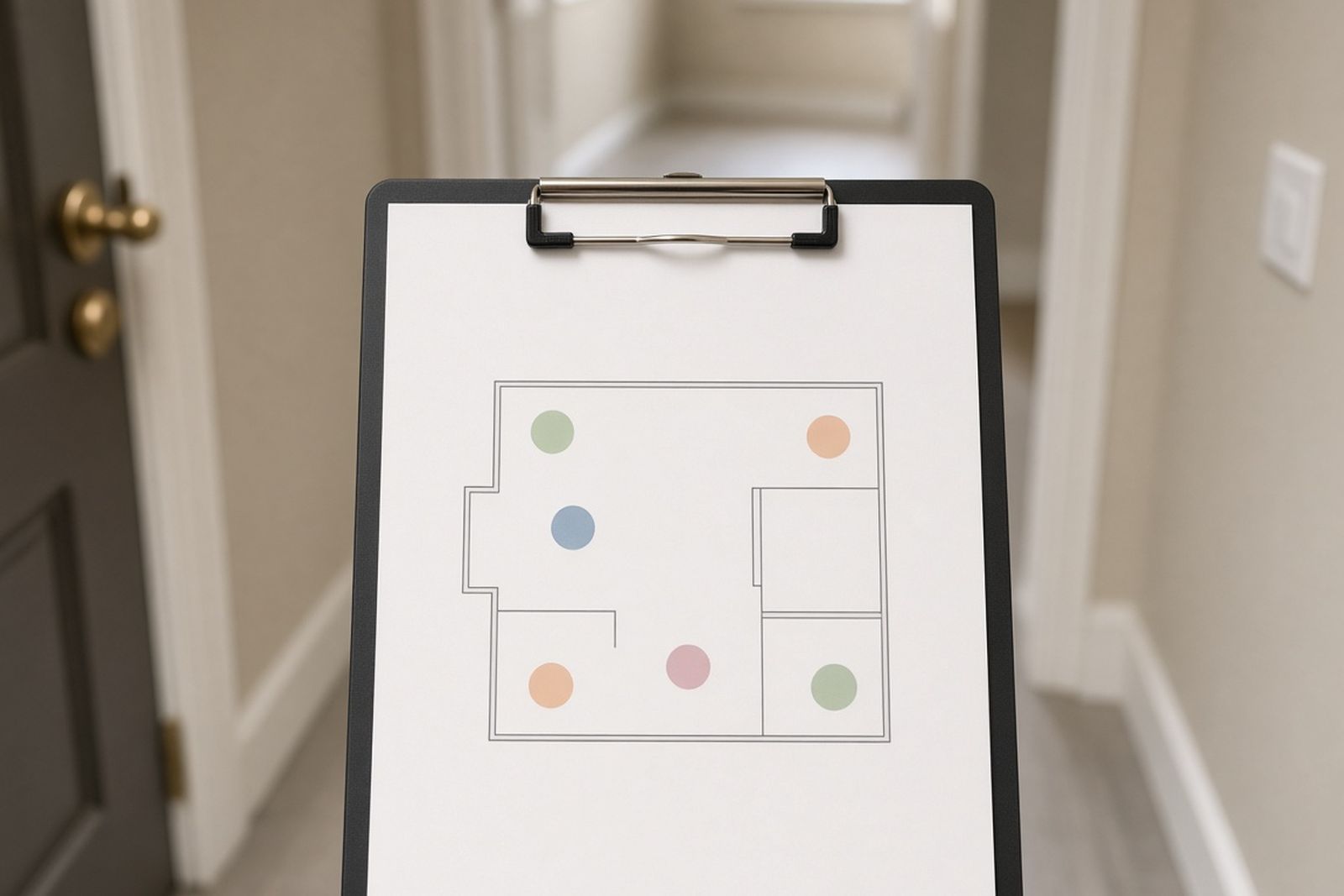
Learn how expert outbreak disinfection works in schools, offices, clinics, gyms, and care homes. See each step, from mapping high-touch spots to checking contact times and records.
Costs explained
What drives the price, published cost ranges, and how to read a written quote line by line.
Planning tools
Hands-on tools help you see cost drivers, check vendors, and organize a claim file. They also help you plan the first day, sort waste, and judge if staff can do the work.
Community polls
See how other facility managers handled closing, vendors, and telling people during outbreaks. Then take the questions that come up to your own team.
Knowledge quiz
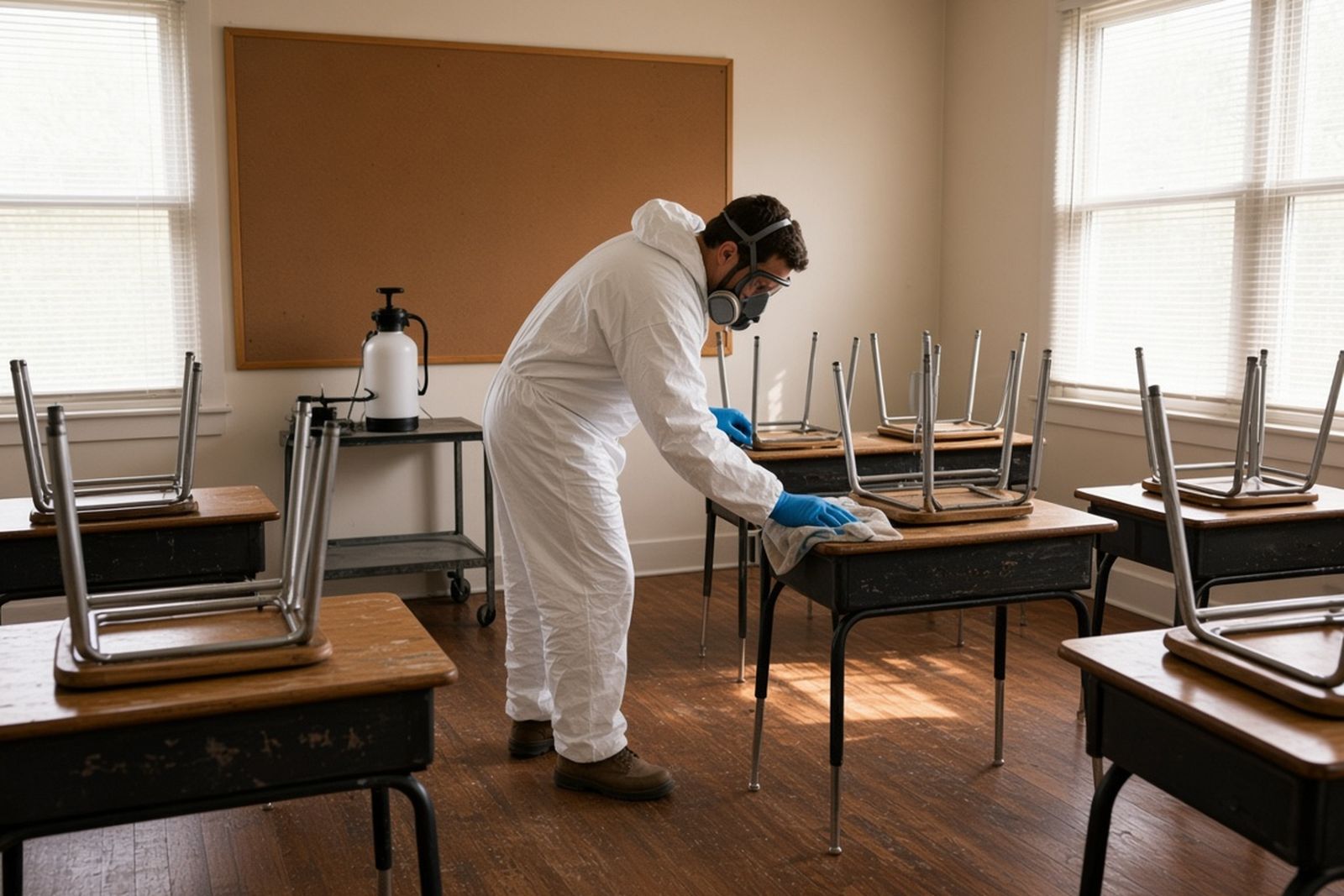
Test what you know about product labels, contact times, keeping germs contained, and records. Do it before you approve a disinfection plan or brief your leaders.
Articles and resources
Articles on norovirus in schools, MRSA in gyms, EPA List N, contact times, and notes to parents. They are written for the people in charge of a building.
City guides
Find disinfection providers who serve your area for facility outbreaks. Learn what to confirm about products, training, and records before you hire.