Free infectious disease disinfection tool
Infectious Disease Disinfection DIY or Call a Pro? Risk Check
Eight yes-or-no questions that produce a risk level and explain when professional help is the safer choice.
Facilities often ask if their own cleaning staff can handle an outbreak response instead of hiring a vendor. Sometimes they can. Think of a small office with hard surfaces and a product whose label lists the germ. The staff are trained on contact times, and there is no visible mess. That may be a fair job to do in-house. A daycare with a norovirus cluster is a different story. It has carpeted rooms, soft toys, and a licensing agency that expects records. This risk check asks a short set of yes or no questions. They cover the germ, the surfaces, and any visible mess. They cover who uses the facility, staff training, and whether you have the product. They also ask if records will be required and if the plan includes fogging. It returns a risk level with an explanation.
A high risk result means the factors that make in-house responses fail are present. It does not mean your staff can't do good work. Common failures include using a product whose label does not list the germ. Others are wiping surfaces dry before the contact time ends and skipping the cleaning step. Running a fogger in a room with people in it is another. So is ending up with no record anyone can rely on. A low result comes with the steps to follow and what to write down. The tool cannot judge the health of certain staff or people in the building. Your building may serve very young children, older residents, or people with weak immune systems. If so, read the result as more cautious than it looks. Training rules for staff who handle body fluids apply no matter the result. Those rules come from OSHA's bloodborne pathogens standard at 29 CFR 1910.1030.
How to use it
- 1Answer each question based on how your facility is today, including staff training and the products you have.
- 2Read the risk level and the specific factors behind it.
- 3For a low result, follow the steps and record-keeping given. Stop if things change.
- 4For a medium or high result, open the vetting checklist and start calling vendors.
Prefer to ask a person?
Your request is sent to the follow-up inbox. A coordinator can reply by email. Not for emergencies; call 911 first if anyone is in danger.
Check whether DIY is safe
Infectious Disease Disinfection: DIY or call a pro?
Eight yes-or-no questions. The result is an educational risk level, not a safety clearance.
1. Is there blood, body fluid, or anything that could carry a bloodborne pathogen?
2. Has the material soaked into carpet, padding, a mattress, drywall or a subfloor?
3. Is there a strong or lingering odor?
4. Could needles, broken glass, drug residue or unknown chemicals be present?
5. Does the affected area cover more than a small spot, or more than one room?
6. Will children, older adults, pregnant people or anyone immunocompromised use the space afterward?
7. Do you need documentation for insurance, a landlord, a sale, or an estate?
8. Would you be doing this while grieving, exhausted or under time pressure?
8 questions left to answer.
A worked example
Picture a made-up small accounting office. An employee tested positive for COVID-19 after several days in the building. The office manager runs the risk check. The germ is a respiratory virus. Surfaces are mostly hard desks and door handles, plus a carpeted meeting room. There is no visible mess. No one in the office is known to have a weak immune system. The cleaning contractor has a product on EPA List N and has been trained on contact times. No records are needed beyond the company's own. Nobody plans to fog. The result comes back low. The explanation says the mix of hard surfaces, an easy-to-kill virus, a listed product, and trained staff makes an in-house response fair. It gives the steps. Map high-touch points, with the employee's desk and shared areas in mind. Wipe away visible dirt. Apply product and keep surfaces wet for the label's contact time. Air out the space. Record what was done and when. It flags the meeting room carpet. There, vacuuming with a filtered machine and fresh air are the practical steps, not spraying. The manager follows the steps overnight and files a short record. If the answer about an employee with a weak immune system had been yes, the result would have moved up. It would have suggested a vendor.
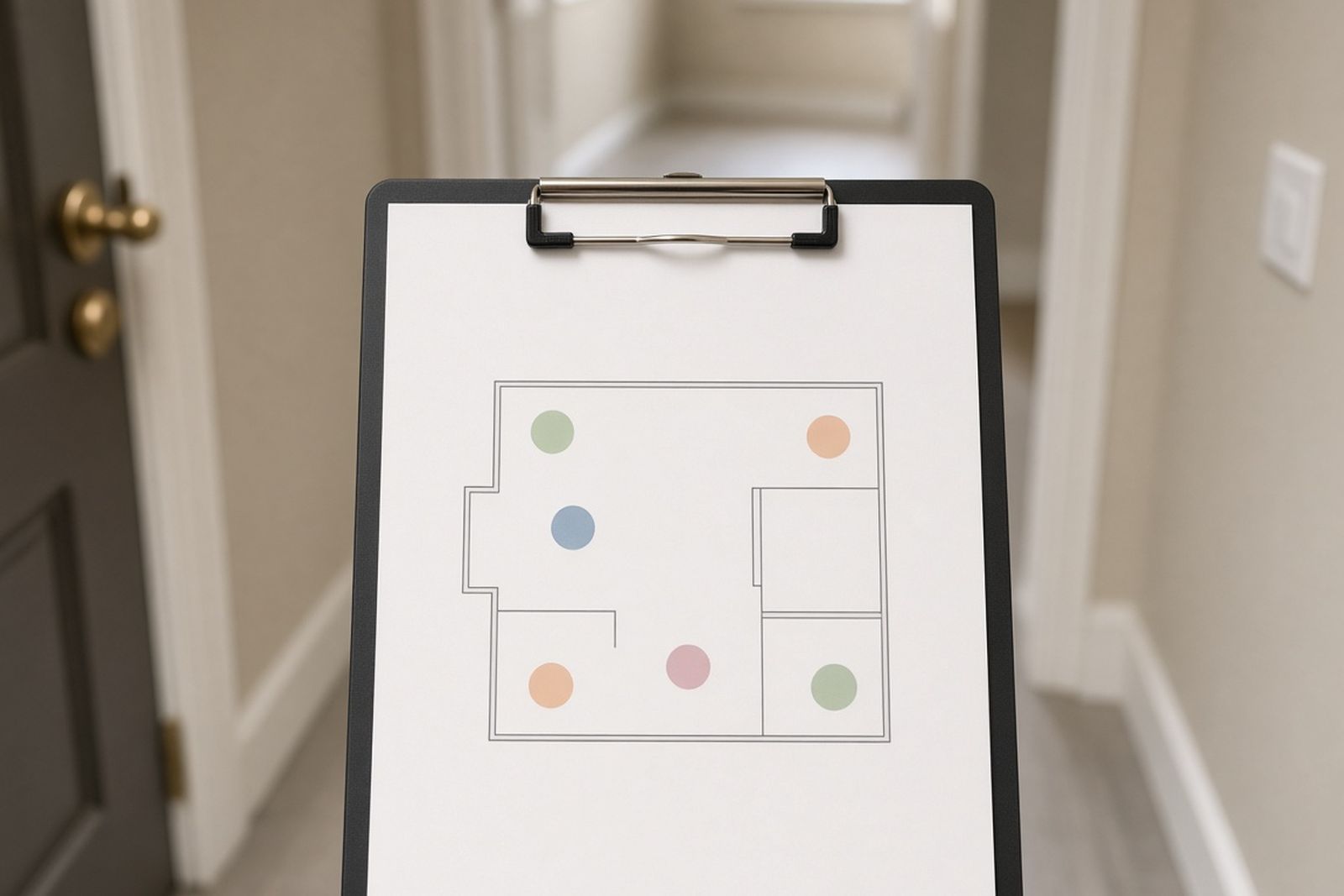
Numbers behind diy risk check decisions
- 223,900
CDC's 2019 Antibiotic Resistance Threats Report estimated 223,900 C. difficile cases in hospitalized patients and 12,800 deaths in 2017, with $1 billion in attributable healthcare costs.
Read with care: Counts hospitalized cases only; costs cover hospital-onset cases only.
Source: CDC (2019)United States, hospitalized patients, 2017 data
- 323,700
CDC estimated 323,700 MRSA cases in hospitalized patients and 10,600 deaths in 2017, with $1.7 billion in attributable healthcare costs.
Read with care: Excludes many uncultured skin infections; hospitalized cases only.
Source: CDC (2019)United States, hospitalized patients, 2017 data
- 9.4-51 million
CDC estimates seasonal flu caused 9.4 million to 51 million illnesses, 120,000 to 710,000 hospitalizations and 6,300 to 52,000 deaths annually in the U.S. between 2010 and 2025.
Read with care: Ranges reflect large season-to-season variation and are modeled estimates.
Source: CDC (2025)United States, annual range across 2010-2025 seasons
- 18
CDC states that as few as 18 norovirus particles are thought to be sufficient to cause infection.
Read with care: Infectious dose estimates come from limited human challenge studies and vary by strain.
Source: CDC (2011)General virology statement, applies to all settings
These figures are public research and agency data, not this network's own job records. Keep each number with its population, year and limits; none of them predicts cost, timing or outcome at a specific property.
DIY or Call a Pro? Risk Check questions for infectious disease disinfection
Which answers drive the result to high risk?
Some germs push it up. These include germs that spread from tiny amounts or form spores, such as norovirus or C. difficile. Other factors are a visible mess from vomit or stool and soft, absorbent surfaces and goods. So are a vulnerable group of people and staff without training on contact times. A product whose label does not list the germ counts too. So does a licensing or record rule, or any plan to fog. Any of these can move the result up.
What does a low-risk sequence look like?
Map high-touch surfaces. Remove visible dirt with detergent. Apply the EPA-registered product whose label lists the germ. Keep surfaces wet for the full contact time. Air out the space as the label says. Record the date, areas, product, registration number, and times. Protect food surfaces and electronics as the label says. Never mix products. Keep people out until the re-entry terms are met.
Can staff use a fogger or electrostatic sprayer?
Only if a few things are true. The product label must allow that method. The room must be empty. The heating and cooling system must be handled as the label says. And someone must be able to confirm the surfaces really stay wet for the contact time. The tool treats fogging by untrained staff without label support as a high risk. Misuse can harm people and do little good.
How does the facility's population change the result?
Some settings serve babies, older residents, patients, or people with weak immune systems. There, a missed surface or a short contact time matters more. These settings often come with licensing rules too. The tool gives those answers heavy weight. Questions about a person's own health risks belong with a doctor. The tool does not cover them and gives no medical advice.
If we handle it in-house, what record should we keep?
Keep the same record a vendor would give you. List the date and times, the areas treated, and the product names and EPA registration numbers. Note the contact time and how it was confirmed, the cleaning done first, and the re-entry time. Add the notice sent to staff or families. That record answers questions later. It shows the response was planned, not made up on the spot.
Can the result change during an outbreak?
Yes. Run it again when the facts change. That may be when a new germ is confirmed or cases spread to other areas. It may be when key staff get sick or a vulnerable group becomes involved. A situation that started as something you could handle in-house can shift toward needing outside help. Checking again after each big change keeps your choice tied to current conditions, not the first day's guesses.
What if our staff want to do the work but the result says high risk?
Take their willingness seriously. Talk through the factors that pushed the result higher. Those might be a germ that forms spores, a heavy mess, or missing protective gear. Some of those gaps can be closed with training and supplies. Others, like too few staff or a vulnerable group of people, may point toward a vendor. The vendor could take the hardest areas while your staff handle the rest.
Related community polls
Every count is a real visitor vote; nothing is seeded or padded. One vote per poll per device, and you can change your answer.
When your facility had an illness cluster, how did you handle cleaning?
How did you decide whether to close all or part of the facility?
Other infectious disease disinfection tools
Cost Range Estimator
Set the affected area, surface types, severity and extras to see an educational cost range and the factors that move it.
OpenProvider Vetting Checklist
Fifteen questions to ask any remediation provider, a readiness score, and a copyable list of what is still unanswered.
OpenInsurance Claim Organizer
A guided checklist from finding the policy to tracking the carrier decision, with a printable summary of where the claim stands.
OpenFirst 24 Hours Planner
Tell the planner a few facts about the situation and get an ordered list of who to call, what not to touch, and what to photograph.
OpenWaste & Disposal Classifier
Five questions about the material point to the likely waste category and which authority to confirm the rules with.
OpenMore on infectious disease disinfection
Infectious Disease Disinfection services
Learn how expert outbreak disinfection works in schools, offices, clinics, gyms, and care homes. See each step, from mapping high-touch spots to checking contact times and records.
Costs explained
What drives the price, published cost ranges, and how to read a written quote line by line.
Insurance and payment
Which policies may respond, how to document a claim, and what to do if coverage is denied.
Community polls
See how other facility managers handled closing, vendors, and telling people during outbreaks. Then take the questions that come up to your own team.
Knowledge quiz
Test what you know about product labels, contact times, keeping germs contained, and records. Do it before you approve a disinfection plan or brief your leaders.
Articles and resources
Articles on norovirus in schools, MRSA in gyms, EPA List N, contact times, and notes to parents. They are written for the people in charge of a building.
City guides
Find disinfection providers who serve your area for facility outbreaks. Learn what to confirm about products, training, and records before you hire.