Short answer
Most outbreak cleaning waste is regular trash outside of health care settings. This includes used wipes, gloves and paper towels. But check first. Items with blood and needles may fall under state medical waste rules. Unused or expired disinfectant concentrates may need a hazardous waste review. Labels include directions for throwing away containers. Wastewater rules cover what goes down drains. List each type of waste and confirm the rule with your state and local agencies.
Why waste deserves a plan before the next outbreak
During an outbreak, the focus is on killing germs, and waste is an afterthought. Custodians fill trash bags with used wipes and gloves. A stack of empty disinfectant jugs grows in the supply closet. And someone wonders whether the vomit cleanup materials need to go in a red bag.
Most of the time, the answers are simple. But not always. Some materials are regulated differently in health care settings. Some disinfectants become a disposal problem when they expire or are left over. And what goes down a floor drain or mop sink can matter to your sewer utility.
A little research before the next outbreak lets staff throw things away correctly without stopping to wonder. That keeps the response moving and avoids needless costs.
The waste streams outbreak disinfection creates
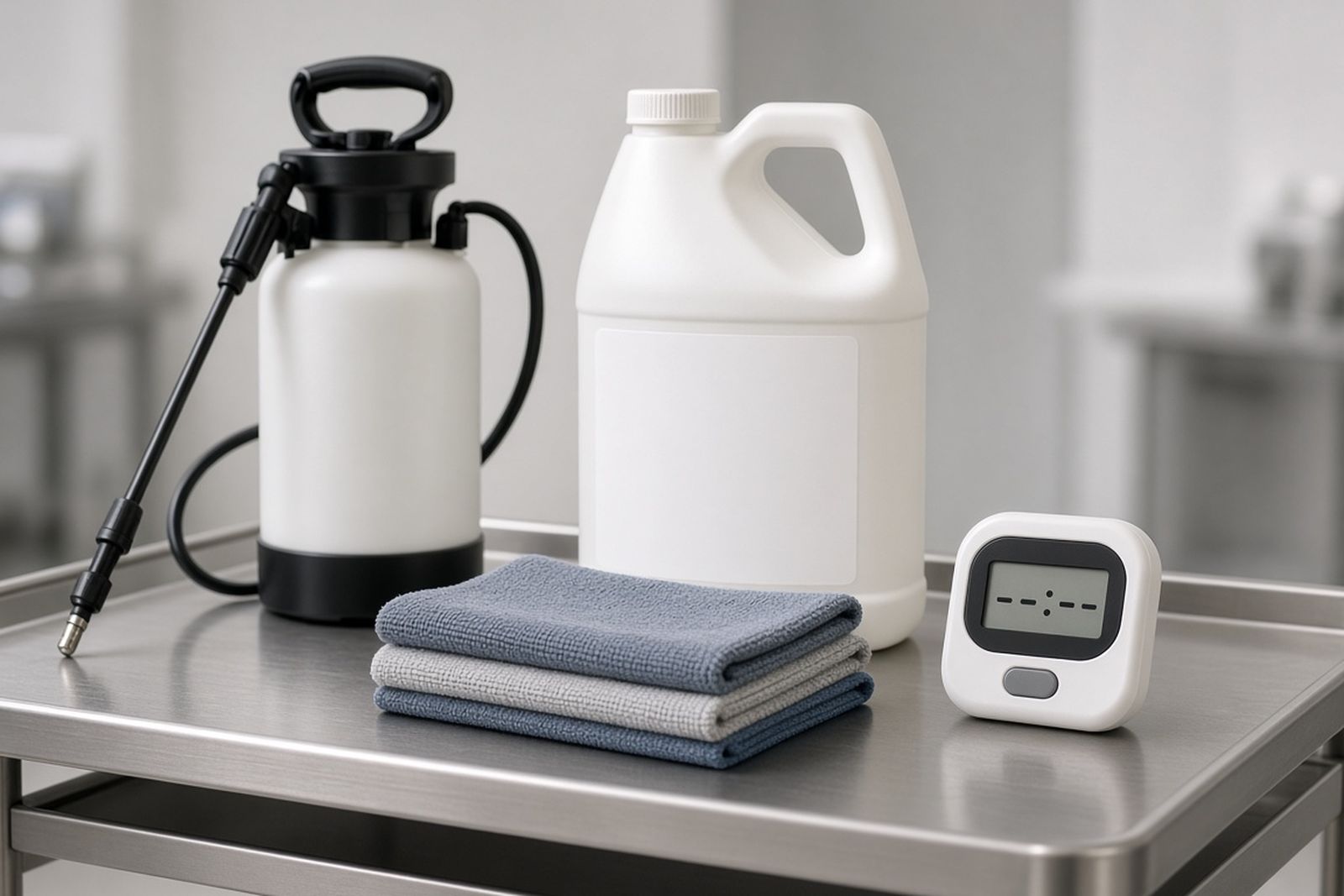
Start by listing what your staff and any outside company really throw away or pour out during an outbreak response. Include both the routine items and the rare ones.
Look up each type of waste on its own. The rule for a used glove is not the same as the rule for a gallon of expired concentrate.
Do not forget items you can reuse. Microfiber cloths, mop heads and cleaning linens are usually washed, not thrown out. During an outbreak, keep soiled reusable items in a closed, labeled bag or bin. Wash them as the maker's instructions say. Make sure the laundry staff know what they are handling.
- Used throwaway wipes, paper towels and cleaning cloths
- Gloves, gowns, masks and other throwaway protective gear
- Materials from vomit or diarrhea cleanup, such as absorbent powder and soiled towels
- Items with visible blood, above all in clinics, dental offices and care homes
- Needles and other sharps found during cleaning or used in health care settings
- Mop water and rinse water from floors and equipment
- Mixed disinfectant left over at the end of a shift
- Empty disinfectant containers
- Expired or discontinued products from emergency stockpiles
Is used cleaning waste from an outbreak considered medical waste?
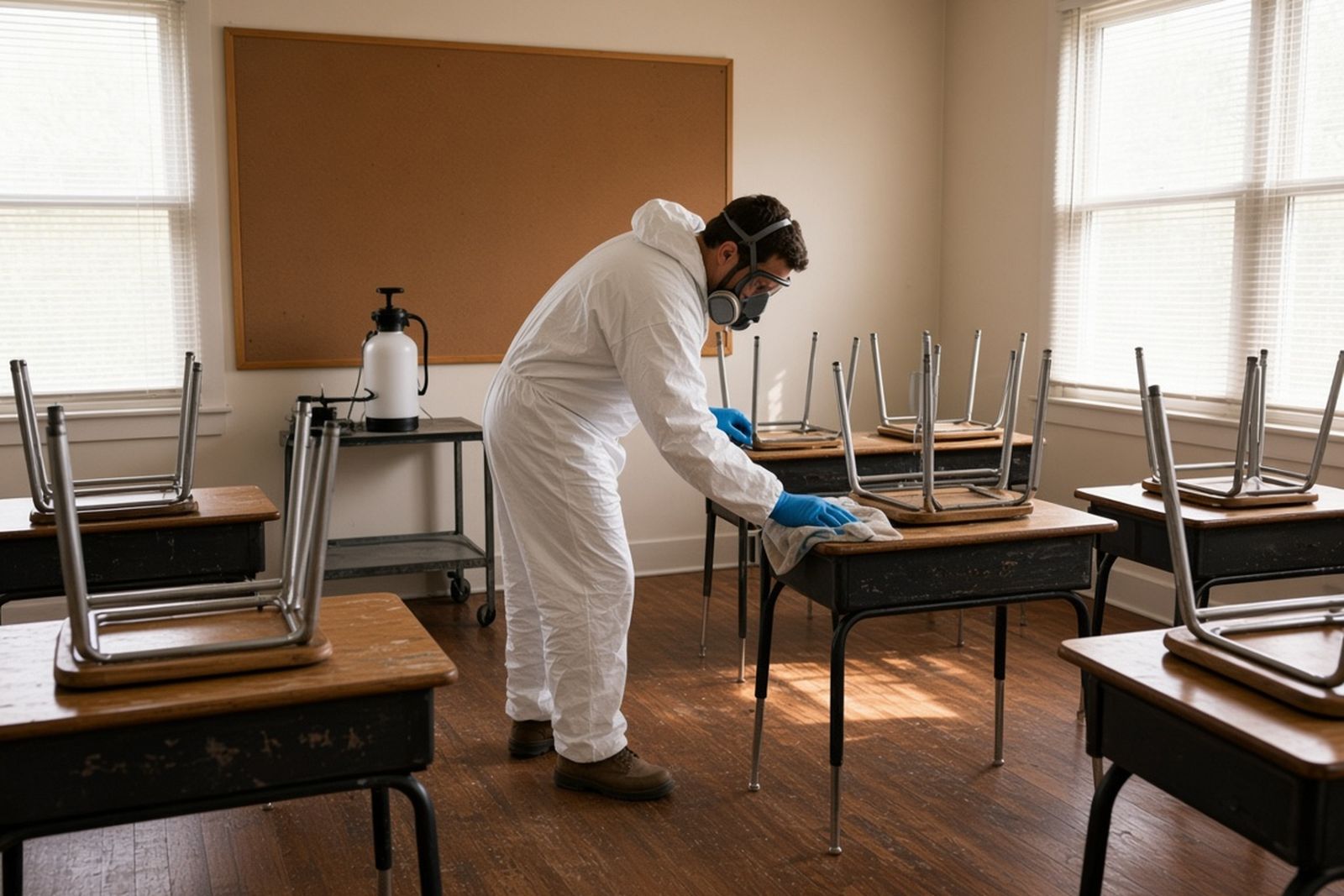
Outside of health care, used wipes, paper towels and protective gear from routine disinfecting are handled as regular trash. That covers places like offices, schools, gyms and stores. The waste should be bagged securely, and bags should be tied before they are removed. But it usually does not need special containers or haulers.
In those places, vomit and diarrhea cleanup materials are also usually regular trash. Still, many sites double-bag them to control odor and leaks. Check your state and local rules to confirm.
Health care settings are different. Clinics, dental offices, long-term care homes and similar places make waste that may meet their state's definition of regulated medical waste. This is most likely for items soaked with blood. EPA does not currently run a full federal medical waste program. So the definitions and handling rules come from your state.
Putting too much in the medical waste group has costs too. Sending regular cleaning waste out as regulated medical waste is expensive. It can also fill up your red bag containers so that truly regulated items have nowhere to go. A clear guide helps staff put each item in the right place the first time.
Sharps and blood-containing items
Needles and other sharps should always go straight into a hard, labeled container that they cannot poke through. In health care settings, OSHA's Bloodborne Pathogens standard sets container rules for workers. State rules cover disposal.
In schools, gyms and offices, needles sometimes turn up in restrooms or common areas. Staff should never pick them up by hand. Use tongs or a similar tool and put the needle in a sharps container. Follow your local health department's advice for disposal. That may mean a drop-off site or a mail-back program.
Items with visible blood, such as materials from a nosebleed or injury cleanup, may be treated differently. It depends on the amount and your state's definitions. Ask your state medical waste program how it classes small amounts of blood outside of health care.
Leftover solutions and empty containers
Mixed solutions often stay useful for only a short time. CDC advises making watered-down bleach fresh each day because it loses strength after 24 hours. That means sites using diluted bleach will often have leftover solution to get rid of.
In most places, small amounts of diluted household-strength disinfectant can go down a sanitary drain, such as a mop sink, with running water. But confirm with your sewer utility. Never pour disinfectants into storm drains. And never mix different products while getting rid of them, since some mixes give off harmful gases.
Product labels include specific directions for throwing away containers and unused product. Many empty containers can be rinsed and recycled or thrown out. But some labels call for rinsing three times or limit reuse. Follow the label, since label directions for registered disinfectants are legally binding.
Expired or excess stockpiles
Many sites bought large amounts of disinfectant during the pandemic. In 2020, EPA's List N of products approved against the COVID virus grew from a few dozen entries to several hundred within months. Some of those purchases are still sitting in storage rooms. Some are past their expiration dates or no longer in use.
Expired or unused concentrates can be hard to get rid of. Based on what is in them and how much there is, some may need to be reviewed as hazardous waste under federal and state rules. This is most likely for businesses and institutions. Unlike homes, they do not get the household waste exception.
Start by pulling the safety data sheet and label for each product. Then contact your state environmental agency or a licensed waste company to ask how the product should be handled. Some makers or distributors offer take-back programs. Do not be tempted to use expired products, since they may no longer work as they should.
From now on, rotate stock so older products are used first. Do not buy more than your site can use before it expires. A simple stock log with purchase dates, expiration dates and storage spots keeps the same problem from building up again.
Are there special rules for high-consequence infectious diseases?
In rare cases, a site may deal with a disease that carries much stricter waste rules. Waste soiled with certain very dangerous germs can be classed as Category A infectious substances under DOT rules. These rules set strict packing, hauling and handling steps.
These cases almost always involve hospitals and public health officials, who will direct the response. If you ever think you are dealing with such a disease, contact your local health department right away. Follow its instructions, including for any waste.
For more common germs such as norovirus, flu or MRSA, sites usually do not need these special steps. Ordinary careful handling and the rules described above are usually enough.
Building a simple waste guide for your staff
If you inherit a warehouse of pandemic-era concentrate, start with the stockpile. Pull the safety data sheet for each product and separate expired stock from stock you can still use. Ask your state environmental agency whether your group, as a business or institution, must review the concentrates as hazardous waste. A licensed company can test and remove what cannot be used. Products you can use can go back into service and onto your chemical safety list.
Then settle the daily questions in writing. Ask the county health department whether vomit cleanup materials from your type of site can go in regular trash if double-bagged and tied. Ask the sewer utility whether diluted disinfectant from mop sinks is OK. Review the answers each year before flu season.
Turn your research into a short table that staff can follow without calling a supervisor. List each type of waste, how to pack it, where it goes and who to call with questions. Post it in custodial closets and include it in outbreak training.
Rules vary by state and county; verify with the local authority. The main sources for the rules at your site are your state medical waste program and your state environmental agency. Your sewer utility, local health department and waste hauler can help too.
- Used wipes, towels and protective gear: bag, tie and put in regular trash unless your site's rules say otherwise
- Vomit and diarrhea cleanup materials: double-bag and tie before throwing away
- Items soaked with blood in health care settings: follow state medical waste rules
- Needles and sharps: hard, labeled sharps container and an approved way to dispose of it
- Leftover diluted solution: sanitary drain with running water if the utility allows it
- Empty containers and expired concentrates: follow the label and check with your state agency or waste company