Short answer
Infectious disease disinfection time depends on the size of the space, the organism involved, the product's labeled contact time, how many soft furnishings must be laundered or removed, and any re-entry interval after spraying or fogging. A single room can be treated in a working session, while a facility responding to an outbreak may need repeated rounds over days or weeks, coordinated with public health guidance.
What sets the length of a job
Square footage is only part of the story. A crew can move through an empty office faster than a bedroom full of upholstered furniture, stuffed toys, and clutter. The organism matters too, because tougher targets like norovirus and C. difficile spores often require products with longer contact times.
Preparation and follow-up are just as important. Clearing surfaces, protecting electronics, and removing items for laundering all take time before the first wipe. After treatment, some products and methods require the space to stay empty for a set period.
When a provider gives you an estimate, ask what it includes. A figure that covers only application time may leave out setup, pre-cleaning, and the wait before you can use the space again.
When the space stays partly in use
Occupancy changes the plan as well. A space that must stay partly in use, such as a clinic that cannot close or a group home where residents have nowhere else to go, has to be treated in sections. Working around people takes longer than working in an empty building, but it is often the only realistic option.
A single room
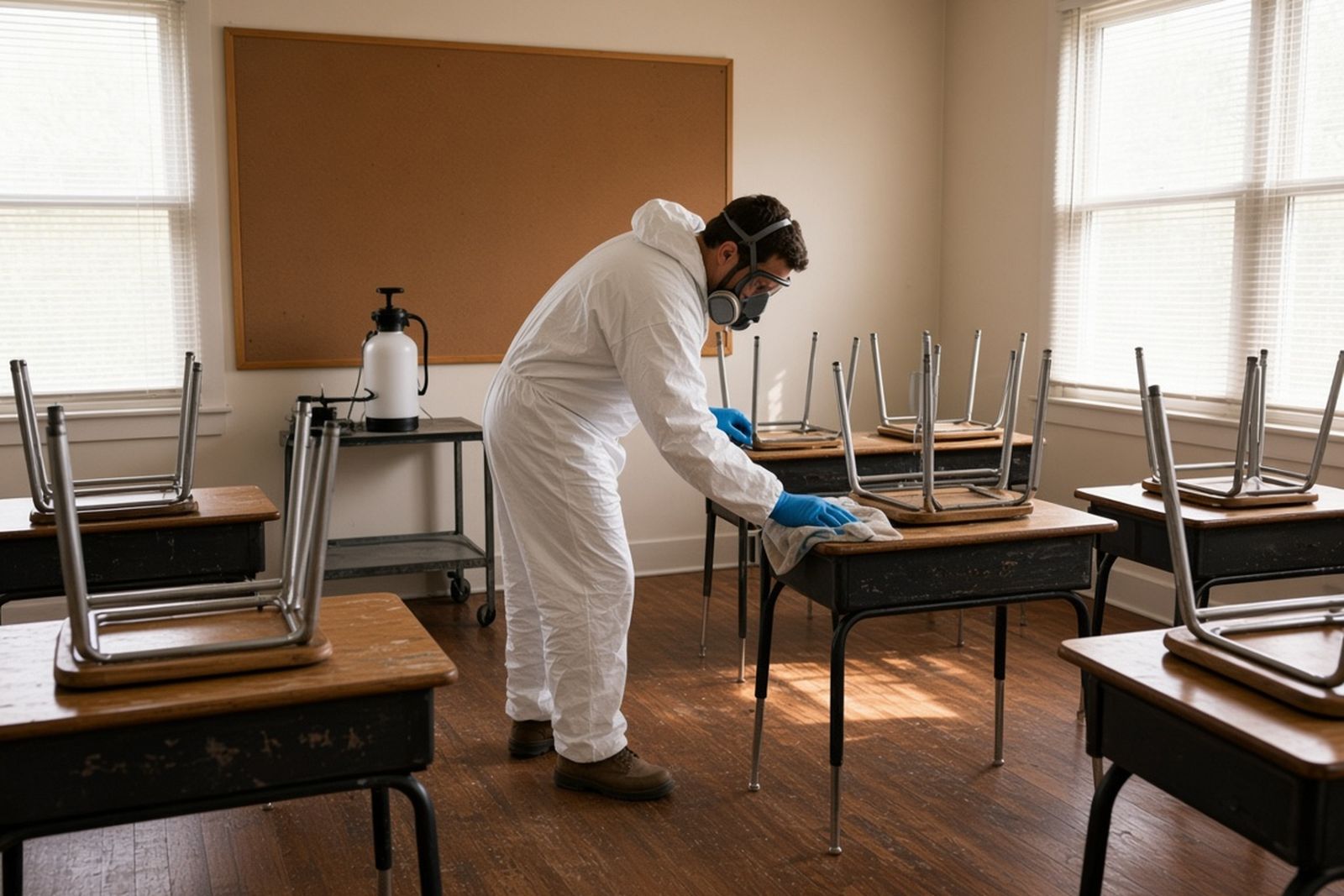
A single room, such as a bedroom where someone recovered from influenza or a small office after a confirmed illness, is usually the simplest case. The crew identifies high-touch points, cleans them, applies disinfectant, and lets it sit for the labeled contact time. Soft items such as bedding are bagged for laundering.
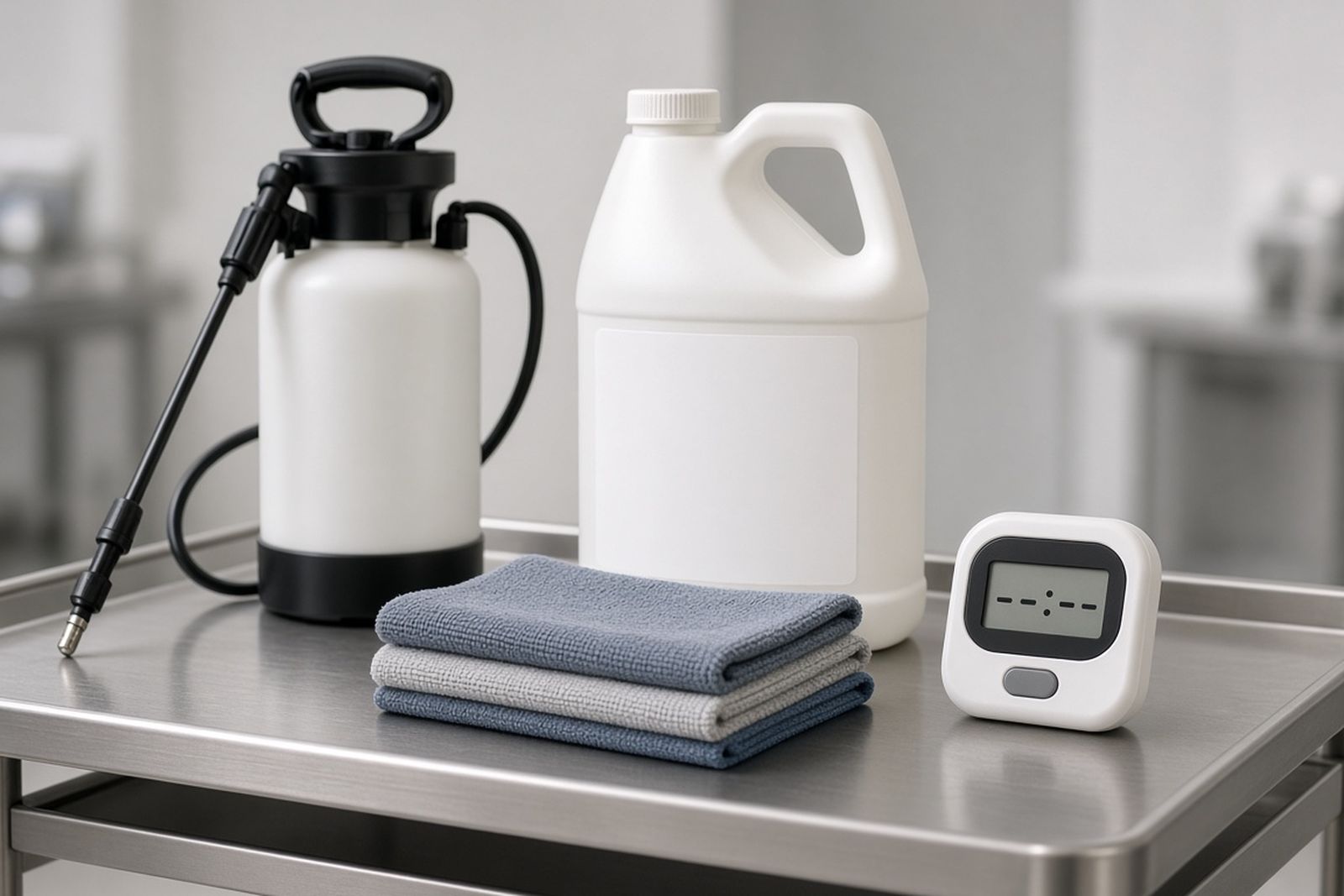
Contact time sets a floor for the job. For norovirus, CDC's 2024 guidance recommends a 1,000 to 5,000 ppm chlorine solution (5 to 25 tablespoons of household bleach per gallon of water) left on surfaces for at least 5 minutes. Other registered products have their own label times, and each surface must stay wet for the full period.
A single bathroom can take as long as a larger bedroom, because it has so many touch points: faucets, flush handles, grab bars, light switches, towel bars, and the floor around the toilet.
If the sick person is still recovering at home, the crew may treat the space while they rest elsewhere and then return later to repeat high-touch surfaces. One pass is rarely enough while someone is actively ill.
Why outbreak responses take longer than a single visit
In an outbreak, the problem is not a single contaminated room. People who are ill, or who have not yet shown symptoms, continue to shed organisms and recontaminate surfaces. A single deep disinfection on day one does not stop that.
Outbreaks also concentrate in places where people live closely together, such as care homes and assisted living. In those settings, disinfection usually becomes a repeated routine rather than a one-time event.
An outbreak response often involves an initial full treatment, followed by more frequent cleaning of high-touch surfaces and shared spaces until the local health department or the facility's infection preventionist declares the outbreak over.
Staffing shapes the pace. If the facility's own housekeeping team is stretched thin by illness, an outside provider may handle common areas while in-house staff focus on resident rooms. Clear division of work avoids both gaps and duplication.
Electrostatic sprayers and foggers: faster, with limits
They can speed application, especially in large open areas with many surfaces. Cadnum and colleagues tested one in a 2020 study in the American Journal of Infection Control. Using 0.25% sodium hypochlorite, the sprayer treated a 15-20 chair waiting room in about 5 minutes, and with a 5-minute contact time it reduced C. difficile spores by 6 log10 or more.
That speed applies to application, not the whole process. Surfaces still need to be cleaned before spraying if they are soiled. The product still has to remain wet for its labeled contact time. And some products have re-entry intervals, which can keep people out of the space for a while after treatment.
Sprayers also do not replace attention to details. Hidden touch points, the undersides of handles, and soft furnishings may need manual treatment or separate handling.
Before choosing a method, ask whether the product is actually registered for electrostatic or fogging application. A product approved only for wiping should not be sprayed into a room just to save time.
Soft furnishings and fabrics
Fabric is one of the biggest variables. Bedding, curtains, towels, and clothing can usually be laundered using hot water and a dryer. Upholstered furniture, mattresses, carpets, and stuffed toys are harder.
Some fabrics can be treated with products labeled for soft surfaces, but those products often have their own instructions and longer contact times. Others may need hot water extraction, steam treatment, or, in heavily soiled cases, removal and replacement.
A provider who carefully sorts soft items before starting, and bags laundry immediately, saves time later and reduces the risk of spreading contamination through the home or facility.
If you plan to wash items yourself, carry them to the machine in a closed bag and wash your hands right after loading. Moving an armful of contaminated linen through a hallway undoes much of the work done on the surfaces around it.
Case sketch: a daycare closed for a stomach virus
Take, for illustration, a daycare that closes for a day after several children and a staff member develop vomiting and diarrhea. The director, working with the local health department, arranges professional disinfection.
The crew arrives after the last child is picked up. They start by bagging soft toys, nap mats, and cloth covers for laundering or disposal. They clean and then disinfect tables, chairs, cubbies, doorknobs, light switches, changing tables, sinks, and toilets with a product that has a norovirus claim, keeping each surface wet for the labeled time. Hard plastic toys are gathered into bins, cleaned, disinfected, and rinsed so they are safe for children to handle again.
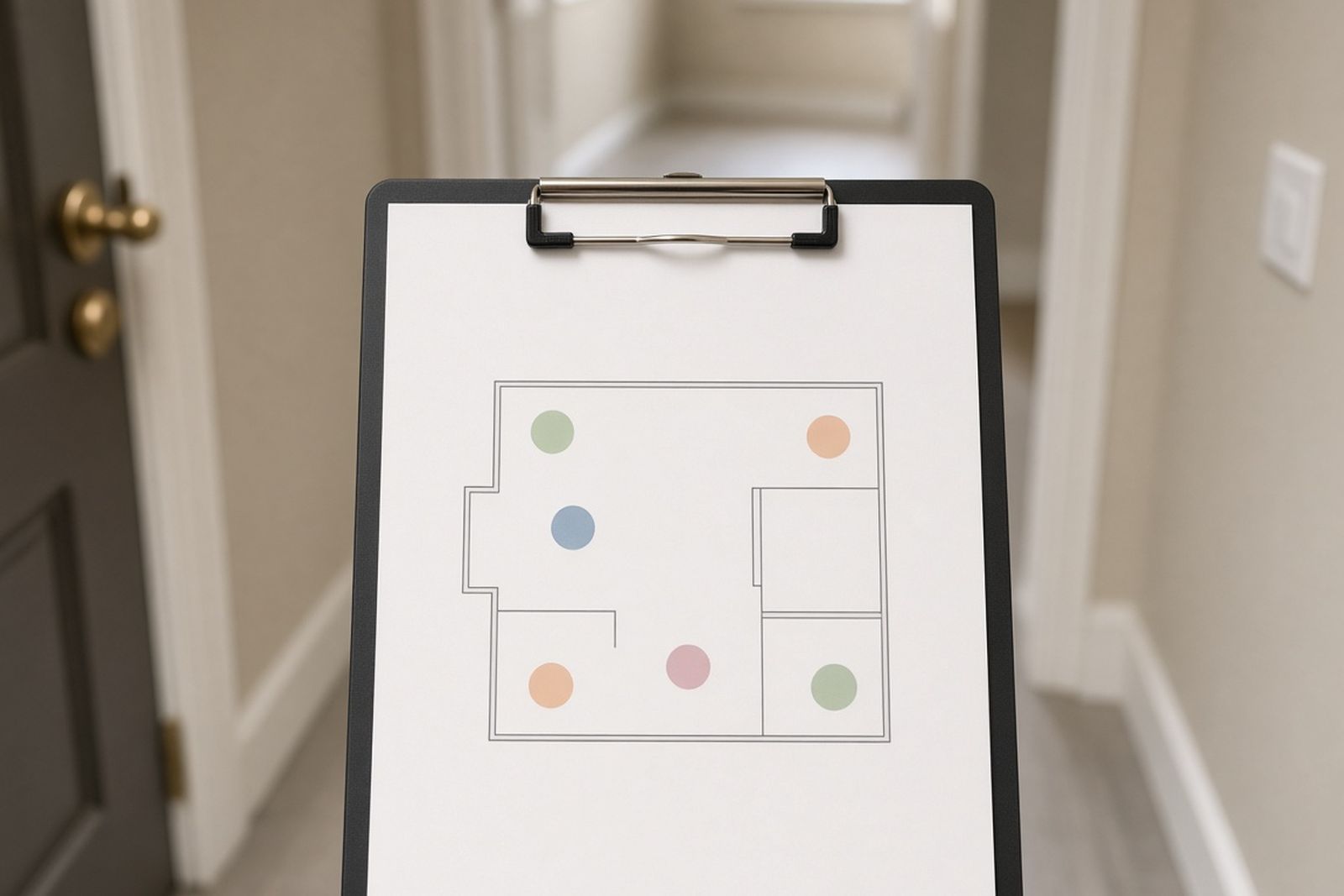
Floors come last, working from the back of the building toward the entrance. The crew documents each room and leaves the director a list of the products used and their contact times.
When the daycare reopens, staff follow an increased cleaning schedule for high-touch surfaces until the health department advises that the outbreak has ended. The professional clean did not end the outbreak on its own; it gave the center a clean starting point.
Common causes of delay
Several predictable issues extend nearly every job. Knowing them helps you plan.
- Clutter and personal items that must be moved before surfaces can be reached
- Soiled surfaces that need cleaning before disinfection
- Organisms that require longer contact times
- Large volumes of soft furnishings
- Sensitive electronics or medical equipment that need special handling
- Re-entry intervals after spray or fog applications
- Occupied spaces that must be treated in sections
How long should you wait before using the space again?
Re-entry depends on the product and method. Many ready-to-use wipes and sprays allow use as soon as surfaces are dry. Some fogging and spraying products have specific re-entry instructions on their labels, and certain food-contact surfaces may require a rinse with potable water afterward.
Ask the provider to tell you in writing when you can return, whether any surfaces need rinsing, and whether ventilation is recommended. People with asthma or chemical sensitivities may want to wait longer and ventilate thoroughly.
Odors from disinfectants can linger after the space is technically ready. Opening windows, running exhaust fans, or using the building's ventilation system on a higher setting for a while helps clear them. A lingering chemical smell is not a sign of better disinfection, and it can make the space uncomfortable for people returning.
Also keep in mind that people can still spread illness after surfaces are treated. Hand hygiene, isolation of sick individuals, and staying home while ill all work alongside surface disinfection.
How can you plan realistic time for your situation?
Start by describing your situation clearly to the provider: the size and layout of the space, the illness involved if known, the number of soft items, and whether the space will be occupied during work. That information lets them estimate setup, application, contact time, and re-entry more accurately.
For facilities, build disinfection time into your outbreak plan in advance. Decide which areas can close, which must stay open, and how you will stage work to protect residents, patients, or staff.
Keep a simple log during any response: the date, the areas treated, the product, its contact time, and who did the work. Over the course of an outbreak, that log shows where time is going, helps you adjust staffing, and gives public health officials a clear picture if they ask what has been done.
If you operate a healthcare, childcare, food service, or residential care facility, ask your county health department early whether reporting or specific cleaning standards apply, because those requirements can add steps to the schedule.