Free infectious disease disinfection tool
Infectious Disease Disinfection Cost Range Estimator
Set the affected area, surface types, severity and extras to see an educational cost range and the factors that move it.
Outbreak disinfection prices confuse facility managers because the same square footage can lead to very different proposals. This estimator asks for things you can describe without a vendor. First is the area to be treated. Next is the surface type. Are surfaces mostly hard, like desks and tile, or mixed? Or are they mostly soft and absorbent, like padded waiting room chairs and carpeted classrooms? Then comes how serious the situation is, based on the germ and any visible mess. Last are the extras. These include after-hours work so the building can stay open, several separate areas, and odor treatment where someone vomited or had a stool accident. They also include removing items that cannot be disinfected. The tool returns a cost range for learning purposes. It also ranks the factors that push your cost up or down.
The range is not a quote. Do not use it as one in a budget request without saying so. Real prices depend on what a vendor finds on a walkthrough. How many high-touch points does the building have? Do restrooms and food areas need heavy work? Must soft goods be thrown out? How much time do the label's contact times add? What the estimator does is prepare you to read a proposal. Say your inputs point to soft surfaces and a norovirus concern. You will then see why a carpeted daycare costs more than a tiled gym of the same size. The tool also lists what a written quote should contain. That way you can compare proposals from different vendors line by line. You can also file them for your leaders or an insurer.
How to use it
- 1Enter the total area of the spaces to be treated, including corridors and restrooms connecting them.
- 2Select the surface mix that best matches the furnishings and floors in those spaces.
- 3Set the severity based on the germ of concern and whether there was a visible mess.
- 4Mark the extras that apply. Then review the cost drivers and the written-quote checklist before you ask for proposals.
Prefer to ask a person?
Your request is sent to the follow-up inbox. A coordinator can reply by email. Not for emergencies; call 911 first if anyone is in danger.
Estimate a cost range
Infectious Disease Disinfection cost range estimator
Educational only. Real pricing needs an on-site assessment and a written scope. Insurance coverage is decided by your carrier, not by this tool.
Relative cost level: Mid range
No published national reference range met our sourcing standard for this category, so the tool shows a relative level instead of dollars. Ask two or three providers for written, itemized quotes.
Cost level: Mid range.
None of the big cost multipliers are selected. Minimum service charges, travel and waste fees still apply.
Ask every quote to itemize labor, containment, product, waste disposal, verification sampling, and any rebuild, and to state what is excluded.
A worked example
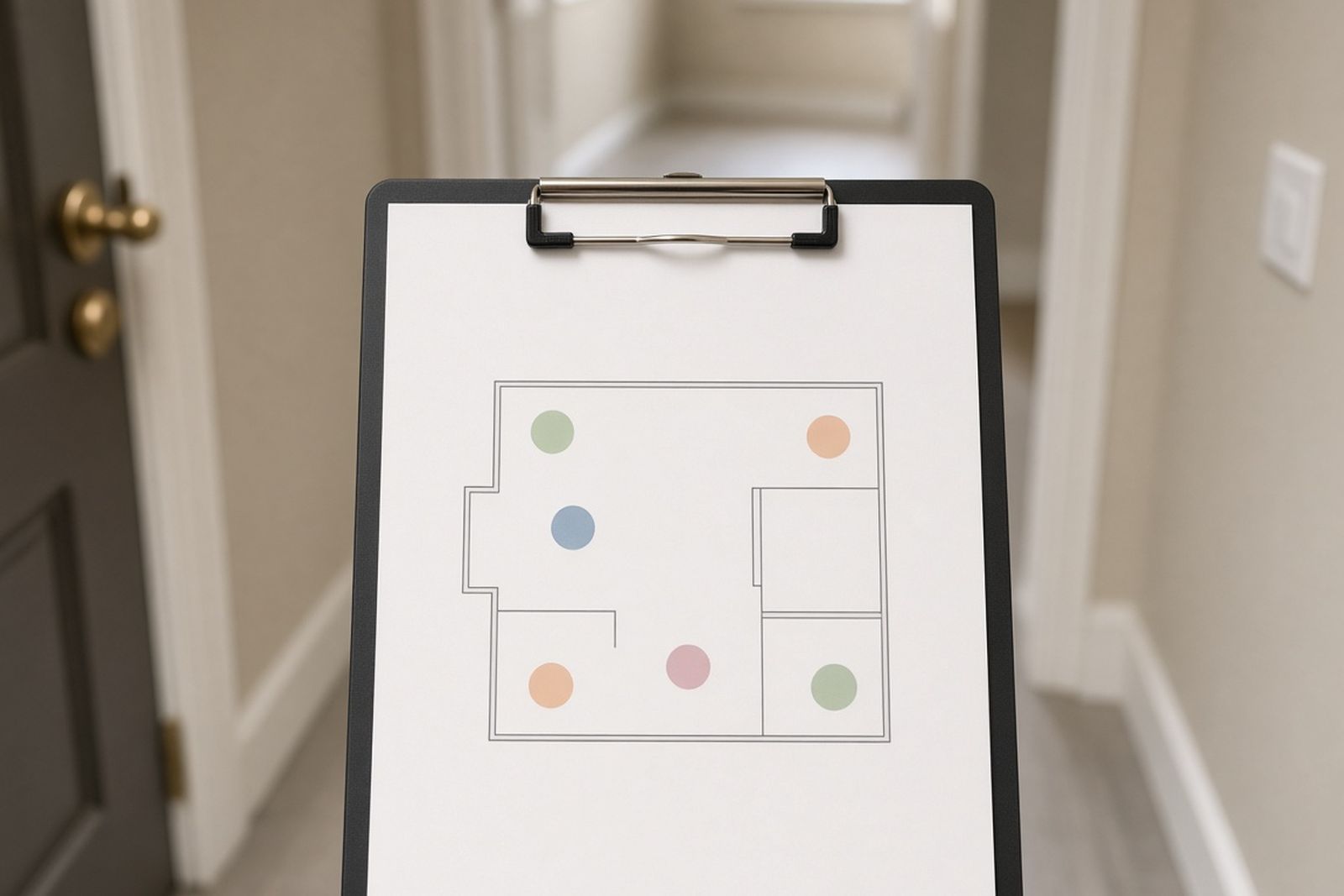
Picture a made-up elementary school. Several classrooms in one wing reported stomach illness over a few days. There was at least one vomiting incident in a hallway. The facilities director enters the wing's classrooms, the hallway, and the nearest restrooms as the area. She picks mixed surfaces. The classrooms have carpet squares and padded reading corners, while the restrooms are tile. She sets severity high because norovirus is suspected and there was a visible mess. She marks after-hours work so the rest of the school can stay open. She also marks multiple areas and odor treatment for the hallway. The estimator places the job in the upper part of its range. It lists the drivers. Norovirus spreads from tiny amounts and needs certain products. Soft surfaces may need to be thrown out or washed. Restrooms need heavy work, and the job runs overnight. Its quote checklist reminds her to ask for a high-touch map of the wing. She should ask for product names with EPA registration numbers. She should ask for the contact time and how it will be checked. She should also get a written re-entry time before the morning bell. Two proposals arrive, and the second is much higher. The checklist shows her why. The higher one includes throwing out the reading-corner cushions. The lower one assumes they will be sprayed in place. That difference, not the price, becomes the real conversation.
Numbers behind cost estimator decisions
- $9.8 billion
A JAMA Internal Medicine meta-analysis estimated the five major healthcare-associated infections cost the U.S. health system $9.8 billion annually, with C. difficile at about $11,285 per case.
Read with care: 2012 dollars; based on published studies rather than national claims data.
Source: JAMA Internal Medicine (2013)United States, adult inpatients, literature 1986-2013
- 500+
EPA's List N of disinfectants approved for use against SARS-CoV-2 grew from 85 products in March 2020 to more than 500 by October 2020.
Read with care: Product count has changed since 2020; List N inclusion is not an EPA endorsement.
Source: EPA (2020)United States, EPA-registered products, as of October 21, 2020
- 10 working days
OSHA's Bloodborne Pathogens standard (29 CFR 1910.1030) requires employers with exposed workers to keep a written exposure control plan reviewed annually, offer hepatitis B vaccination within 10 working days, and train workers at least annually.
Read with care: Applies to employers and their workers, not to homeowners doing their own cleanup.
Source: OSHA (1991)United States, employers with occupationally exposed employees
- 4,000+
Under FIFRA, a disinfectant must be registered with EPA before it can be sold or distributed in the U.S.; more than 4,000 antimicrobial products are currently registered.
Read with care: Registration means EPA reviewed efficacy and safety data for label claims, not that any product works on every pathogen.
Source: EPA (2025)United States, federal pesticide regulation
These figures are public research and agency data, not this network's own job records. Keep each number with its population, year and limits; none of them predicts cost, timing or outcome at a specific property.
Cost Range Estimator questions for infectious disease disinfection
Why does severity depend on the organism?
Different germs need different products, contact times, and levels of care. Norovirus and C. difficile call for specific label claims and heavy restroom work. Flu and COVID-19 are handled by most hospital disinfectants, so the focus is on covering high-touch spots. The estimator uses severity as a stand-in for those differences. So choose the germ your health contact or vendor believes is involved.
Does the range include closing the facility?
No. Lost income, staff time, and the cost of moving people elsewhere are not part of the estimate. After-hours work is included as an extra because it changes labor cost. It is often chosen exactly to avoid a closure. Track closure costs separately if you are building a file for your leaders or an insurer.
How do porous surfaces change the estimate?
Soft items can't be reliably disinfected with a surface product. These include upholstery, carpet, nap mats, plush toys, and fabric dividers. So they are thrown out, washed at the right temperatures, or treated with methods the label allows. That adds labor and materials, and sometimes the cost of replacing things. Picking a soft or mixed surface type moves the range up. It also adds that driver to your list.
Should I include fogging as an extra?
Fogging and electrostatic spraying are ways to apply product, not separate services. So the estimator does not treat them as extras. A vendor may price them as a line item. The written-quote checklist will help you ask if cleaning before spraying is included. It will also help you ask if the method keeps the surfaces you care about wet for the label's contact time.
Can I use the output to justify a budget line?
Use it to explain the cost drivers to your leaders, clearly labeled as a range for learning purposes. A real budget line should rest on written proposals that list the scope, products, and records. The estimator's list of what a quote should contain will help. It helps you get proposals in a form a board or a finance office can review.
Does the estimate change if our own staff handle part of the preparation?
It can. Your team can clear clutter, bag soft goods, and unlock rooms before the crew arrives. That cuts the labor a vendor must price. Ongoing wiping by your own staff afterward can also shorten any follow-up visit. The estimator assumes the vendor does all the work. So note which tasks your team will take on. Ask each vendor to show how their quote reflects that split.
Why might a real quote fall outside the estimator's range?
The range reflects common drivers such as the germ, the area, the surface mix, and the schedule. A real quote can come in higher when a building has unusual equipment, lots of soft goods, or hard-to-reach spaces. It can also come in higher when a licensing agency demands extra records. It can come in lower when the affected area is small and well prepared. Ask the vendor which factors pushed their number up or down.
Related community polls
Every count is a real visitor vote; nothing is seeded or padded. One vote per poll per device, and you can change your answer.
When your facility had an illness cluster, how did you handle cleaning?
How did you decide whether to close all or part of the facility?
Other infectious disease disinfection tools
Provider Vetting Checklist
Fifteen questions to ask any remediation provider, a readiness score, and a copyable list of what is still unanswered.
OpenInsurance Claim Organizer
A guided checklist from finding the policy to tracking the carrier decision, with a printable summary of where the claim stands.
OpenFirst 24 Hours Planner
Tell the planner a few facts about the situation and get an ordered list of who to call, what not to touch, and what to photograph.
OpenWaste & Disposal Classifier
Five questions about the material point to the likely waste category and which authority to confirm the rules with.
OpenDIY or Call a Pro? Risk Check
Eight yes-or-no questions that produce a risk level and explain when professional help is the safer choice.
OpenMore on infectious disease disinfection
Infectious Disease Disinfection services
Learn how expert outbreak disinfection works in schools, offices, clinics, gyms, and care homes. See each step, from mapping high-touch spots to checking contact times and records.
Costs explained
What drives the price, published cost ranges, and how to read a written quote line by line.
Insurance and payment
Which policies may respond, how to document a claim, and what to do if coverage is denied.
Community polls
See how other facility managers handled closing, vendors, and telling people during outbreaks. Then take the questions that come up to your own team.
Knowledge quiz
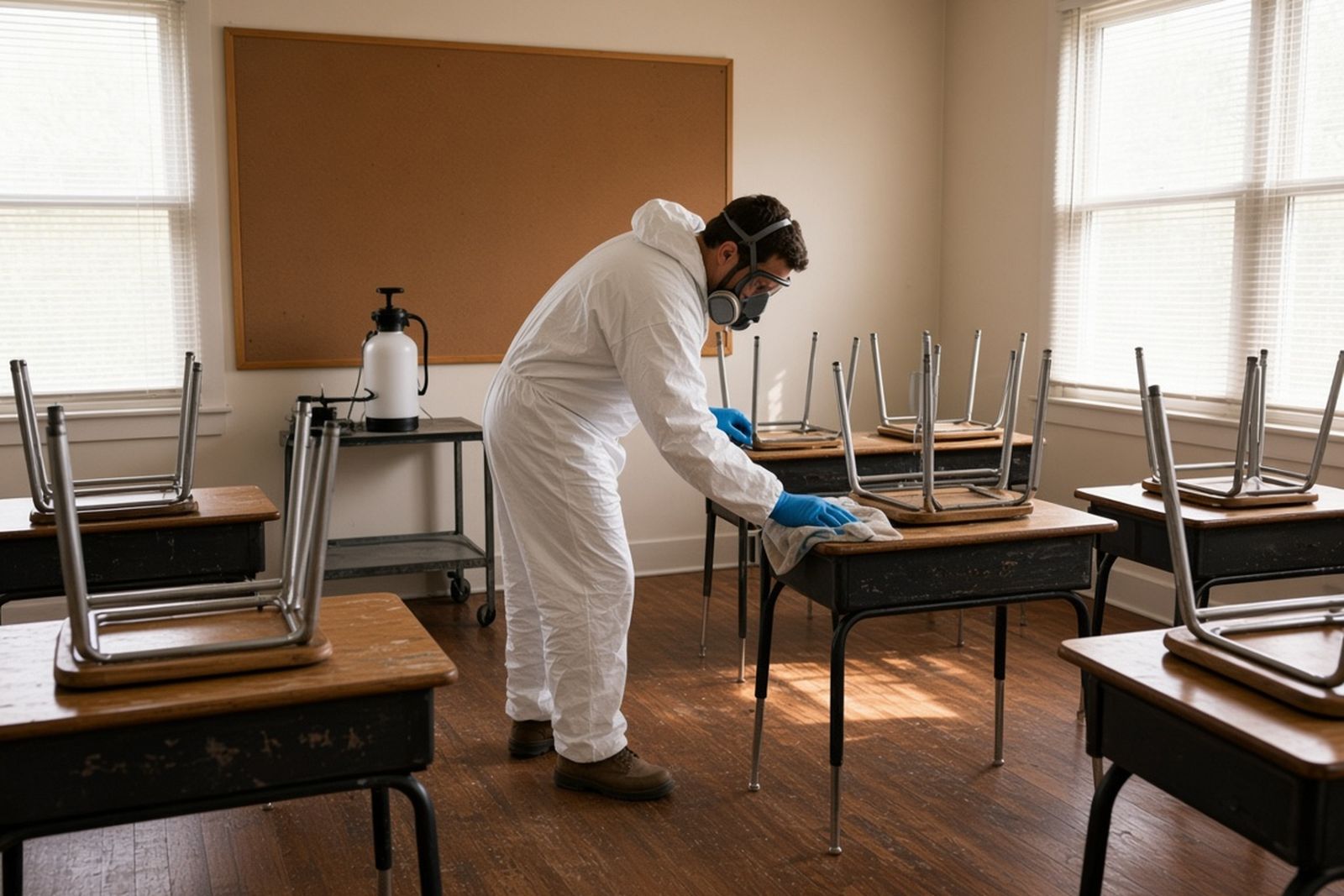
Test what you know about product labels, contact times, keeping germs contained, and records. Do it before you approve a disinfection plan or brief your leaders.
Articles and resources
Articles on norovirus in schools, MRSA in gyms, EPA List N, contact times, and notes to parents. They are written for the people in charge of a building.
City guides
Find disinfection providers who serve your area for facility outbreaks. Learn what to confirm about products, training, and records before you hire.