Short answer
Outbreak disinfection pricing for schools, clinics, gyms, and offices is driven by the organism, the square footage and surface mix, how long the product must stay wet, whether the building can close, and how much pre-cleaning and documentation you need. Spore-forming organisms and dense, high-touch spaces take the most labor. Compare written scopes line by line rather than headline per-square-foot rates.
Per-square-foot rates are only a starting point
Facility managers are used to pricing janitorial work by the square foot, and disinfection vendors often quote the same way. It is a useful shorthand for a first conversation. ISSA's 2025 commercial cleaning pricing guide lists electrostatic disinfection at $0.10 to $0.30 per square foot and medical facility cleaning at $0.14 to $0.29 per square foot.
Those ranges describe general market pricing, not an outbreak response in your building. A gym locker room after a skin infection cluster, a preschool classroom after a norovirus outbreak, and an open-plan office after a flu wave may cover similar floor areas but differ enormously in the number of touch points, the organism involved, and the time each surface needs.
Use a per-square-foot figure to sanity-check a quote. Use the written scope to decide whether the work described will actually address your situation.
The organism and the surfaces: the biggest cost drivers
The organism is often the single biggest cost driver. Enveloped viruses such as influenza are relatively easy to inactivate with many registered products. Norovirus is tougher, and products with a norovirus claim may require longer contact times. C. difficile spores are harder still, generally calling for sporicidal products that can be more aggressive on surfaces and slower to work.
Longer contact times translate into more labor. A technician who must keep a surface wet for several minutes, and reapply on vertical or porous areas where the product dries early, covers less ground per hour than one using a product with a short contact time.
If your health department, occupational health lead, or physician has identified the organism, give that information to vendors up front. A vendor who quotes without asking what you are dealing with is guessing.
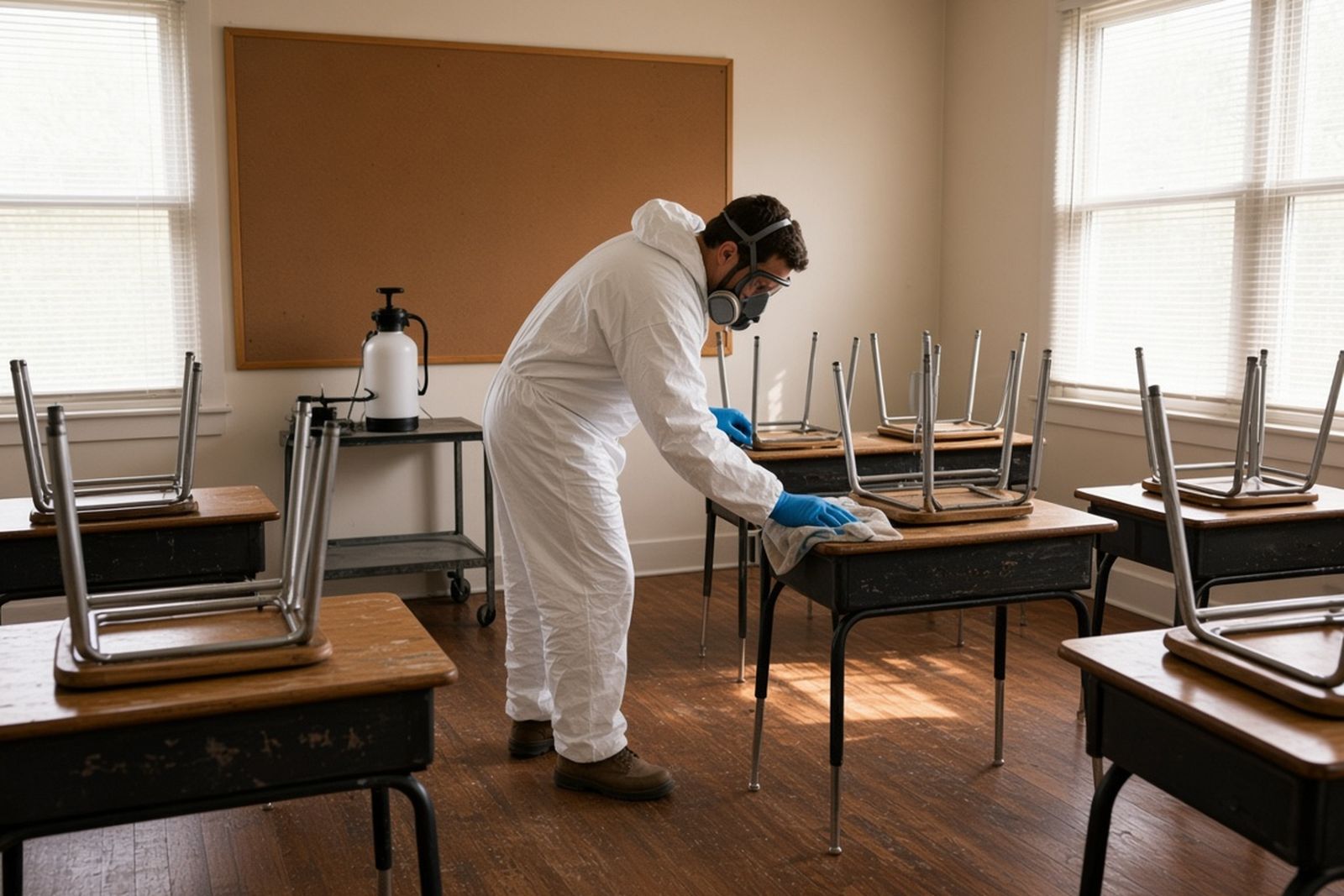
Open floor area is quick. The labor lives in the details: keyboards, door hardware, railings, faucet handles, fitness equipment grips, toys, shared tablets, reception counters, and restroom fixtures. A small room crowded with touch points can take longer than a large empty hall.
Material compatibility also matters. Some disinfectants can cloud acrylic, degrade vinyl upholstery, or damage electronics. Laboratory testing of plastics has linked more alkaline cleaning and disinfecting products to cracking and crazing, which is one reason vendors may choose different products for different parts of the same building.
Ask vendors how they plan to handle electronics, soft seating, and specialty equipment. Their answer affects both the price and whether you end up replacing damaged items later.
- Restrooms, locker rooms, and showers
- Classrooms with toys, shared supplies, and small furniture
- Exam rooms, treatment chairs, and waiting areas
- Fitness equipment, mats, and weight racks
- Break rooms, kitchens, and vending areas
- Shared electronics, badge readers, and elevator panels
Does fogging or electrostatic spraying save money?
Electrostatic sprayers and foggers can cover large areas quickly and reach awkward angles, which can lower labor costs for broad treatment. They are not a substitute for cleaning, and they do not remove soil or biofilm that shields microbes.
Different technologies perform differently, but the lesson is the same for all of them: coverage without direct contact and prior cleaning can leave gaps, and a cheaper spray-only quote may simply be pricing in those gaps.
A sensible quote often combines methods: manual cleaning and wiping of high-touch surfaces, followed by spraying for broad coverage where the label allows it. If a vendor proposes spraying alone, ask how they will address visibly soiled surfaces first.
Soft furnishings, mats, and things you cannot wipe
Hard surfaces are the easiest part of any outbreak response to price. The harder questions involve items that absorb liquid or cannot tolerate chemicals: upholstered waiting room chairs, fabric cubicle panels, nap mats, carpeted reading corners, yoga mats, stuffed animals, curtains, and privacy screens.
Each of those items forces a decision. It can be laundered at a temperature the manufacturer allows, treated with a product whose label specifically covers soft surfaces, set aside for a period, or discarded and replaced. Vendors price those choices very differently, and some quotes quietly leave soft goods out entirely.
Before you compare prices, make a short inventory of the soft items in the affected rooms and ask every vendor what they plan to do with each category. You may decide that your own staff can bag toys and run them through a commercial washer while the crew handles hard surfaces. You may also find that replacing a few inexpensive nap mats costs less than paying for specialized treatment.
The same goes for ventilation. Some vendors will propose HVAC cleaning as part of an outbreak response. Ask what problem that step is meant to solve for your specific organism, and whether your facilities team or mechanical contractor agrees it is needed.
Schedule and documentation
Buildings that can close for a day or a weekend are cheaper to treat than buildings that must stay open. When a school, clinic, or residential program cannot close, crews may need to work overnight, in phases, or around occupied rooms, all of which adds labor and supervision.
Re-entry time also matters. Some products require ventilation or a waiting period before people return. If that window collides with your opening hours, the vendor may need a different product or a different sequence, which changes the price.
Share your hard constraints early: the time the first staff arrive, rooms that cannot close, and events already on the calendar. A vendor can price realistically only if they know the real schedule.
It also helps to decide in advance who from your organization will be on site during the work. A facilities lead who can unlock rooms, answer questions about equipment, and sign off on completion keeps the crew moving and avoids paying for technicians to wait in a hallway.
Outbreak disinfection often needs to be proven, not just performed. Parents, board members, licensing agencies, clients, and health departments may ask what was done, with what product, and when. Producing a clear record takes time, and reputable vendors build it into their price.
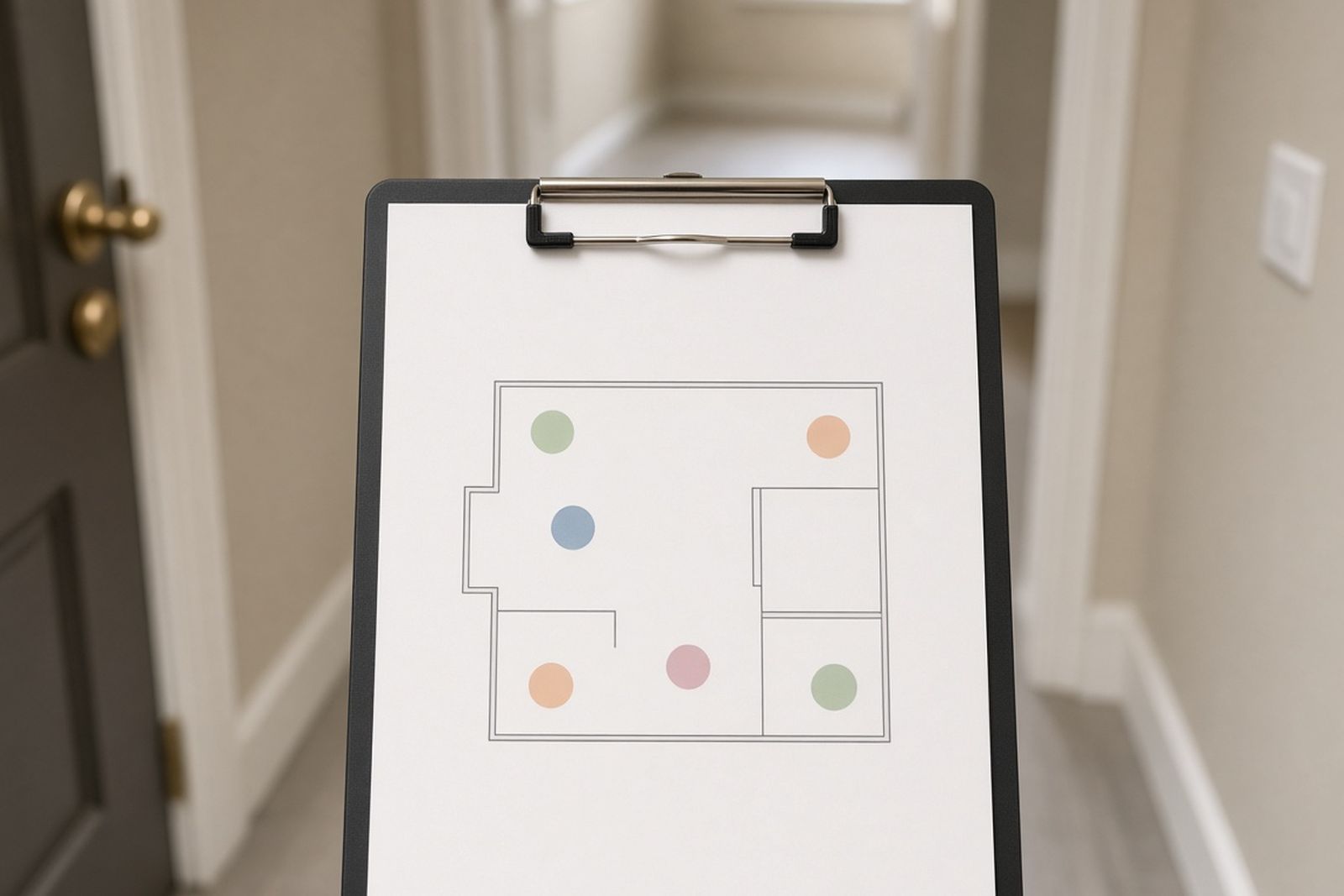
Useful documentation includes a room-by-room checklist, the product name and EPA registration number, the contact time used, the names of technicians, and times of entry and completion. Some vendors add photographs or surface testing.
The documentation you need depends on your audience. A small office may need only a completion certificate. A clinic or group home may want far more detail. Ask for a sample report before you sign so you know what you are paying for.
Two quotes for the same preschool
Here is an illustrative comparison. A preschool director learns that several children and two staff members have had vomiting and diarrhea within a few days. The local health department suggests norovirus and recommends thorough disinfection. The school has four classrooms, two restrooms, a kitchen, and a small office.
Vendor A quotes a low per-square-foot price for electrostatic spraying on a Saturday, with no mention of pre-cleaning or toys. Vendor B quotes higher. Their scope includes manual cleaning of toys, cribs, changing tables, and restroom fixtures, a product with a norovirus claim and its labeled contact time, spraying of broader areas, and a room-by-room report the director can share with parents and the health department.
The director asks Vendor A how toys and soiled surfaces will be handled, and the answer is vague. She chooses Vendor B because the scope matches what the health department asked for. The lower quote was lower mostly because it left out work she needed.
Controlling cost without weakening the response
Start by letting your own staff do what they can safely do well. Removing clutter, bagging soft toys, clearing desks, and moving items off floors before the crew arrives can meaningfully cut labor time. Ask the vendor which preparation steps help most.
Next, target the response. Not every room may need the same level of treatment. The health department or your infection control lead can help you identify the areas most likely to be involved, so you are not paying for sporicidal treatment of a storage room nobody has entered.
Finally, pay attention to how your own team uses disinfectants day to day. A common habit is spraying a surface and wiping it dry right away, before the product has had time to work. Training staff on contact time can reduce how often you need outside help at all. Your county health department can tell you which outbreak reporting or cleaning requirements apply to your type of facility, which also tells you what any vendor's scope must cover.