Short answer
OSHA has no single rule for outbreak disinfection. But employers must still protect the staff who do the work. The chemical safety rule covers the disinfectants. The protective gear rule requires a written review of dangers. Breathing protection rules apply when respirators are needed. Rules on bloodborne germs apply where blood is involved. The General Duty Clause covers known dangers. Schools and public agencies may fall under a state plan.
Why OSHA belongs in an outbreak response
When a norovirus cluster hits a school or flu sweeps through an assisted living home, most attention goes to the people who are sick. That is fitting. But the response itself creates a second group of people at risk. These are the custodians, cleaning staff and maintenance workers who spend long shifts wiping, spraying and handling soiled items.
Those workers face two kinds of exposure at once. They are in close contact with surfaces covered in germs, and sometimes with vomit or diarrhea. They are also using strong disinfectants more often and in larger amounts than usual.
OSHA's role is to make sure the employer has thought about both. There is no special outbreak rule. So the duties come from general rules that apply every day. They just become more pressing when the workload jumps.
Recordable illnesses and injuries
Record-keeping is part of this as well. A staff member may get sick from an exposure at work. Or they may get a skin or breathing problem from using disinfectant. Either case may need to go on your injury and illness log. Ask your safety or human resources lead to review those cases. Don't assume illnesses are always personal matters.
Hazard communication for disinfectants
The Hazard Communication standard, 29 CFR 1910.1200, is often the OSHA rule that matters most for disinfecting work. Most hospital-grade and spore-killing disinfectants are hazardous chemicals. Some can irritate or harm the skin, eyes or airways.
Under the rule, you need a written chemical safety program and a safety data sheet for every product on site. You need labels on every container, including spray bottles filled from a larger jug. And you need training that explains the dangers and how to stay safe, in words your staff understand.
Outbreaks are when this falls apart. Rush orders bring in new products. Temporary staff join the team. Bottles get refilled without labels. Make a habit of adding any new product to your list and your training before it reaches a cart.
Workers notice the chemical side of this work. A 2023 study by Wilson and colleagues talked with cleaning staff. Six of 11 people interviewed had problems or worries from breathing cleaning chemicals, and eight of 11 did not know cleaning work carries an asthma risk. That second finding points straight at a training gap employers can close.
The PPE hazard assessment
The protective gear rule, 29 CFR 1910.132, asks employers to check the workplace for dangers. They must choose the right protective gear and sign off on the review in writing. For disinfecting work, the review should look at both the germ and the chemical.
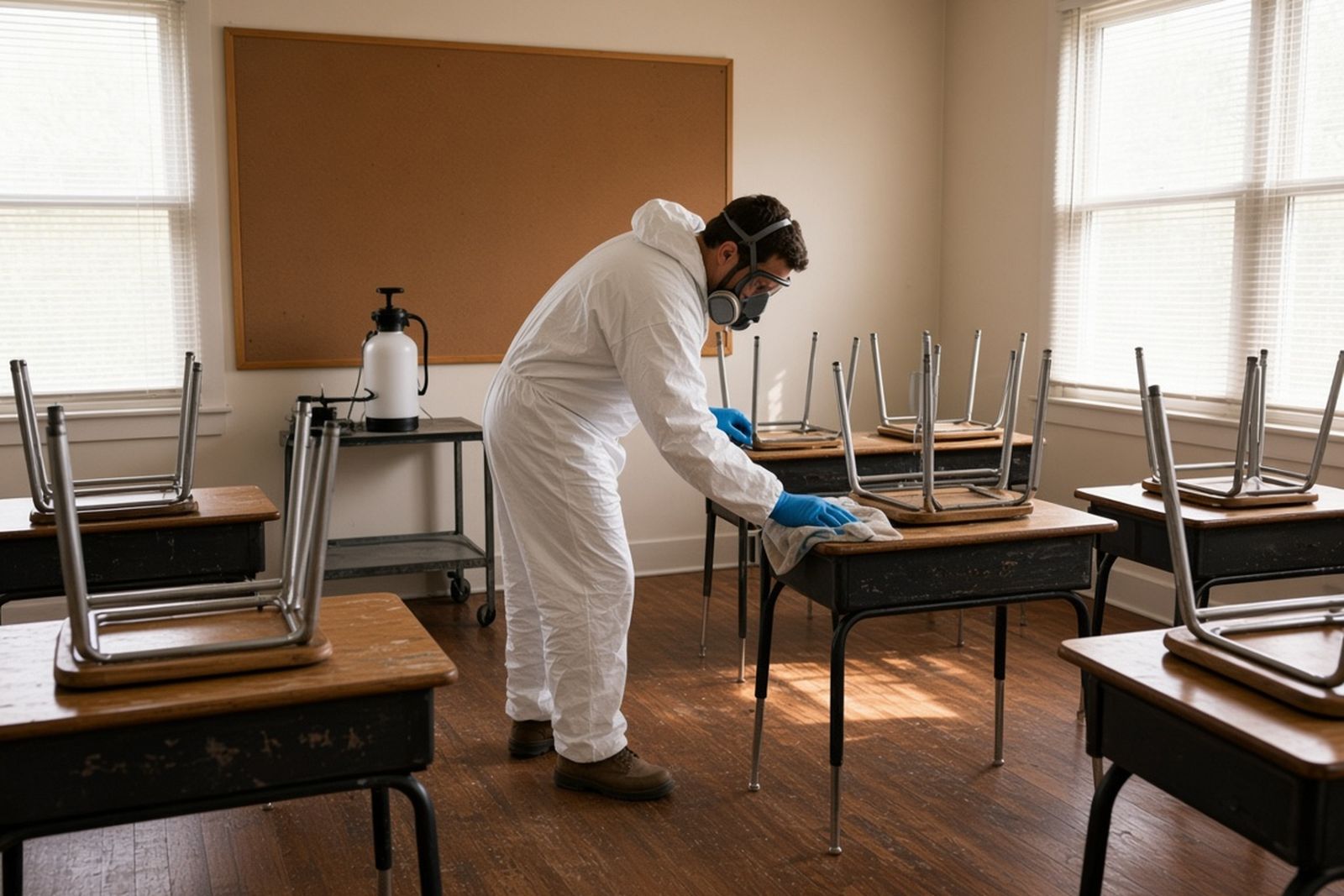
A good review looks at each task on its own instead of lumping everything together. Wiping desks with a ready-to-use product is a different exposure from cleaning up vomit in a hallway. It is also different from spraying disinfectant with an electrostatic sprayer in a closed room.
Once the review is done, make sure the gear is really on hand on every shift, in the sizes your staff need. Make sure people are trained to put it on and take it off without getting germs on themselves.
- Gloves that match each disinfectant's safety data sheet
- Eye or face protection for splashing, pouring and overhead work
- Gowns or aprons that resist fluids for body fluid cleanup
- Shoe covers or work-only shoes where floors are very dirty
- Breathing protection when the review or product label calls for it
When does respiratory protection come into play?
Respirators may be needed for two different reasons in disinfecting work. One is chemical. Some products can give off fumes or mists, above all when sprayed, fogged or used in small rooms. Their labels or safety data sheets may call for breathing protection. The other reason is germs. In health care settings, workers may need respirators when cleaning rooms of patients with diseases that spread through the air.
Whenever an employer requires respirators, the Respiratory Protection standard, 29 CFR 1910.134, expects a written program. It also expects a medical check, fit testing and training. That can feel like a lot during a busy week. That is why it helps to set up the program before an outbreak arrives.
If you plan to fog or spray, read the product label carefully. Label directions often say how long to wait before going back in, how much fresh air is needed and what protective gear is required. Those directions are legally binding under federal pesticide law.
Remember that a respirator is the last line of defense, not the first. Other choices can cut how often respirators are needed at all. You can pick a ready-to-use product instead of mixing strong concentrates. You can switch from spraying to wiping in small rooms. You can bring in more fresh air. Those choices are usually cheaper and more comfortable for staff over a long outbreak.
Does the Bloodborne Pathogens standard apply to outbreak cleanup?
It depends on what is being cleaned. The Bloodborne Pathogens standard, 29 CFR 1910.1030, applies to blood and some other body fluids that can carry disease. Droplets from coughs and sneezes, vomit and stool are usually outside its reach unless blood is visible.
Clinics, dental offices, long-term care homes and schools with health rooms often have staff who are already covered because they handle blood on the job. For those workers, the rule expects a written exposure plan that is reviewed often. It also expects an offer of the hepatitis B shot, training at the start and from time to time, and a private process for checking workers after an exposure.
Some general custodial staff might clean up blood now and then. Many employers include them in the exposure plan instead of trying to predict every case. It is simpler and gives more protection.
The General Duty Clause
Section 5(a)(1) of the Occupational Safety and Health Act, often called the General Duty Clause, makes employers keep workplaces free of known dangers likely to cause death or serious harm. OSHA has used it to deal with dangers that specific rules do not fully cover.
For infectious disease, that can mean following widely accepted public health advice when your workers are exposed. One example is CDC's advice on cleaning after a norovirus event. The clause does not require perfection. But it does expect a careful response to known risks.
The best defense is a written plan made in calm times. Say you can show how you reviewed the danger, chose products, trained staff and handed out gear. You are then in a far stronger position than a site that made it up as it went.
A pre-shift routine for custodians during a norovirus outbreak
Say the county health department confirms a likely norovirus outbreak. It suggests extra cleaning of restrooms, cafeteria surfaces and classroom high-touch spots. The custodial team should hear from its supervisor before the next shift starts. Confirm that the chosen disinfectant is on EPA's norovirus list. Review its safety data sheet with the team. Point out how long the label says it must stay wet.
Hand out gloves, eye protection and throwaway gowns for body fluid cleanup. Show how to take them off without touching the outside. Invite questions. A custodian may report that the product causes coughing in small restrooms. If so, prop doors open and run exhaust fans during cleaning. Ask the safety office to review whether breathing protection is needed.
Write down the training, the gear handed out and the products used. Talk it over when the outbreak ends so the written plan gets better each time.
Just as important is what supervisors avoid. Do not push staff to skip wet times to finish faster. Do not borrow unlabeled bottles from another building. Never expect custodians to work while sick. Those choices protect workers. And, not by chance, they make the disinfecting itself work better.
Which regulator covers schools, public clinics, and government buildings?
Federal OSHA usually does not cover state and local government workers. Public school custodians, county clinic staff and city building workers are usually protected only in certain states. Their state must run an OSHA-approved state plan that covers public workers.
Private schools, private clinics, gyms, offices and most care homes are covered by federal OSHA or the state plan where they operate. Health care sites may also answer to accrediting groups and state license agencies with their own rules on infection control.
Your state labor department and your lawyer can confirm which agencies oversee your staff. Your local health department can tell you what it expects during an outbreak.
Documentation that holds up
Good records make it easy to show that you took your duties seriously. They also help the next person who has to lead an outbreak response, who may not be you.
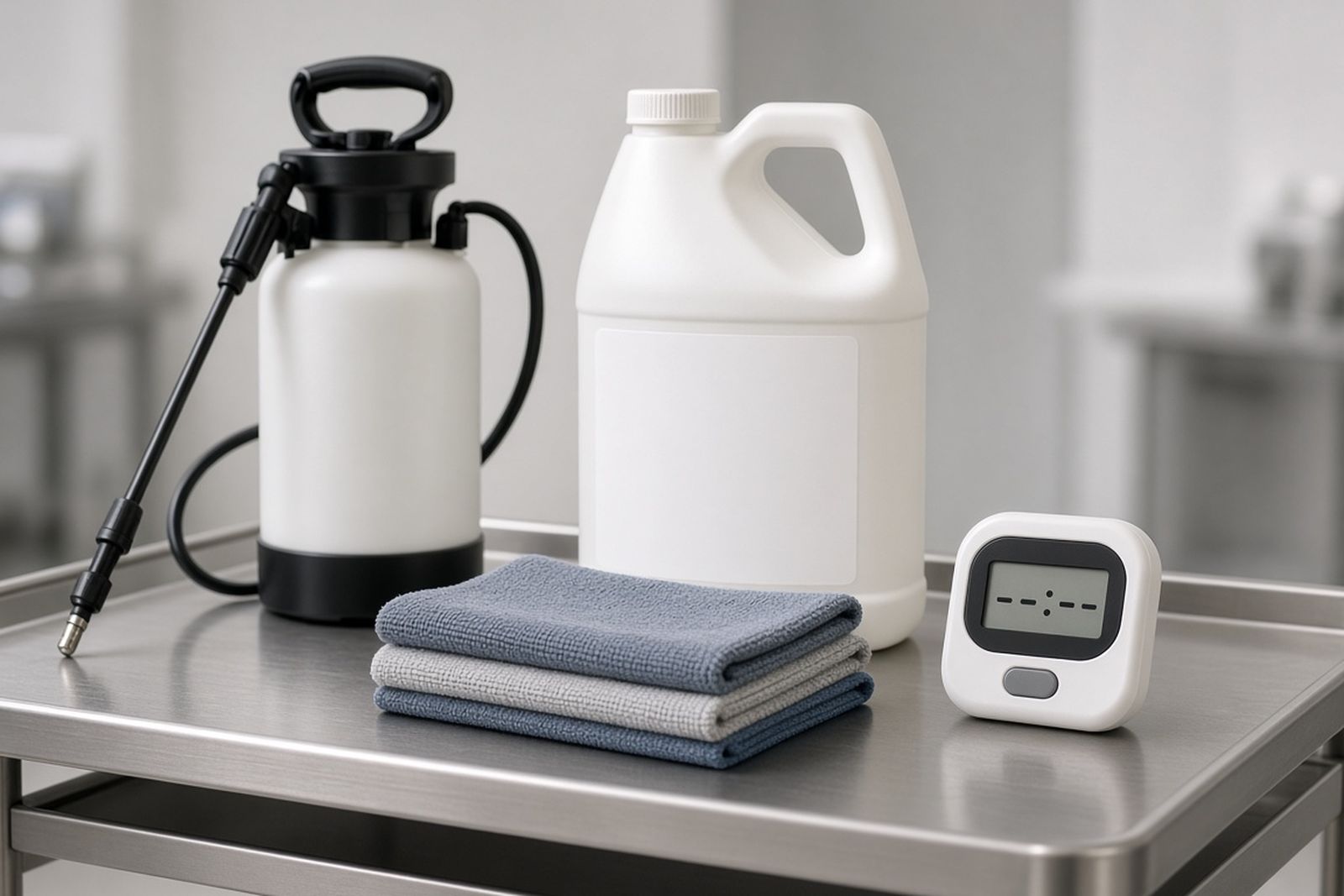
Records matter beyond following the rules, too. Spraying and wiping dry right away is one of the most common disinfecting mistakes. Writing down wet times in your cleaning logs builds the right habit with your own staff.
- Written chemical safety program and current chemical list
- Safety data sheets for every disinfectant in use
- Signed review of protective gear needs for disinfecting tasks
- Training records with dates, topics and who attended
- Breathing protection program papers if respirators are required
- Cleaning logs showing areas, products and wet times during outbreaks