Short answer
Start your protective gear plan with three questions. Which germ is involved, and how does it spread? Which disinfectant will be used, and what do its label and safety data sheet require? Will it be wiped, sprayed or applied with an electrostatic sprayer? Those answers decide the glove material, the type of gown or coverall, the eye protection and whether respirators are needed. Train staff on how to take gear off, because soiled gear removed carelessly spreads germs further.
How outbreak PPE differs from routine custodial work
Everyday cleaning in an office or school uses familiar products and brings modest exposure. An outbreak changes both. Staff may be cleaning up vomit in a classroom. They may be disinfecting a room where a resident with C. difficile was cared for. Or they may be applying a stronger product across a whole building on a tight schedule.
The protective gear has to cover two dangers at once: the germ and the chemical. A glove that is fine for handling paper towels may not stand up to a strong spore-killing product. And a gown that keeps droplets off clothing may do little good if the real risk is a splash to the eyes.
OSHA's protective gear rule, 29 CFR 1910.132, requires employers to review these dangers, choose gear and sign off on the review in writing. Doing that before an outbreak begins makes the response faster and safer when one comes.
It also has to cover who is doing the work. Outbreak responses often pull in staff who do not normally clean. Examples are teachers, aides or front-desk workers asked to help wipe down rooms. If they will handle disinfectants or body fluids, they need the same training and gear as your custodial team.
Start with the organism
Different germs spread in different ways, and that affects what staff need to protect. For most building disinfection, the worry is touching soiled surfaces and body fluids. Some germs add a risk of splashes or tiny airborne droplets.
Norovirus needs special mention because it takes very little of it to make someone sick. Cleaning up vomit or diarrhea from a norovirus case can send droplets into the air. So eye and face protection and careful technique matter, even when the area looks small.
Your local health department or infection control nurse may give advice for a specific germ during an outbreak. Build that into the review instead of relying on a one-size-fits-all kit.
- Norovirus: touch and splashes from vomit or stool; eye protection and fluid-resistant gowns for body fluid cleanup
- C. difficile: spores on surfaces; gloves and gowns plus a spore-killing product, which often brings stronger chemical dangers
- MRSA and other bacteria spread by skin: touching shared equipment, mats, benches and linens
- Flu and other breathing illnesses: surfaces and nearby droplets; respirators may apply in health care settings, based on current advice
- Materials with blood: full precautions for bloodborne germs
Then the disinfectant
Every EPA-registered disinfectant comes with a label and a safety data sheet. Together, they tell you what protective gear the maker expects. They say how long the product must stay wet and how much fresh air is needed. Label directions for pesticide products, which include disinfectants, are enforceable under federal law. So the label is where your review should start.
Bleach solutions, hydrogen peroxide blends, peracetic acid products and quaternary ammonium products (quats) each carry different dangers. Some mainly irritate the skin and eyes. Others can cause worse burns or breathing problems at the strength they are used. Mixing strong concentrates adds a splash risk that ready-to-use products avoid.
Match gloves to the product using the safety data sheet and the glove maker's data. Standard nitrile exam gloves work for many ready-to-use products, but not all. This matters most during long cleaning shifts, when gloves stay in contact with wet surfaces for a long time.
Pay attention to skin and eye complaints during long outbreak cleaning. Redness, itching or irritation after a week of heavy disinfectant use may be a sign. A glove material may be breaking down. Staff may be touching their faces with soiled gloves. Or a different product may be a better fit.
Application method and respirators
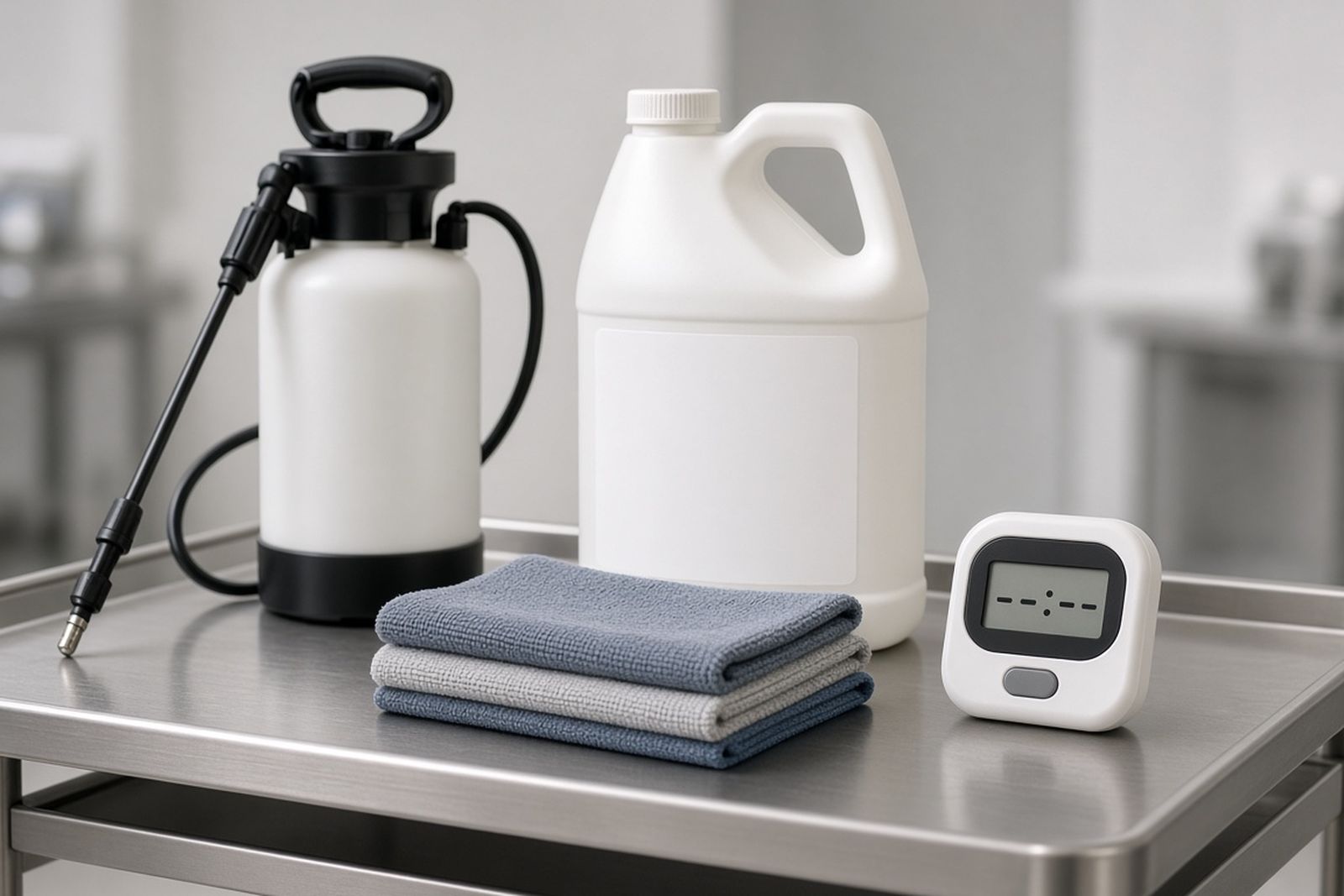
How a product is applied often changes the respirator you need, sometimes by a lot. Wiping keeps most of the product on the surface. Spraying, fogging and electrostatic spraying put droplets or mist into the air. These can reach the eyes and lungs of the person applying them and anyone else in the space.
Ways of applying products changed widely during the pandemic. In a 2023 study of cleaning staff, Wilson and colleagues said 53% reported changes in how they applied products, such as fogging, spraying or wiping. Many sites kept those newer methods afterward, sometimes without updating their reviews of the dangers.
If you use sprayers or electrostatic equipment, check the product label. Look for approved ways to apply it, the breathing and eye protection required and how long to wait before people go back in. Some products labeled for wiping are not approved for spraying at all. Keep people out of the area until the label says it is safe to go back in.
Respirators come into play for two reasons. Some disinfectants and ways of applying them create fumes or mists that call for breathing protection. In health care settings, cleaning rooms of patients with infections that spread through the air may also call for respirators. That depends on current public health advice and your infection control policy.
If an employer requires respirators, the Respiratory Protection standard, 29 CFR 1910.134, applies. That includes a written program, a medical check, fit testing, training and steps for care and storage. Surgical masks are not respirators and do not meet those rules.
Where you can, cut the need for respirators with other steps. Choose a less harmful product that still has the label claims you need. Wipe instead of spray in small rooms. Bring in more fresh air during and after applying the product.
A task table for common jobs
Once you have thought about the germ, product and method, build a simple task table. It helps staff grab the right gear quickly. It also gives supervisors something to check against.
The examples below are starting points only. Your review, product labels and local health advice may call for more or different gear.
- Wiping high-touch surfaces with a ready-to-use product: gloves that match the product
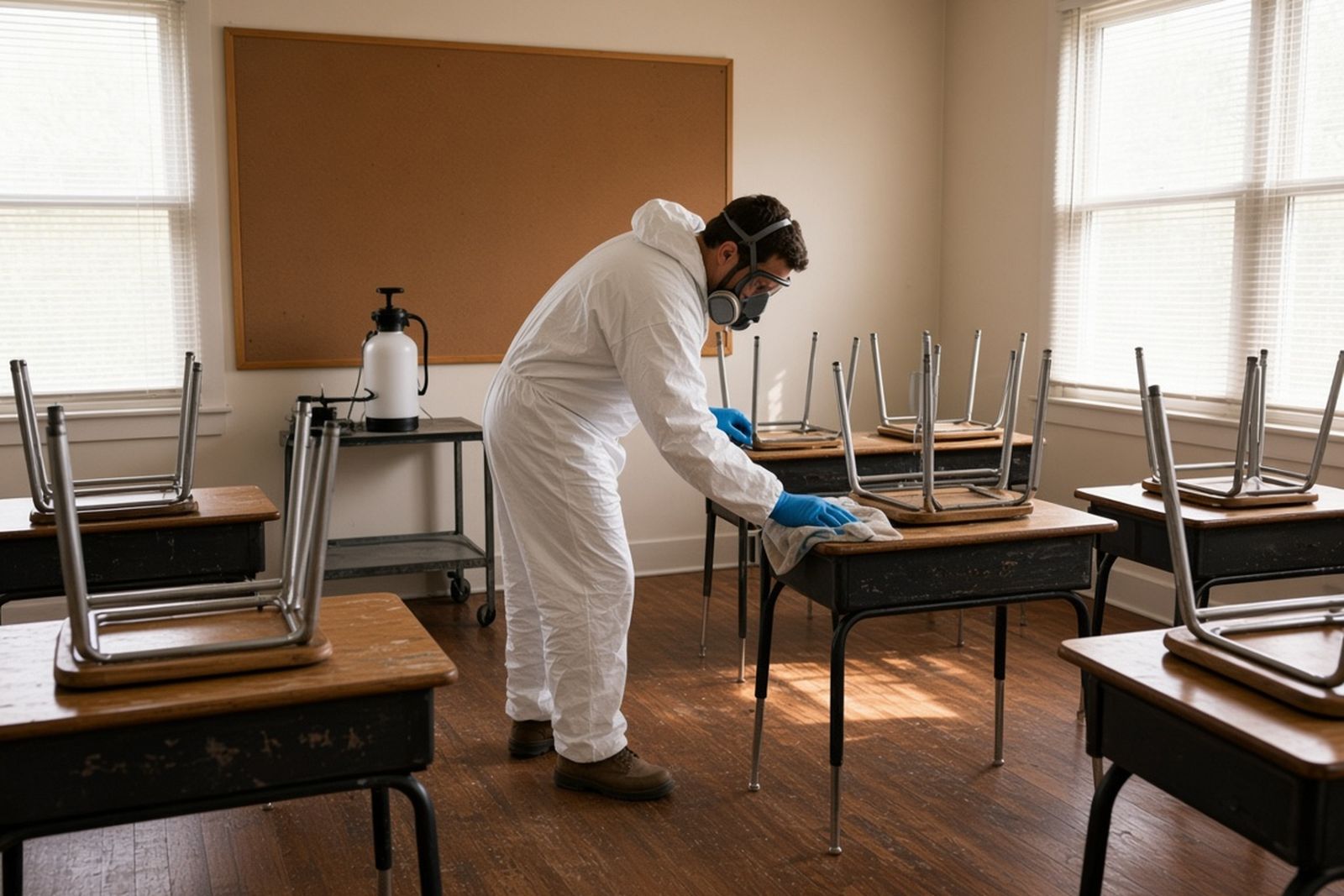
- Cleaning up vomit or diarrhea: gloves, a fluid-resistant gown, eye protection or a face shield, and shoe covers if the floor is very dirty
- Disinfecting a room after a C. difficile case with a spore-killing product: gloves, gown and eye protection, plus breathing protection if the label requires it
- Electrostatic or spray application in closed spaces: gloves, eye protection and breathing protection as the label says
- Mixing or diluting concentrates: chemical-resistant gloves, goggles and an apron in an area with fresh air and an eyewash nearby
Worked example: a gym after member skin infections
The example below is made up. A fitness center learns that several members have skin infections that their doctors traced to MRSA. The owner decides to close for an evening and bring in a disinfecting company. The owner also reviews what the gym's own staff should do from now on.
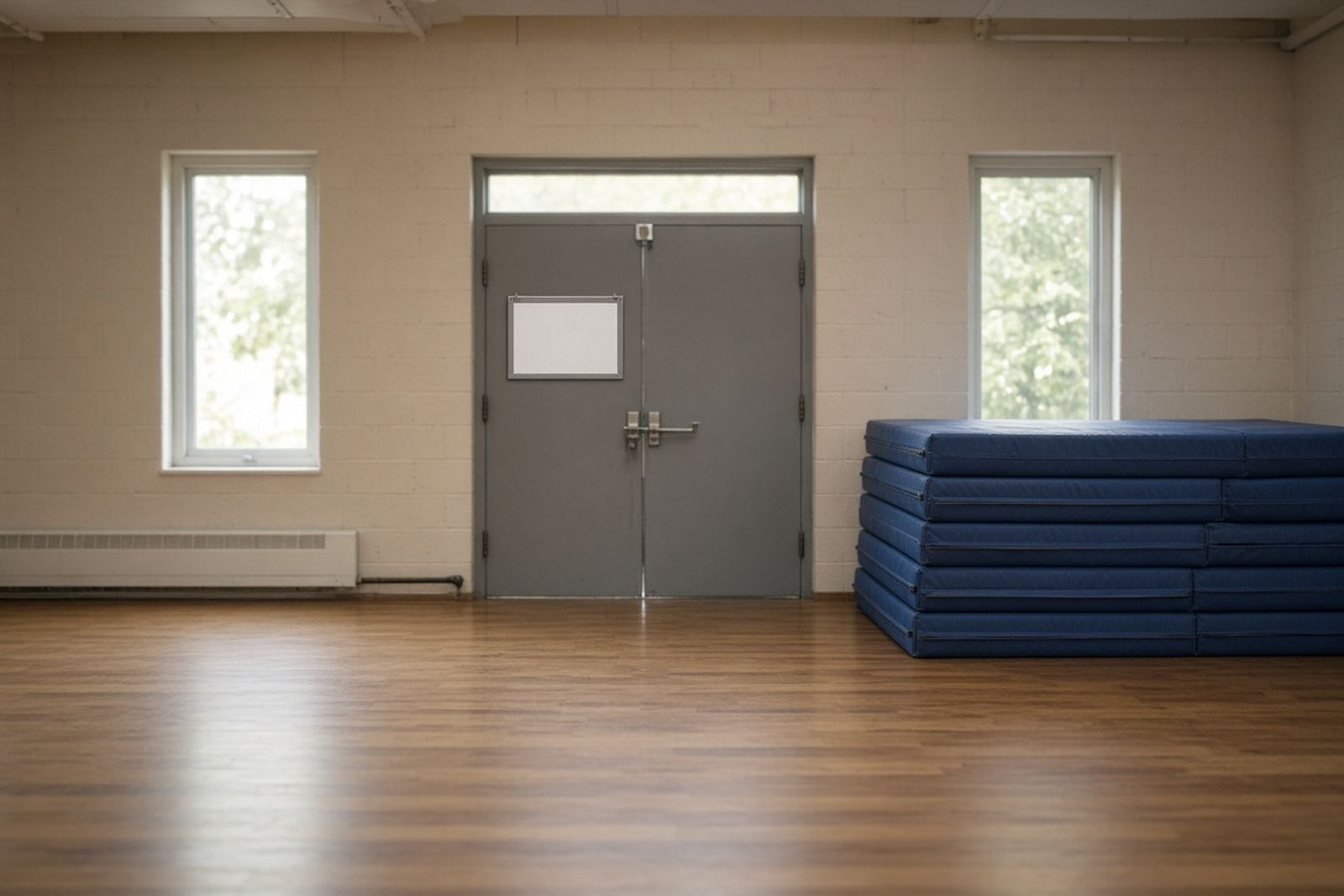
The company's lead first asks about the surfaces. These include vinyl benches, rubber floor mats, wrestling mats, locker room benches and shared equipment such as kettlebells and resistance bands. She picks a registered product with an MRSA claim that is safe for vinyl and rubber. She confirms that its label allows electrostatic spraying.
Her crew wears gloves that match the chemical, eye protection and respirators, as the label directs for electrostatic use. They need these because they will be spraying in closed locker rooms. Before spraying, they wipe surfaces that look dirty, because spraying over dirt makes the product work less well. The gym stays closed until the label's waiting time before going back in has passed.
For daily cleaning afterward, the owner's staff use a ready-to-use wipe version of a matching product and wear nitrile gloves. The owner writes down both plans and posts the daily steps in the staff room.
Donning, doffing, and keeping the plan ready
Protective gear only protects if it is used correctly from start to finish. Putting it on is usually simple. Put on the gown first, then the respirator or mask if needed, then eye protection. Last, pull on gloves over the gown cuffs.
Taking gear off is where germs spread. Take off gloves and gown in a way that keeps the soiled outside surfaces away from your body. Then remove eye protection by the strap, then the respirator or mask. Clean your hands right away. Set up a spot for taking gear off at the exit of the affected area, with a lined trash can.
Practice taking gear off during training, not only during an outbreak. Staff who have done it several times while calm are much less likely to touch their faces or clothes when they are tired.
Review the plan whenever you change products or start a new way of applying them. Also review it when you serve a new group of people, such as adding a child care program to an office building. Look at it again after each major outbreak to capture what worked and what did not.
Keep a stock of outbreak gear apart from daily supplies. Include gowns, eye protection and extra gloves in every size. That way a sudden rush does not leave staff without gear.
Health care sites, schools and child care programs may have extra expectations from their license agencies. Ask them directly. Lean on your local health department for advice during an active outbreak.
A short review afterward with the people who did the cleaning is the best source of ideas for doing better. Ask what gear ran short and what felt so uncomfortable that staff were tempted to skip it. Ask which instructions were unclear. Their answers belong in the next version of the plan.