Short answer
A professional outbreak disinfection starts with a scoping call about the organism, the affected areas, and your schedule. On the day, the crew preps rooms, cleans soiled surfaces, applies a registered disinfectant for its full labeled contact time, and may add spraying for broad coverage. Expect re-entry guidance and a written report listing rooms, products, registration numbers, contact times, and technicians.
The first call
A capable vendor spends the first conversation listening. Expect questions about what illness you are dealing with, whether a health department or physician has confirmed it, how many people are affected, which rooms or zones they used, and whether the building can close.
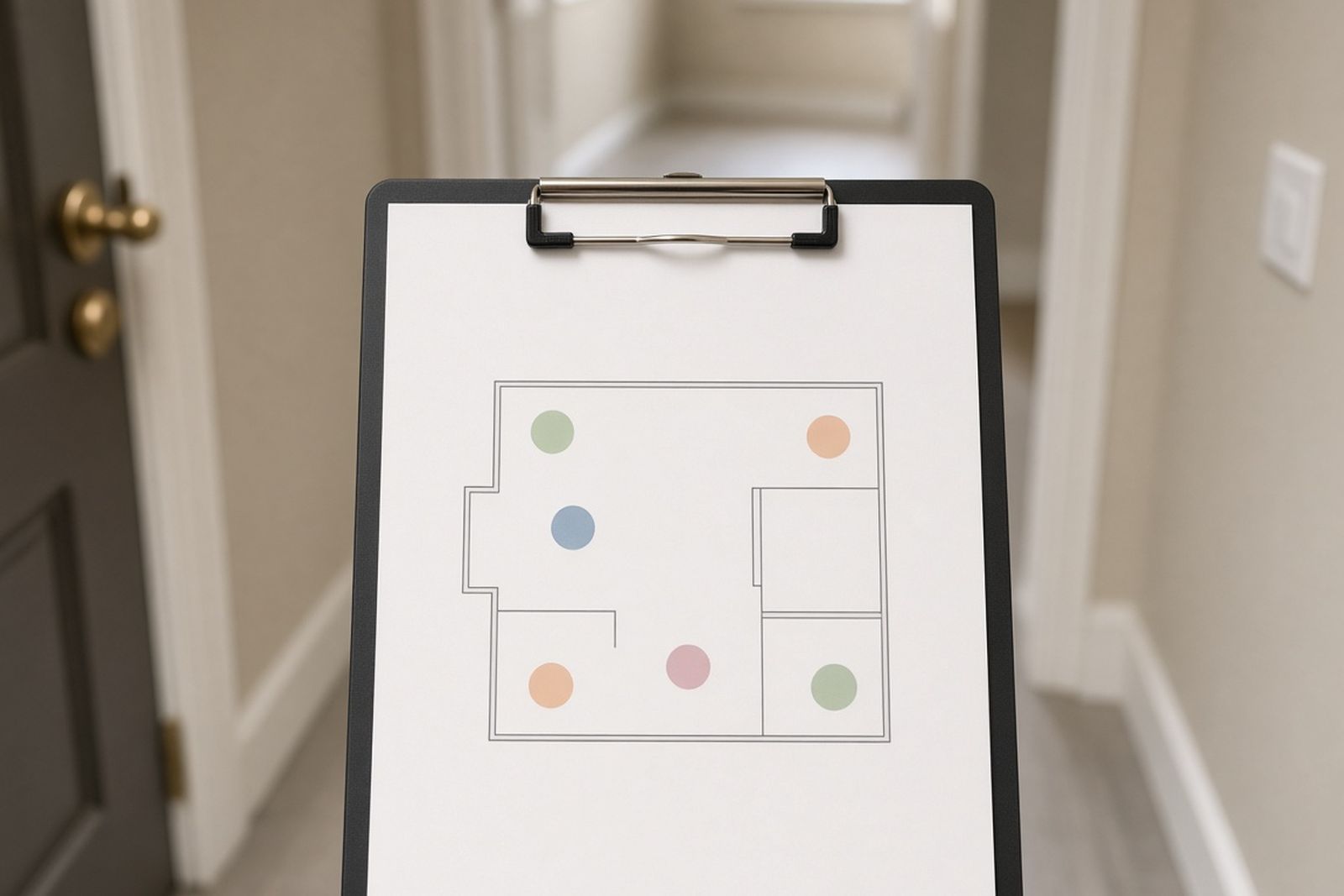
They will also want to know about the space itself: flooring types, the amount of soft furniture, electronics, specialty equipment such as treatment chairs or fitness machines, and any materials that are known to be sensitive to chemicals. If you have a floor plan, send it. If you have an infection control lead, loop them in.
By the end of the call, you should have a rough plan and a date for either a walkthrough or a written scope. If the vendor jumps straight to a price without asking about the organism or the rooms, treat that as a sign the quote is generic.
It helps to have a few facts written down before you call: the date the first case was reported, the rooms or programs those people used, whether any food service is involved, and the name of your contact at the health department if one has been assigned. Vendors can plan more precisely when they are not relying on memory.
What a good written scope looks like
The scope is your agreement about what will be done. It protects you, and it gives you something to share with leadership, parents, clients, or regulators.
Read it carefully before the crew arrives. If something important is missing, such as how toys or shared electronics will be handled, ask for it to be added.
- The organism of concern and the product selected, with its EPA registration number
- The labeled contact time for that organism and how it will be achieved
- Every room or zone included, and anything specifically excluded
- How soft goods, electronics, and specialty equipment will be treated
- Whether spraying or fogging will be used, and where
- Protective equipment the crew will wear
- Re-entry timing and any ventilation requirements
- What the final report will contain
Preparing the building
Preparation makes the visit faster and more effective. Ask the vendor for a checklist, but most lists look similar. Clear desks and counters of papers and personal items. Bag soft toys and small objects that will be laundered or treated separately. Unplug and cover electronics that should not be sprayed. Remove food from break rooms and classrooms.
Tell staff and families what is happening and when. In schools and care settings, a short, factual note that the building is being disinfected after illness, without identifying anyone, helps prevent rumors and reassures people that action is being taken.
Arrange for someone with keys and building knowledge to meet the crew. That person should know where the janitor's closet, water sources, electrical panels, and any locked rooms are.
If your building has a routine janitorial contractor, tell them about the outbreak visit too. They may need to skip a night, avoid using a conflicting product on freshly treated surfaces, or adjust their routine afterward.
What happens while the crew is working?
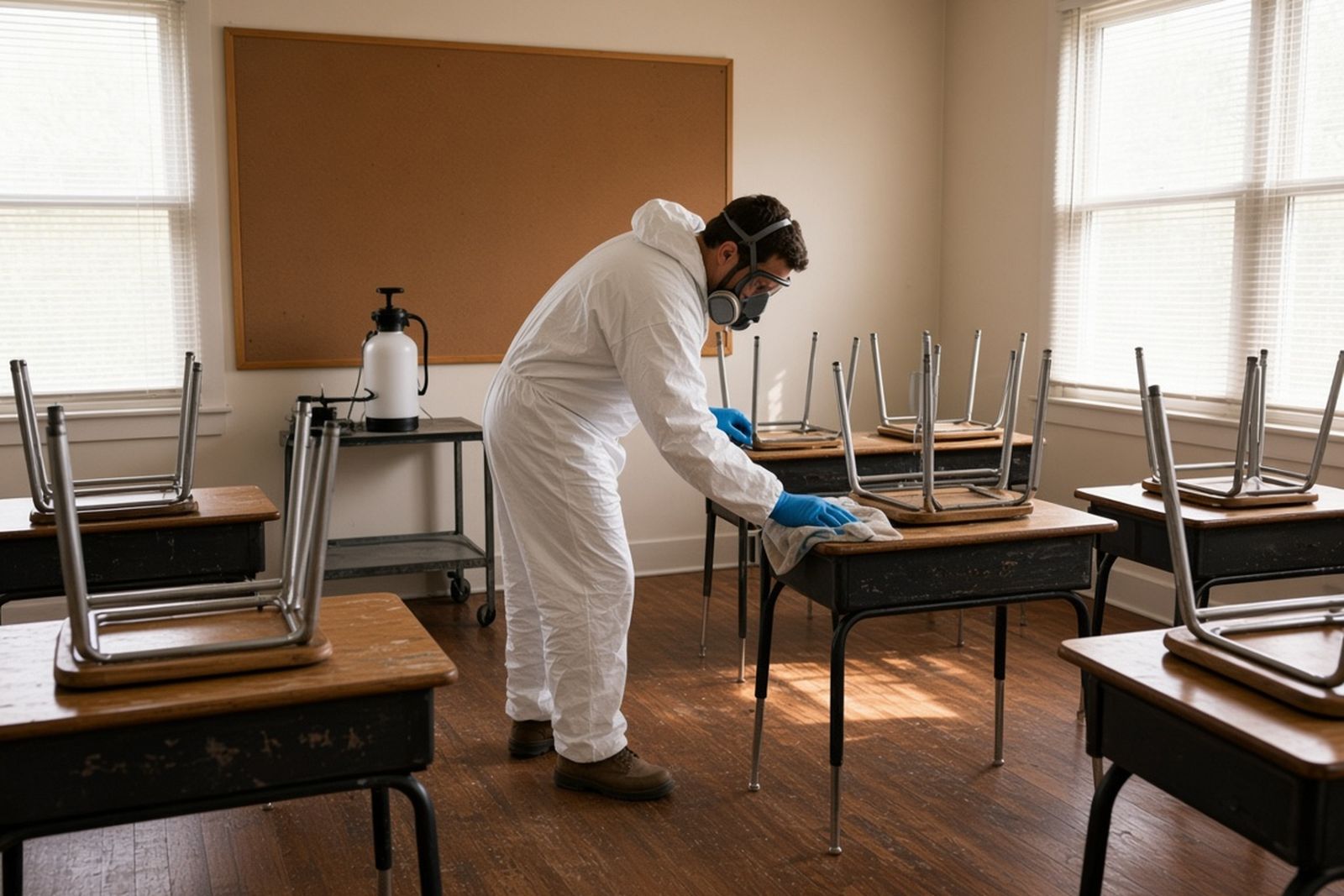
Most crews follow a consistent sequence. They set up a staging area, put on protective equipment, and work from cleaner areas toward dirtier ones so they do not carry contamination back into treated rooms. Visibly soiled surfaces are cleaned first, because organic material can interfere with disinfectants.
Next comes disinfection of high-touch surfaces by wiping or spraying, with attention to contact time. For norovirus, CDC advised in 2024 that a 1,000 to 5,000 ppm chlorine solution (5 to 25 tablespoons of household bleach per gallon of water) be left on surfaces for at least 5 minutes. Professional crews may use other registered products, but the principle is the same: the surface must stay wet for the time the label or guidance requires.
You may see technicians returning to the same surfaces more than once. That usually means they are reapplying product that dried early, which is a good sign rather than inefficiency.
Where electrostatic sprayers fit
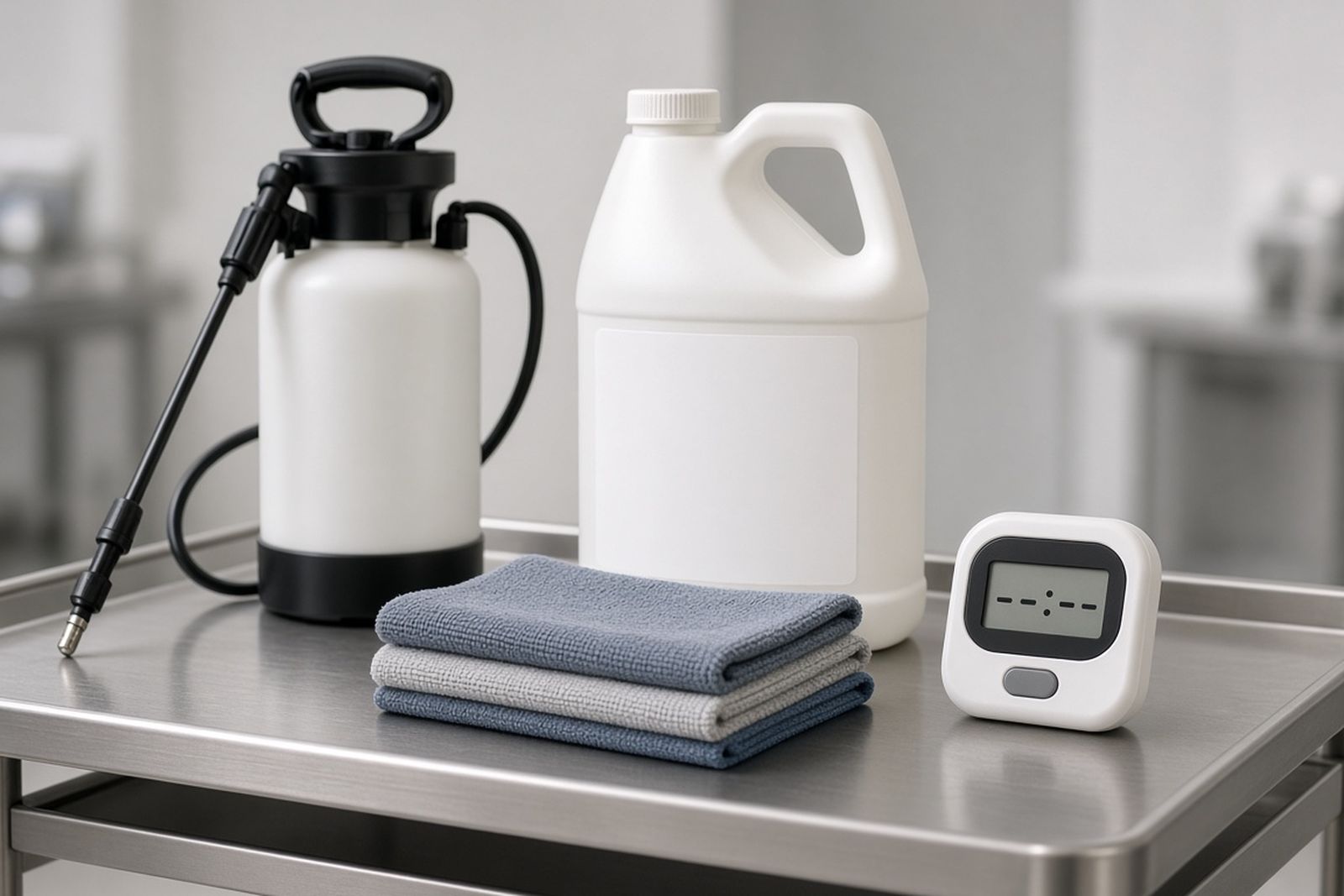
Many vendors use electrostatic sprayers, which give droplets a charge so they wrap around objects and coat surfaces more evenly. Used properly, they can treat large areas quickly.
A 2020 study in the American Journal of Infection Control found that an electrostatic sprayer applying 0.25% sodium hypochlorite reduced C. difficile spores by 6 log10 or more with a 5-minute contact time and disinfected a 15-20 chair waiting room in about 5 minutes. That is a meaningful result, but it depended on a specific product, a specific contact time, and controlled conditions.
In your building, spraying works best as one step in a larger process. It complements cleaning and targeted wiping rather than replacing them. If you see a crew spray a visibly dirty surface without cleaning it first, ask about it.
When can people come back into the building?
Re-entry depends on the product. Some registered disinfectants allow occupants back once surfaces are dry. Others call for ventilation or a waiting period on the label. The crew should tell you, in writing, when each area is ready.
Before reopening, walk the space with the crew lead. Look for residue on surfaces children or patients will touch, damage to finishes or electronics, and anything that was missed. Food-contact surfaces may need a potable water rinse after certain products, so confirm what the label requires for kitchens and cafeterias.
If anyone on your staff has asthma or chemical sensitivities, ask about the product in advance and consider giving them a later start time on the first day back.
Keep the report and the product label handy on reopening day. If a staff member or parent asks what was used, you can answer accurately instead of guessing, which builds far more confidence than a general assurance that the building is clean.
An overnight clinic visit, step by step
Consider an illustrative case: a small outpatient physical therapy clinic learns that two patients who used the same treatment area have been diagnosed with MRSA skin infections. The clinic's medical director asks for a thorough disinfection before the next morning's appointments.
The vendor arrives at 7 p.m. after the last patient leaves. Staff have already stripped linens, bagged resistance bands, and cleared the front desk. The crew cleans and wipes treatment tables, exercise equipment grips, door hardware, and restroom fixtures with a product carrying an MRSA claim, keeping surfaces wet for the labeled time. They then spray the waiting room and hallways.
By late evening the crew lead walks the space with the office manager, notes that one vinyl bench showed slight dulling, and hands over a report listing every room, the product and registration number, contact times, and technician names. The clinic opens on schedule the next morning.
The director files the report with the clinic's infection control records and uses it to answer a patient who asks what was done.
The final report
The report is what you keep after the crew leaves. It should be specific enough that someone who was not there could understand what happened.
Expect the product name and EPA registration number, the contact time used, the rooms and surfaces treated, the methods used in each area, the start and finish times, the names of technicians, and any issues found, such as damaged materials or areas that could not be accessed. Some vendors include photographs or surface testing results.
Store the report where you keep other safety and maintenance records. Ask your county health department whether your type of facility must report certain illnesses or keep specific cleaning records, and file the report accordingly.
What happens after the visit?
One disinfection visit addresses surfaces as they are on that day. If people who are still ill return, or if hand hygiene and routine cleaning slip, contamination can build again. That is why many facilities pair a professional visit with a short refresher for their own staff on which products to use, how long to leave them wet, and which surfaces to prioritize.
If cases continue after disinfection, contact your health department or infection control advisor. The source may be something disinfection cannot fix, such as ongoing person-to-person spread or a food handling problem, and they can help you find it.
Consider scheduling a short debrief with the vendor a week or two later. Ask what they noticed about your building that makes outbreaks harder to control, such as cluttered surfaces, hard-to-clean upholstery, or a shortage of hand hygiene stations near entrances. Those observations are often worth as much as the visit itself, and they can shape purchasing decisions the next time you replace furniture or equipment.