Infectious Disease Disinfection: Industry Insights
Operational analysis of infectious disease disinfection documentation, property-type differences, technology limits, environmental decisions, and provider business models—without invented case histories.
Industry insights posts explain how the outbreak disinfection trade really works. You will read about national franchise networks compared with local independent firms. You will learn why some companies hire others to do the spraying or haul the waste. You will see how a call center may send your request to a crew you have never heard of. Other articles look at ties with medical waste haulers and the role of standards groups and cleaning industry training programs. They cover the rise of electrostatic equipment and its uneven quality. They also cover how demand surged and then settled after the pandemic years reshaped the field.
Get an email reply about infectious disease disinfection
Send a short message to the follow-up inbox. A coordinator can reply by email. This form does not send emergency help; call 911 first if anyone is in danger.
Knowing the business behind a proposal helps you ask better questions. If you know a brand name may be a referral service, you can ask who will be on site. If you know which claims regulators have challenged, you can read ads with a sharper eye. Then you can focus on the practices that truly support your facility.
How Infectious Disease Disinfection Practice Has Changed
How outbreak cleaning in schools, clinics, gyms and care homes moved from janitor routines to germ-specific products, touch mapping and records.
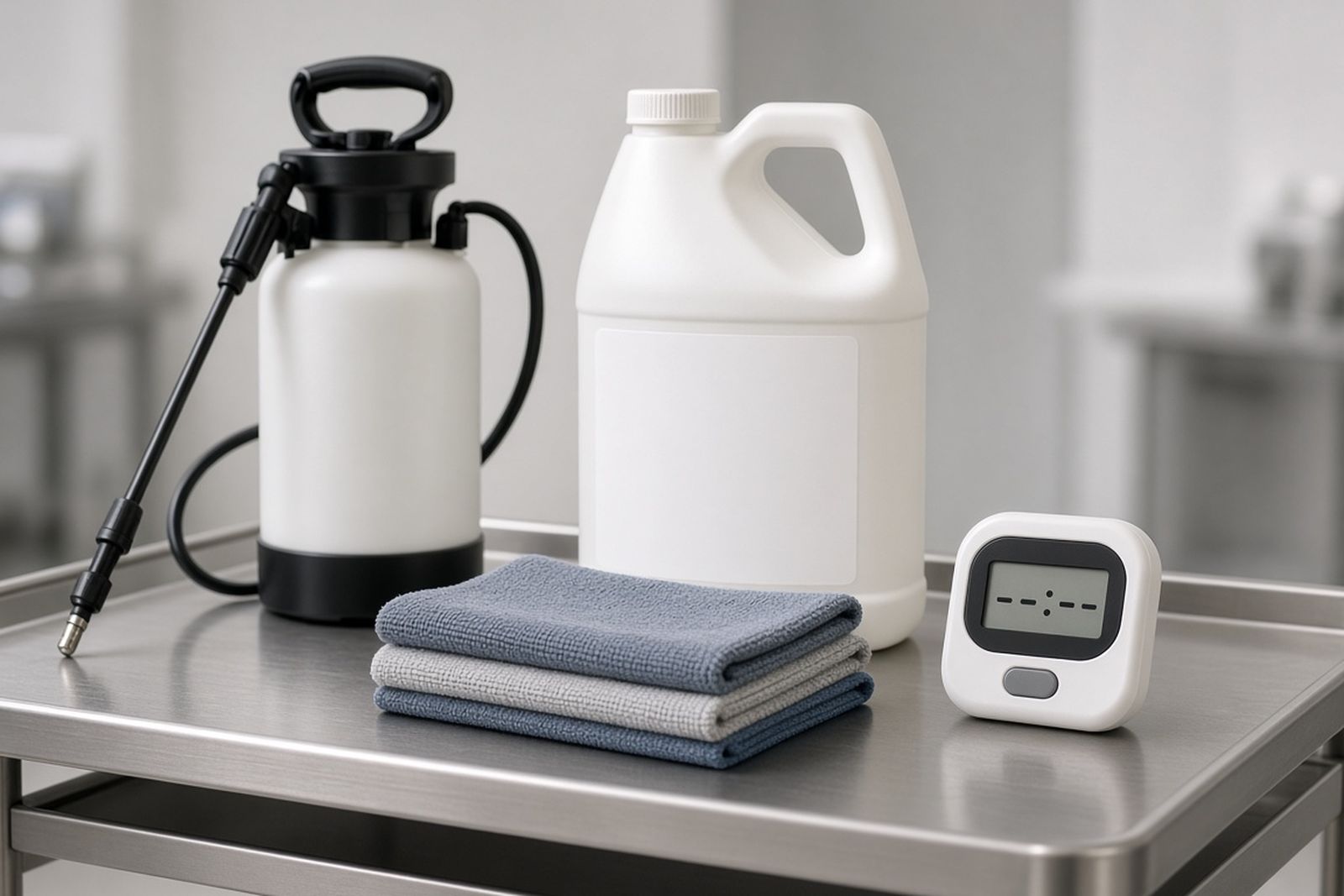
Building disinfection has moved from general janitorial cleaning to a more targeted practice. Crews choose EPA-registered products with claims for specific germs. They keep surfaces wet for the time the label requires. They map the surfaces people touch most and pair hand wiping with spray tools. Workers are protected under rules on bloodborne germs, and each service is written down. The COVID-19 pandemic sped up many of these changes. It also showed the limits of relying on fogging first.
Infectious Disease Disinfection for Property Managers: What You Need to Know
When a tenant or visitor falls ill with a contagious disease, property managers face decisions on notice, shared spaces, vendors, and privacy. Start here.
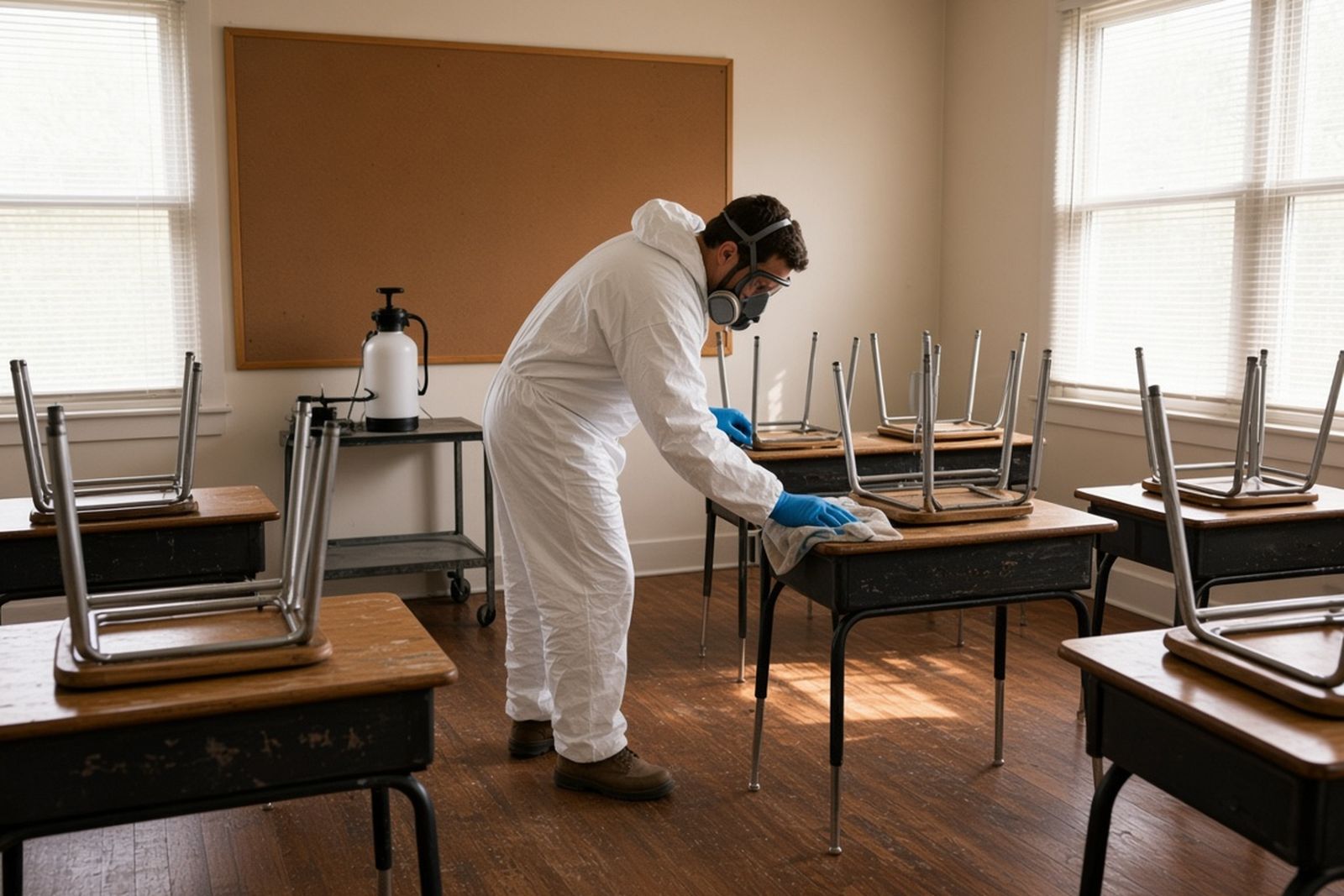
When an infectious illness affects a building you manage, focus on shared spaces and high-touch surfaces, protect the sick person's privacy, and follow any instructions from the local health department. Hire a disinfection provider who names the organism of concern, uses an EPA-registered product with a matching claim, respects contact times, and documents what was treated. Check local rules before restricting access to a unit.
Infectious Disease Disinfection Planning Example: Building a Defensible Scope
Walk through a hypothetical home disinfection after a C. diff illness and see how each line of an infectious disease scope can be explained and checked.
A defensible infectious disease disinfection scope ties every step to the organism involved, the surfaces people touched, and a product whose label claim and contact time fit that organism. It separates cleaning from disinfection, explains how soft items are handled, records re-entry timing, and ends with documentation you can review. This hypothetical example shows how that reasoning looks in a real-world home setting.
Commercial vs Residential Infectious Disease Disinfection
Disinfecting a home after the flu differs from treating an office, school, or clinic after an outbreak. Compare scope, rules, scheduling, and records here.
Residential infectious disease disinfection focuses on a small household, the rooms a sick person used, and personal belongings. Commercial disinfection covers more people, more shared surfaces, and often outside oversight from health departments, licensing agencies, or employers' safety duties. In both settings the product must match the organism and stay wet for its labeled contact time, but commercial jobs usually need phased scheduling and more formal documentation.
Environmental Responsibility in Infectious Disease Disinfection
Outbreak disinfection can overshoot, leaving residue, fumes, and waste behind. See how targeted methods protect people and the environment without losing kill.
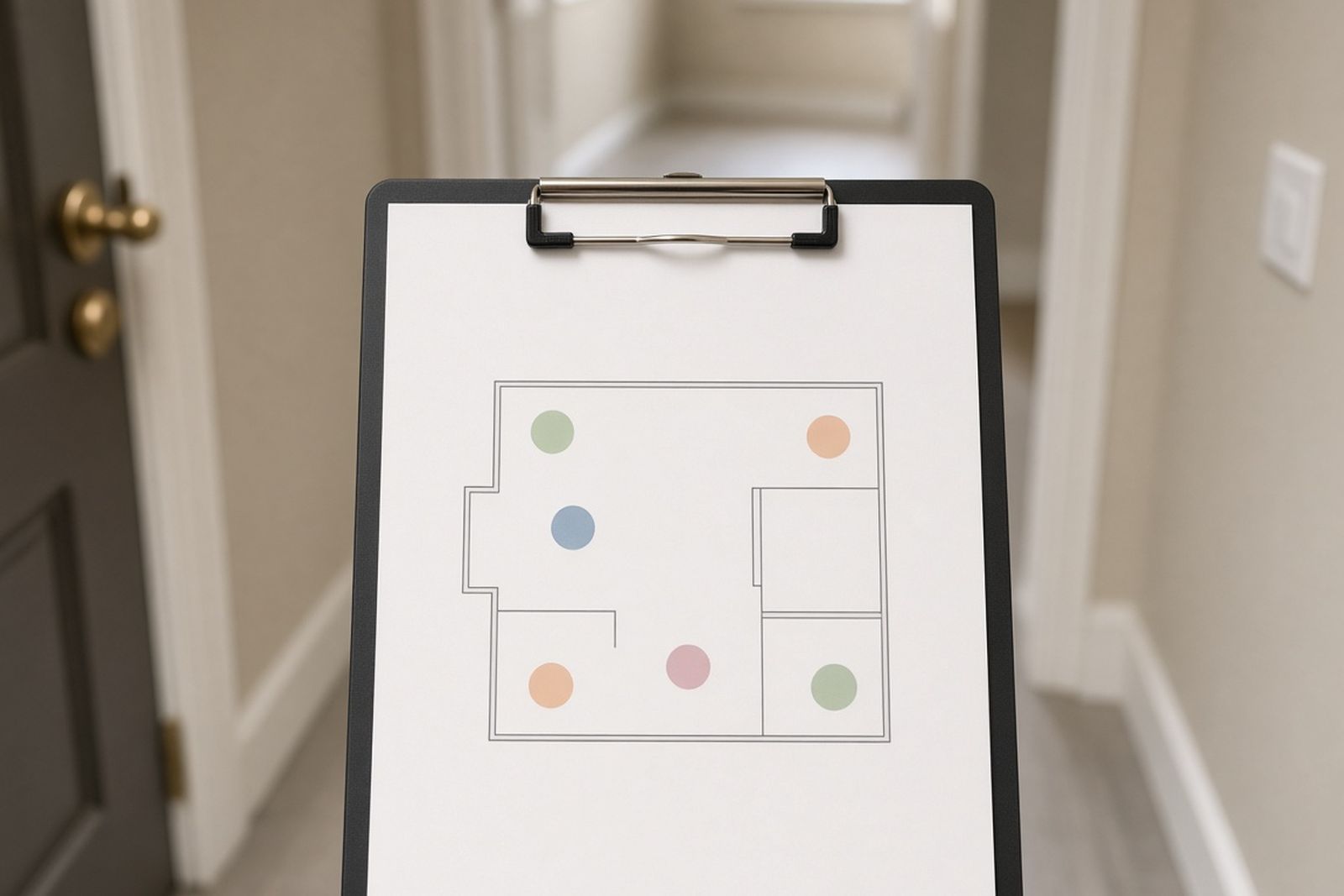
Environmentally responsible infectious disease disinfection targets the surfaces and organisms that actually matter, uses registered products at label strength for the labeled contact time, favors cleaning plus targeted wiping over blanket fogging, protects indoor air for occupants and workers, and disposes of wipes, concentrates, and rinse water properly. Doing less, but doing it correctly, usually lowers both health risk and environmental impact.
Sourced figures on industry insights
- 223,900
CDC's 2019 Antibiotic Resistance Threats Report estimated 223,900 C. difficile cases in hospitalized patients and 12,800 deaths in 2017, with $1 billion in attributable healthcare costs.
Read with care: Counts hospitalized cases only; costs cover hospital-onset cases only.
Source: CDC (2019)United States, hospitalized patients, 2017 data
- 323,700
CDC estimated 323,700 MRSA cases in hospitalized patients and 10,600 deaths in 2017, with $1.7 billion in attributable healthcare costs.
Read with care: Excludes many uncultured skin infections; hospitalized cases only.
Source: CDC (2019)United States, hospitalized patients, 2017 data
- 9.4-51 million
CDC estimates seasonal flu caused 9.4 million to 51 million illnesses, 120,000 to 710,000 hospitalizations and 6,300 to 52,000 deaths annually in the U.S. between 2010 and 2025.
Read with care: Ranges reflect large season-to-season variation and are modeled estimates.
Source: CDC (2025)United States, annual range across 2010-2025 seasons
These figures are public research and agency data, not this network's own job records. Keep each number with its population, year and limits; none of them predicts cost, timing or outcome at a specific property.
What research has found
Findings from published studies of people and properties in situations like this one. They describe what researchers observed in a specific group; they are not predictions for your case.
Floors were disinfected less consistently than high-touch surfaces.
Conferences and study days were a major source of biofilm knowledge.
Industry Insights: common questions
Why might a different company show up than the one I called?
Some brands run as referral networks or franchises that pass jobs to local operators. Some firms hire other companies for special tasks. That is not always a problem, but you should know who is doing the work. Before you sign, ask which company employs the technicians. Ask whose insurance applies and who is responsible for the final record.
Did the pandemic change how disinfection companies operate?
It brought many new companies, a surge in electrostatic equipment, and closer attention to product claims. Regulators pushed back on some overblown marketing. Buyers grew more familiar with labels and contact times. Some companies that popped up quickly have since left the field. Others built lasting programs. To sort them, ask how long a firm has done outbreak work, and in which settings.
Are there industry standards for outbreak disinfection?
Several trade and cleaning groups publish training programs and suggested practices. Some offer facility accreditation. These can show a company's commitment. But they vary in how strict they are, and they are not government licenses. Ask what a credential required, whether it is current, and how it shapes the company's daily work. The product label and your local rules still carry more weight.
Why do some disinfection companies also offer unrelated cleaning services?
Many firms started in restoration, janitorial, or specialty cleaning. They added outbreak disinfection when demand rose. Offering several services keeps crews busy between outbreaks. That is not a problem in itself. But ask how much of their work is outbreak response. Ask if the technicians sent to you have that experience.
How do disinfection companies handle busy illness seasons?
Demand often rises during peak seasons for respiratory and stomach illnesses. Some companies put contract clients first. Others bring in temporary staff or team up with other firms. Ask how they handle surges and whether your facility will get priority. Setting up service before the season begins can help. Keep a backup vendor's number in your plan as well.
What role do product distributors play in the disinfection industry?
Distributors supply products, equipment, and sometimes training to both vendors and facilities. They can explain label claims, mixing systems, and which products are safe on which surfaces. Some also sell store-brand versions of registered products. Their advice can be useful, but always check the label and registration number yourself. A store-brand product should carry the same registration number as the original. Compare them before you assume they are the same.
Are disinfection companies regulated like other contractors?
Oversight varies. Businesses must follow product labels and worker safety rules. Some states require a pesticide license for certain kinds of commercial disinfection. General business licensing applies, as it does for other contractors. Ask each vendor what licenses apply in your state. Confirm with the state agency if needed. Keep a copy of any license in your vendor file.
Related community polls
Every count is a real visitor vote; nothing is seeded or padded. One vote per poll per device, and you can change your answer.
When your facility had an illness cluster, how did you handle cleaning?
How did you decide whether to close all or part of the facility?
More on infectious disease disinfection
Infectious Disease Disinfection services
Learn how expert outbreak disinfection works in schools, offices, clinics, gyms, and care homes. See each step, from mapping high-touch spots to checking contact times and records.
Costs explained
What drives the price, published cost ranges, and how to read a written quote line by line.
Insurance and payment
Which policies may respond, how to document a claim, and what to do if coverage is denied.
Planning tools
Hands-on tools help you see cost drivers, check vendors, and organize a claim file. They also help you plan the first day, sort waste, and judge if staff can do the work.
Community polls
See how other facility managers handled closing, vendors, and telling people during outbreaks. Then take the questions that come up to your own team.
Knowledge quiz
Test what you know about product labels, contact times, keeping germs contained, and records. Do it before you approve a disinfection plan or brief your leaders.
City guides
Find disinfection providers who serve your area for facility outbreaks. Learn what to confirm about products, training, and records before you hire.