Short answer
Residential infectious disease disinfection focuses on a small household, the rooms a sick person used, and personal belongings. Commercial disinfection covers more people, more shared surfaces, and often outside oversight from health departments, licensing agencies, or employers' safety duties. In both settings the product must match the organism and stay wet for its labeled contact time, but commercial jobs usually need phased scheduling and more formal documentation.
Same illness, different setting
The organism does not care whether it lands on a kitchen counter or a conference table. Influenza, norovirus, and resistant bacteria behave the same way in both. What differs is how many people touch a surface, how quickly they rotate through a space, and who is accountable for keeping it safe.
In a home, you usually know who was sick, which rooms they used, and who else lives there. In an office, a gym, or a classroom, dozens or hundreds of people share surfaces, and you often do not know who is ill until several people are.
That uncertainty shapes the plan. Residential jobs can be precise and targeted. Commercial jobs usually need broader coverage of shared high-touch points, clearer communication with occupants, and more careful scheduling around business hours.
A typical residential job
A residential job usually starts with a conversation about the illness and the household. The provider asks who was sick, for how long, which rooms and bathroom they used, and whether anyone at home is especially vulnerable, such as an infant, an older adult, or someone in cancer treatment.
The work then concentrates on the sick person's room, their bathroom, and the path they traveled through the house. High-touch items such as remotes, phones, door handles, and faucet handles come first. Bedding and towels are laundered. Upholstered furniture and carpets get a plan of their own, since they cannot be wiped like a countertop.
Homes also involve personal decisions. A family may want to keep a favorite blanket or a child's stuffed animal. A good provider explains which items can be laundered or cleaned and which are difficult to treat, then lets the household decide.
A typical commercial job
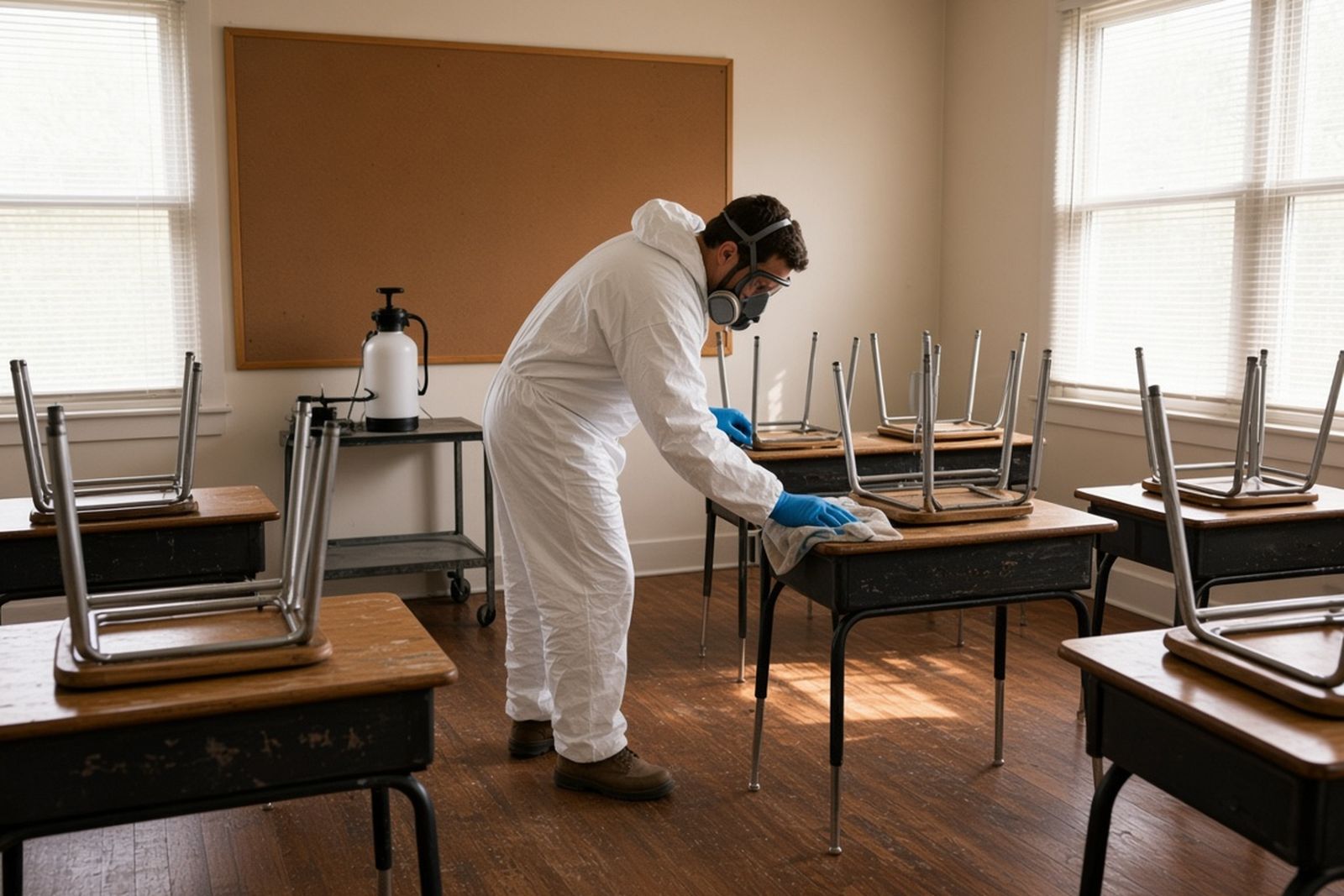
Commercial jobs are often triggered by a cluster of cases, a confirmed illness in an employee or student, or a request from a health department. The provider needs to know which areas the affected people used, but in practice the plan usually covers all shared spaces because exposure is hard to trace.
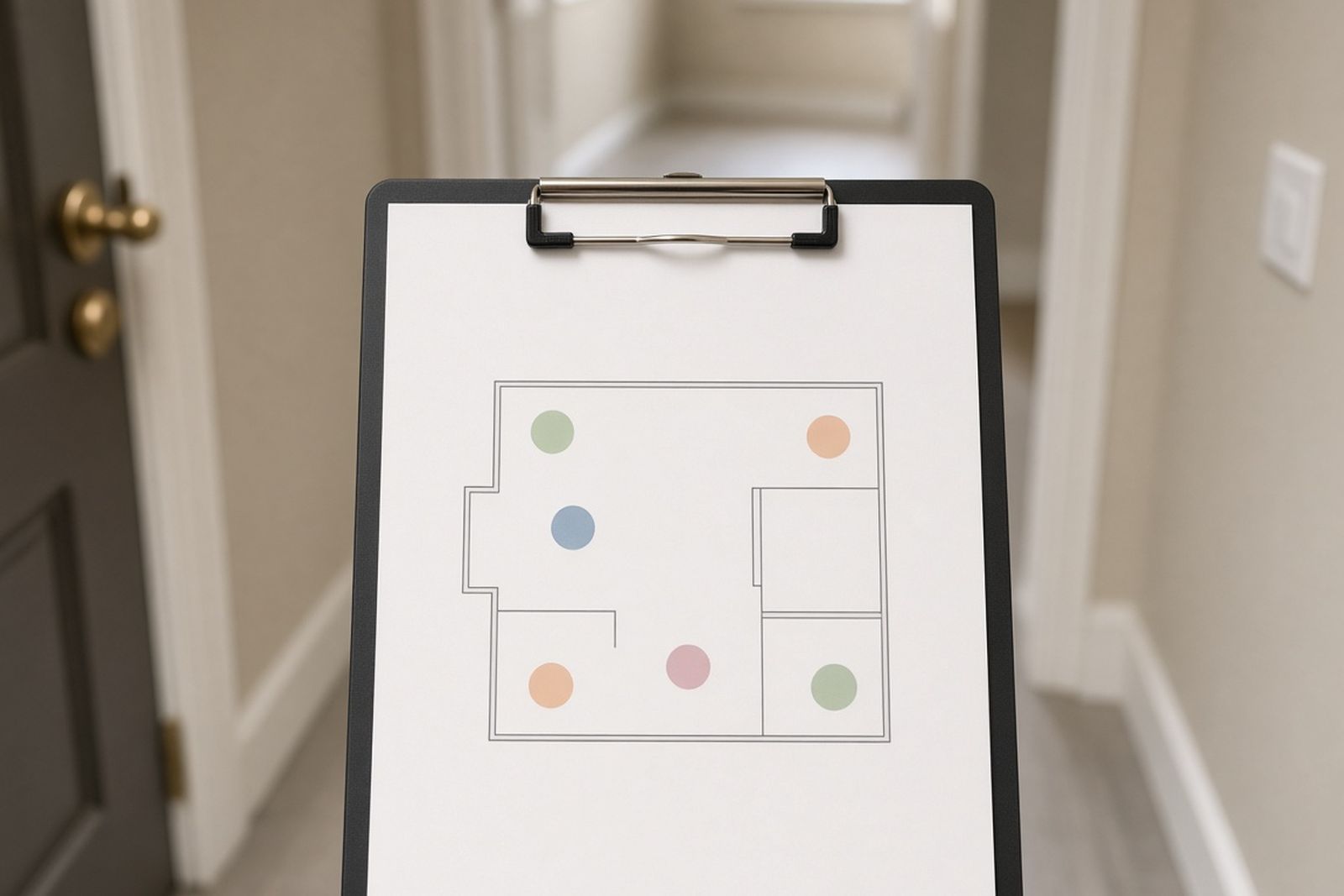
The scope focuses on surfaces touched by many hands. It may be organized by zone, such as restrooms, break rooms, entrances, elevators, and workstations, with each zone assigned a product and a contact time.
Commercial scopes also need to account for equipment that cannot tolerate liquid, such as point-of-sale terminals, shared laptops, and lab instruments. The provider should list which products are compatible with those items, or recommend manufacturer-approved wipes, rather than simply spraying everything in the room.
- Door hardware, push bars, and badge readers
- Elevator call buttons and handrails
- Break room appliance handles, faucets, and vending machine buttons
- Shared keyboards, phones, touchscreens, and printers
- Restroom fixtures, stall latches, and dispensers
- Conference room tables, chair arms, and remote controls
- Fitness equipment, locker handles, and bench surfaces in gyms
Which outside rules and agencies apply to businesses?
Many businesses answer to someone beyond the owner. Schools and childcare centers may follow state or county health rules and guidance from the local health department during an outbreak. Long-term care, clinics, and other healthcare settings have infection control requirements and often a designated infection preventionist. Food businesses operate under a health permit.
Employers also have workplace safety obligations when staff might be exposed to infectious materials, such as written plans and training for workers who may contact blood or certain other body fluids. Those duties attach to specific exposures, not every illness, but they show the kind of formal responsibility an employer can carry that a household does not.
Homes rarely face these layers. The exception is a home that doubles as a licensed daycare or care setting, where the state licensing agency's outbreak rules apply to the licensed part of the house.
Scale and illness patterns
Shared spaces amplify spread. Norovirus is the classic example: CDC's outbreak guidance notes that over half of reported norovirus outbreaks in the United States occur in long-term care facilities. The combination of close contact, shared bathrooms, and vulnerable residents makes those settings especially prone to repeated waves.
Seasonal respiratory illness adds its own pressure. Offices and schools see absences rise during flu season, and management may want visible action. Surface disinfection is one part of the response, alongside encouraging sick people to stay home, hand hygiene, and ventilation.
In a home, the scale is small. The main risk is to other household members, and the plan can be tailored to their health needs.
How is scheduling handled when a business cannot close?
Many businesses ask for after-hours work so operations can continue. That is often possible, but it creates a timing question. Products need their full wet contact time, and some applications, such as fogging or broad spraying, require the space to stay empty for a period stated on the label before people return.
Phasing is another option. A provider might treat restrooms and break rooms first, then move to workstations, keeping each zone closed only while it is being treated. The plan should say how occupants will know which areas are open.
Homes usually have simpler scheduling but less flexibility about space. A family may not have anywhere else to go. The provider can work room by room, letting the household stay in untreated areas until work reaches them.
Illustration: one flu season, two very different jobs
An illustrative case makes the contrast concrete. Take a parent who works at a 50-person marketing agency and lives in a small apartment with a partner and a newborn. During a bad flu week, the parent falls ill, and so do several coworkers.
At the agency, management hires a provider to treat shared spaces over a weekend. The scope covers restrooms, the kitchen, conference rooms, shared desks, and entry points. The provider uses a product with an influenza claim, lists its contact time, and leaves a log by zone. Management sends a note to staff encouraging anyone sick to stay home and adds hand sanitizer at entrances.
At the apartment, the concern is the newborn. The household asks their pediatrician for guidance and decides to disinfect the bathroom, kitchen handles, light switches, and the bedroom the parent used, using a household product with an influenza claim and following its label. They launder bedding and towels. Because influenza is an enveloped virus that many products inactivate readily, a careful household can often handle this without hiring anyone.
Same virus, very different scale, decision-makers, and paperwork.
Spaces that are partly home and partly business
Some properties do not fit neatly into either category. A short-term rental is someone's income but a guest's temporary home. A family daycare runs a licensed business inside a residence. A group home is a household that also operates under state oversight. An apartment building's lobby is commercial space, while the units above are private homes.
Short-term rentals and family daycares
In these settings, borrow the stricter approach for the shared or licensed parts. A short-term rental host who learns a guest was sick with a stomach bug should treat the bathroom, kitchen, and high-touch points with a product that carries a norovirus claim before the next check-in, and should launder all linens. The next guest has no way of knowing what happened, so the host carries that responsibility.
A family daycare should follow whatever outbreak guidance its licensing agency and local health department provide, even though the building is also the owner's home. Private family rooms that children never enter can be handled like any other household space.
When in doubt, ask who else will use the space next and whether they had any say in the risk. The less control the next occupant has, the more careful the disinfection should be.
What records and experience should you look for in a provider?
For a home, a simple summary is usually enough: the rooms treated, the product and its registration number, the contact time observed, and which items were laundered or discarded. Keep it with other household records in case someone falls ill again.
For a business, expect a more formal package. That may include a zone-by-zone log, product labels and safety data sheets, technician names, re-entry times after any spray application, and a summary the business can share with staff, a health inspector, or a licensing agency. Ask your provider in advance what format your regulator or corporate office prefers.
Match experience to the job. A provider who routinely handles school or long-term care outbreaks will know how to coordinate with an infection preventionist or health department. A provider who works mostly in homes will be more practiced at discussing belongings and household routines.
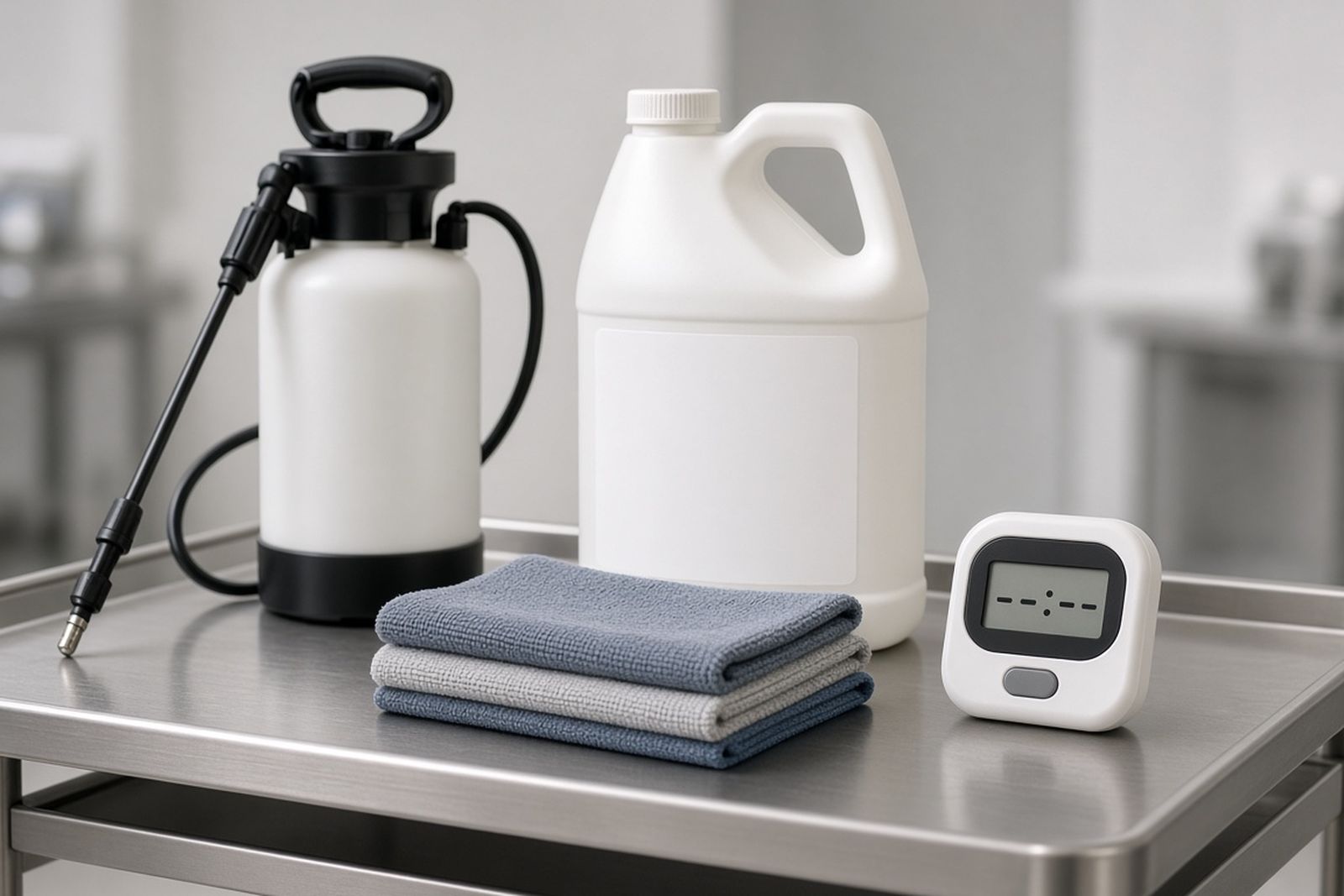
Either way, ask the same core questions: what organism the plan targets, which product will be used and whether its label lists that organism, how contact time will be met, and what documentation you will receive. A clear answer to those questions matters more than any piece of equipment the provider brings.