Midwest · US

Infectious Disease Disinfection Planning in Chicago, IL

Planning infectious disease disinfection in Chicago, IL

Chicago winter disinfection planning. Covers CTA vestibule maps, wet times with radiators on, EPA List N limits, and CDC clean-then-disinfect steps. This is planning guidance, not a claim of a local office or crew in Chicago.

Get an email reply about infectious disease disinfection

Send a short message to the follow-up inbox. A coordinator can reply by email. This form does not send emergency help; call 911 first if anyone is in danger.

Tell us what you need help with. Share a short description; please leave out medical details, access codes, and other sensitive information.

A request does not confirm a booking. For immediate danger, contact local emergency services.

Or email info@prompartybuses.com

Direct answer

The short answer for Chicago, IL

Chicago three-flat walk-ups, steam-radiator vestibules, and coat hooks used on the way to the CTA need winter records. Protect the label's wet time when radiator heat traps smells. Keep List N inside its COVID-19 limits. Refuse sterile-condo badges after a hallway fog.

Editorial guide · Biohazard Remediation NetworkUpdated 2026-07-22Location focus: Chicago, IL

Local planning context

Three-flats near the L and lakefront towers funnel hands onto freight elevators, alley package rooms, laundry pull-chains, and vestibule buzzers between CTA trips. Unused dining alcoves hardly matter. List those touch points for the days someone was contagious, rather than fogging a dining alcove nobody used. Chicago Department of Public Health materials can help spread factual building notices. They don't certify a unit above Lake Shore Drive as sterile. Alley salt tracked in from the L stop cakes onto vestibule tile long before anyone touches a parlor switch.

Wool coats on shared hooks, salty grit runners, and fabric sectionals usually need washing or temporary removal. If a fall on icy stairs leaves blood in a three-flat hallway, workers need an OSHA bloodborne pathogen plan.

Along busy streets, storefront clinics may share lobbies with apartments. Instrument sterilization is the storefront clinic's business. It's not a word for a three-flat stairwell. Brown Line platform grit is very different from the sunscreen film southern towers fight.

Property considerations

Put vestibule buzzers, freight-elevator plates, package-room levers, and laundry pull-chains first.

Wash or remove salty grit runners and shared coats before any disinfectant.

Treat the three-flat bath after everyone has left for the train.

Kitchen counters may need a rinse; remotes need an electronics-safe wipe.

Don't let commute traffic rub wet surfaces dry in shared halls.

Hallway postings should give the product sheet and reopen time, nothing more.

Note the alley garbage-chute pulls if they were on the path while someone was contagious.

Response-planning framework

Map coat traffic from the L stop

List N is still a COVID-19 reference when directions are followed. It doesn't cover every winter stomach virus in a three-flat. Reject sterile-condo sales talk along Lake Shore Drive.

Lift the sidewalk salt before any disinfectant

CDC community guidance puts detergent cleaning of vestibule grit and bath grime ahead of any product. Salt missed under the coat hooks wastes the bottle. Buzzers and faucets stay damp until the label clock is done. Log the times, so hallway perfume is never taken as a finished job.

Keep halls closed despite CTA timing

Set one reopening time for the whole building. Don't let tenants wipe surfaces dry so they can catch the L. Sending people to another bath helps only when that bath was treated too.

A flu-season packet for CDPH questions

A tap swab reads film only. CDPH and the state health office take public questions. Give residents reopening hours and SDS access, not fogger recipes.

Documentation checklist

  1. 1Map of traffic from the vestibule to the washers
  2. 2Flu-season exposure pattern, without names
  3. 3EPA registrations and label germ claims
  4. 4Proof that sidewalk salt was cleaned off first
  5. 5Timed wet-period logs for baths and buzzers
  6. 6Building reopening schedule tied to CTA train times
  7. 7Washing decisions for coat-hook items and runners
  8. 8Line stating the corner clinic got none of this work

Official resources

Questions for this location

Which surfaces matter most after a stomach bug in a three-flat near the L?

Focus on the bathroom used during the illness. Then do the fridge handles along that route and the vestibule hardware where wool coats hang after the Brown Line. Detergent must lift the alley salt before any EPA-registered product labeled for stomach germs goes on. The surface must stay wet for the full label time. Runners belong in the wash. List N doesn't magically cover norovirus on radiators or buzzers. Handwashing still matters when storm windows stay shut for days.
Can a hallway wipe stand in for upstairs bedroom work?

It can't. How people moved through the shared laundry, kitchens, and coat hooks decides what gets treated. Hard-surface disinfecting only counts where grime was removed and the wet time finished. A hallway scent is not sterilization. Leave unused parlors out, in writing. Germ claims must match the concern. Don't assume List N answers every flu-season question.

What belongs on a landlord flu-season notice for shared stairs?

List the closed areas, the expected return time from the SDS, and where residents can read product information. Leave out diagnoses. Say it cuts risk where it was used. It is no vaccine. Step up only when blood or other body fluids that can carry disease appear. A walk-up doesn't become a sterile clinic because a vestibule was wiped.

How does radiator heat change reopen discipline before a CTA departure?

Steam heat and storm windows trap smells, which pushes people to buff fixtures dry so they can catch a train. That habit ruins the wet time. Keep rooms empty through the printed time, even when the wait feels long in January. Air out carefully afterward. Salty grit runners may need extra drying. Cold weather never widens what List N covers.

Which records satisfy a lakefront or three-flat insurance review?

Save each bottle's name and EPA number, the three-flat rooms done, and how the salt came off. Add timed wet periods, decisions on coats and runners, fresh-air steps, and written reopening times. Prep photos help. Swabs, if any, reflect film. Germ-free-forever certificates have no place here. Send community questions to the Chicago Department of Public Health or the Illinois Department of Public Health.

How should a Chicago three-flat owner clean the shared back stairs after a tenant illness in winter?

Clear salt and grit from the back-stair treads and rails first, since a salty film keeps disinfectant from working. Wash the rails and door handles with detergent. A product safe on old painted rails goes on next. Cold weather can slow drying, and it can also make surfaces slick. Don't leave treads wet. If the treads are icy, clean only the rails and handles. Tell tenants when the stairs were cleaned.

What should a Chicago lakefront tower resident expect when the fitness center reopens after an illness?

Management should post when the room was cleaned and when it reopens. They may add wipes near each machine. Wipe handles and seats before and after use anyway, as good practice. Yoga mats and foam rollers are hard to fully disinfect, so bringing your own makes sense. If you have a health concern, talk to your doctor rather than the front desk. If you're sensitive to chemicals, ask management for the product's safety data sheet.

Contact

Get help by email

Send a short message for an email reply about infectious disease disinfection planning questions for the Chicago area.

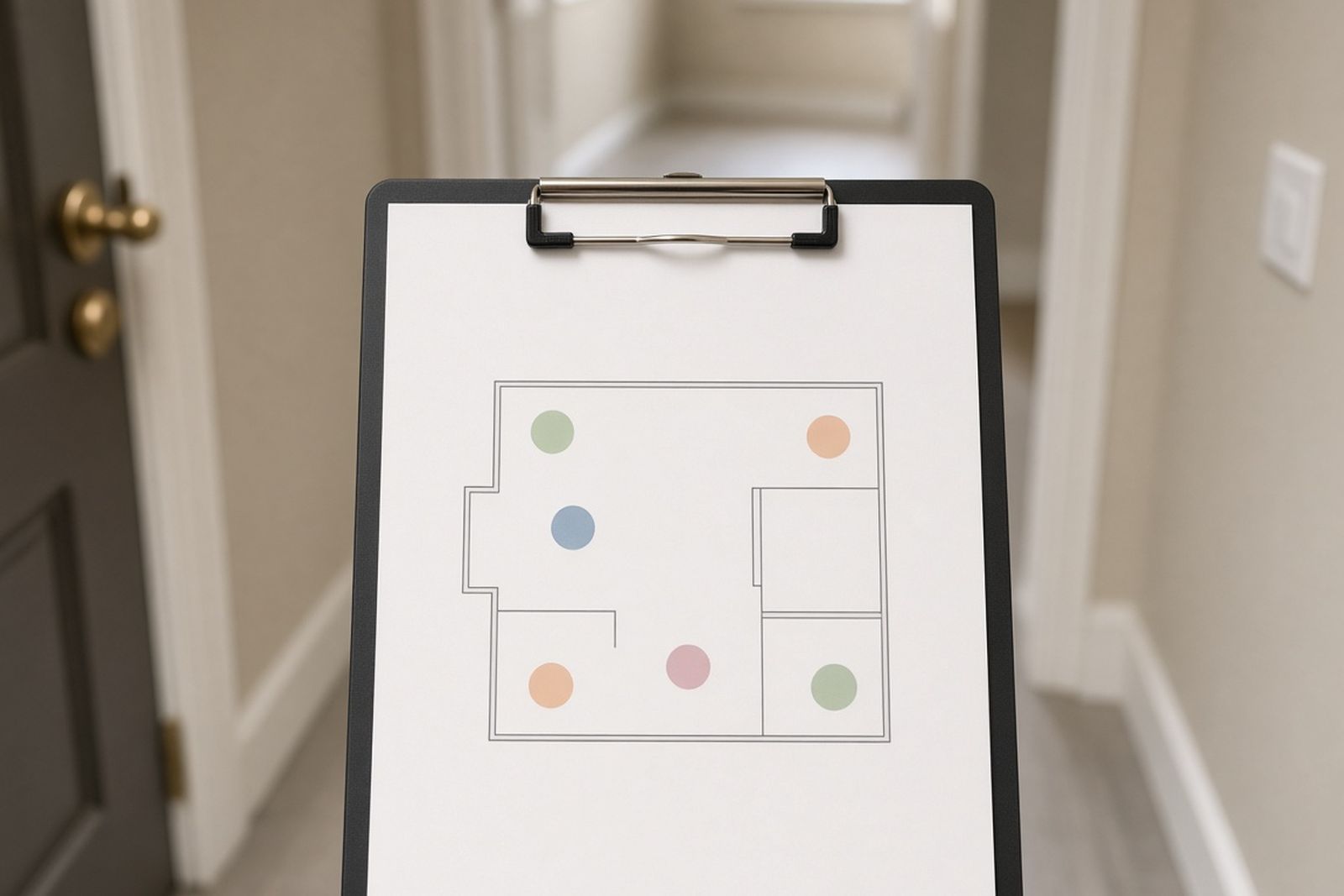
Clipboard showing a room plan with color-coded dots marking high-touch surfaces
Illustrative photo, not a job record. Clipboard showing a room plan with color-coded dots marking high-touch surfaces.
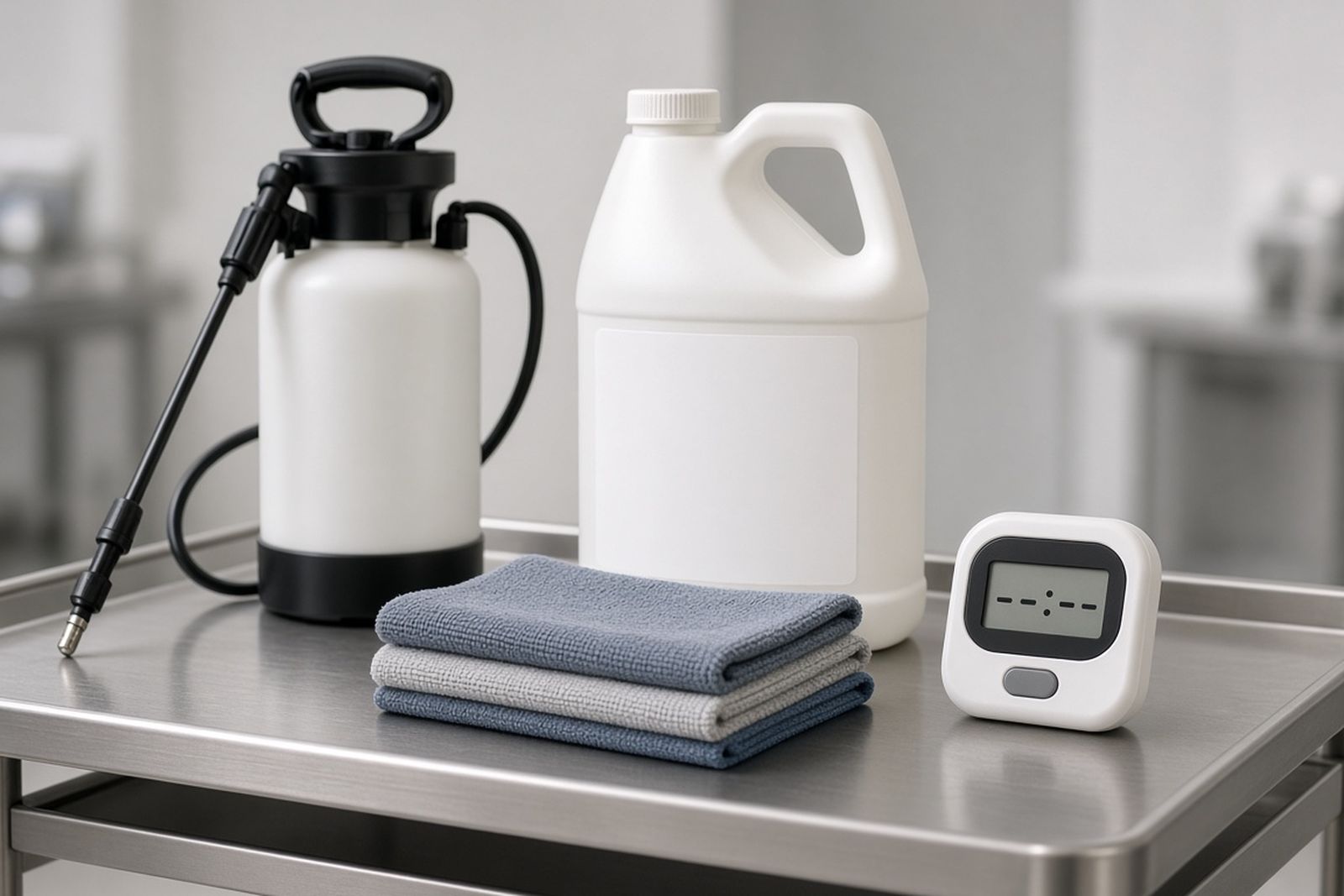
Pump sprayer, disinfectant jug, folded cloths and a contact-time timer on a steel cart
Illustrative photo, not a job record. Pump sprayer, disinfectant jug, folded cloths and a contact-time timer on a steel cart.

Infectious Disease Disinfection figures to keep in mind

National and research figures, not Chicago data. Local conditions, rules and providers vary; use these for scale and context only.

$15-$400+

HomeAdvisor reports that disinfecting a home to reduce germs, bacteria and viruses costs anywhere from $15 to $400 or more depending on DIY versus professional service.

Read with care: Broad range mixing DIY supplies and professional visits; specialized biohazard work costs more.

Source: HomeAdvisor (2026)United States residential, cost guide updated June 2026

72 hours

In a 2020 NEJM study, viable SARS-CoV-2 was detected up to 72 hours on plastic and 48 hours on stainless steel, but not after 24 hours on cardboard or 4 hours on copper.

Read with care: Viral titers dropped sharply over time; CDC later judged surface transmission to be a low risk relative to airborne spread.

Source: New England Journal of Medicine (2020)Laboratory study, controlled conditions

7 months

A systematic review found MRSA can persist on dry surfaces for 7 days to 7 months, C. difficile spores for 5 months, norovirus for 8 hours to 7 days, and influenza for 1 to 2 days.

Read with care: Persistence under lab conditions does not equal infectivity in real settings; ranges are wide.

Source: BMC Infectious Diseases (2006)Systematic review of laboratory persistence studies, published 2006

These figures are public research and agency data, not this network's own job records. Keep each number with its population, year and limits; none of them predicts cost, timing or outcome at a specific property.

Plan before you reach out

Use the first 24 hours planner for immediate steps and the provider vetting checklist to confirm any Chicago provider's training, insurance and waste path in writing.

What research has found

Findings from published studies of people and properties in situations like this one. They describe what researchers observed in a specific group; they are not predictions for your case.

Changing application type was associated with being awakened by coughing episodes.
Who was studied: 59 Arizona survey respondents and 11 interviewees from maid services and a school district.Limits: Small voluntary sample; no causal inference; survey item nonresponse substantial.COVID-19 cleaning protocol changes, experiences, and respiratory symptoms among cleaning… (2023)
Floors were disinfected less consistently than high-touch surfaces.
Who was studied: 47 US hospital environmental-services respondents across 26 states; 2019 survey.Limits: 47 of 273 contacted participated; practices were reported rather than observed.Environmental cleaning and disinfection of hospital rooms: A nationwide survey (2021)

Infectious Disease Disinfection community polls

Poll results

Every count is a real visitor vote; nothing is seeded or padded. One vote per poll per device, and you can change your answer.

Your experience

When your facility had an illness cluster, how did you handle cleaning?

No visitor votes yet
Process

How did you decide whether to close all or part of the facility?

No visitor votes yet

Planning cleanup in Chicago?

Send a short message about the property to the follow-up inbox. A coordinator can reply by email with next steps.

Your request is sent to the follow-up inbox. A coordinator can reply by email.

If anyone is hurt or in danger, call 911 first.