Short answer
Before infectious disease disinfection begins, assess ten risks: choosing a product without the right organism claim, missing contact time, breathing chemical vapors, stirring up contaminated droplets, spreading germs with cloths and mops, protective equipment gaps, mixing incompatible products, returning too soon after spraying or UV treatment, damaging surfaces or creating fire hazards, and recontamination from people who are still ill.
Why disinfection needs its own safety check
Disinfection is meant to protect people, so it is easy to assume the process itself is harmless. In practice, it can fail in ways that leave germs behind, and it can create new hazards for the people doing the work and those who return to the space.
The stakes are real in healthcare settings and beyond. CDC estimates 518,000 healthcare-associated infections occurred in U.S. acute care hospitals in 2023, with 1 in 38 patients having at least one on any given day. Homes, schools, offices, and care facilities face their own versions of the same challenge.
A short risk check before starting helps you choose the right product, method, and protection. The ten risks below apply whether you are disinfecting a single sick room or responding to an outbreak in a facility.
Some of these risks are about effectiveness, and some are about safety. Both matter, because a disinfection effort that fails gives people false confidence.
Risks 1 and 2: wrong product, missed contact time
Risk 1 is choosing a product without the right organism claim. Disinfectants are tested against specific organisms, and their labels list what they cover. A product that works against influenza may not work against norovirus, and most general-purpose products do not kill C. difficile spores. Using the wrong product can leave the most important organisms untouched.
Check the label and EPA registration number before you start, and match the claim to the illness involved. If you do not know the organism, choose a product with a broad claim that includes tougher targets, and follow any guidance from your healthcare provider or local health department.
Risk 2 is missing the contact time. Every label lists how long the surface must stay wet. Wiping too soon, applying too little, or working in a warm, breezy room can cut that time short. The result looks clean but may not be disinfected.
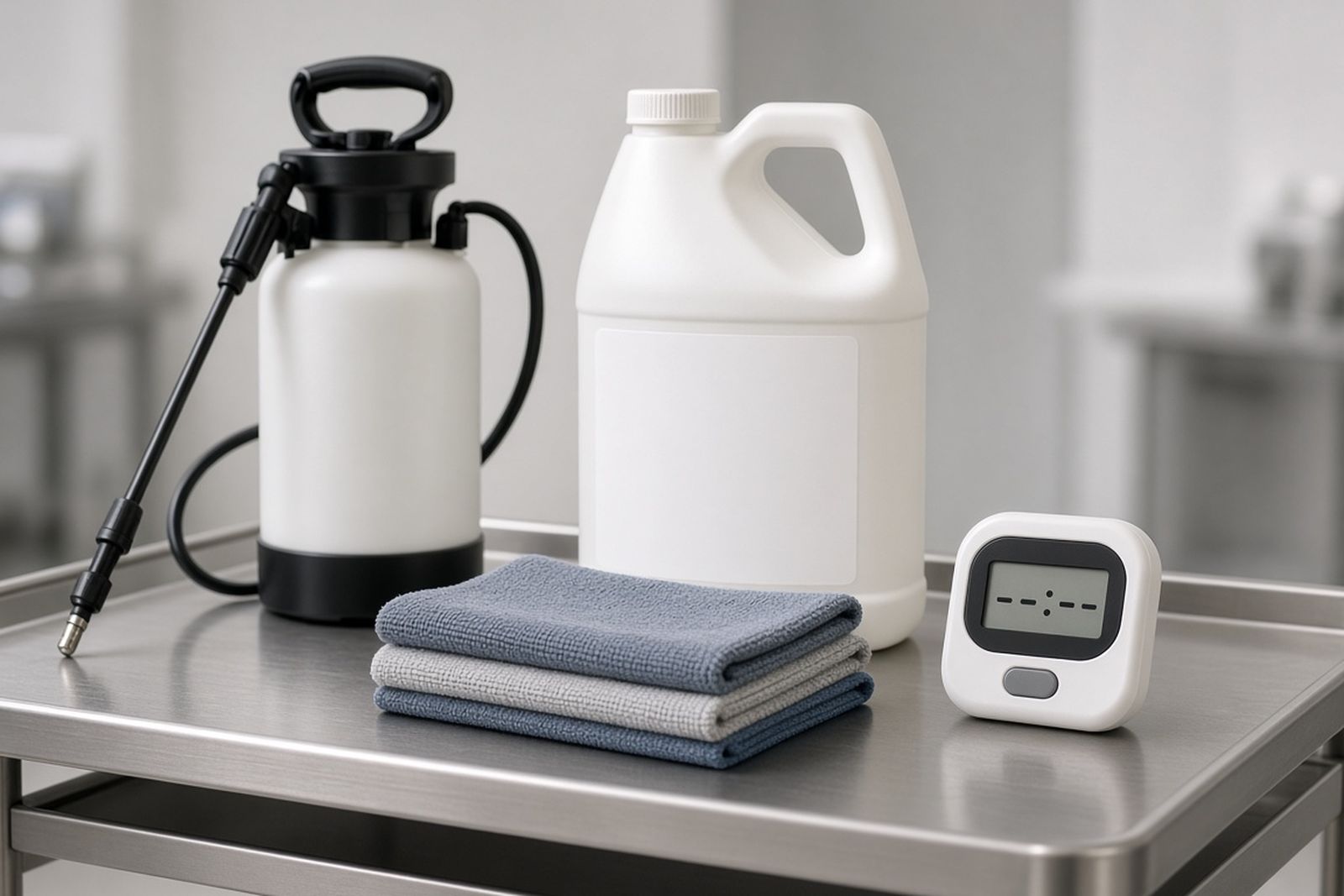
Apply enough product to keep surfaces visibly wet, use a timer, and reapply if a surface dries early.
Risks 3 and 4: when the process spreads germs
Risk 3 is stirring up contaminated droplets. Spraying disinfectant forcefully onto a surface covered in vomit, stool, or other body fluids can splash or aerosolize the material before the product has a chance to work. Using a high-pressure spray or a fan in a contaminated room can do the same.
Remove visible material first with disposable towels, then clean, then disinfect. Apply product gently, and avoid spraying soiled surfaces at close range.
Risk 4 is spreading germs with cloths, mops, and tools. A single cloth used across an entire room can carry organisms from a contaminated surface to a clean one. Mop water that is not changed becomes a reservoir. Biofilms add a less visible layer of risk. A 2024 survey by Centeleghe and colleagues found that awareness of dry-surface biofilms lags well behind awareness of biofilms in general, even among healthcare professionals, yet these films can persist on frequently touched surfaces and resist casual wiping.
Use fresh cloths often, work from clean areas to dirty ones, color-code cloths for different areas, and change mop water frequently. Launder reusable cloths on hot or discard disposables after use.
Risks 5 and 6: vapors and incompatible products
Risk 5 is breathing chemical vapors. Many disinfectants irritate the eyes, nose, throat, and lungs, especially when sprayed or used in poorly ventilated rooms. Repeated exposure can contribute to asthma symptoms. People who already have asthma or other breathing conditions are at higher risk.
Ventilate while you work by opening windows or running exhaust fans. Choose wipes or dampened cloths over sprays when practical. Check the safety data sheet for respiratory hazards, and use a mask or respirator if the label calls for one.
Risk 6 is mixing incompatible products. Bleach is widely used in disinfection. In a 2021 nationwide survey of hospital environmental cleaning by Han and colleagues, 81% reported bleach use on high-touch surfaces in contact-isolation rooms. Bleach mixed with ammonia-based products releases chloramine gases, and bleach mixed with acidic cleaners can release chlorine gas.
Use one product at a time, never combine products in a bucket or spray bottle, and rinse surfaces before switching products.
Risks 7 and 8: protective equipment and early re-entry
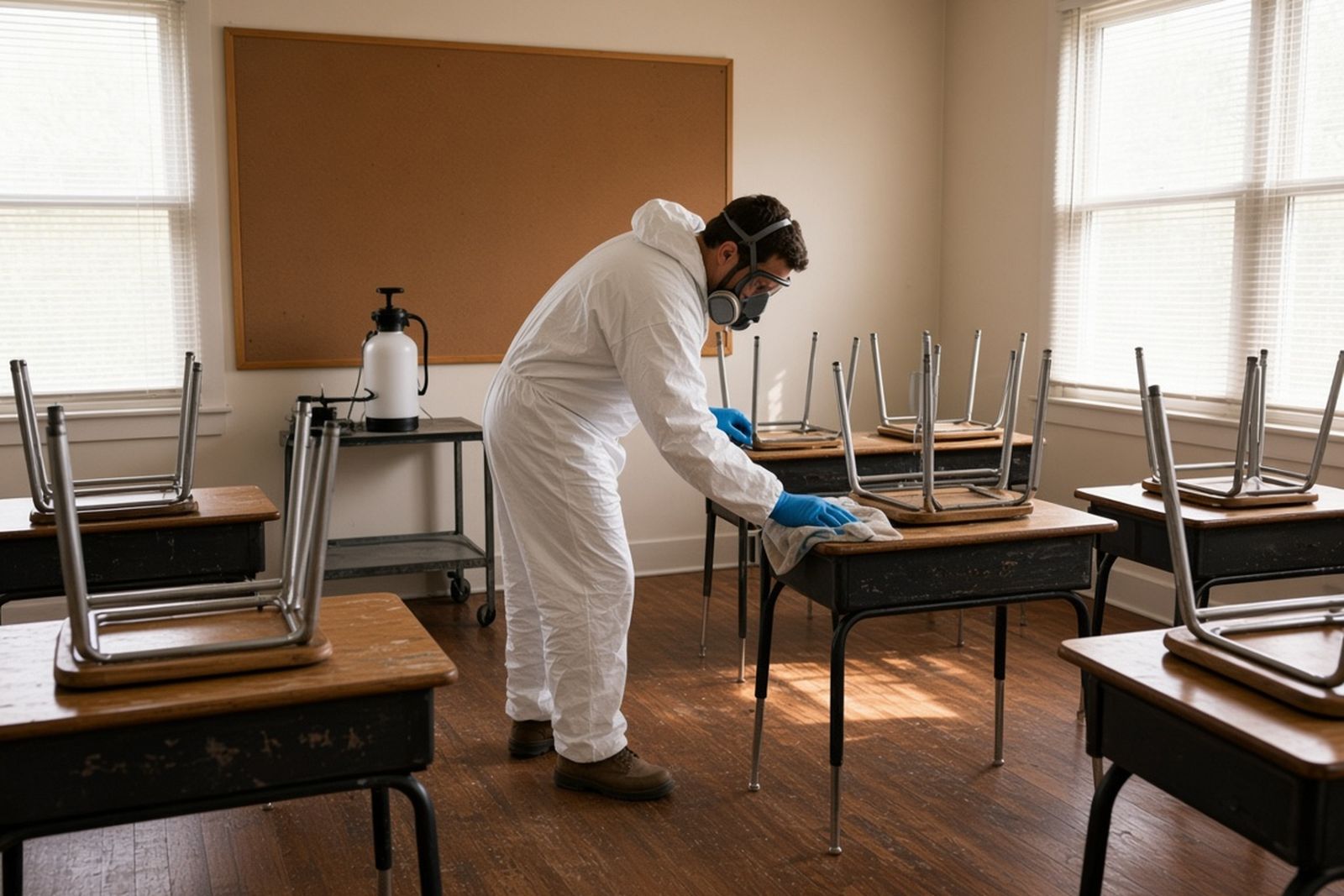
Risk 7 is protective equipment gaps and removal errors. Gloves that tear, gowns that do not cover wrists, and missing eye protection all leave openings for exposure. Removing protective equipment incorrectly is a common way people contaminate their own hands and faces at the end of a job.
Choose equipment suited to the organism and method, such as gloves, eye protection, gowns, and respirators for airborne illnesses. Practice a removal sequence that keeps the contaminated outside away from skin, typically removing gloves first or together with the gown, then eye protection, then the mask, and wash hands immediately afterward.
Risk 8 is returning too soon after spraying, fogging, or UV treatment. Some fogging and spraying products have label re-entry intervals, and UV-C light can injure skin and eyes if people are present during operation. Entering early exposes people to chemicals or light before it is safe.
Post signs, lock or monitor doors, and follow the label or manufacturer instructions for re-entry. Ask any provider to state the re-entry time in writing.
Protective equipment only helps if it is available where the work happens. Stock gloves in several sizes, keep eye protection with the cleaning supplies rather than in a distant closet, and replace items as soon as they run low. Staff who have to hunt for equipment are more likely to go without it.
Risks 9 and 10: surfaces, fire, and recontamination
Risk 9 is damaging surfaces and creating fire hazards. Repeated use of strong disinfectants can crack plastics, cloud screens, corrode metals, and discolor fabrics. Alcohol-based products are flammable and should not be used near open flames, heaters, or oxygen equipment. Damaged surfaces are also harder to clean in the future.
Check manufacturers' cleaning instructions for electronics and medical equipment, test products on a small area of fabrics, and store flammable products safely.
Risk 10 is recontamination from people who are still ill. A room can be disinfected thoroughly and then recontaminated within minutes if a sick person uses it again. Disinfection works best alongside isolation of sick people where possible, handwashing, and cleaning high-touch surfaces regularly until the illness has passed.
Plan disinfection as an ongoing routine during illness, with a thorough final round after recovery.
Running the check before an outbreak response
The check works best as a short meeting with the people who will do the work, held before anyone opens a bottle. When a stomach illness moves through a group home or care setting, it tends to surface the same issues. The wipes on hand may carry no norovirus claim, so a registered product that does needs to be ordered. Staff need timers to meet the contact time. Anyone with asthma can be assigned laundry and supply tasks instead of spraying.
The same meeting is the time to set up color-coded cloths for bathrooms and common areas and to walk through how to remove gloves and gowns safely. If residents who are ill still need a bathroom, dedicate one to them and schedule high-touch cleaning there several times a day. Ask the local health department how long to continue the enhanced routine, and document each round.
A disinfection risk checklist
A short checklist turns these risks into habits.
- Does the product label cover the organism involved?
- Do you have a way to time and meet the contact time?
- Has visible soil been removed before disinfecting?
- Is the room ventilated, and are people with breathing conditions protected?
- Is only one product in use, with others put away?
- Are cloths color-coded and changed often?
- Is the right protective equipment on, and does everyone know how to remove it?
- Is the re-entry time known and posted?
- Are electronics, fabrics, and flammable hazards accounted for?
- Is there a plan for ongoing cleaning while people are still ill?
Keeping disinfection both safe and effective
Safety and effectiveness usually point in the same direction. The right product used correctly, with good ventilation and protective equipment, protects both the people doing the work and those who return to the space.
If you manage a facility, build these checks into your outbreak plan and training. If you hire a provider, ask how they address each risk before work begins.
Keep your approach proportional. A single cold in a household does not call for the same measures as a norovirus outbreak in a care facility. Matching the effort to the actual risk avoids unnecessary chemical exposure while still protecting the people who matter most, and it keeps staff from tuning out warnings that are raised too often.
In healthcare, childcare, education, food service, and residential care settings, your licensing agency may set specific requirements, so confirm them before the next outbreak rather than during it.