Short answer
An outbreak response puts pressure on everyone: administrators fielding questions, staff worried about getting sick, families anxious about their loved ones, and cleaning crews working long hours. You can manage that stress by communicating early and plainly, setting realistic expectations about what disinfection can do, planning closures and reentry carefully, protecting the privacy of those who are ill, and looking after the people doing the work.
Why an outbreak creates so much stress
An outbreak turns an ordinary building into a place people are worried about entering. In a school, parents start texting each other before the principal has confirmed anything. In a care facility, families call the front desk repeatedly. In an office or gym, rumors spread faster than the illness itself.
For the person in charge, the pressure comes from several directions at once. You are managing sick staff or residents, coordinating with the health department, choosing a disinfection vendor, rearranging schedules, and answering questions you may not yet be able to answer.
Care settings often carry the heaviest load. According to CDC in 2024, about 2,500 norovirus outbreaks are reported in the United States each year, and over half occur in long-term care facilities. Staff in those buildings may have lived through several outbreaks and know how exhausting they are.
How do you talk to people without causing panic?
Silence tends to make anxiety worse. When people do not hear from leadership, they fill the gap with guesses. A short, factual message early in the response is usually better than a polished one two days later.
Say what you know, what you do not know yet, and what you are doing about it. For example: several people have reported stomach illness; we are working with the health department; we have scheduled professional cleaning and disinfection of affected areas tonight; we will update you by a specific time tomorrow. Then keep that promise.
Avoid promising that the building is germ-free or that nobody else will get sick. Those claims are not realistic, and if more cases appear, trust erodes quickly. Instead, explain the steps being taken and what people can do themselves, such as staying home when sick and washing hands carefully.
Choose one voice. When a principal, a school nurse, a district office, and a teacher each send slightly different messages, families notice the inconsistencies and assume something is being hidden. Agree internally on who will communicate, what channels you will use, and how often you will update, and route questions back to that person.
Plan for the questions you will get. People commonly ask whether they should keep children home, whether visiting is allowed, what the cleaning products are, and whether the building is safe tomorrow. Drafting short answers in advance saves time and keeps your tone steady when the phone starts ringing.
Protecting privacy and planning disruptions
In small communities, like a classroom, a group home, or a workplace team, people often guess who was sick first. That can lead to blame, gossip, or exclusion, which adds emotional harm to a physical illness.
Keep communications general. Refer to affected areas or groups rather than individuals, and ask staff not to discuss who was sick. Health information may also be protected by privacy rules depending on your setting, so check with your legal or compliance lead about what can and cannot be shared.
Remind everyone that infections are not a reflection of anyone's hygiene or character. Many organisms spread before symptoms appear, and even careful people get sick.
Disinfection work usually requires closing some areas, rearranging schedules, and keeping people out until surfaces have been treated and any label reentry intervals have passed. Planning those disruptions in advance reduces friction.
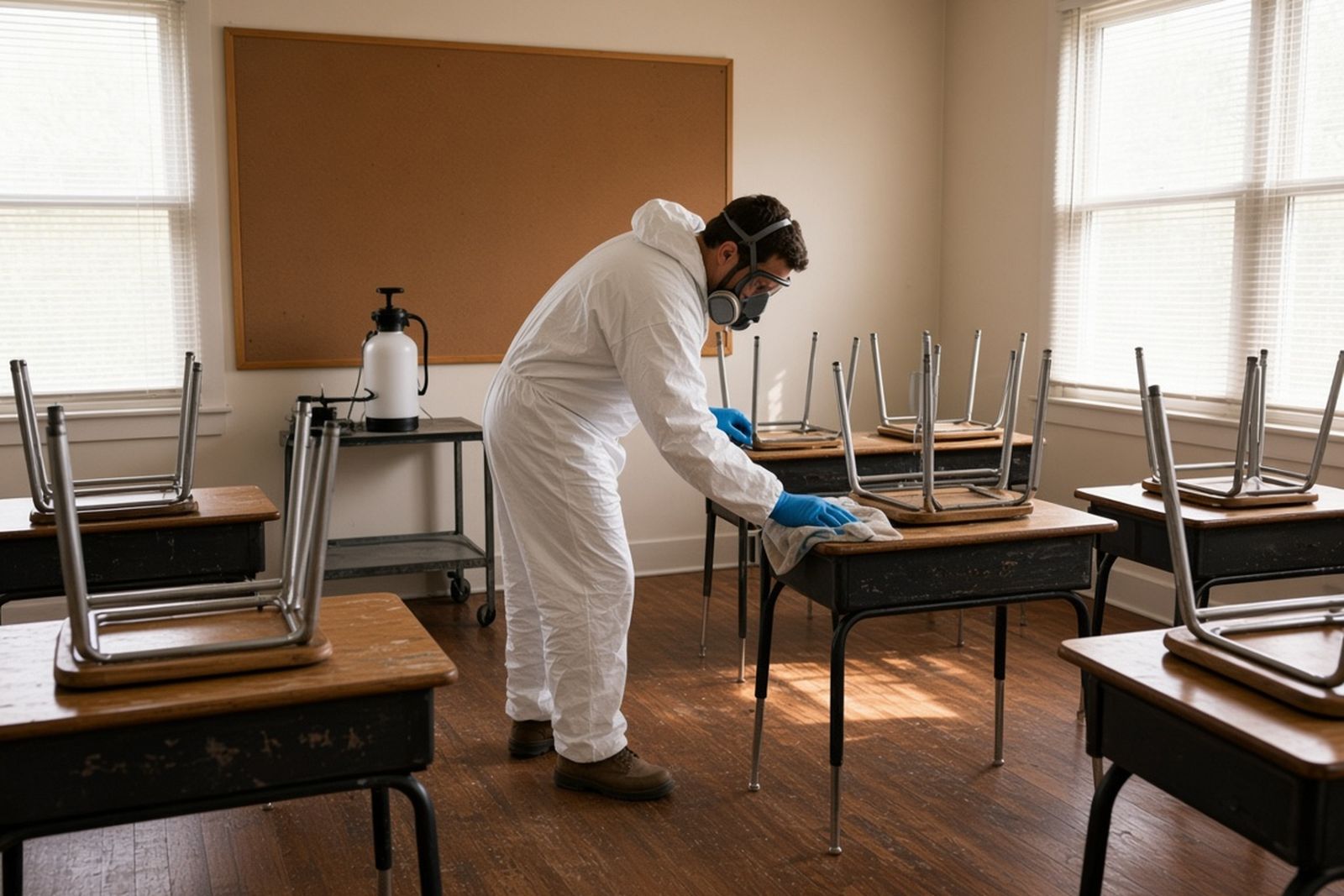
Visible work can be reassuring, but it can also alarm people if they are not expecting it. A crew in protective suits walking through a lobby during pickup time may prompt more worried calls than the illness itself. Where you can, schedule the most visible work after hours and let people know in advance that professional crews will be on site.
Useful planning steps include the items below.
- Identify which rooms or wings will close and for how long, based on the vendor's plan
- Arrange alternate spaces for classes, meetings, meals, or activities
- Tell staff when the crew will arrive and leave, and who to contact with questions
- Plan ventilation and reentry timing according to product labels
- Keep a quiet, clean space available for anyone who becomes ill during the day
- Prepare a short message for visitors explaining any closed areas
Worries about chemicals
Some people are as worried about disinfectants as they are about the illness. Parents of children with asthma, staff with chemical sensitivities, and residents with respiratory conditions may ask whether the products are safe.
Those concerns deserve a real answer, not just reassurance. Taking questions about chemicals seriously is part of good outbreak management, and it often calms people more than any statement about the illness.
Ask your vendor for product names, safety data sheets, and reentry guidance, and share a plain-language summary with anyone who asks. Choose products and application methods that fit your occupants, schedule work when buildings are empty where possible, and make sure spaces are ventilated before people return.
Supporting staff through a prolonged outbreak
Front-line staff often carry the heaviest emotional load. Nurses, aides, teachers, custodians, and front-desk employees may be covering for sick coworkers, worrying about bringing illness home, and absorbing frustration from families or members.
Acknowledge the strain openly. Adjust workloads where you can, make sure protective equipment and cleaning supplies are available, and give people accurate information so they are not relying on rumors. Recognize the custodial and environmental services staff whose extra effort often goes unseen.
Be alert to staff who come to work sick because they feel guilty leaving coworkers short-handed. That instinct is generous, but it can prolong an outbreak. Clear, supportive policies about staying home, and supervisors who model them, remove some of that pressure.
If your organization has an employee assistance program, remind staff that it exists. Short check-ins from supervisors, even a few minutes at the start of a shift, can make people feel less alone during a difficult stretch.
A group home keeps routines intact
Here is an illustrative case from a group home for adults with developmental disabilities, where three residents and two staff members develop vomiting and diarrhea over a weekend. Residents rely on consistent routines, and changes to their environment can be upsetting.
The director calls the local health department, notifies families with a brief message, and arranges for a disinfection vendor to treat bathrooms, the dining area, and shared living spaces. She asks the vendor to work in stages so residents can stay in familiar rooms while other areas are treated, and she has staff explain the visitors in simple terms: people are here to clean so everyone can feel better.
The vendor uses a product with a norovirus claim, cleans surfaces before disinfecting, and ventilates each area before residents return. The director sends families a second update the next day describing what was done and when visiting will resume.
The outbreak still runs its course, but residents' routines stay mostly intact, families feel informed, and staff know the building is being cared for properly.
Second waves, and helping the building feel normal again
Outbreaks do not always end after the first disinfection. New cases may appear because people were infected before cleaning, because illness is spreading person to person, or because an area was missed. Each new case can reignite worry and make people question the response.
Be honest about why this can happen. Explain that disinfection reduces risk on surfaces but cannot stop transmission between people who are already infected. Review the vendor's completion report to see whether any areas were inaccessible or whether additional treatment is warranted.
Continue regular updates, even if they are brief. Consistent communication signals that leadership is still engaged and that the situation is being managed, which is often more reassuring than any single action.
Once the outbreak is over, people may still feel uneasy. Some will hesitate to use certain restrooms or shared spaces. Others will keep wiping surfaces obsessively. Time helps, but so do deliberate steps.
Announce clearly when the outbreak has ended, based on your health department's guidance. Thank staff, families, and members for their patience. Share what you learned and any changes you are making, such as updated cleaning schedules, stocked hand hygiene stations, or a vendor on standby for future events.
Finally, take care of yourself. Leading through an outbreak is draining. Debrief with your team, note what worked, and rest when you can. A calm, prepared leader is one of the most effective outbreak tools any facility has. Your local health department can tell you when closed areas can reopen and normal operations can resume.