South · US

Infectious Disease Disinfection Planning in Alpharetta, GA

Planning infectious disease disinfection in Alpharetta, GA

Alpharetta HOA disinfection planning. Covers clubhouse baths, carpool mudrooms, EPA claims, the limits of List N, and CDC community hygiene steps. This is planning guidance, not a claim of a local office or crew in Alpharetta.

Get an email reply about infectious disease disinfection

Send a short message to the follow-up inbox. A coordinator can reply by email. This form does not send emergency help; call 911 first if anyone is in danger.

Tell us what you need help with. Share a short description; please leave out medical details, access codes, and other sensitive information.

A request does not confirm a booking. For immediate danger, contact local emergency services.

Or email info@prompartybuses.com

Direct answer

The short answer for Alpharetta, GA

Townhomes near Avalon, GA 400 carpools, and HOA clubhouses opened by key fob need North Fulton records. Do soccer cleats before formal dens. Keep List N inside its COVID-19 limits. Refuse sterile-suburb certificates after a citrus wipe.

Editorial guide · Biohazard Remediation NetworkUpdated 2026-07-22Location focus: Alpharetta, GA

Local planning context

In Windward-style cul-de-sacs and around tech-campus badge readers, germs hide in the mudroom. Wet soccer cleats, backpacks, and fridge runs after practice all end up there. Formal dens stay quiet, while powder-room levers and garage keypads see constant hands. List those spots for the days someone was contagious, instead of fogging a den nobody used. Evenings at Avalon and youth tournament weekends change which clubhouse fixtures see the most hands. Pickup runs to North Point stores add another keypad cluster after practice that formal dens never see.

School carpools and GA 400 backups squeeze reopening choices. Sealed cooling traps smells after products go on. A parent racing to school may towel off a damp tap. The product then stops early. Team jerseys, entry runners, and fabric sectionals usually need washing or temporary removal. A lemon-scented wipe of the mudroom bench doesn't make the house sterile. If a soccer injury leaves blood on the mudroom floor, workers need an OSHA bloodborne pathogen plan.

Clubhouse key fobs and pool gates create shared restroom clusters that private dens never see. Map those spots when HOA calendars reopen after an illness report. Device sterilization language belongs in clinics, not in HOA email blasts.

Property considerations

Start with cleat benches, backpack hooks, garage keypads, and powder-room levers.

Wash or remove team jerseys and entry runners before any product goes on.

Treat the kids' bath after drop-off, not before.

Handle kitchen counters, which may need a rinse, separately from the garage keypad and powder-room levers.

Block carpool and clubhouse fob traffic until the wet time is done.

HOA and sitter notes skip any illness names.

Response-planning framework

Sketch where hands went on tournament weekend

Sketch where the kids went after the tournament. Think mudroom bench, garage keypad, powder room, and fridge. Treat those. Keep any promise of a germ-free home or sterile neighborhood out of messages to other families.

Clear the clay off cleat benches first

Red clay under backpacks blocks the spray. Leave the kids' taps and the garage pad damp for the bottle's full time. Log the wet period, so a citrus smell never stands in for a finished job.

Hold the rooms through the GA 400 drop-off

Nobody walks through the treated mudroom or half bath until both the label timer and SDS notes say so. One family schedule beats wiping panels dry for a North Point carpool. The hall bath counts only if it got treated. Use the HVAC fresh-air setting if your system has one. Don't tell the family the air is sterile.

A board packet for Windward-style HOAs

Give the HOA board a short summary of the clubhouse work. Include the products, surfaces, wet times, and reopening time. A fridge swab? Film only. Leave out names and illnesses.

Documentation checklist

  1. 1Sketch of cleat-bench and powder-room traffic
  2. 2Note on the tournament or carpool exposure, without names
  3. 3EPA registration numbers and the germ claims used
  4. 4Proof that clay was removed from benches and baths
  5. 5Wet-period start and stop times for powder rooms
  6. 6Family reopening schedule tied to GA 400 drop-offs
  7. 7Decisions to wash or bag jerseys and runners
  8. 8HOA clubhouse note that keeps private dens out of the job

Official resources

Questions for this location

After a youth-soccer carpool stomach cluster, where should a townhome start?

Start with the powder room the kids used, the fridge pulls on that path, and the cleat bench where backpacks landed. Jerseys go to the laundry, not a spray bottle. HOA notices shouldn't suggest List N covers every stomach virus from a soccer carpool. Confirm the stomach-germ claims on the bottle you used. Handwashing still matters at the cleat bench.
If the clubhouse restroom was wiped, are upstairs bedrooms finished too?

No. Trace the laundry baskets, kitchen pulls, and mudroom pads. Treat only the high-touch objects that were on the path while someone was contagious. Keep them wet for the labeled time. A lemon smell in a powder room doesn't sterilize the upstairs. Shared washers need their own line item. Write down what was in and out of the job.

What should a nanny tell grandparents while the mudroom is closed?

Name the closed rooms and the SDS return time, and nothing about diagnoses. Surface work lowers germs on treated objects. It isn't a vaccine or a test result. No fog near a frail grandparent. A bloody scrape changes the rules. Never promise hospital-grade sterilization of a suburban townhome.

Why do North Point drop-offs cut the label wet time short?

Sealed cooling holds smells, so someone wipes fixtures dry to leave for GA 400. That ends the disinfecting early. Let the full wet time run, even if carpool pickup means the house stays empty a little longer. Air out carefully afterward. Runners may need longer to dry. Record the schedule you actually used. Carpool calendars don't widen what List N covers.

What should go to an insurer after a North Fulton school-week project?

List each bottle, its EPA number, and every room. Show how red clay and field dirt were cleaned off first, the wet times, and what happened to jerseys and runners. Add fresh-air steps and reopening times. Prep photos help. A residue swab only hints at leftover grime. No townhome is germ-free on paper. Keep children's names and illnesses out of the paperwork.

How should an Alpharetta family clean a minivan after a carpool stomach illness?

Remove soiled items first and bag them. Wipe the seat-belt buckles, door handles, window buttons, cupholders, and sliding-door handles with detergent. Follow with a spray made for car cabins. Fabric seats and floor mats may need a carpet or upholstery cleaner instead, or a wash if the mats come out. Leave the doors open to air out the van while products work. Let the other carpool families know the van was cleaned.

What should an Alpharetta HOA clubhouse do before hosting a birthday party after a recent illness report?

Before the party, clean and disinfect restroom fixtures, door handles, kitchen counters, and tables, following each product's contact time. Put out hand sanitizer and ask hosts to use serving utensils. The HOA doesn't need to cancel the event unless public health staff advise it. After the party, clean the same surfaces again. If several guests get sick afterward, the county health department can help look into it.

Contact

Get help by email

Send a short message for an email reply about infectious disease disinfection planning questions for the Atlanta area.

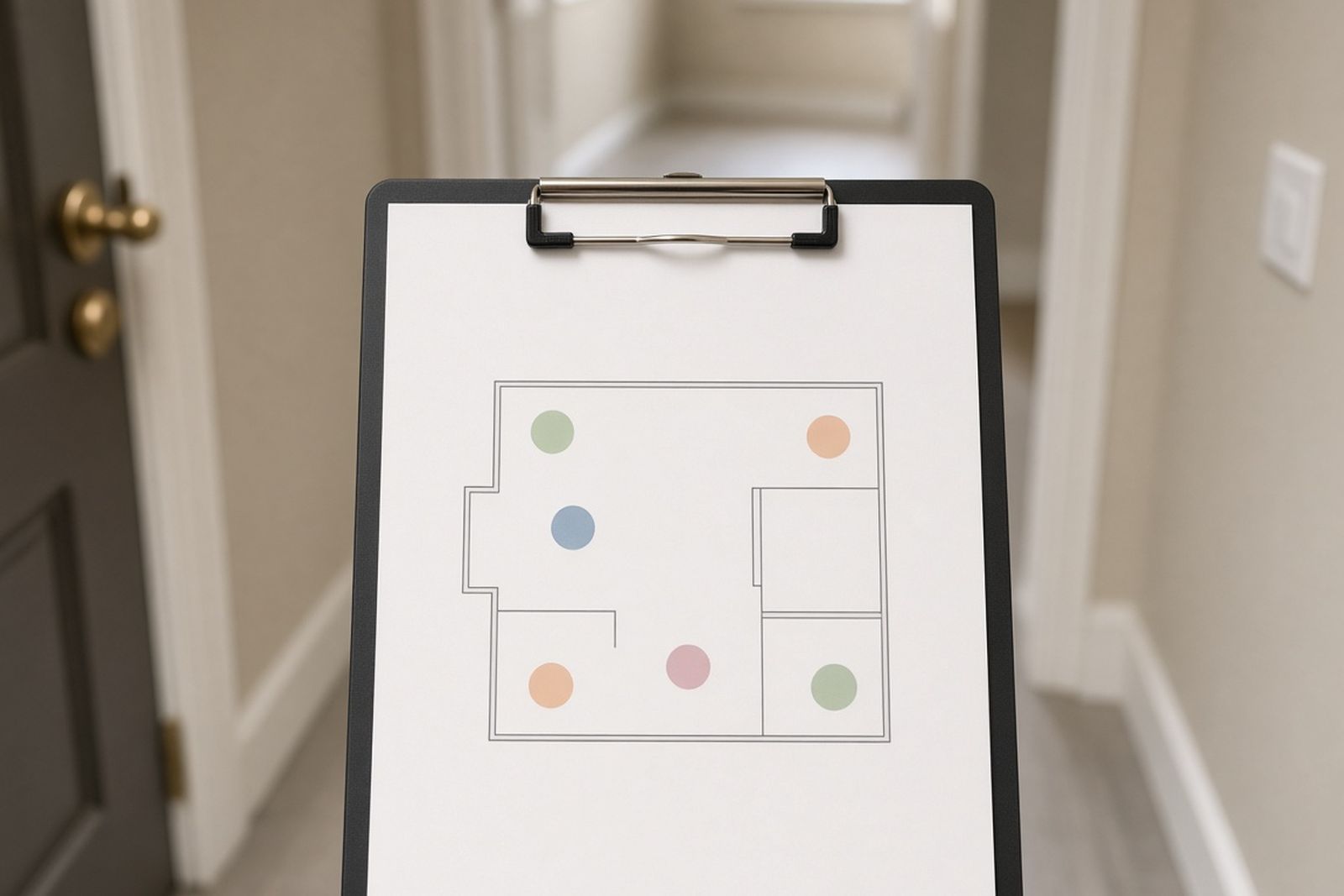
Clipboard showing a room plan with color-coded dots marking high-touch surfaces
Illustrative photo, not a job record. Clipboard showing a room plan with color-coded dots marking high-touch surfaces.
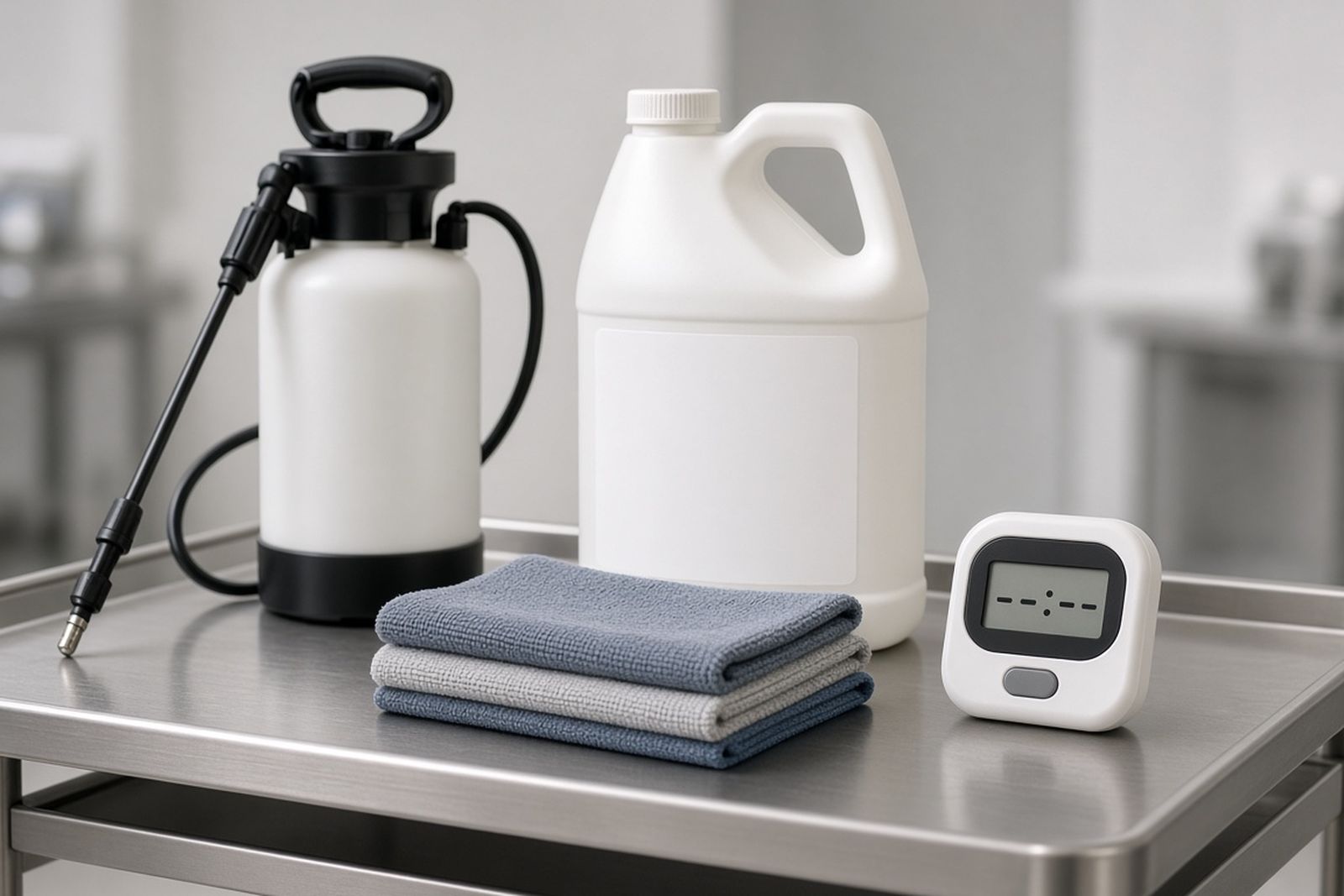
Pump sprayer, disinfectant jug, folded cloths and a contact-time timer on a steel cart
Illustrative photo, not a job record. Pump sprayer, disinfectant jug, folded cloths and a contact-time timer on a steel cart.

Infectious Disease Disinfection figures to keep in mind

National and research figures, not Alpharetta data. Local conditions, rules and providers vary; use these for scale and context only.

11

Six of 11 interviewees described concerns or problems from inhaling cleaning chemicals.

Read with care: Small voluntary sample; no causal inference; survey item nonresponse substantial.

Source: Wilson et al. (2023)59 Arizona survey respondents and 11 interviewees from maid services and a school district.

70.8%

70.8% favoured combining methods for cleaning and disinfection.

Read with care: Reported knowledge and practices, not observed compliance or infection outcomes.

Source: Centeleghe et al. (2024)137 healthcare-professional respondents; convenience/purposive online sample across the pandemic.

8

Products above pH 8 accounted for 74% of failures in the experiment.

Read with care: Accelerated test conditions; not a failure rate for installed equipment.

Source: Jennings et al. (2024)Eight wipe formulations tested on healthcare plastics under fixed strain for seven days.

These figures are public research and agency data, not this network's own job records. Keep each number with its population, year and limits; none of them predicts cost, timing or outcome at a specific property.

Plan before you reach out

Use the first 24 hours planner for immediate steps and the provider vetting checklist to confirm any Alpharetta provider's training, insurance and waste path in writing.

What research has found

Findings from published studies of people and properties in situations like this one. They describe what researchers observed in a specific group; they are not predictions for your case.

Conferences and study days were a major source of biofilm knowledge.
Who was studied: 137 healthcare-professional respondents; convenience/purposive online sample across the pandemic.Limits: Reported knowledge and practices, not observed compliance or infection outcomes.Infection prevention control in practice: a survey of healthcare professionals’ knowledg… (2024)
Floors were disinfected less consistently than high-touch surfaces.
Who was studied: 47 US hospital environmental-services respondents across 26 states; 2019 survey.Limits: 47 of 273 contacted participated; practices were reported rather than observed.Environmental cleaning and disinfection of hospital rooms: A nationwide survey (2021)

Infectious Disease Disinfection community polls

Poll results

Every count is a real visitor vote; nothing is seeded or padded. One vote per poll per device, and you can change your answer.

Your experience

When your facility had an illness cluster, how did you handle cleaning?

No visitor votes yet
Process

How did you decide whether to close all or part of the facility?

No visitor votes yet

Planning cleanup in Alpharetta?

Send a short message about the property to the follow-up inbox. A coordinator can reply by email with next steps.

Your request is sent to the follow-up inbox. A coordinator can reply by email.

If anyone is hurt or in danger, call 911 first.