South · US

Infectious Disease Disinfection Planning in Buckhead, GA

Planning infectious disease disinfection in Buckhead, GA

Buckhead tower disinfection planning. Covers valet and locker maps, amenity wet times, honest EPA List N limits, and CDC clean-then-disinfect steps. This is planning guidance, not a claim of a local office or crew in Buckhead.

Get an email reply about infectious disease disinfection

Send a short message to the follow-up inbox. A coordinator can reply by email. This form does not send emergency help; call 911 first if anyone is in danger.

Tell us what you need help with. Share a short description; please leave out medical details, access codes, and other sensitive information.

A request does not confirm a booking. For immediate danger, contact local emergency services.

Or email info@prompartybuses.com

Direct answer

The short answer for Buckhead, GA

Peachtree valet stubs, package rooms near Lenox, and amenity decks booked by app need tower records. Do private elevator cars before unused balconies. Keep List N inside its COVID-19 limits. Refuse sterile-penthouse certificates after a scent machine runs in the sky lobby.

Editorial guide · Biohazard Remediation NetworkUpdated 2026-07-22Location focus: Buckhead, GA

Local planning context

Peachtree towers pile germs onto valet stub counters, package lockers stuffed with deliveries, amenity restroom levers, and private elevator call plates. None of these ever show up in balcony listing photos. Fulton County Board of Health materials can help spread factual resident notices. They don't certify a penthouse as sterile. Delivery spikes near Lenox fill package rooms with cardboard grit, which blocks the product if nobody cleans it first.

Sealed cooling and lots of padded banquettes change how smells clear after products go on. Concierge apps push the gym and club lounge to reopen early. That tempts staff to buff wet panels dry before the wet time ends. A scent-machine cycle is not a sterilization certificate.

Medical and dental suites in the podium share parking ramps with residences near Lenox traffic. Instrument-cleaning terms belong to those podium suites. No association notice should suggest the tower was sterilized because a dental suite cleaned its treatment rooms. Ride-share drop-offs near Phipps create a second cluster of stub tickets that unused balcony furniture never sees.

Property considerations

Put valet counters, package lockers, amenity restroom levers, and private elevator plates first.

Lounge cushions and gym mats leave for the wash first.

Keep amenity restrooms and treated elevators empty through the labeled wet time.

Private kitchen counters may need rinsing; lounge tables usually do not.

Override booking-app pressure to reopen until the wet time is done.

Share only SDS and empty-period facts. Never claim a sterile tower.

Include the concierge desk phone handsets if they were on the path while someone was contagious.

Include sky-lobby turnstile paddles if residents badged through after the illness.

Response-planning framework

Sketch the path from Lenox deliveries to the lounge

Ask the board whether it sounds like vomiting in the amenities or a cold or flu exposure. Use no resident names. Choose EPA-registered products whose labels list the germ behind the lounge report. A COVID-19 List N entry says nothing about a lounge stomach bug. Ban sterile-penthouse slogans near Peachtree.

Scrub cardboard grit out of package rooms

CDC community guidance wants locker grit and restroom grime gone first. Missed residue on valet stub counters keeps the product from working as labeled. Keep private elevator plates wet for the printed time. A scent-machine cycle proves nothing.

Override spin-class bookings

Block spin classes and lounge bookings in the app for the full wet time. Don't let staff wipe panels dry for a reserved session. A backup restroom only helps if it was treated too.

A Peachtree association binder

Sky-lobby tap swabs show film, not germs. Send residents with health questions to the county board of health or their own doctor, not the concierge desk.

Documentation checklist

  1. 1Sketch of valet stub and package-locker traffic
  2. 2Note on the amenity exposure, without names
  3. 3EPA registration numbers and the germ claims used
  4. 4Proof that cardboard grit was removed
  5. 5Private-car and club-bath wet clocks
  6. 6Booking-app override schedule for reopening
  7. 7Decisions to wash or bag banquettes and mats
  8. 8Note that podium clinic floors were left out of the residential work
  9. 9Note on the ride-share stub-ticket cluster at the porte-cochere

Official resources

Questions for this location

After a club-lounge stomach cluster near Peachtree, what should boards treat first?

Start with the amenity restrooms used during the illness, the package lockers stuffed with Lenox deliveries, private elevator call plates, and valet stub counters. Yoga mats go to the laundry. Tower associations shouldn't treat List N as norovirus insurance for every amenity. Confirm the label's stomach-germ claims before posting reopening notices. Handwashing still matters in valet lines.
If the lounge smelled like cleaner, are private stacks above Lenox finished?

No. Trace the elevator cars, unit kitchens, and laundry. Keep every lounge and elevator touch point on that route wet for the full labeled time. A lounge fragrance doesn't sterilize bedrooms. Untreated stacks need clear exclusion lines. List N is not a master key for every germ residents post about in building chats.

How should concierge desks describe closed amenities without diagnosing anyone?

Name the closed amenities and the SDS return times, and nothing more. Cleaning vendors are not clinicians. A spray on a lounge table is no vaccine. Skip fogging around medically fragile residents who stay in the building. Bleeding from a gym injury may call for a bloodborne pathogen plan.

Why do spin-class booking apps cut wet times short?

Sealed cooling holds smells, so staff wipe panels dry before a booked class. That ends the disinfecting early. Keep the full wet time, even if the lounge sits empty longer than the concierge app promised. Air out as the SDS directs. Porous banquettes may need longer to dry. Record the override schedule. HVAC settings don't widen what List N covers.

What should a Peachtree association send an insurer after amenity work?

Send the insurer a plain record. List the products and registration numbers and the lounge, lockers, and elevators treated. Note the grit scrub, each timer, and where the mats and banquettes went. Add fresh-air steps and reopening times. Prep photos help. A residue swab only hints at leftover grime. A germ-free badge for a Peachtree tower would be marketing, not fact. Residents with health questions belong with their doctor or county public health staff, not the valet desk.

How should a Buckhead tower resident clean after returning from a trip with a stomach bug?

Unpack your bags in one spot, like the laundry room. Wash travel clothes right away on warm settings. Clean the bathroom you use with detergent first. Then disinfect the toilet flush, faucet, and door handle each day while you're sick. Wipe your phone and keys. Ask the concierge to leave deliveries at your door. Once you're well, disinfect kitchen handles and remotes. Tell building staff only what they need to know about deliveries.

What should a Peachtree association do about valet keys after an illness report among staff?

Valet keys and stubs pass through many hands. Staff should wash hands or use sanitizer between cars. They should clean the key cabinet handle and counter several times a day during the illness. Key fobs can be wiped with a disinfectant wipe that won't damage electronics. Sick staff should stay home as their doctor advises. The association can tell residents extra cleaning is under way without naming any employee.

Contact

Get help by email

Send a short message for an email reply about infectious disease disinfection planning questions for the Atlanta area.

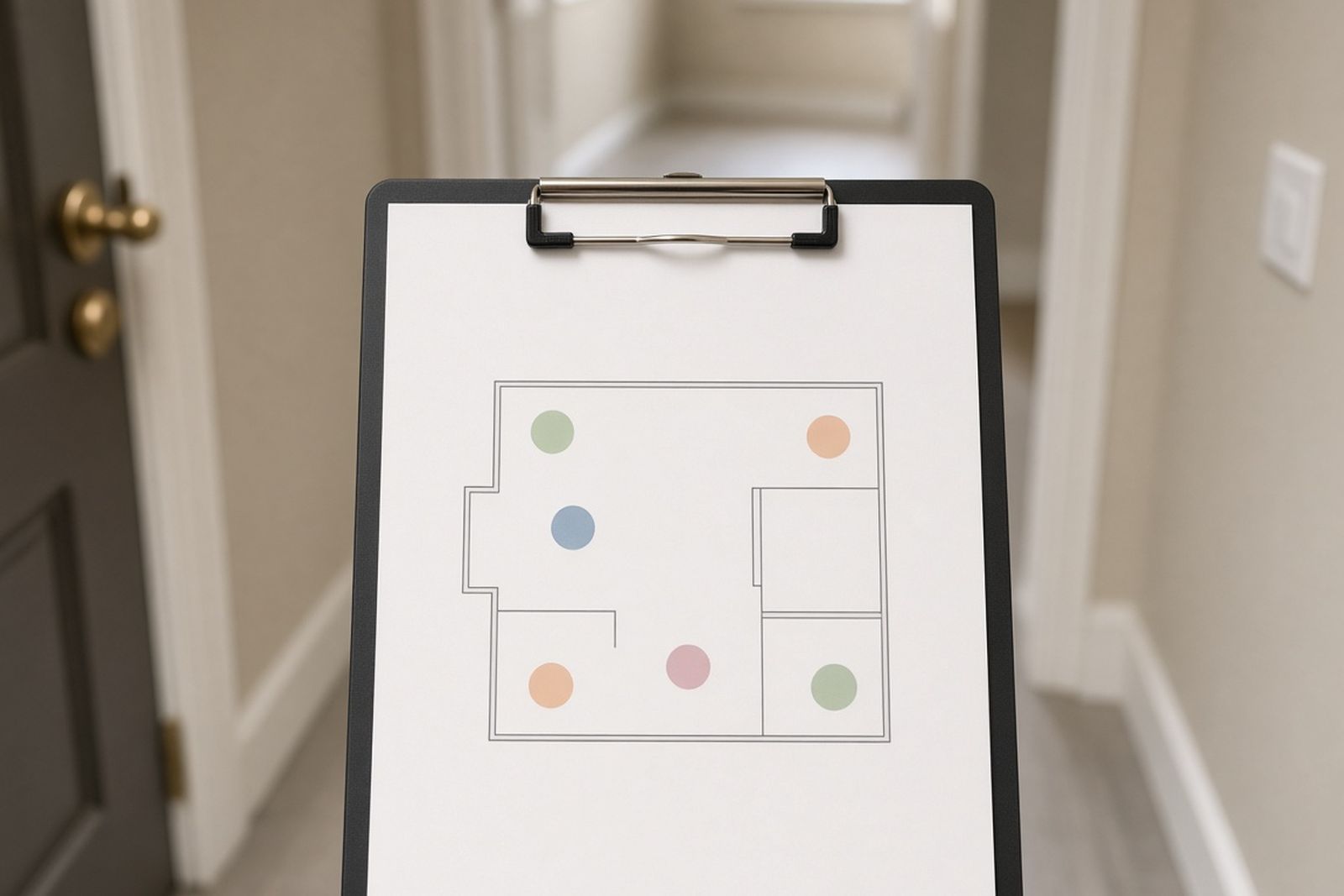
Clipboard showing a room plan with color-coded dots marking high-touch surfaces
Illustrative photo, not a job record. Clipboard showing a room plan with color-coded dots marking high-touch surfaces.
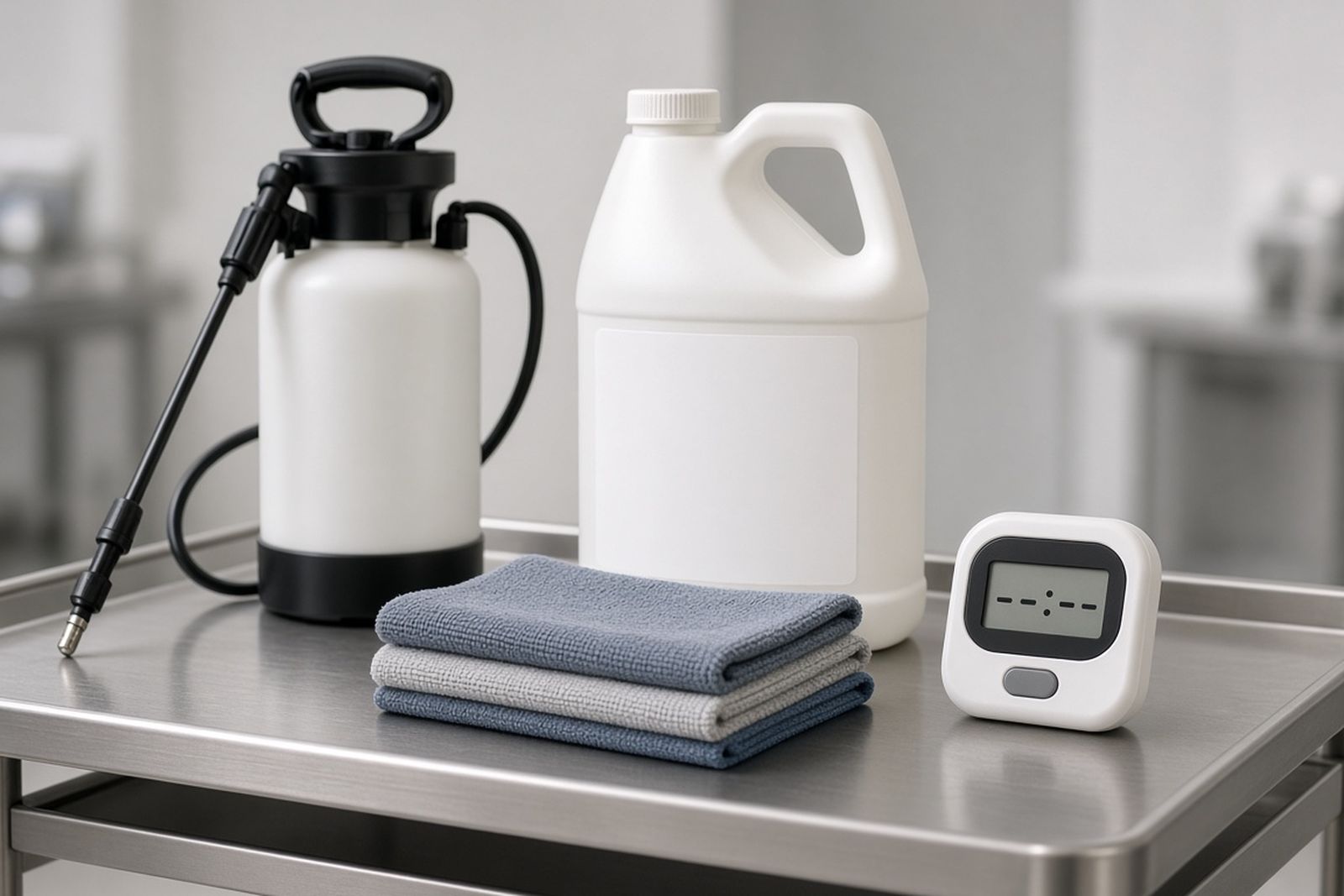
Pump sprayer, disinfectant jug, folded cloths and a contact-time timer on a steel cart
Illustrative photo, not a job record. Pump sprayer, disinfectant jug, folded cloths and a contact-time timer on a steel cart.

Infectious Disease Disinfection figures to keep in mind

National and research figures, not Buckhead data. Local conditions, rules and providers vary; use these for scale and context only.

$0.10-$0.30 per sq ft

ISSA's commercial cleaning pricing guide lists electrostatic disinfection at $0.10 to $0.30 per square foot and medical facility cleaning at $0.14 to $0.29 per square foot.

Read with care: Trade-association ranges; actual quotes vary by region, square footage and frequency.

Source: ISSA (2025)United States commercial facilities, industry-wide ranges, December 2025

$15-$400+

HomeAdvisor reports that disinfecting a home to reduce germs, bacteria and viruses costs anywhere from $15 to $400 or more depending on DIY versus professional service.

Read with care: Broad range mixing DIY supplies and professional visits; specialized biohazard work costs more.

Source: HomeAdvisor (2026)United States residential, cost guide updated June 2026

6 log10

A 2020 study found an electrostatic sprayer applying 0.25% sodium hypochlorite reduced C. difficile spores by 6 log10 or more with a 5-minute contact time and disinfected a 15-20 chair waiting room in about 5 minutes.

Read with care: Results are specific to the tested sprayer and disinfectant; efficacy depends on the chemical, not the sprayer alone.

Source: American Journal of Infection Control (2020)Laboratory and hospital field testing, single device and disinfectant

These figures are public research and agency data, not this network's own job records. Keep each number with its population, year and limits; none of them predicts cost, timing or outcome at a specific property.

Plan before you reach out

Use the first 24 hours planner for immediate steps and the provider vetting checklist to confirm any Buckhead provider's training, insurance and waste path in writing.

What research has found

Findings from published studies of people and properties in situations like this one. They describe what researchers observed in a specific group; they are not predictions for your case.

Transfer risk varied by product chemistry.
Who was studied: Six commercial wipe products; two bacterial strains on nonporous Formica.Limits: Specific products and strains; no general maximum area or disease outcome established.Cross-contamination by disinfectant towelettes varies by product chemistry and strain (2020)
Wiping physically removed some spores from the inoculated area.
Who was studied: Non-sporicidal-claim wipes tested on Formica with C. difficile spores.Limits: Not a comparison of all sporicidal products; physical removal is not complete inactivation.Disinfectant wipes transfer Clostridioides difficile spores during the disinfection proc… (2020)

Infectious Disease Disinfection community polls

Poll results

Every count is a real visitor vote; nothing is seeded or padded. One vote per poll per device, and you can change your answer.

Your experience

When your facility had an illness cluster, how did you handle cleaning?

No visitor votes yet
Process

How did you decide whether to close all or part of the facility?

No visitor votes yet

Planning cleanup in Buckhead?

Send a short message about the property to the follow-up inbox. A coordinator can reply by email with next steps.

Your request is sent to the follow-up inbox. A coordinator can reply by email.

If anyone is hurt or in danger, call 911 first.