South · US

Infectious Disease Disinfection Planning in Arlington, VA

Planning infectious disease disinfection in Arlington, VA

Arlington, VA disinfection planning near Metro. Covers busy hallway touch points, EPA claims, List N limits, wet times, and honest ways to lower risk. This is planning guidance, not a claim of a local office or crew in Arlington.

Get an email reply about infectious disease disinfection

Send a short message to the follow-up inbox. A coordinator can reply by email. This form does not send emergency help; call 911 first if anyone is in danger.

Tell us what you need help with. Share a short description; please leave out medical details, access codes, and other sensitive information.

A request does not confirm a booking. For immediate danger, contact local emergency services.

Or email info@prompartybuses.com

Direct answer

The short answer for Arlington, VA

Crystal City contractor floors, Pentagon City homes linked to the mall, and Orange Line badge lobbies need Northern Virginia plans. Do shared touchscreens before decor. Keep List N inside its COVID-19 limits. Refuse sterile-campus certificates after a lunch-hour fog.

Editorial guide · Biohazard Remediation NetworkUpdated 2026-07-22Location focus: Arlington, VA

Local planning context

On Crystal City and Rosslyn contractor floors, weekday illness questions center on a few items. Badge readers, touchscreen booking panels, hot-desk USB arms, and shared mouse kits pass between hybrid workers. Mapping those spots beats fogging a sculpture nook in reception. Arlington County Public Health can support factual tenant notices. It doesn't turn an office floor into a sterile clinic.

Pentagon City homes linked to mall parking and Metro tunnels add package rooms and amenity keypads. Overnight staff feel pressure to reopen them. Humid summers change how fast smells clear. The label sets the clock, not a standup. Soft booth cushions and headset ear pads usually need washing, new covers, or leaving out. Hard-surface germ claims don't cover them.

Wellness clinics in mixed towers share elevators with apartments. Office floors and residential amenity rooms fall under CDC guidance for ordinary community settings. If blood shows up on a Rosslyn office floor or in a Pentagon City amenity room, workers may need an OSHA bloodborne pathogen plan.

Property considerations

List badge readers, booking touchscreens, hot-desk USB arms, and shared mouse kits first.

Decide on cover changes for booth cushions and headset ear pads before any product goes on.

Keep conference rooms empty through the labeled wet time when hybrid workers return in waves.

Keep office kitchenette counters, which may need a rinse after disinfecting, separate from the product used on hot desks.

Night staff get one clock for the package room and amenity keypads.

Contractor floor notices should say nothing about the wellness clinic's own cleaning.

Response-planning framework

Chart the path from badge to hot desk

Trace arrivals from the Metro or garage through the badge lobby, booking panel, and assigned desk area. Flag the badge readers, mouse kits, and any restroom where someone was sick as places to scrub first. Write which floors are in the job. Reception art left untouched shouldn't look finished. Note the illness pattern without diagnosing coworkers.

Match EPA claims to the outbreak

List N is a COVID-19 reference only. It doesn't tell an Arlington office manager which products handle norovirus or spore-forming germs. When a clinician raises a spore concern, the product needs a spore claim on its label.

Guard the wet time from standup calendars

Follow SDS fresh-air guidance in humid summer air. Sensitive staff may need more time. Sending staff to another floor's restroom helps only if that restroom was treated too.

A facilities packet for Arlington County questions

Keep product names, EPA numbers, the desk areas treated, cleaning notes, and wet-time logs for the tenant file. A residue swab on a badge-lobby restroom tap checks for grime only. It doesn't identify germs. Medical questions belong with clinicians, Arlington County Public Health, or VDH.

Documentation checklist

  1. 1List of hand-contact spots in the badge lobby and hot-desk areas
  2. 2What the nightly janitors did versus the special cleanup
  3. 3EPA numbers, germ claims, and contact times for products used on hot desks, badge lobbies, and amenity rooms
  4. 4Detergent cleaning sign-off for mouse kits, booking panels, and restrooms before disinfection
  5. 5When each conference room was treated and reopened
  6. 6Overnight-staff reopening time for package rooms and amenities
  7. 7Crystal City tenant notices, stripped of health facts
  8. 8Notes on headset and booth soft items left out or given new covers

Official resources

Questions for this location

Can a Crystal City hot-desk neighborhood reopen between standups if it was sprayed at lunch?

The desks qualify when they were washed before treatment and nobody sat there until the label's timing ran out. A spray between standups while contractors keep using the same hot desk doesn't meet that bar. Block the area on the booking panel for the afternoon. Keep product names and times for the tenant file. Don't tell clients the floor was sterilized.
How should managers treat shared mouse kits after a gastrointestinal cluster?

Collect the mouse kits and wipe off visible grime. Disinfect them with a product that's safe for electronics and labeled for the germ involved. A product on List N isn't proven against norovirus unless its label says so. Soft ear pads and fabric booth cushions usually need washing or replacing. Put the kits back only when the product has dried. Reopen the whole area on one written time.

A contractor on our Rosslyn floor had COVID-19. Is a List N product the whole answer?

No. On a Rosslyn contractor floor, List N identifies products EPA has listed for the COVID-19 virus under label directions. Check the EPA number. Follow the contact time and surface directions for screens, laminate, and badge readers. List N doesn't cover the stomach bugs that can move through a shared office later.

How should notices separate clinic tenants from office-floor work?

Write them separately. A wellness clinic in the tower cleans its rooms under its own rules. That has nothing to do with the contractor floors or apartments sharing the elevators. The office notice should list only the badge lobby, conference rooms, and kitchenettes that were cleaned, and when they reopen. Leave out any mention of clinical cleaning, and never call the building sterilized.

What verification is realistic after badge-lobby disinfection?

A short file is realistic. List the products and labels used on badge readers, turnstiles, and lobby restrooms. Add the cleaning steps, wet times, and the time the lobby reopened. A couple of photos help. Swab readings show film, nothing more. Reject certificates promising the lobby is germ-free. Leave out the names of anyone who was sick. Keep the file where the tenant's facilities team can find it.

How should an Arlington employee clean a shared headset or hot-desk kit before using it?

Wipe the headset band, microphone arm, keyboard, and mouse with a disinfectant wipe the office provides. Keep each surface wet as long as the wipe's label says. If the ear pad covers are fabric, replace or remove them, since wipes don't work well on cloth. Let the kit dry before you use it. Wash your hands afterward. If you're not sure which wipes are safe for electronics, ask facilities which product they approve.

What should a Pentagon City resident expect when a building amenity closes for disinfection?

Expect a notice from building management. It should say which amenity is closed, when it reopens, and sometimes which other rooms you can use instead. Management shouldn't say who was sick. The closure should follow the product's contact and return directions, so it may last longer than a quick wipe-down. If you have allergies or breathing problems, you can ask for the product name and safety data sheet.

Contact

Get help by email

Send a short message for an email reply about infectious disease disinfection planning questions for the Washington DC area.

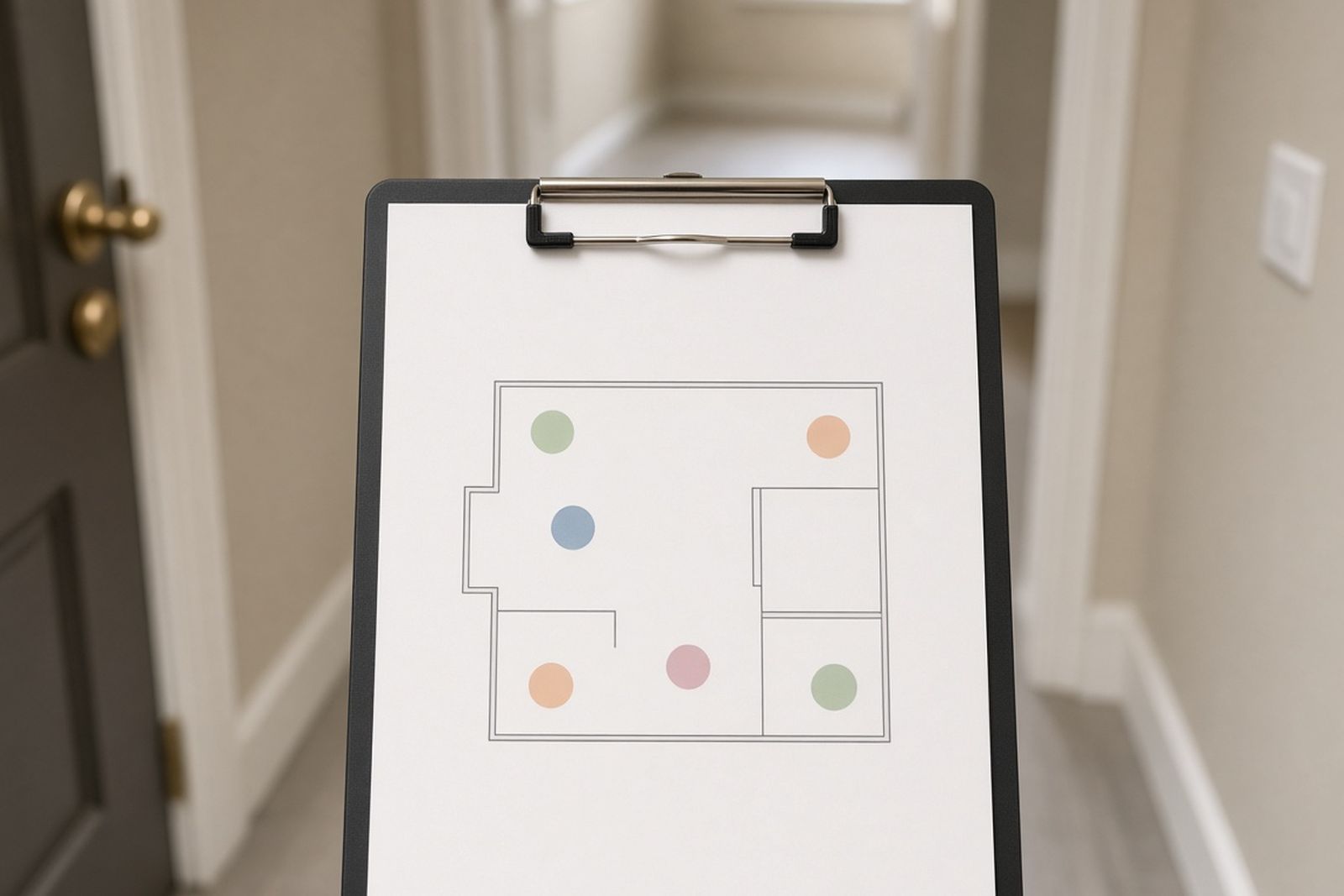
Clipboard showing a room plan with color-coded dots marking high-touch surfaces
Illustrative photo, not a job record. Clipboard showing a room plan with color-coded dots marking high-touch surfaces.
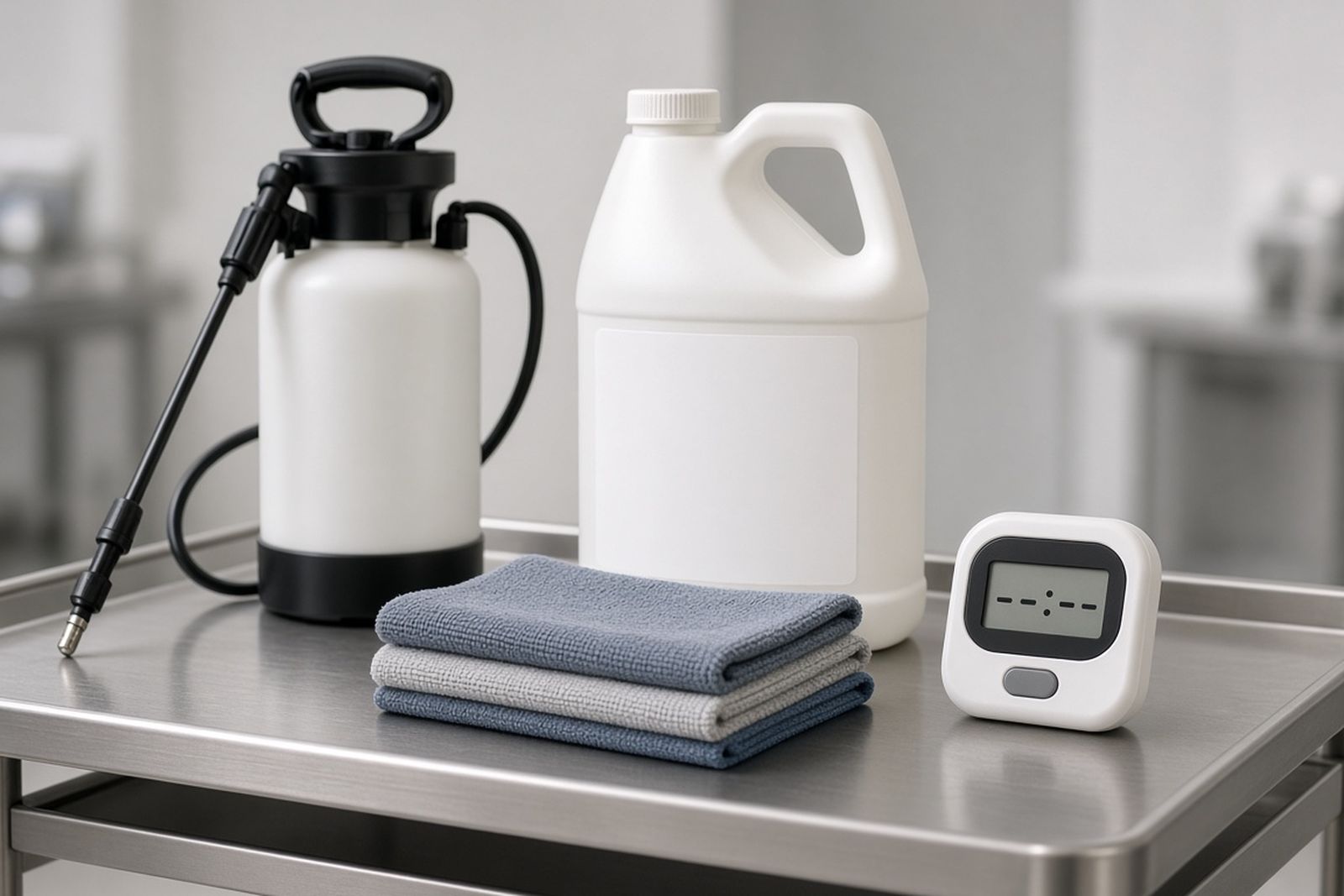
Pump sprayer, disinfectant jug, folded cloths and a contact-time timer on a steel cart
Illustrative photo, not a job record. Pump sprayer, disinfectant jug, folded cloths and a contact-time timer on a steel cart.

Infectious Disease Disinfection figures to keep in mind

National and research figures, not Arlington data. Local conditions, rules and providers vary; use these for scale and context only.

$0.10-$0.30 per sq ft

ISSA's commercial cleaning pricing guide lists electrostatic disinfection at $0.10 to $0.30 per square foot and medical facility cleaning at $0.14 to $0.29 per square foot.

Read with care: Trade-association ranges; actual quotes vary by region, square footage and frequency.

Source: ISSA (2025)United States commercial facilities, industry-wide ranges, December 2025

$15-$400+

HomeAdvisor reports that disinfecting a home to reduce germs, bacteria and viruses costs anywhere from $15 to $400 or more depending on DIY versus professional service.

Read with care: Broad range mixing DIY supplies and professional visits; specialized biohazard work costs more.

Source: HomeAdvisor (2026)United States residential, cost guide updated June 2026

72 hours

In a 2020 NEJM study, viable SARS-CoV-2 was detected up to 72 hours on plastic and 48 hours on stainless steel, but not after 24 hours on cardboard or 4 hours on copper.

Read with care: Viral titers dropped sharply over time; CDC later judged surface transmission to be a low risk relative to airborne spread.

Source: New England Journal of Medicine (2020)Laboratory study, controlled conditions

These figures are public research and agency data, not this network's own job records. Keep each number with its population, year and limits; none of them predicts cost, timing or outcome at a specific property.

Plan before you reach out

Use the first 24 hours planner for immediate steps and the provider vetting checklist to confirm any Arlington provider's training, insurance and waste path in writing.

What research has found

Findings from published studies of people and properties in situations like this one. They describe what researchers observed in a specific group; they are not predictions for your case.

Used wipes retained spores during and after wiping.
Who was studied: Non-sporicidal-claim wipes tested on Formica with C. difficile spores.Limits: Not a comparison of all sporicidal products; physical removal is not complete inactivation.Disinfectant wipes transfer Clostridioides difficile spores during the disinfection proc… (2020)
Transfer risk varied by product chemistry.
Who was studied: Six commercial wipe products; two bacterial strains on nonporous Formica.Limits: Specific products and strains; no general maximum area or disease outcome established.Cross-contamination by disinfectant towelettes varies by product chemistry and strain (2020)

Infectious Disease Disinfection community polls

Poll results

Every count is a real visitor vote; nothing is seeded or padded. One vote per poll per device, and you can change your answer.

Your experience

When your facility had an illness cluster, how did you handle cleaning?

No visitor votes yet
Process

How did you decide whether to close all or part of the facility?

No visitor votes yet

Planning cleanup in Arlington?

Send a short message about the property to the follow-up inbox. A coordinator can reply by email with next steps.

Your request is sent to the follow-up inbox. A coordinator can reply by email.

If anyone is hurt or in danger, call 911 first.