McLean, VA

Infectious Disease Disinfection Planning in McLean, VA

What to do, who to contact, and what to ask in McLean.

Illness at your McLean home or Tysons-area office? See which surfaces come first, how to plan around security doors, and which records to ask for.

Get an email reply about infectious disease disinfection

Send a short message to the follow-up inbox. A coordinator can reply by email. This form does not send emergency help; call 911 first if anyone is in danger.

Tell us what you need help with. Share a short description; please leave out medical details, access codes, and other sensitive information.

A request does not confirm a booking. For immediate danger, contact local emergency services.

Or email info@infectiousdiseasecleanup.online

The short answer for McLean, VA

After illness in your McLean home or an office near Tysons, start by listing the things many hands touch. Have them washed, then disinfected for the full time on the label. Below, you will see how to plan around security doors, what to ask a company, and which records to keep for work.

What to do, step by step

  1. 1

    List the touch points and the rooms nobody could enter

    Think through where hands land at the entry, in meetings and in restrooms. Give that list to the company. Then ask which rooms the crew will not be allowed into because of security. Those rooms should be written down as untreated. That way nobody on your team assumes later that a locked room was cleaned. It also keeps the record honest if your employer reads it.

  2. 2

    Ask what the product label really covers

    List N is a sound reference for the COVID-19 virus when it fits your case. It should not be stretched to every germ. Ask to see the label and check that your illness is listed there. Watch the wording in any workplace memo too. Words like sterilized do not belong in it, because no surface product can deliver that in an office. A plain memo that says what was cleaned and when is worth more to you.

  3. 3

    Bring people back in stages

    Treated zones stay closed through the wet time and the return period. If your office has hybrid staff, bring them back in waves instead of all at once. Each suite should be aired the way the label and safety data sheet direct. Give your facilities team or your family a plain reopening time. You do not need to share anyone's diagnosis to do that, and you should not.

  4. 4

    Get records that hold up at work

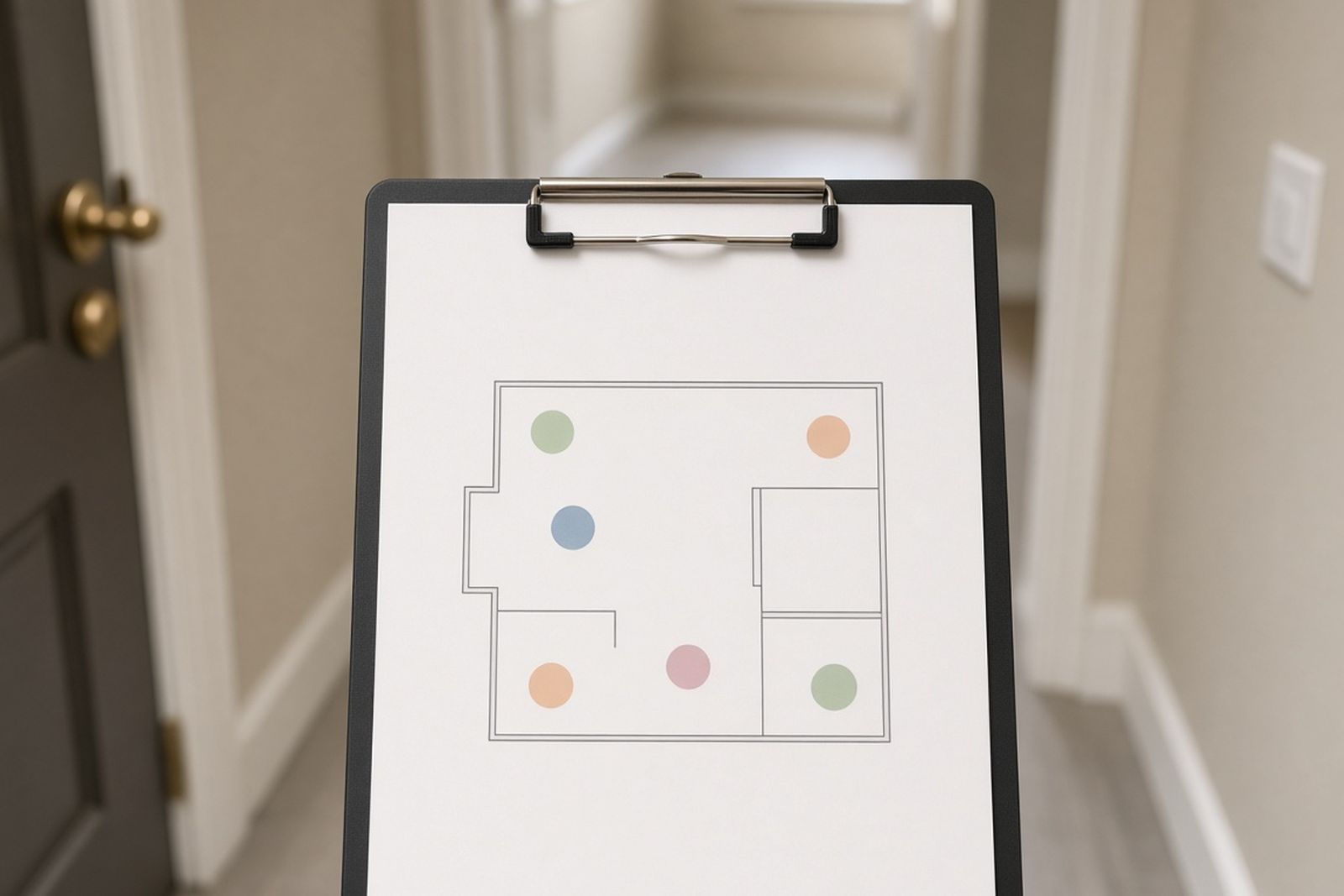
    Your Tysons facilities team should receive a map of the zones, EPA numbers, timed logs and a list of skipped rooms. If the crew ran a swab test, know its limit. It flags organic film left on a surface, never germs. Public health questions go to the Fairfax County Health Department or VDH. The company's report should stay free of medical advice.

What cleanup is like in McLean

McLean's quiet residential streets sit right beside the busy office floors of Tysons Corner. A large single-family home and a crowded commercial suite need different plans. If your family was ill, your home office and the rooms you all share are the focus. In a shared suite, the reception counter and conference room remotes pass through many hands in a day. Tell the company which kind of space you have. The time, the cost and the number of people you must notify will follow from that.

Many buildings around McLean have serious security hardware. You may deal with keypads, turnstiles and restricted contractor offices near secure rooms. Those are high-touch spots, and they also limit when a crew can get in. Ask building security for a block of access long enough for cleaning plus the full wet period. Doors should not be propped open against the rules. Grime still has to come off first. If an escort's shift is ending, that is a reason to reschedule, not to cut the wet time short.

If you or someone in your household works for the government or a contractor, your employer may want records for its files. A good company can give you product registrations and wet-time logs. It should not invent lab clearance results or a sterile-facility certificate. What happens at your house is community surface disinfection, which is a different thing from hospital sterilization. If a cleanup involves blood or other body fluids, OSHA rules may cover the crew, whatever anyone's clearance level is.

What to expect for your type of home

  • Tysons-area office suites: Security keypads, badge readers and the reception counter are touched by nearly everyone. Ask that they head the list, ahead of desks in private offices.
  • Secured buildings: Work out the timing with building security before the job. Nobody should badge in and interrupt a surface that is still in its wet time.
  • Commuter homes: The mudroom door and the garage entry are where you bring the outside in. Add those handles and the garage keypad to the surfaces you want treated.
  • Floors with secure rooms: If the crew could not enter a room, it should be listed as not treated. Do not accept paperwork that implies the entire floor was done.
  • Tightly sealed offices: Modern suites hold fumes. Ask how the space will be aired after products go on, and whether building engineering needs to change the air settings.
  • Mixed buildings with a health care tenant: That tenant has its own duties. Your office plan should cover only your suite and the shared areas, described in ordinary cleaning terms.

Papers and records to keep

  • Access limits and any secure areas left untreated, listed by name
  • The high-touch list for entry hardware, restrooms and conference room controls
  • A copy of every label, so a security or HR office can see what was applied
  • Proof that cleaning was done before any disinfectant was applied
  • Wet-time logs matched to the escorted access windows
  • Fresh-air steps and written return instructions for each suite or room
  • A note separating your family's rooms from the secured home office
  • Copies of messages to employers or household staff, with no medical details

Local offices and official help

Common questions in McLean

How can my office be disinfected without breaking security door rules?

Book escorted access windows long enough for cleaning, applying the product and the full wet time on the label. Secure doors should stay shut, not propped. If some rooms cannot be entered, they are listed as untreated. Elevator and restroom work may need after-hours planning with building engineering. Ask that escort logs show enough unbroken minutes. A job where the wet time was cut short because an escort went home has not done its work.
Can the company just fog our open office instead of wiping the conference room controls?

No. Remotes, keyboards and shared phones are touched constantly, and many cannot take heavy spray. A good crew lists those items and cleans off any grime. Then it uses a wipe the label allows, safe for electronics, and keeps the surface wet for the contact time. Fogging may add coverage on some hard surfaces only if the product is labeled for it and the room is empty. Skip the AV clickers, and the first morning meeting passes germs by hand again.

What should I write down after my family's respiratory illness cleanup?

Write down the products, their EPA registration numbers, the rooms treated and the cleaning steps. Add contact times and whether soft items were washed or left out. Note the fresh-air steps and the reopening time. Include the garage entry and mudroom handles if commuters use them. If your workplace asks, hand over that factual packet without any diagnosis. Skip any certificate saying your house is sterile. Regular cleaning still matters once the job ends.

My employer wants hard proof the office is safe. What can a company really give?

It can give a record of the process, and that is the proof that holds up. Look for the right product for the claim, cleaning before disinfecting, timed wet periods and a clear list of what was skipped. Swabbing a badge reader for residue shows how well it was scrubbed. It says nothing about viruses. Lab cultures are easy to misread without an infection-prevention program behind them. Your employer should turn down a sterile-campus letter and keep the logs.

Does a spill of blood change what kind of cleanup we need?

Yes. OSHA's bloodborne pathogen rules kick in once a crew might handle blood or similar fluids on your job. An injury cleanup on a loading dock or in a fitness room is one case. Wiping keyboards after cold season is not. Tell the company what kind of mess you have. With blood present, expect protective gear, a set cleaning order and careful waste handling. Without it, the job is scrubbing, a product whose label lists your germ, the full wet time and fresh air.

How do I plan the work around our nanny or housekeeper?

Talk with your nanny or housekeeper before anything starts. Tell them which rooms will close, when products go on and when they can safely come back. If they will help, give them gloves and a copy of the product's safety data sheet. Do not ask a household employee to fog rooms or handle soiled items without training and protective gear. If they were exposed to the illness, let them decide with their own doctor whether to come in that day.

Should my home office for contractor work be cleaned differently from the rest of the house?

The cleaning method is the same, but the planning may differ. Ask your employer who may enter the office and whether sensitive papers must be locked away first. Ask whether the equipment can be wiped at all. Keyboards, docking stations and phones usually need a product the maker allows. Keep a simple record of when the office was cleaned and with what. Employers sometimes ask for it after an exposure.

Clipboard showing a room plan with color-coded dots marking high-touch surfaces
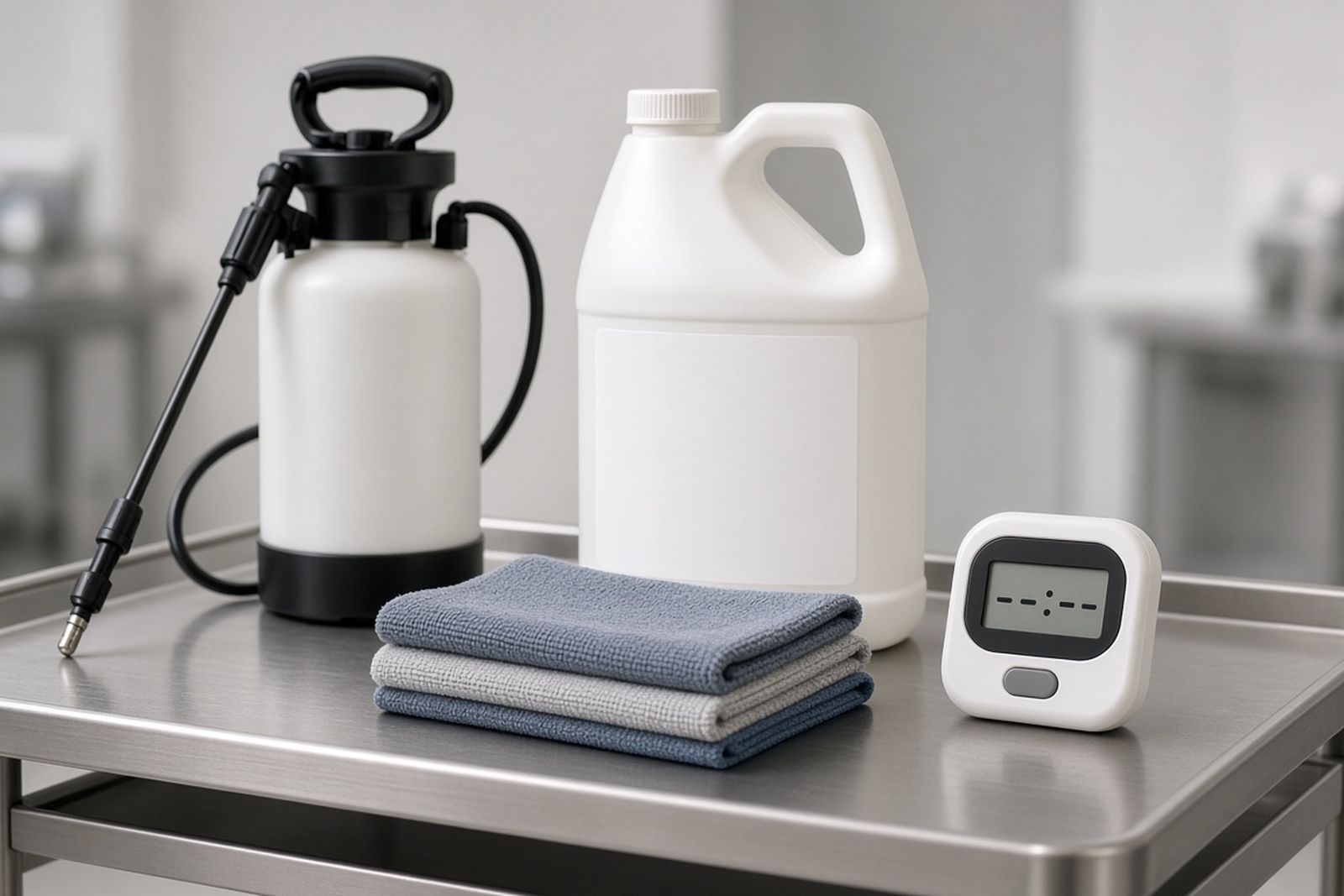
Pump sprayer, disinfectant jug, folded cloths and a contact-time timer on a steel cart

Facts worth knowing

  • CDC school guidance says flu virus can live on a surface, and possibly infect someone, for up to 48 hours.

    Why it matters: If someone in your home or building has flu, wipe down shared surfaces often while they are sick.

    Source: CDC, 2019

  • OSHA requires employers whose workers may contact blood to keep a written safety plan, offer hepatitis B shots within 10 working days, and train workers at least yearly.

    Why it matters: When you hire a cleanup company, you can ask whether its workers have this training and a written plan.

    Source: OSHA, 1991

  • A disinfectant must be registered with the EPA before it can be sold in the U.S., and more than 4,000 germ-killing products are registered.

    Why it matters: Registration does not mean a product kills every germ, so check that the label lists the germ you are worried about.

    Source: EPA, 2025

Tools that help right now

What would you do?

Poll results

Vote to see how other people answered. You can change your answer at any time.

Your experience

When your facility had an illness cluster, how did you handle cleaning?

Be the first to vote
Process

How did you decide whether to close all or part of the facility?

Be the first to vote

Need help in McLean?

Send a short message about the property to the follow-up inbox. A coordinator can reply by email with next steps.

Your request is sent to the follow-up inbox. A coordinator can reply by email.

If anyone is hurt or in danger, call 911 first.