Boca Raton, FL

Infectious Disease Disinfection Planning in Boca Raton, FL

What to do, who to contact, and what to ask in Boca Raton.

Illness in your Boca Raton condo or rental? See which shared spots come first, how humidity affects timing, and what your association should tell you.

Get an email reply about infectious disease disinfection

Send a short message to the follow-up inbox. A coordinator can reply by email. This form does not send emergency help; call 911 first if anyone is in danger.

Tell us what you need help with. Share a short description; please leave out medical details, access codes, and other sensitive information.

A request does not confirm a booking. For immediate danger, contact local emergency services.

Or email info@infectiousdiseasecleanup.online

The short answer for Boca Raton, FL

When illness spreads in your Boca Raton condo tower, rental or household, three things matter most. Grime is cleaned off before any disinfectant. The most-touched spots are handled first. And nobody claims the tower is sterile. See what to ask your association, landlord or cleaning company, and what to save.

What to do, step by step

  1. 1

    Ask how elevators and trash chutes will be handled

    Find out from your manager which elevators, chute rooms, package lockers and clubhouse fixtures are on the list. The crew should scrub away grime before it applies anything, then time how long each surface stays wet. The service elevator should be booked so bags of soiled fabric do not ride with residents. Elevators are best reopened in stages. That keeps you and anyone with luggage from brushing against panels that are still wet.

  2. 2

    Turn over a shared rental without perfume shortcuts

    After an illness and before the next tenant, bathroom grime is removed and shared towels are washed or replaced. Only after that should the bath get an EPA-registered product whose label lists the germ, left wet as long as the label says. A fragrance fog proves nothing. Soft items that cannot be cleaned well get bagged or thrown out. This matters most when a new roommate's move-in is already booked, so speak up early.

  3. 3

    Wait for the reopening time in a humid tower

    With COVID-19, List N only helps when the label is followed. With a stomach bug, check the germ claim on the product that was really used. Your sealed, air-conditioned unit should be aired the way the safety data sheet directs. Humid air dries slowly, so the reopening time should allow for that without trimming the wet time. One posted time for elevators and amenities keeps the front desk from releasing floors early.

  4. 4

    Read the association notice with care

    A fair notice tells you about amenity closures and names no resident. Ask that the association file hold product registrations, wet-time logs and a list of units that were not treated. A swab of a chute-room handle can show leftover organic film, never germs. Community questions go to the Florida Department of Health in Palm Beach County or Florida DOH. Be skeptical of a sterile-tower certificate or any claim reaching past the units crews entered.

What cleanup is like in Boca Raton

Boca Raton's condo towers and garden apartments share a lot: elevators, trash-chute rooms, package lockers, clubhouses and pool decks. You and your neighbors, seasonal and year-round, all put your hands on them. After illness spreads, those shared spots come first, along with any bathroom in your unit where someone vomited or had diarrhea. Ask your manager whether the freight or service elevator can be booked for the job. That often decides whether bags of soiled fabric and chute waste ride in the same cars you use every day.

Rentals near the university and training programs see frequent roommate changes and shared bathrooms. Stomach bugs spread easily there when grime removal and the wet time get skipped between move-in weekends. If you rent or own one, see that the bathroom is done first and shared towels are washed. The unit must then sit empty long enough for the wet period. A perfume fog between lease signings is not a plan. Soft items and bathroom film are the usual weak spots, most of all when new roommates show up with boxes early.

South Florida humidity and sealed air conditioning change how fast your rooms dry and how long smells last. Before your holiday guests arrive, every step on the label should be finished. Your home and your building's amenities are not a hospital, so sterilization talk does not apply. If COVID-19 is the illness, EPA List N may guide which product is picked. It does not mean every germ named on a resident Facebook thread is covered. If a crew meets blood in a tower unit, OSHA's worker rules on bloodborne germs apply to them.

What to expect for your type of home

  • Condo towers: Elevators, trash-chute doors, package lockers and clubhouse restrooms are shared by every floor. Ask which floors have no service-elevator access, since that changes how waste leaves the building.
  • Roommate rentals near campus: Bathroom grime and shared towels come before any general spraying. Push for this before a move-in weekend, when the next tenant is already on the way.
  • Units expecting holiday or snowbird guests: Leave extra days for the wet period and fresh air. You do not want luggage leaning on an elevator panel that is still wet.
  • Buildings where units stayed locked: A crew that could not get into private units did not treat them. Those stacks should be left out of any building-wide statement you receive.
  • Pool decks: Gates, latches and outdoor furniture are mostly weathered plastic and metal. Ask your manager whether the product label allows those materials before anyone treats them.
  • Association-run buildings: Notices from your condo board should give the facts and nothing private. When the illness began in your unit, it is fair to ask for a look at the draft.

Papers and records to keep

  • A note separating amenity work from private units, with untreated floors or stacks listed
  • The high-touch list for elevators, chute rooms, package lockers, clubhouses and pool gates
  • Label copies for products used in chute rooms, elevators and pool-deck restrooms
  • The cleaning record and how shared towels and soft items were handled
  • Service-elevator or chute notes, plus wet-time logs for bathrooms and elevators
  • The empty-period schedule for snowbirds, holidays or move-in, with written return times
  • Fresh-air notes for the sealed, air-conditioned rooms that were treated
  • Copies of the board's hallway and email announcements, with no resident named

Local offices and official help

Common questions in Boca Raton

How should my condo association describe the elevator disinfection?

It should describe facts. The elevators closed so grime and film could be cleaned off. A named EPA-registered disinfectant with a stated germ claim was applied and kept wet for the full time. A reopening time was set from the label and the need for fresh air. The notice should not call the tower sterile, say every apartment was treated, or name the sick resident. Ask that the product and wet-time packet stay in association records for insurers.
What matters most when turning over our roommate rental after a stomach illness?

The bathroom matters most. The outside of the toilet, the flush handle, faucets and any floor where the mess spread all need cleaning. Shared towels and washcloths are washed or replaced. Kitchen film is cleaned before anything is disinfected. Soft items that cannot be cleaned well are bagged or thrown out. The unit then stays empty until the return time. Nobody should fog while a new roommate carries boxes in. Write down the products and times for your landlord.

Why does sealed air conditioning make things harder after disinfecting?

In this humid climate, windows often stay shut. Chemical smells and moisture linger if there is too little fresh air or time away. Staff sometimes wipe surfaces dry early to cut the smell, which ruins the contact time. Ask about fans or a longer empty period, as the label and safety sheet allow. Tower engineers may be able to switch the system to outdoor air after the wet time. The front desk should refuse early move-ins until then.

I manage a building. What proof should I accept after the amenities are treated?

Accept proof of the process. That means EPA registration numbers, the germ claims relied on, areas treated, proof of cleaning, timed wet periods, fabric decisions and written return times. Photos of the prep work are useful. Refuse any certificate promising a sterile clubhouse or no future illness. The closeout papers should name the private stacks that were not treated. Then seasonal residents will not assume their locked unit was part of an amenity-only job.

Someone was hurt in our condo gym. Is that a different kind of cleanup?

Yes. OSHA's bloodborne pathogen rules cover any task in your tower where a worker could come into contact with blood or similar fluids. An injury with bleeding in the fitness center is one example. Routine counter work after a cold is not. The plan should say which kind of mess is present, so gear and waste packing match it. Too little, and the crew lacks protection. Too much, and your condo gym is handed hospital duties it never needed. Health advice still comes from clinicians.

I was sick at home and a snowbird relative is arriving. How do I get my unit ready?

Wash the guest bathroom and kitchen with detergent. Then disinfect handles, remotes and faucet levers with a product labeled for those surfaces. Put out fresh sheets and towels, and set a lined, lidded wastebasket in the guest room. If your relative is still recovering from something, ask their doctor what to watch for and whether they should have their own bathroom. Keep the balcony slider open for air while products dry, as the label advises.

Who is in charge of disinfecting our condo pool deck after an illness report?

Usually the association and its management company, not individual owners. The pool water falls under its own chemistry rules, which are separate from surface disinfection. Deck furniture, shower valves, gate latches and restroom fixtures are hard surfaces that can be cleaned and disinfected. Ask the manager which products are used and how long the deck will be closed. If you wonder about swimming after an illness in the building, check with the county health department or your doctor.

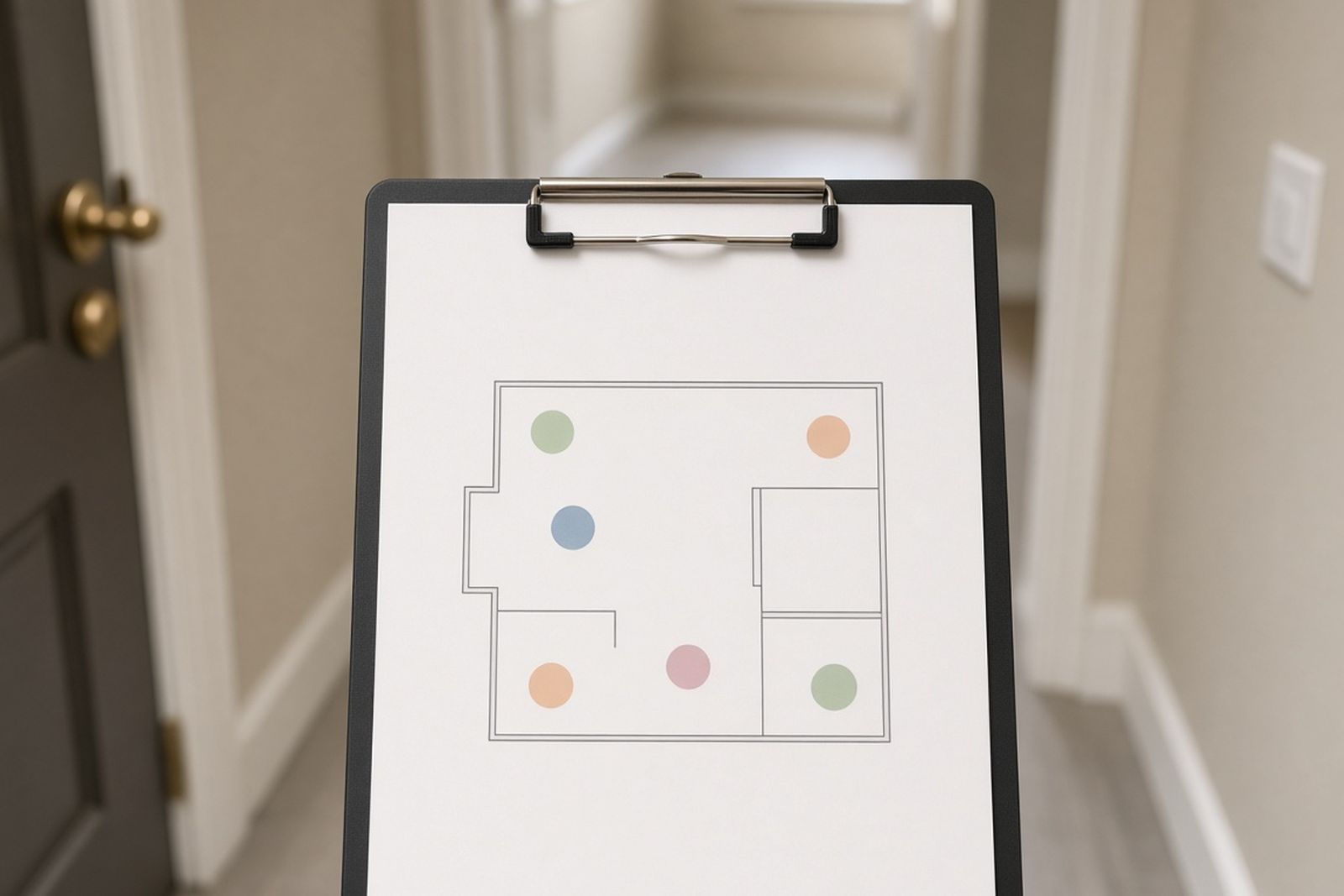
Clipboard showing a room plan with color-coded dots marking high-touch surfaces
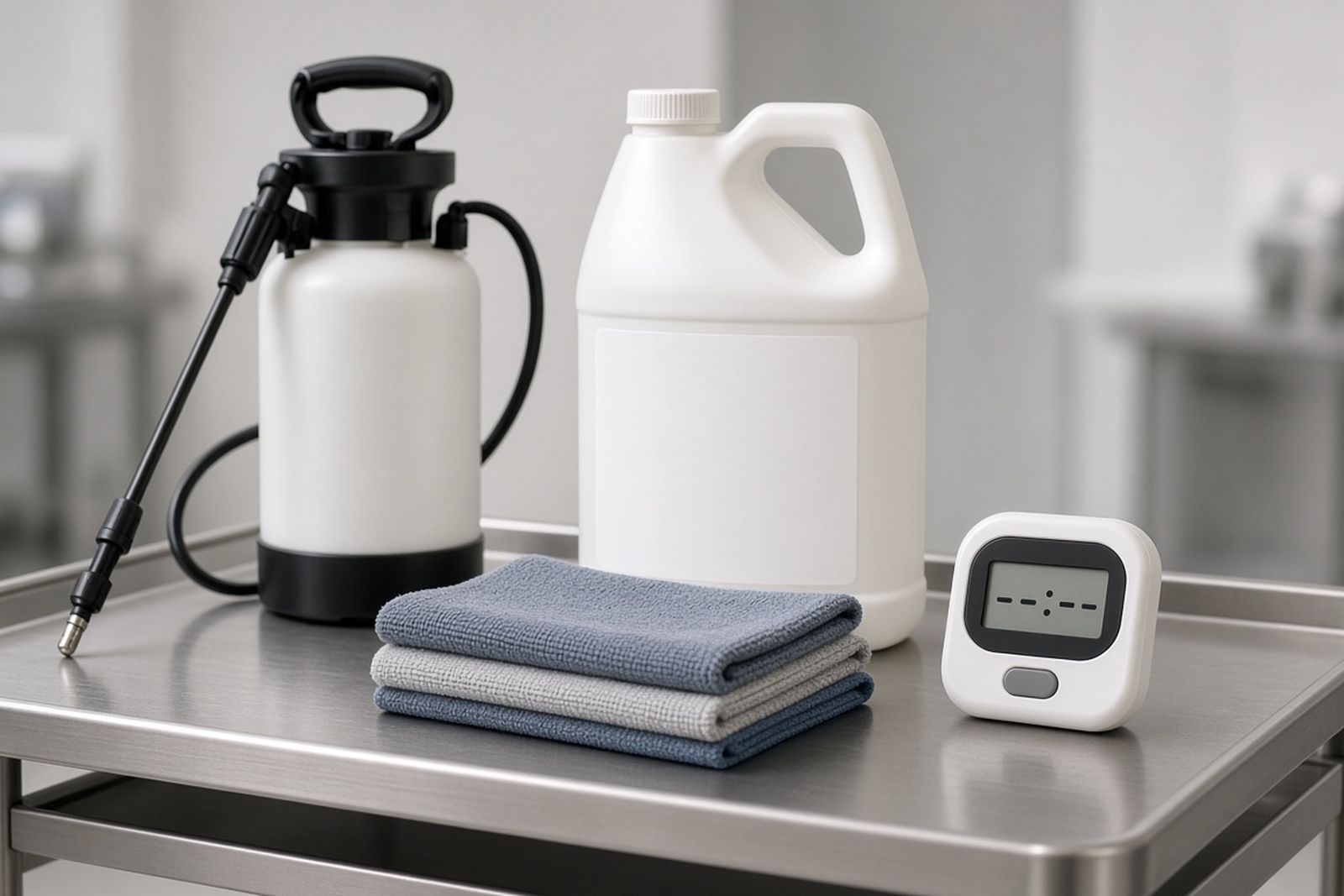
Pump sprayer, disinfectant jug, folded cloths and a contact-time timer on a steel cart

Facts worth knowing

  • OSHA requires employers whose workers may contact blood to keep a written safety plan, offer hepatitis B shots within 10 working days, and train workers at least yearly.

    Why it matters: When you hire a cleanup company, you can ask whether its workers have this training and a written plan.

    Source: OSHA, 1991

  • CDC school guidance says flu virus can live on a surface, and possibly infect someone, for up to 48 hours.

    Why it matters: If someone in your home or building has flu, wipe down shared surfaces often while they are sick.

    Source: CDC, 2019

  • The CDC says to mix 5 tablespoons (1/3 cup) of bleach per gallon of water, leave it wet at least 1 minute, and make a fresh batch every 24 hours.

    Why it matters: Never mix bleach with ammonia, and know that bleach can damage some of your surfaces.

    Source: CDC, 2024

Tools that help right now

What would you do?

Poll results

Vote to see how other people answered. You can change your answer at any time.

Your experience

When your facility had an illness cluster, how did you handle cleaning?

Be the first to vote
Process

How did you decide whether to close all or part of the facility?

Be the first to vote

Need help in Boca Raton?

Send a short message about the property to the follow-up inbox. A coordinator can reply by email with next steps.

Your request is sent to the follow-up inbox. A coordinator can reply by email.

If anyone is hurt or in danger, call 911 first.