Miami, FL

Infectious Disease Disinfection Planning in Miami, FL

What to do, who to contact, and what to ask in Miami.

Illness in your Miami condo or tower? See why salt film comes off first, how shutters and storms change timing, and what a board should post.

Get an email reply about infectious disease disinfection

Send a short message to the follow-up inbox. A coordinator can reply by email. This form does not send emergency help; call 911 first if anyone is in danger.

Tell us what you need help with. Share a short description; please leave out medical details, access codes, and other sensitive information.

A request does not confirm a booking. For immediate danger, contact local emergency services.

Or email info@infectiousdiseasecleanup.online

The short answer for Miami, FL

After an illness in your Miami condo or tower, start with the elevator buttons, package lockers, garage keypads and the bathroom that was used. Salt film has to be washed off before any disinfectant can work. Here is how humidity, storm shutters and pool-deck schedules change your plan, and what to ask your board or a company.

What to do, step by step

  1. 1

    Start with salt-air touch points, not balcony decor

    Trace the path hands took: the garage keypad, the lobby, the elevator, your unit and the pool deck. Mark where the mess was worst, such as a restroom someone used while vomiting. Give that list to your manager or the company. Ask for it in writing which amenities are in the job. If the balconies were not treated, the paperwork should say so. Otherwise a neighbor may assume the whole tower was done and skip cleaning their own rail.

  2. 2

    Pick a product labeled for what is going around

    Note whether the reports sound like a stomach bug or like a cold or flu. You do not need to name or diagnose anyone. Then ask the company to show you a label that fits. Look for an EPA registration number and that kind of germ on it. Be wary of scent machines sold as a way to sterilize pool decks or cabanas. A pleasant smell in the cabana is not cleaning, and your association's money is better spent on labor and the right product.

  3. 3

    Hold the wet time when a storm break tempts you

    The pool showers and tower halls stay off limits until two clocks run out: the wet time on the label and the return time on the safety data sheet. Humid air may slow the drying, and that is fine. Nobody should wipe surfaces early to catch a gap between thunderstorms. When the shutters open again, air the space as the sheet directs. If you manage the building, post one reopening time so staff are not pressed to guess.

  4. 4

    Build a board packet with climate notes

    Keep the labels, the list of areas treated, the wet-time log and a note on shutters and airing. If a swab was used, it only checks for grime. Your board's notice should list what was closed, such as the pool deck, the gym or the lockers, and when each reopens. It should never name a resident or a unit. If you are a resident and want to see the packet, ask your manager. You have good reason to know what was cleaned.

What cleanup is like in Miami

Coastal towers in Miami deal with things an office up north never sees. Salt film builds on the garage keypad. Afternoon thunderstorms upend the amenity schedule. Hurricane shutters trap chemical smells for hours. After an illness, ask that the elevator banks, package lockers and pool-deck shower valves be done before anyone fogs a balcony nobody uses. If you are on the board, the Florida Department of Health in Miami-Dade can help you with facts for a tenant notice. It does not turn a cabana into a sterile clinic, and no vendor can either.

Humid air keeps a disinfectant wet longer, which helps it meet the time on the label. The catch is patience. When residents want the deck back, staff are tempted to wipe things dry early. Tourist turnover adds pressure for quick linen changes too, and fresh sheets are not the same as a cleaned unit. Ask your manager how the wet time will be protected. One more point: a slip on a wet Brickell deck can leave blood behind. The crew that cleans it up has to follow OSHA's bloodborne pathogen rules, so mention any blood when you report the mess.

Some Brickell towers have a street-level clinic that shares the elevators with the apartments above. The clinic has its own program for cleaning instruments and exam rooms. None of that carries over to your floor. If your building posts a notice, read how it is worded. It should tell you which shared areas were cleaned and when they reopen. What the clinic does downstairs has no place in it, and neither does the word sterilized. If it does, ask the manager to correct it before more residents rely on it.

What to expect for your type of home

  • Coastal condo towers: The salt-weathered garage keypad, the elevator call buttons and the pool-deck shower valves come first. Tell your manager which of these the sick resident or guest used.
  • Buildings with outdoor-facing hardware: Salt film has to be washed off with detergent before any disinfectant goes on. Ask the company how it cleans metal that faces the salt air, since film blocks the product.
  • Towers with cabanas and pool showers: These amenities stay closed through the full wet time on the label. Ask the board to post the hour they reopen at the deck entrance.
  • Condo kitchens: Your kitchen counter may need a rinse after disinfecting, while the pool-deck showers do not. Read the label's food-surface directions before you cook again.
  • Units with hurricane shutters: With shutters closed, airing out has to be planned. Ask for the return time from the safety data sheet, and wait for it after a storm passes.
  • Pool decks with cabana cushions: Choose whether cushions get washed or removed before any product goes on. Ask the board who handles them, because fabric cannot be treated like a hard surface.

Papers and records to keep

  • A list of the salt-air hardware and pool-deck showers that were treated
  • How the board or a resident described the illness, leaving out names and unit numbers
  • EPA numbers and germ claims for products used on the deck, lobby and elevators
  • A note that detergent cleaning came first, including removal of salt film
  • Timed wet-period logs, with a note on the humid conditions that day
  • When the shutters opened and how the unit was aired before anyone returned
  • Whether the cabana cushions were washed or taken away
  • Copies of the tenant notices, checked to hold no personal health details

Local offices and official help

Common questions in Miami

Why does Miami's humidity change how our board should schedule amenity disinfection?

Humidity cuts both ways. It helps keep surfaces wet for the labeled time. But it also traps smells under the shutters, and it tempts staff to wipe things dry so guests can use the showers between storms. So keep the full wet time, air the space as the safety data sheet says once the shutters open, and post one reopening time. Soft cabana items still need washing or removal in any season.
Should the salt film on our garage keypads be washed off before disinfecting?

Yes. CDC's advice stresses removing grime and residue first, because a film can shield germs from the product. Salt-weathered hardware gets cleaned with detergent. Only then does the disinfectant go on the keypad. It needs an EPA number, the right germ claim and its full wet time. Skipping the detergent to save time is a common mistake in coastal towers, so it is worth asking your vendor about it directly.

Our Brickell deck was treated at lunch. Can it reopen in a break between storms?

A break in the weather is not enough by itself. The loungers and rails must have been washed, treated and left untouched for the label's full timing. A quick spray while guests keep using the shower valves does not count. Block the amenity on the calendar until the time is up. Keep the EPA numbers and wet times on file. And do not tell residents the deck was sterilized.

Someone in our Miami condo had COVID-19. Which products should we use?

Choose a product from List N, which is EPA's COVID-19 list and goes no further than that. Check the EPA number. Follow the label's wet time and surface directions, and take care on metal exposed to salt. Clean with detergent first, keep the unit empty while things are wet, and let fresh air in once the shutters are open. For the medical side, turn to your doctor or Miami-Dade's state health office.

What should a Miami-Dade condo board keep on file after the work?

The file should hold the products and labels, and which decks, garage keypads and lockers were treated. It should log the scrub steps and every timer, and photos help. A swab speaks to film and never to germs. Salt air, crowds and time bring germs back, so a germ-free tower certificate means nothing. Residents' names and health stay out. Wider health questions can go to the Florida Department of Health in Miami-Dade.

How do I clean my Miami condo after an illness while the hurricane shutters are closed?

With the shutters down you cannot air the unit, so choose low-odor products and avoid foggers and heavy aerosol sprays. Put the disinfectant on with a cloth or wipe, on handles, taps and counters, and follow the wet time. Run the air conditioning and the bathroom fan. If the storm has cut power, focus on handwashing and keep soiled items bagged. Save any big cleanup until you can safely open the windows.

I host a short-term rental in Miami. What do I do after a guest's illness in tourist season?

Block the next night if you need more time to clean properly. Strip all the linens and wash them hot. Clean the bathrooms and kitchen with detergent. Then disinfect the handles, remotes, balcony door handles and the thermostat. Salt air can leave a film on outdoor furniture, so wash the balcony surfaces before you disinfect them. Keep the unit closed until the product's return time passes. Do not mention the illness in the listing or in reviews.

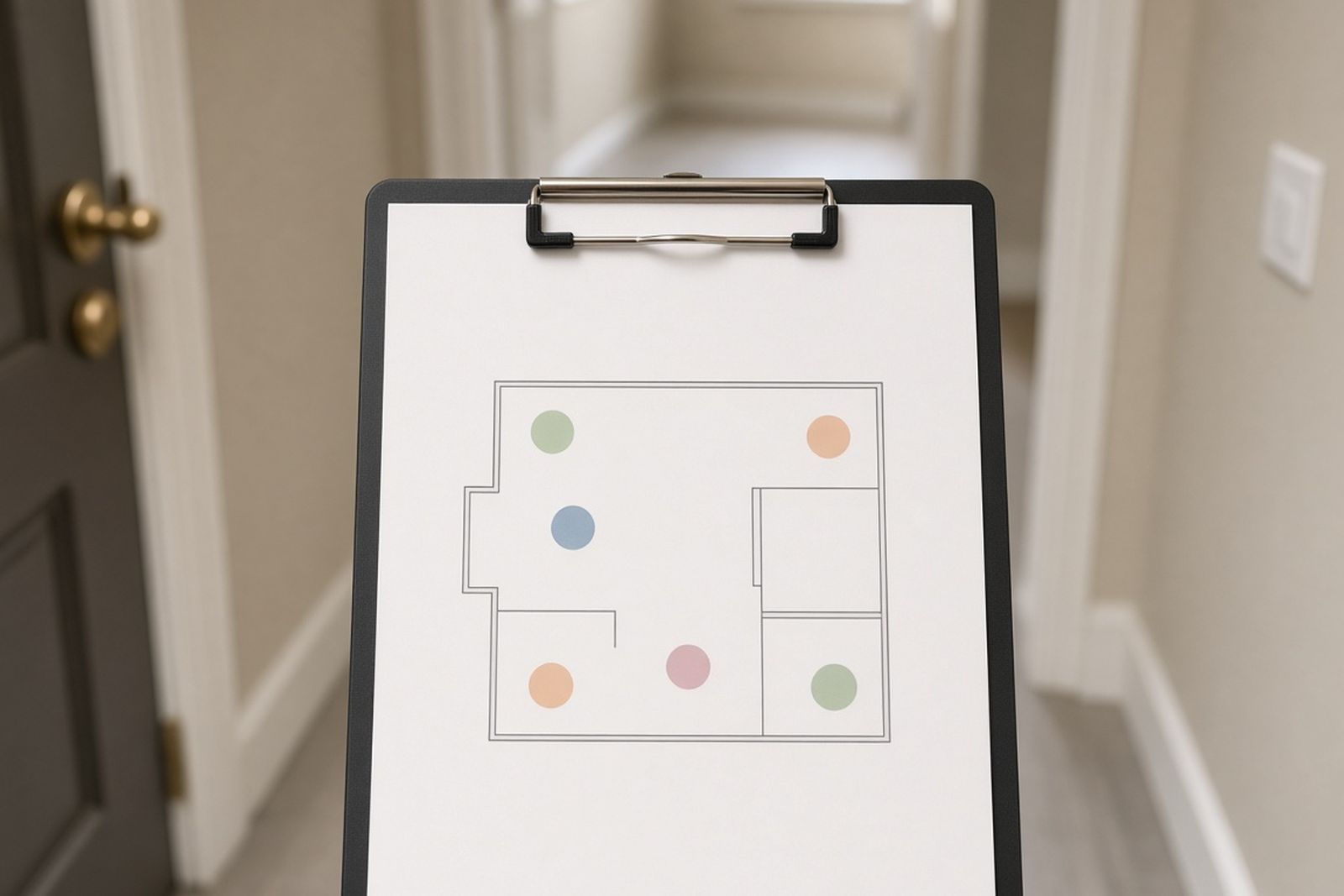
Clipboard showing a room plan with color-coded dots marking high-touch surfaces
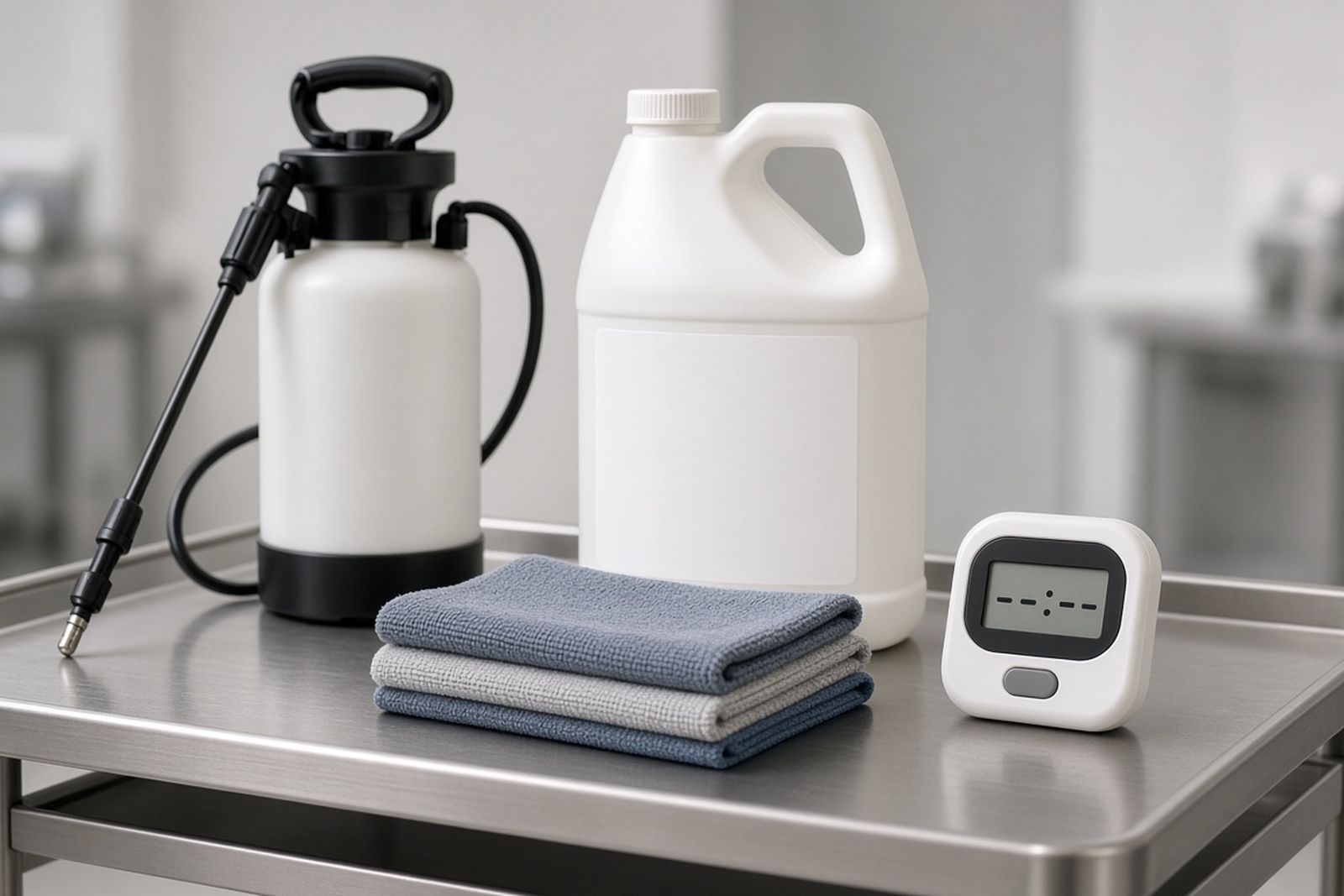
Pump sprayer, disinfectant jug, folded cloths and a contact-time timer on a steel cart

Facts worth knowing

  • A disinfectant must be registered with the EPA before it can be sold in the U.S., and more than 4,000 germ-killing products are registered.

    Why it matters: Registration does not mean a product kills every germ, so check that the label lists the germ you are worried about.

    Source: EPA, 2025

  • CDC school guidance says flu virus can live on a surface, and possibly infect someone, for up to 48 hours.

    Why it matters: If someone in your home or building has flu, wipe down shared surfaces often while they are sick.

    Source: CDC, 2019

  • For norovirus, the CDC recommends a stronger mix of 5 to 25 tablespoons of bleach per gallon of water, left on surfaces for at least 5 minutes.

    Why it matters: After vomiting or diarrhea in your home, use this stronger mix rather than the everyday bleach recipe.

    Source: CDC, 2024

Tools that help right now

What would you do?

Poll results

Vote to see how other people answered. You can change your answer at any time.

Your experience

When your facility had an illness cluster, how did you handle cleaning?

Be the first to vote
Process

How did you decide whether to close all or part of the facility?

Be the first to vote

Need help in Miami?

Send a short message about the property to the follow-up inbox. A coordinator can reply by email with next steps.

Your request is sent to the follow-up inbox. A coordinator can reply by email.

If anyone is hurt or in danger, call 911 first.