Northeast · US

Infectious Disease Disinfection Planning in Cambridge, MA

Planning infectious disease disinfection in Cambridge, MA

Disinfection for Cambridge housing near the labs. Covers high-touch maps, EPA labels, List N limits, how long surfaces stay wet, and CDC community cleaning. This is planning guidance, not a claim of a local office or crew in Cambridge.

Get an email reply about infectious disease disinfection

Send a short message to the follow-up inbox. A coordinator can reply by email. This form does not send emergency help; call 911 first if anyone is in danger.

Tell us what you need help with. Share a short description; please leave out medical details, access codes, and other sensitive information.

A request does not confirm a booking. For immediate danger, contact local emergency services.

Or email info@prompartybuses.com

Direct answer

The short answer for Cambridge, MA

Apartments along the biotech corridor, Red Line bike cages, and semester turnover near Kendall need plans that keep home cleaning apart from research-lab language. Save List N for COVID-19 claims. Refuse sterile-suite certificates after a quick futon flip.

Editorial guide · Biohazard Remediation NetworkUpdated 2026-07-22Location focus: Cambridge, MA

Local planning context

Semester move-ins and Red Line bike cages create a different kind of turnover than village duplexes. Storage-cage padlocks, shared dryer knobs, and hallway recycling lids pass through many hands between leases. After an illness, list the unit bath, the cage keypad, and the laundry pull before fogging a parlor nobody uses. The Cambridge Public Health Department can support factual notices. No office certifies a walk-up as sterile.

Radiator heat traps smells after products go on. Students buff fixtures dry to make a lecture, which cuts the label's wet time short. Ordinary scent-and-wipe turnovers between roommates don't sterilize anything. Blood in a rental hallway or bike cage calls for an OSHA bloodborne pathogen plan for the workers who clean it.

Kendall's big labs sit just a block from plain homes. Lab safety boxes and tool sterilizing belong to the labs and their own rules. The stairs in a home are still a place where you just cut risk, as CDC's cleaning tips say. A notice must never say a triple-decker was made sterile because a lab down the street wiped its benches.

Property considerations

Put bike-cage keypads, dryer knobs, and recycling lids ahead of parlor decor.

Launder the futon covers and desk-chair fabric early.

Before a 9 a.m. lecture, nobody uses the treated bath until its clock ends.

A shared kitchenette counter may need a water rinse after disinfecting, while a study desk does not.

Write a roommate reopening time that holds up against group-chat pressure.

Ban research-lab sterilization wording from residential reopening notes.

Response-planning framework

Keep the housing job apart from research programs

Say plainly that the job is residential community cleaning, not lab decontamination. List N is about COVID-19. The stomach bugs that pass between roommates may need a different label claim. Refuse sterile-suite sales talk.

Clean dryer and cage grime before any product

CDC guidance for homes puts scrubbing off grime ahead of disinfecting a shared student bath. Laundry lint film and bath residue shield germs if you skip it. Keep desk surfaces, taps, and cage keypads wet for the full printed contact time, even if a lecture is starting. Scent is not a timer. Soft futon covers come off the hard-surface list.

Keep roommates out on lecture mornings

One written clock posted for all roommates beats rushed wiping before a quiz. Using the back porch stairs instead only helps if those rails were treated as well. With the radiators running, air out as the SDS directs.

A landlord file without biosafety clearance claims

The landlord file should keep EPA numbers, label claims, a map of the unit and cage, cleaning notes, and wet-time logs. A residue swab on a shared dryer knob only checks for leftover grime. Never attach lab clearance language to a residential invoice.

Documentation checklist

  1. 1List of contact spots in the bike cage, laundry, and unit bath
  2. 2Written statement that the job is residential, not lab decontamination
  3. 3EPA registration numbers and germ claims
  4. 4Proof of detergent cleaning first
  5. 5Timed wet periods for baths, dryer knobs, and cage hardware
  6. 6Roommate reopening time set around class schedules
  7. 7Washing decisions for futon covers and desk-chair fabric
  8. 8Exclusion note listing any research spaces that were not part of the job

Official resources

Questions for this location

Is residential disinfection the same as laboratory decontamination near Kendall?

No. Lab programs follow biosafety and instrument rules that don't apply to ordinary apartments. Home work is community risk reduction. Clean off grime first, apply EPA-registered products whose labels match the germ, and keep surfaces wet for the labeled contact time. Don't bring sterile-suite language into a walk-up invoice. Medical and research decisions stay with those programs. Cambridge Public Health takes local questions.
Which objects matter most after roommate stomach illness in a triple-decker?

Start with the bathroom used during the illness. Next come the fridge and faucet handles, dryer knobs, and the bike-cage keypad if the sick roommate used them. Clean off grime first, then use a labeled disinfectant. Futon covers and cushions go in the washer or get set aside. A List N product isn't automatically a norovirus product. Roommates should read the label before choosing one for a stomach bug.

Can roommates keep Zooming in a sprayed bedroom while it is still wet?

No. The room must stay empty for the full wet time and the label's return steps, and surfaces must be cleaned first and kept wet. Typing on a wet keyboard re-soils the desk and breaks the process. Block the room on a shared calendar. File the EPA numbers and wet times. Don't tell roommates the unit was sterilized.

What does List N cover after COVID-19 exposure in a Harvard Square rental?

List N points to products EPA has listed for the COVID-19 virus. Check the EPA number. Follow the contact time and surface directions, including on laminate desks and old tile. It doesn't cover the stomach bugs that spread through dorm-style rentals each semester. Add detergent cleaning, keep roommates out during the wet time, and crack a window despite the radiators.

What belongs in a landlord packet that will not be misread as lab clearance?

Stick to plain facts about the apartment. List which rooms and shared spaces were cleaned, the products and labels, wet times, and when tenants could return. If there are labs or research spaces in the building or nearby, say clearly that they weren't part of the work. Swab meters measure grime, not germs. Reject any certificate claiming the unit is germ-free.

How should Cambridge roommates split cleaning duties when one of them is sick?

The sick roommate should stay in their room as much as they can. If the apartment has two bathrooms, they should use just one. A healthy roommate can wipe the shared fridge handle, microwave, and doorknobs once a day with a labeled disinfectant. The sick person can wipe the bathroom touch points after each use if they feel up to it. Keep separate towels and dishes. Once everyone is better, split a full clean of the kitchen and bath, and wash all shared linens.

Should a Cambridge landlord clean the bike cage and storage area after a tenant illness?

Only the parts people touch often. That's the cage door handle, the keypad or lock, and any light switch. Clean them with soap and water to remove grime. A cage-safe disinfectant follows. Bikes don't need disinfecting unless the tenant was sick on or near them. Post a short note saying the area was cleaned. Tenants should wash hands after moving bikes, as with any shared equipment.

Contact

Get help by email

Send a short message for an email reply about infectious disease disinfection planning questions for the Boston area.

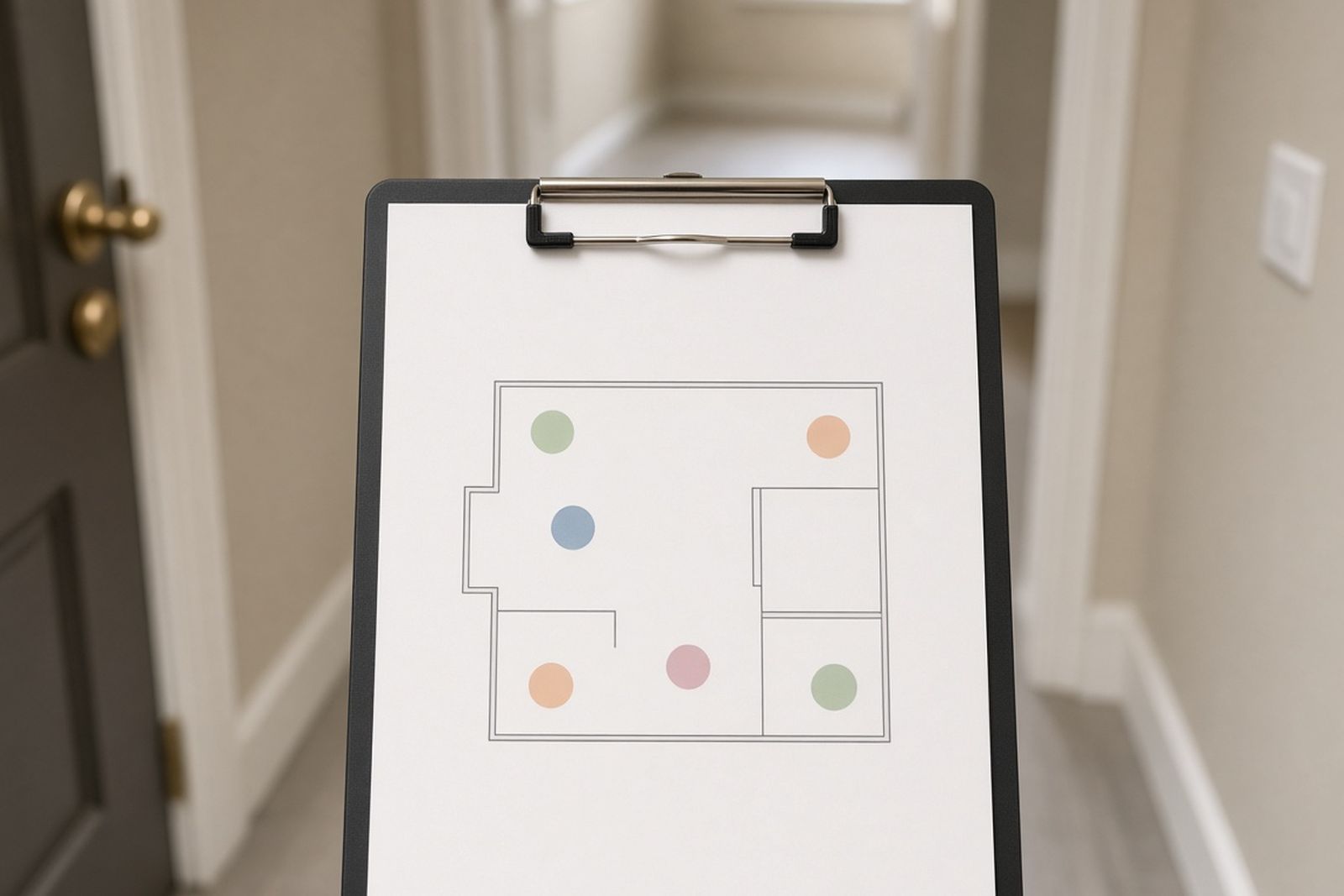
Clipboard showing a room plan with color-coded dots marking high-touch surfaces
Illustrative photo, not a job record. Clipboard showing a room plan with color-coded dots marking high-touch surfaces.
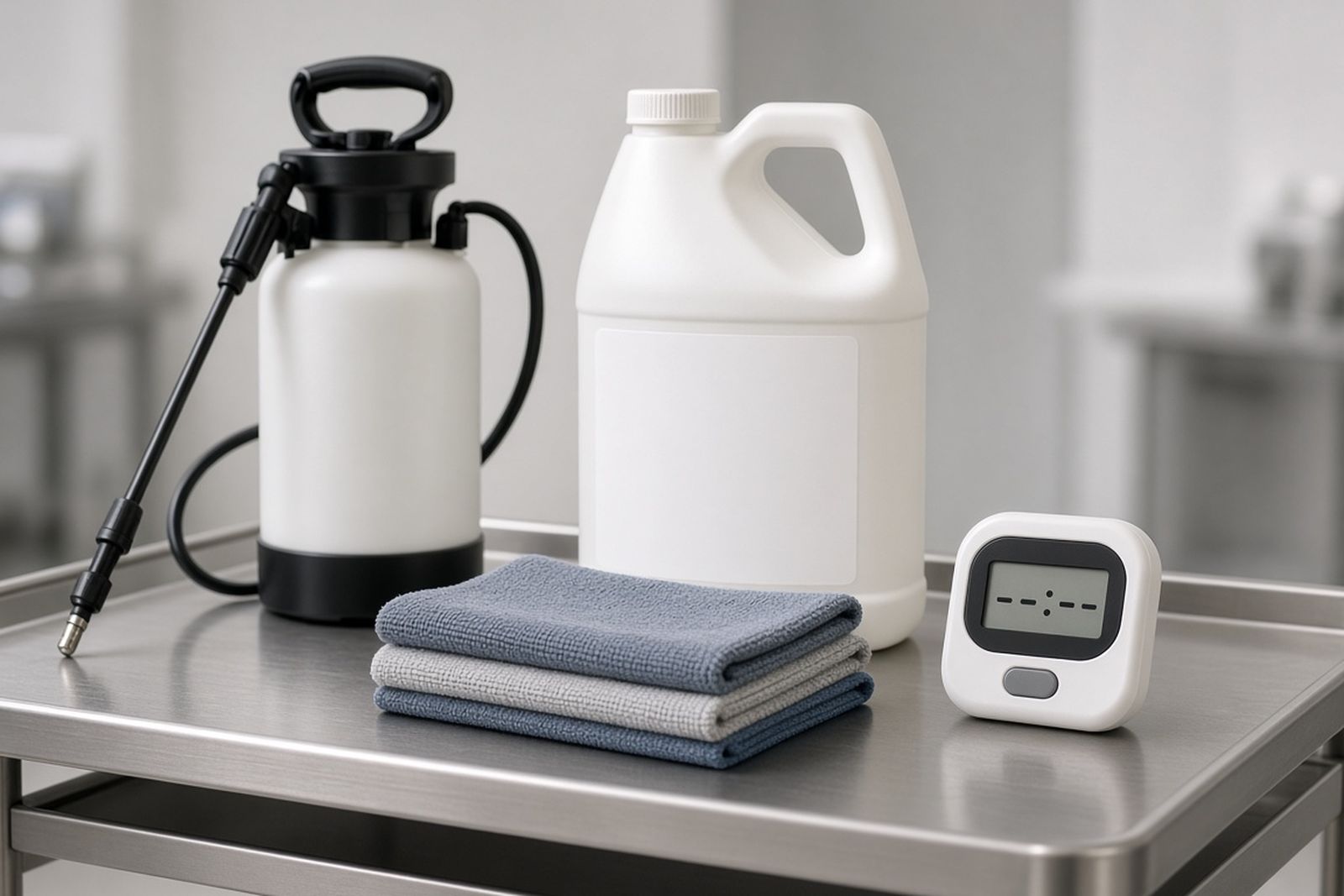
Pump sprayer, disinfectant jug, folded cloths and a contact-time timer on a steel cart
Illustrative photo, not a job record. Pump sprayer, disinfectant jug, folded cloths and a contact-time timer on a steel cart.

Infectious Disease Disinfection figures to keep in mind

National and research figures, not Cambridge data. Local conditions, rules and providers vary; use these for scale and context only.

500+

EPA's List N of disinfectants approved for use against SARS-CoV-2 grew from 85 products in March 2020 to more than 500 by October 2020.

Read with care: Product count has changed since 2020; List N inclusion is not an EPA endorsement.

Source: EPA (2020)United States, EPA-registered products, as of October 21, 2020

4,000+

Under FIFRA, a disinfectant must be registered with EPA before it can be sold or distributed in the U.S.; more than 4,000 antimicrobial products are currently registered.

Read with care: Registration means EPA reviewed efficacy and safety data for label claims, not that any product works on every pathogen.

Source: EPA (2025)United States, federal pesticide regulation

2,500

About 2,500 norovirus outbreaks are reported in the United States each year, and over half occur in long-term care facilities.

Read with care: Only reported outbreaks are counted; many outbreaks go unreported.

Source: CDC (2024)United States, annual reported outbreaks, all settings

These figures are public research and agency data, not this network's own job records. Keep each number with its population, year and limits; none of them predicts cost, timing or outcome at a specific property.

Plan before you reach out

Use the first 24 hours planner for immediate steps and the provider vetting checklist to confirm any Cambridge provider's training, insurance and waste path in writing.

What research has found

Findings from published studies of people and properties in situations like this one. They describe what researchers observed in a specific group; they are not predictions for your case.

Tested wipes moved C. difficile spores onto previously clean areas.
Who was studied: Non-sporicidal-claim wipes tested on Formica with C. difficile spores.Limits: Not a comparison of all sporicidal products; physical removal is not complete inactivation.Disinfectant wipes transfer Clostridioides difficile spores during the disinfection proc… (2020)
Every tested wipe product transferred bacteria to previously uncontaminated surfaces.
Who was studied: Six commercial wipe products; two bacterial strains on nonporous Formica.Limits: Specific products and strains; no general maximum area or disease outcome established.Cross-contamination by disinfectant towelettes varies by product chemistry and strain (2020)

Infectious Disease Disinfection community polls

Poll results

Every count is a real visitor vote; nothing is seeded or padded. One vote per poll per device, and you can change your answer.

Your experience

When your facility had an illness cluster, how did you handle cleaning?

No visitor votes yet
Process

How did you decide whether to close all or part of the facility?

No visitor votes yet

Planning cleanup in Cambridge?

Send a short message about the property to the follow-up inbox. A coordinator can reply by email with next steps.

Your request is sent to the follow-up inbox. A coordinator can reply by email.

If anyone is hurt or in danger, call 911 first.