Northeast · US

Infectious Disease Disinfection Planning in Weston, MA

Planning infectious disease disinfection in Weston, MA

Weston estate disinfection planning. Covers plans for several buildings, EPA labels, honest List N limits, wet times, and CDC community hygiene steps. This is planning guidance, not a claim of a local office or crew in Weston.

Get an email reply about infectious disease disinfection

Send a short message to the follow-up inbox. A coordinator can reply by email. This form does not send emergency help; call 911 first if anyone is in danger.

Tell us what you need help with. Share a short description; please leave out medical details, access codes, and other sensitive information.

A request does not confirm a booking. For immediate danger, contact local emergency services.

Or email info@prompartybuses.com

Direct answer

The short answer for Weston, MA

Private-lane compounds on acreage west of Route 20, with tack-room boot benches and caretaker cottages, need plans that cover several buildings. List which buildings people actually used. Match EPA labels to what made people sick. Refuse sterile-estate badges after one fog pass.

Editorial guide · Biohazard Remediation NetworkUpdated 2026-07-22Location focus: Weston, MA

Local planning context

Weston acreage often splits daily life across a main house, a caretaker cottage, and a barn or pool pavilion with its own sinks. After an illness, germs usually move through laundry rooms, pantry doors, and the lane-gate keypad. Unused formal parlors matter far less. List each building people used while someone was contagious. Don't assume a building was treated just because it's nearby. The Weston Board of Health can support factual notices. It doesn't create medical clearance for a private compound.

West of Route 20, houses sealed up for winter dry differently. Landscape crews and riding staff prop side doors open early, which can interrupt the label's wet time. Horse blankets stored indoors, drapes, and pavilion cushions usually need washing or setting aside. Hard-surface germ claims don't cover them. A winter wipe-down of barn sinks and pantry doors doesn't sterilize anything. If a riding or barn injury leaves blood behind, the workers cleaning it need an OSHA bloodborne pathogen plan.

Riders use side doors, which puts hose bibs and tack-room switches in play without anyone passing the front door. Map those spots if riders moved between the barn and the kitchen wing. CDC community cleaning guidance still covers homes: clean grime first, then disinfect with a product matched to the germ. Hospital sterilization language for devices belongs in clinical programs, not cottage reopening notes.

Property considerations

Map lane-gate keypads, tack-room switches, and caretaker laundry controls before parlor decor.

Treat the main house, the cottage, and the pool pavilion as three separate jobs on paper.

Set aside or wash horse blankets and pavilion cushions before any product goes on.

Kitchen counters where meals are prepared may need a rinse, unlike barn sinks and gate hardware.

Coordinate vendor gate access so side doors stay closed through the wet time.

Keep sterile-campus wording out of caretaker reopening instructions.

Response-planning framework

List every building people actually used

Is the cottage dealing with a gut bug or a cough? Record which, and diagnose no one. List N is about COVID-19. A stomach bug moving through the cottage, or a spore-forming germ, may need a product with a different label claim. Refuse sterile-compound slogans.

Clean grime along the service paths first

CDC community advice says to wash off barn grit and household grime with detergent before disinfecting. Clean bathroom film and mudroom grit in each included building before any product goes on. In a cold barn or closed-up cottage, keep surfaces wet for the full contact time on the label, even if drying is slow.

Keep lane access closed during the empty period

One written clock for caretakers and vendors beats rushed early wiping for a delivery. Air out under the storm windows as the SDS directs.

An estate file for Board of Health questions

A residue swab on a pantry handle only points to leftover grime. Send public questions to the Weston Board of Health or the Massachusetts Department of Public Health. Medical decisions stay with doctors.

Documentation checklist

  1. 1List of buildings, including the cottages and pavilions in the plan
  2. 2Illness pattern as the family or estate manager described it, without naming anyone
  3. 3EPA registration numbers and germ claims
  4. 4Proof of detergent cleaning in each building
  5. 5Clock times for the cottage bath, lane gate, and laundry room
  6. 6Reopening time for vendors and caretakers using the lane
  7. 7Decisions to wash or set aside blankets and cushions
  8. 8Notes on outbuildings left out, so no one assumes an untreated barn is done

Official resources

Questions for this location

Our caretaker was sick in the cottage. Do we need to treat the barn too?

Not unless the sick caretaker, or someone caring for them, went there. Think about where they actually went while contagious. That may be the cottage, the laundry room, and maybe the pantry door or lane gate. If they fed horses or used the tack room, include the tack-room door, switches, and sink. If the barn was untouched, write that down. Treating buildings no one entered adds chemical exposure without lowering risk.

Does EPA List N mean a private-lane compound is free of every pathogen after one treatment?

No. For a Weston property with several buildings, List N only names products EPA has listed for the COVID-19 virus, used as the label directs. It doesn't cover norovirus, C. diff spores, or other winter illnesses. The right bottle still helps only on what it touched. It doesn't clear the air, the upholstery, or the people. Write down what was treated in each building and what wasn't.

What should we tell grooms and landscape crews about the cleanup without singling anyone out?

Tell them which buildings are closed, how long the product must stay in place, and when they can go back in. Say nothing about who was sick or why. If a groom or crew member asks about their own health, suggest they talk to their doctor or the Weston Board of Health. Keep the tone practical and short, and give everyone the same message.

What verification is realistic after multi-building disinfection?

Keep a folder for each building. Include products and labels, surfaces treated, cleaning steps, wet times, reopening times, and what was done with blankets and cushions. A residue swab on a barn sink or pantry handle can flag leftover grime. It can't certify that anything is sterile. Reject paperwork promising the property is germ-free. Note buildings left untreated so no one assumes they were done.

When does a Weston cottage cleanup call for bloodborne pathogens precautions?

OSHA bloodborne pathogen planning comes in when workers can expect to handle blood or other body fluids that can carry disease, such as after a fall in the barn. Describe the mess first. If blood or similar material is involved, the plan needs protective gear, sealed waste bags, and exposure-control steps for the crew. If not, clean first and use a labeled disinfectant second. Describe it honestly for a cottage or barn, not in operating-room terms.

How should a Weston property manager clean a pool pavilion that stayed open during a guest's illness?

Close the pavilion and list what the sick guest touched. That includes the bath fixtures, changing-room door, outdoor fridge handle, and any shared towels. Clean those surfaces with detergent. Then disinfect them with a product labeled for them, and keep them wet for the full time. Wash towels and cushion covers. If the pool water is a concern, ask your pool service to check its chemistry. Reopen the pavilion once the label's return time has passed.

What should Weston riding staff do if they feel sick while caring for horses?

Staff who are sick should talk with their employer about staying home or limiting contact with others. They should follow their own doctor's advice. If they must work, handwashing before and after barn chores, and before eating, matters most. Clean the tack-room door handle, sink, and shared tools at the end of the shift. Keep a separate cup and water bottle. Human colds and stomach bugs usually don't spread to horses, but a vet can answer animal-health questions.
Contact

Get help by email

Send a short message for an email reply about infectious disease disinfection planning questions for the Boston area.

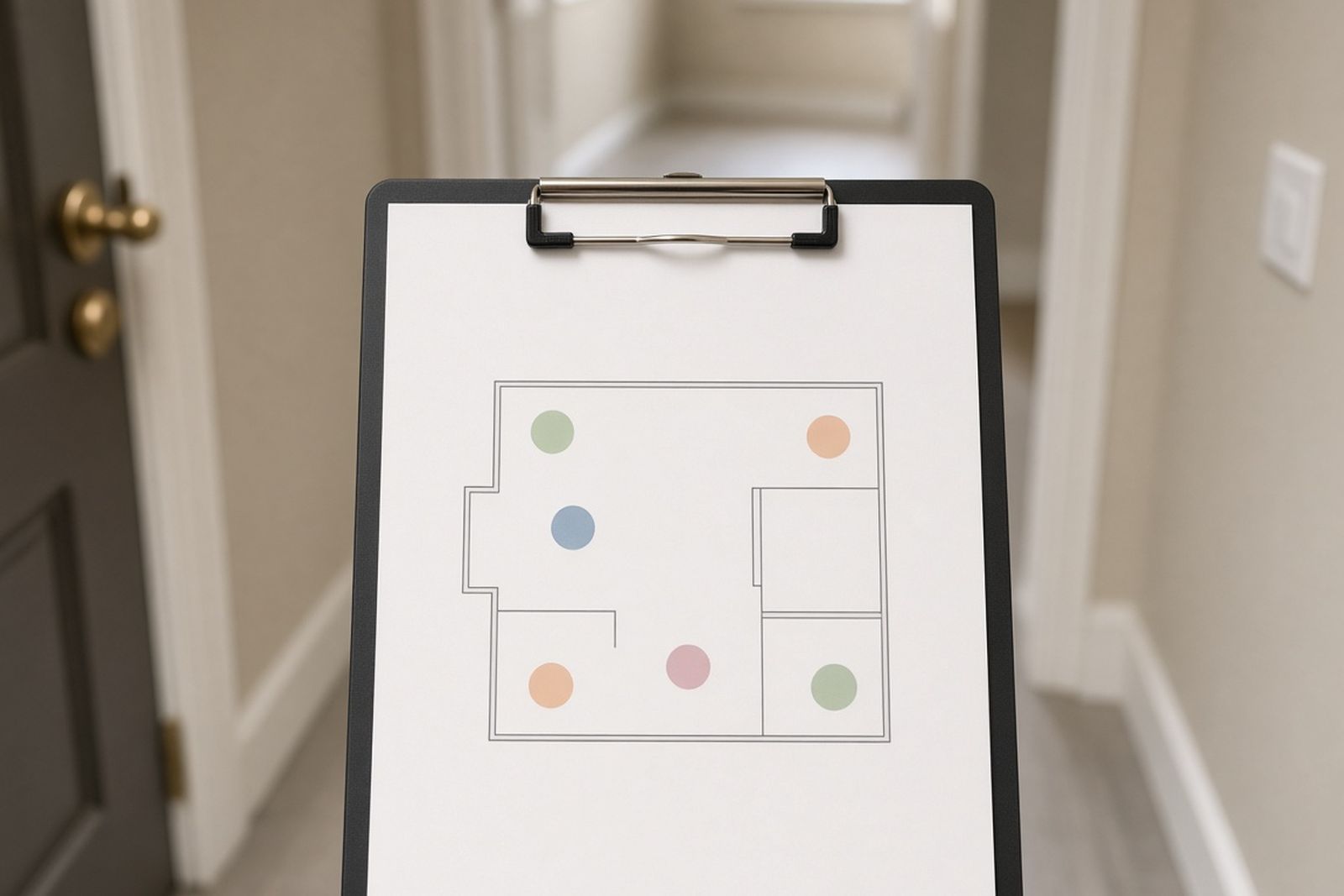
Clipboard showing a room plan with color-coded dots marking high-touch surfaces
Illustrative photo, not a job record. Clipboard showing a room plan with color-coded dots marking high-touch surfaces.
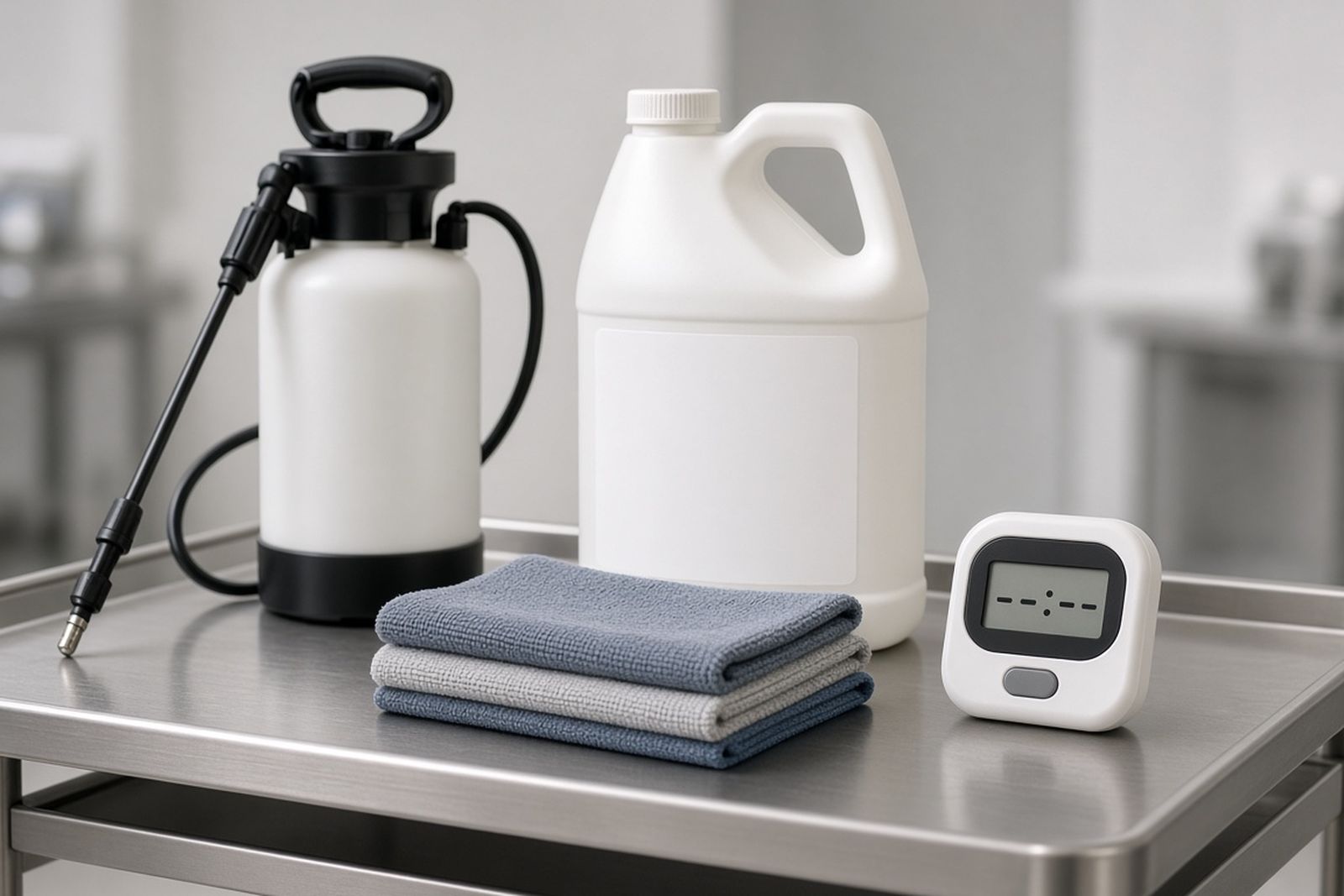
Pump sprayer, disinfectant jug, folded cloths and a contact-time timer on a steel cart
Illustrative photo, not a job record. Pump sprayer, disinfectant jug, folded cloths and a contact-time timer on a steel cart.

Infectious Disease Disinfection figures to keep in mind

National and research figures, not Weston data. Local conditions, rules and providers vary; use these for scale and context only.

8

Products above pH 8 accounted for 74% of failures in the experiment.

Read with care: Accelerated test conditions; not a failure rate for installed equipment.

Source: Jennings et al. (2024)Eight wipe formulations tested on healthcare plastics under fixed strain for seven days.

11

Six of 11 interviewees described concerns or problems from inhaling cleaning chemicals.

Read with care: Small voluntary sample; no causal inference; survey item nonresponse substantial.

Source: Wilson et al. (2023)59 Arizona survey respondents and 11 interviewees from maid services and a school district.

42%

An American Cleaning Institute survey found 42% of Americans were not letting disinfectant sprays and wipes stay wet long enough to work, with 26% wiping immediately after spraying.

Read with care: Trade-association survey conducted early in the pandemic; self-reported behavior.

Source: American Cleaning Institute (2020)United States, 1,005 adults surveyed March 18-19, 2020

These figures are public research and agency data, not this network's own job records. Keep each number with its population, year and limits; none of them predicts cost, timing or outcome at a specific property.

Plan before you reach out

Use the first 24 hours planner for immediate steps and the provider vetting checklist to confirm any Weston provider's training, insurance and waste path in writing.

What research has found

Findings from published studies of people and properties in situations like this one. They describe what researchers observed in a specific group; they are not predictions for your case.

Used wipes retained spores during and after wiping.
Who was studied: Non-sporicidal-claim wipes tested on Formica with C. difficile spores.Limits: Not a comparison of all sporicidal products; physical removal is not complete inactivation.Disinfectant wipes transfer Clostridioides difficile spores during the disinfection proc… (2020)
Both methods reduced cultured bacterial contamination.
Who was studied: Naturally contaminated surfaces in a comparative field test.Limits: Specific device, protocol and success criterion; no patient infection endpoint.Superiority of manual disinfection using pre-soaked wipes over automatic UV-C without pr… (2023)

Infectious Disease Disinfection community polls

Poll results

Every count is a real visitor vote; nothing is seeded or padded. One vote per poll per device, and you can change your answer.

Your experience

When your facility had an illness cluster, how did you handle cleaning?

No visitor votes yet
Process

How did you decide whether to close all or part of the facility?

No visitor votes yet

Planning cleanup in Weston?

Send a short message about the property to the follow-up inbox. A coordinator can reply by email with next steps.

Your request is sent to the follow-up inbox. A coordinator can reply by email.

If anyone is hurt or in danger, call 911 first.