East Hampton, NY

Infectious Disease Disinfection Planning in East Hampton, NY

What to do, who to contact, and what to ask in East Hampton.

Reopening an East Hampton house after a sick visitor? See what a winter shutdown does and does not do, and what to ask your caretaker.

Get an email reply about infectious disease disinfection

Send a short message to the follow-up inbox. A coordinator can reply by email. This form does not send emergency help; call 911 first if anyone is in danger.

Tell us what you need help with. Share a short description; please leave out medical details, access codes, and other sensitive information.

A request does not confirm a booking. For immediate danger, contact local emergency services.

Or email info@infectiousdiseasecleanup.online

The short answer for East Hampton, NY

If a late-season visitor was sick at your East Hampton house, a winter shutdown does not finish the job for you. Idle sinks still need soap, and each product still needs its full wet time. Below you will find what to check before you reopen for the holidays and what to ask your caretaker or a cleaning company.

What to do, step by step

  1. 1

    Use the shutdown weeks, but do not count on them

    A closed house makes it easy to keep rooms empty while a product stays wet for the time on its label. Quiet alone does not clear germs from fabric or from fixtures nobody has washed. Write down what you know about the late-season illness, without trying to diagnose your visitor. Have your caretaker read you the EPA number and the germs named on the label. List N answers a COVID-19 question and nothing else. Turn down anyone who offers you a sterile bunkhouse.

  2. 2

    Have idle fixtures washed with detergent first

    CDC's advice for homes starts with removing grime. A bunkhouse bath that sat unused can hold a film that shields germs from the disinfectant. A careful caretaker or crew will wash those fixtures, then put the product on and keep it wet for the printed time. Ask them to note when the wet time started and stopped. That gives you something better than a lemon scent to go by. If the note is missing, you cannot tell whether the step was done.

  3. 3

    Set the reopening time before holiday guests arrive

    Give your caretaker one written time when the buildings open again. Have that time settled before relatives start to travel. Windows can be opened a little at a time under the storm sash to air the rooms. If you send a message to family, list the outbuildings that are still closed and the hour each one opens. Leave your visitor's name out of it. Anyone who arrives soon after the work can ask to see the product's safety data sheet.

  4. 4

    Keep a caretaker packet for your insurer

    Ask your caretaker to save the EPA numbers, the germs each label lists, a sketch of each outbuilding, the detergent notes, the wet-time log and the fabric choices. A quick swab of a studio faucet can flag leftover grime. It cannot prove that germs are gone. Mark any workroom that was not treated, so you know what the bunkhouse invoice covers. For questions about illness in the community, you can turn to the Suffolk County Department of Health.

What cleanup is like in East Hampton

Compounds this far east often close from late fall to early spring. Your writing room, guest bunkhouse and outdoor rinse stall sit unused while a caretaker checks the pipes and the mouse traps. If someone was sick late in the season, the shutdown gives you plenty of time for products to sit wet. But months of quiet do not clean a mattress or a worktable. Write down which bunkhouse baths and studio sinks the visitor touched. Then choose whether mattress toppers stored in a damp spot get washed or thrown out. The Suffolk County Department of Health shares public health messages. It does not certify homes.

Your pressure point is the holiday reopening, not a Saturday rental turnover. Storm windows stay down for weeks. A caretaker may buff fixtures dry early so the house smells fresh when relatives arrive for a feast. That cuts the wet time short. Ask the caretaker to follow the label instead and to tell you the times. Canvas drop cloths in the studio, wool throws in the bunkhouse and window-seat cushions sealed in plastic bins usually need airing or washing first. A scented fog does not take the place of detergent on a sink that sat idle all winter.

Some things get touched without anyone crossing your main foyer. Think of the lockbox on the dune post, the outdoor rinse valve and the studio dimmer switch. If late-season visitors used them, put them on your list. When a shut house is opened, the caretaker may also find blood or other body fluids. Tell the cleaning company if that happens, because OSHA's rules for blood cleanup may then apply to the crew. CDC's pages on hospital sterilization describe clinics. They are not a test your bunkhouse has to pass.

What to expect for your type of home

  • Dune-road compounds: Bunkhouse baths, studio sinks, outdoor rinse valves and the dune-post lockbox matter more than formal rooms. Tell the company which of these your late-season visitor touched before the house closed.
  • Properties with separate studios and bunkhouses: Give each workroom and bunkhouse its own line in the plan. Ask for paperwork that names what was treated, so one bunkhouse invoice is not taken as the whole compound.
  • Houses with fabrics stored over winter: Toppers and canvas drop cloths kept in damp spots should be aired, washed or thrown out before any product goes on. Ask the caretaker what was stored where.
  • Winterized homes: Shutdown weeks are good for letting products finish their wet time. They are not a reason to skip detergent on sinks that sat idle. Ask how idle fixtures will be washed first.
  • Artist studios and kitchenettes: A kitchenette counter may need a rinse after disinfecting, because food touches it. A studio worktable does not follow those food rules. Ask which product is planned for each.
  • Caretaker-managed homes: Find out who used the lockbox and when, before a Thanksgiving or year-end reopening. Keep that note, so you know which handles and valves were touched after the house closed.

Papers and records to keep

  • What you know about the late-season illness, written without naming the visitor
  • A list of the bunkhouse, studio and main-house areas that were included
  • Product EPA numbers for the bunkhouse and studio work, with each label's germ list
  • A note on how idle fixtures were washed with detergent before disinfecting
  • Wet-time start and stop hours, tied to your caretaker's rounds
  • Which fabrics were aired, which were washed and which were thrown out
  • The holiday reopening time that you gave your caretaker
  • A note on any blood or body fluids found while opening the compound

Local offices and official help

Common questions in East Hampton

The bunkhouse sat closed all winter. Is it already safe for holiday guests?

No, not on that basis alone. A shutdown makes it easier to keep rooms empty during the wet time. It does not clean a mattress, sink film or throws sealed in a bin. If a late-season visitor was sick, have the fixtures washed with detergent first. Then use an EPA-registered product whose label lists the germ, kept wet for the full label time. Air or wash fabrics that were stored damp.
Should my caretaker fog a studio that was locked all winter after one autumn illness?

Fog does not replace cleaning the sinks and switches your sick visitor really used. If the studio was locked and unused after they left, write that down and leave it out. Still take care of the shared lockbox, the outdoor rinse valve and any laundry that linked the studio to the main house. If the studio was used, have it cleaned and then disinfected with a timed wet period. Leave medical advice to doctors.

How should I word a Thanksgiving reopening message to relatives?

Keep it short and factual. Name the dune-road outbuildings that are still shut. Give the hour the product timer ends, and then the hour the safety data sheet says family can go in. Leave out any diagnosis and any graphic detail. Offer the safety data sheet to anyone who arrives soon after the work. For wider health questions, point relatives to the Suffolk County Department of Health and not to your own guesses.

What can List N do for me when I open the compound after a COVID-19 exposure?

List N lets you check a bottle against EPA's COVID-19 list. That is the first step for the compound. After that, the label's wet time and surface limits still apply in the bunkhouse, studio and main house. Months of winter closure do not replace that step for things touched just before the house shut. Do not stretch the same bottle to cover a stomach bug later. Note which outbuildings were treated.

Which records should my caretaker keep after waking up the house?

Ask for the product names and labels, and a list of the bunkhouses and studios that were treated. The record should also show the cleaning done on fixtures that sat idle, how long surfaces stayed wet, and what happened to blankets and cushions. Add how the house was aired and when relatives may arrive. Swab readings, if any, only point to grime. Skip any certificate that promises the compound is germ-free.

How should a caretaker in East Hampton stay safe when opening a house after an illness last season?

The caretaker should open windows first to air the house out. Gloves are a good idea while gathering leftover linens and trash. It is worth looking for signs of mice, mold or water damage, which are more common after a winter closure and may need their own cleanup. Hands should be washed before eating or driving. A caretaker who feels sick after the work should see a doctor and say what they were cleaning.

Nobody used our East Hampton guest bunkhouse after the sick visitor left. Can we skip it?

Yes, if no one went into the bunkhouse during or after the illness. It does not need disinfecting for that illness. Write down that it stayed closed and untouched, so your caretaker does not treat it by mistake. Dust it and air it out before the next guests, as you always would. If you are not sure who went in, have the door handle, light switches and bathroom fixtures cleaned. That takes little time and settles the question.

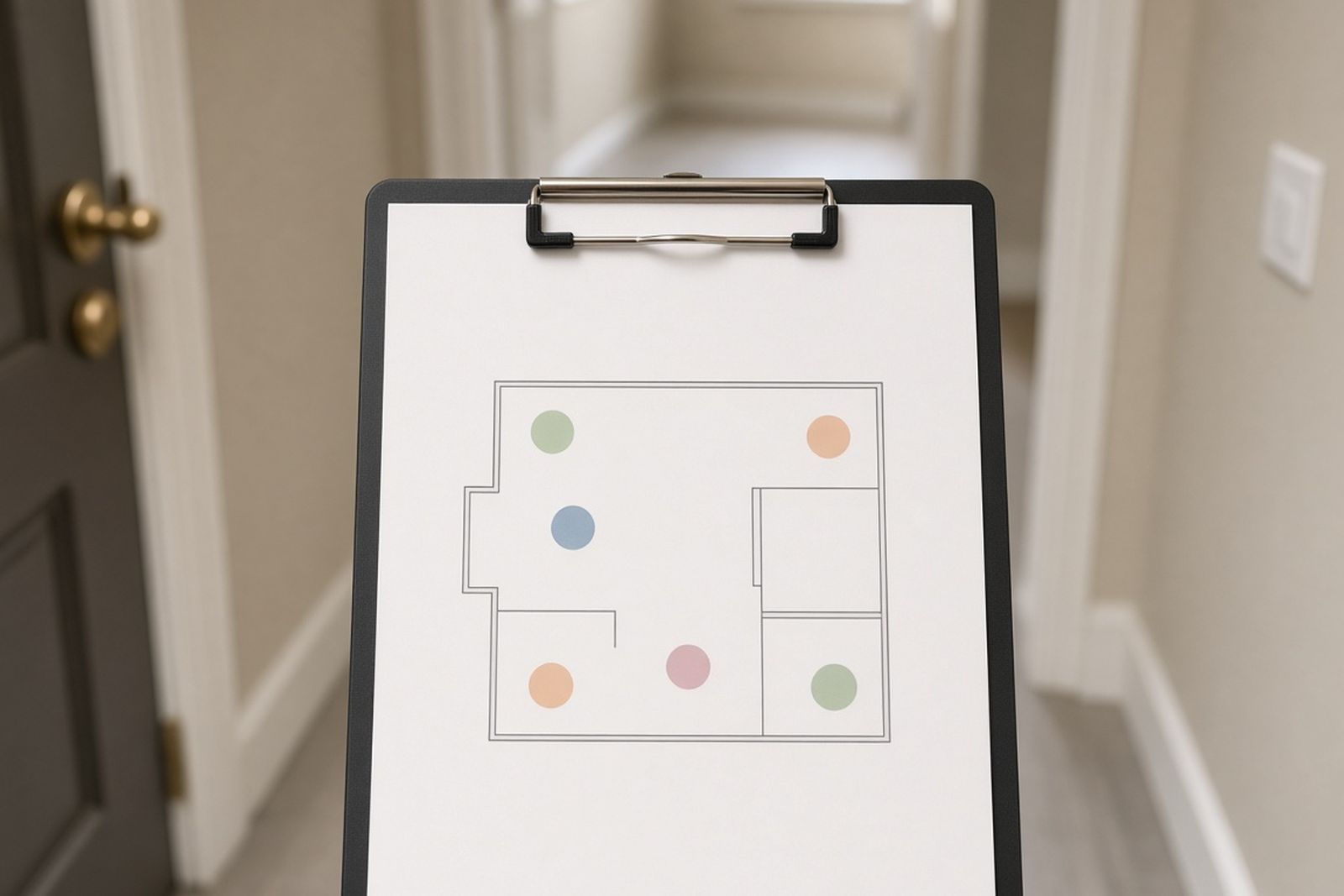
Clipboard showing a room plan with color-coded dots marking high-touch surfaces
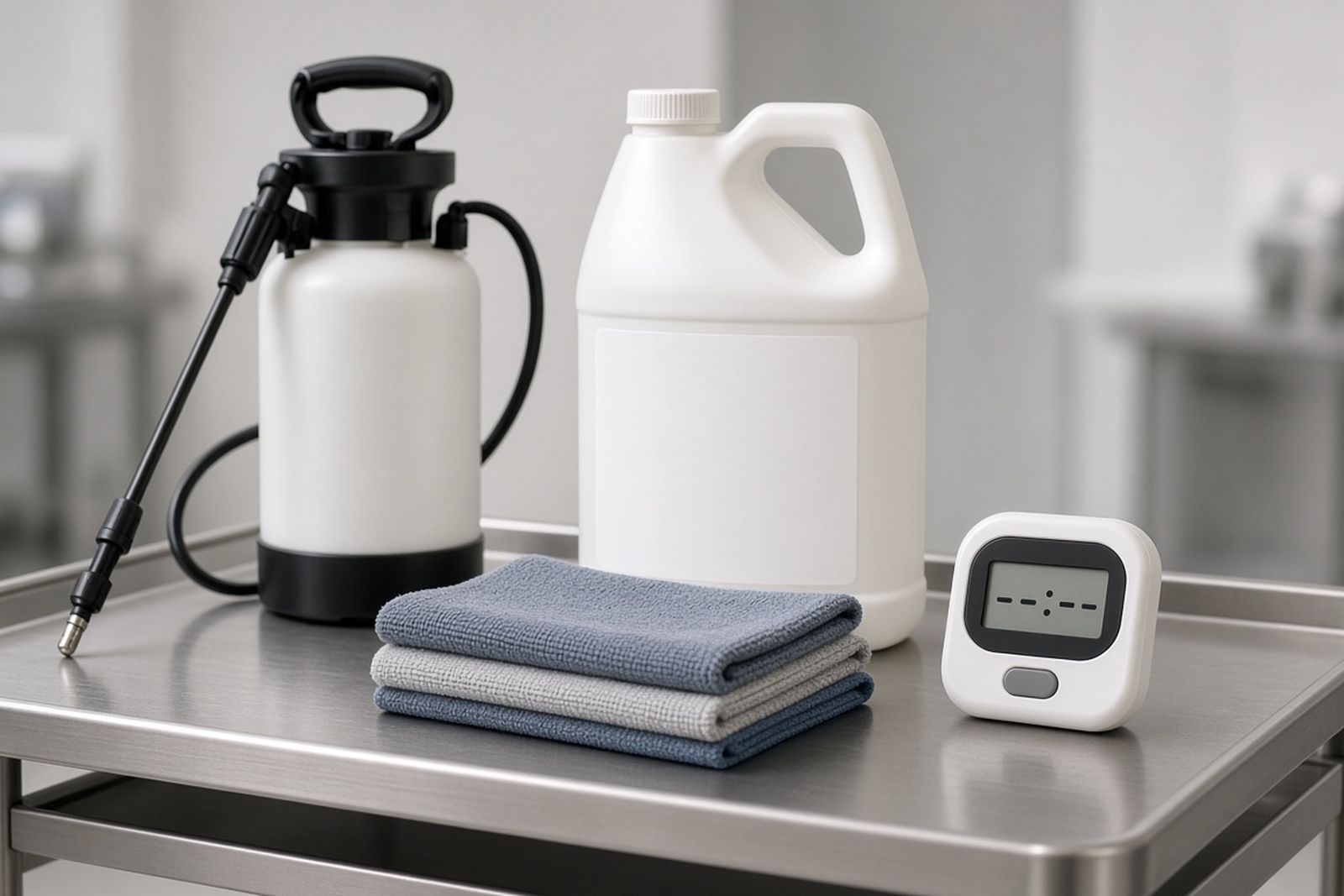
Pump sprayer, disinfectant jug, folded cloths and a contact-time timer on a steel cart

Facts worth knowing

  • In lab studies, MRSA lasted 7 days to 7 months on dry surfaces, C. difficile spores 5 months, norovirus up to 7 days, and flu 1 to 2 days.

    Why it matters: Waiting may not clear some germs, so you may need to disinfect surfaces a sick person touched.

    Source: BMC Infectious Diseases, 2006

  • HomeAdvisor says disinfecting a home costs from $15 to $400 or more, depending on whether you do it yourself or hire a professional.

    Why it matters: The range is wide, so ask for a written quote, and expect specialized biohazard work to cost you more.

    Source: HomeAdvisor, 2026

  • A cleaning trade group's December 2025 price guide lists electrostatic disinfection at $0.10 to $0.30 per square foot for commercial buildings.

    Why it matters: Use this as a rough range to compare quotes; your price may differ by region, size and how often you need service.

    Source: ISSA, 2025

Tools that help right now

What would you do?

Poll results

Vote to see how other people answered. You can change your answer at any time.

Your experience

When your facility had an illness cluster, how did you handle cleaning?

Be the first to vote
Process

How did you decide whether to close all or part of the facility?

Be the first to vote

Need help in East Hampton?

Send a short message about the property to the follow-up inbox. A coordinator can reply by email with next steps.

Your request is sent to the follow-up inbox. A coordinator can reply by email.

If anyone is hurt or in danger, call 911 first.