Scarsdale, NY

Infectious Disease Disinfection Planning in Scarsdale, NY

What to do, who to contact, and what to ask in Scarsdale.

Illness in your Scarsdale home? See why the mudroom, baths and media den come first, how to time work around the train, and what to ask a service.

Get an email reply about infectious disease disinfection

Send a short message to the follow-up inbox. A coordinator can reply by email. This form does not send emergency help; call 911 first if anyone is in danger.

Tell us what you need help with. Share a short description; please leave out medical details, access codes, and other sensitive information.

A request does not confirm a booking. For immediate danger, contact local emergency services.

Or email info@infectiousdiseasecleanup.online

The short answer for Scarsdale, NY

In a Scarsdale colonial, germs ride in through the garage mudroom and settle in the family bath and the media den. Clean those first, then use a product whose label lists your household's illness. You will see how to time the work around trains and carpools, and what to ask a cleaning service.

What to do, step by step

  1. 1

    Build the plan on mudroom and media-den traffic

    Start with where your family really goes: the mudroom, the kitchen, the bath and the den. Then read each bottle's list of germs and choose the one that names your family's illness. List N was built for COVID-19. A stomach bug going around the carpool may need a stomach-germ claim that List N alone does not give. If a service talks about a sterile colonial, you have heard a sales line, not a plan.

  2. 2

    Have the boots-and-bags zones washed first

    CDC's community steps put cleaning ahead of disinfecting. Skip it, and mudroom grit and bath film will shield germs from the product. After washing, the product stays wet for the printed time on taps, benches and remotes. Note the start and stop times yourself or ask the service to. A lemon scent in the hallway should not be taken as proof that the job is done.

  3. 3

    Set one household clock around trains and carpools

    Doors on your treated rooms stay shut until the product's time and the safety data sheet's notes are both met. One clock for the whole household beats a rushed buffing before someone leaves. If the spare bath was not treated, do not send the family there as a backup. With the storm windows on, air the house out carefully. Nobody should tell you the air itself has been made sterile.

  4. 4

    Keep a household file

    Save the product names and numbers, the wet-time logs, a sketch of the den and mudroom, and copies of any notes you sent. A swab on a faucet checks for grime, not germs. Questions about illness in the community go to the Westchester County Department of Health or the New York State Department of Health. Tell your caregiver the empty-room hours and where the safety sheets are kept. Do not hand anyone a do-it-yourself fog recipe.

What cleanup is like in Scarsdale

In Scarsdale's stone colonials, the real germ path often runs through the garage mudroom. Wet boots, sports bags and trips to the fridge follow each Harlem Line arrival. Your formal living room stays quiet, while the bath taps and the remotes in the finished media den see constant hands. So chart those spots for the days someone was contagious, and do not pay anyone to fog the crown molding. The Westchester County Department of Health can help you share factual information with other families. It does not certify a colonial as sterile.

Carpool loops and train times squeeze your choices about when to reopen a room. Storm windows trap smells after products go on. It is tempting to buff the fixtures dry so everyone can get out the door in the morning, but that cuts the label's wet time short and wastes the effort. Gaming chairs, den throws and fabric sectional covers usually need washing or a spell out of the room. And however thorough it feels, a winter wipe-down of your house is not a sterilization certificate.

A private caregiver or tutor may visit your home without turning it into a licensed clinic. Even so, take care. Nobody should fog a room with a medically fragile person in it. Products are chosen by the germs on the label. Any note you write about reopening should be free of diagnosis words. Lots sit close together in Scarsdale, and news travels over the hedge. Keep what you tell neighbors private and factual: which days workers will be there, and nothing about who was ill.

What to expect for your type of home

  • Colonials with a garage mudroom: The bench, the sports-bag drop spot, the fridge handle and the family bath taps are the first surfaces to treat. Formal rooms can wait.
  • Finished media dens: Throws and gaming-chair cushions should be washed or taken out before any product goes on. Remotes and controllers get wiped with something safe for electronics.
  • Homes with one main bath: It has to stay empty through the labeled wet time. Plan that for after the school departure, not during the scramble before it.
  • Family kitchens: Food surfaces have a rinse step on the label. Keep that task apart from wiping the den remotes, even if the same person does both.
  • Commuter households: The Harlem Line morning rush is the usual reason a wet time gets cut short. Start the work once the last person has left for the train.
  • Homes with a visiting caregiver: Leave diagnosis words out of any reopening note. Give the caregiver the empty-room hours and the safety data sheets, and nothing more.

Papers and records to keep

  • A sketch of the contact spots in your mudroom and media den
  • A short note on what happened, with nobody named
  • EPA numbers for each bottle and the germ claim you picked it for
  • The detergent steps done on gritty benches and in the baths
  • Wet-time start and stop for the baths and the kitchen
  • Your household reopening time, tied to the Harlem Line or the carpool
  • Notes on which soft den items were washed or removed
  • A caregiver note that keeps medical care apart from empty-room facts

Local offices and official help

Common questions in Scarsdale

Several kids in our carpool had a stomach illness. Where should we start at home?

Start with the baths used during the illness. Fridge handles, the switches along that path and the mudroom bench where sports bags land come after. Grit and grime are removed with detergent. On the bath and bench, use an EPA-registered product whose label lists stomach germs, and leave it wet as long as the bottle says. Wash the den throws instead of spraying them. Handwashing after the carpool and before meals still matters.
If the media den is treated, are the upstairs bedrooms covered too?

No. Think about how people moved through the laundry, kitchen and mudroom. The high-touch objects on those paths are disinfected and kept wet for the full time. Upstairs bedrooms are not sterile because the den smelled like cleaner. A shared laundry should not be skipped either. Have the service write down which rooms are in the job and which are not. The germ claim must match your concern, and List N is no key to every germ.

How should our visiting caregiver talk about the cleaning?

The caregiver can say which rooms are closed and when the safety sheet's return time lets people back in. Cleaning workers should not be asked for a diagnosis. A labeled product lowers germs on the surfaces it treats. It is not a vaccine or a test. Nobody fogs around a medically fragile person who stays in the house. If blood or other body fluids are present, a bloodborne pathogen plan may be needed.

Why is it so tempting to cut the wet time short in storm-window season?

Because smells linger with the storm windows down, and mornings are rushed. Families buff fixtures dry before a school or train departure, and that habit ruins the disinfecting. Let the den stay shut longer instead. Air the house out with care in cold weather. Soft den items may need extra drying. Write down the times you really used. Cold weather does not widen what List N covers.

What should we put in a packet for our insurer?

Insurers usually want to see what was done, not promises. Include the products used and their labels, the rooms treated in your colonial, the cleaning steps, wet times and reopening times. Photos of the prep help. A swab reading, if one was taken, only shows leftover grime. Skip any certificate claiming the house is germ-free for good. Wider health questions go to the Westchester County Department of Health or your doctor.

How do we clean the finished basement playroom after our child's stomach illness?

Pick up the hard toys. Wash them in hot, soapy water, or in the dishwasher if they are dishwasher-safe. Any that cannot be washed are disinfected with a product labeled for toys, and rinsed if the label says to. Play mats and stuffed toys go in the washing machine. Clean and disinfect the stair rail, light switch and door handle. Basements hold smells, so run a fan and give the room extra time before children come back.

What should we tell a cleaning service coming after an illness at home?

Tell the service that someone at home was sick, so workers can pick gloves and products that fit. You do not need to share personal details. Say which rooms the sick person used and which they did not. Ask what products they plan to use and whether the labels cover the concern your doctor mentioned. Agree on which soft items you will wash yourselves. Let them know when family members will be home, so the work can finish first.

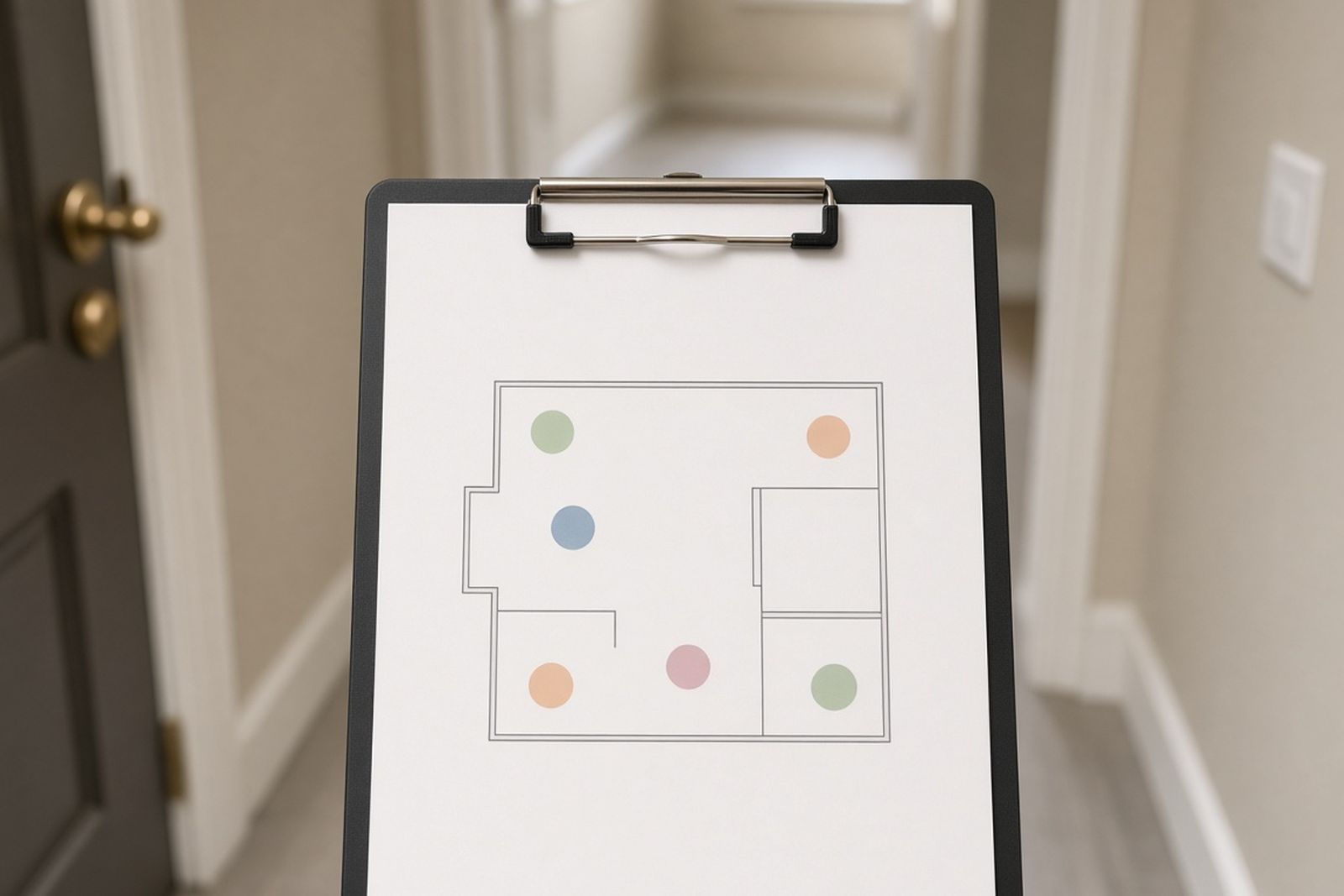
Clipboard showing a room plan with color-coded dots marking high-touch surfaces
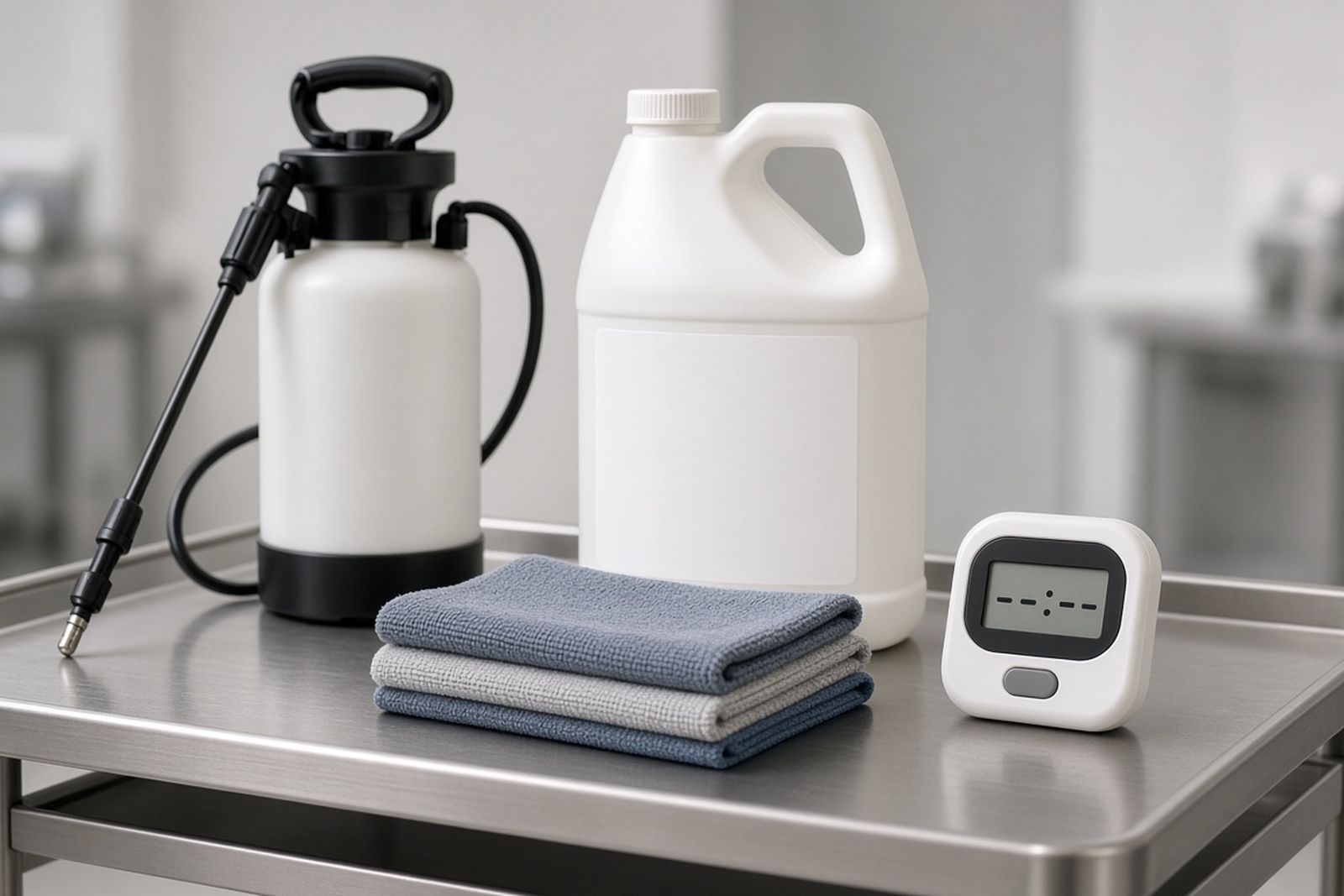
Pump sprayer, disinfectant jug, folded cloths and a contact-time timer on a steel cart

Facts worth knowing

  • The CDC says to mix 5 tablespoons (1/3 cup) of bleach per gallon of water, leave it wet at least 1 minute, and make a fresh batch every 24 hours.

    Why it matters: Never mix bleach with ammonia, and know that bleach can damage some of your surfaces.

    Source: CDC, 2024

  • For norovirus, the CDC recommends a stronger mix of 5 to 25 tablespoons of bleach per gallon of water, left on surfaces for at least 5 minutes.

    Why it matters: After vomiting or diarrhea in your home, use this stronger mix rather than the everyday bleach recipe.

    Source: CDC, 2024

  • A cleaning trade group's December 2025 price guide lists electrostatic disinfection at $0.10 to $0.30 per square foot for commercial buildings.

    Why it matters: Use this as a rough range to compare quotes; your price may differ by region, size and how often you need service.

    Source: ISSA, 2025

Tools that help right now

What would you do?

Poll results

Vote to see how other people answered. You can change your answer at any time.

Your experience

When your facility had an illness cluster, how did you handle cleaning?

Be the first to vote
Process

How did you decide whether to close all or part of the facility?

Be the first to vote

Need help in Scarsdale?

Send a short message about the property to the follow-up inbox. A coordinator can reply by email with next steps.

Your request is sent to the follow-up inbox. A coordinator can reply by email.

If anyone is hurt or in danger, call 911 first.