Northeast · US

Infectious Disease Disinfection Planning in New York, NY

Planning infectious disease disinfection in New York, NY

New York City disinfection planning. Covers shared building cores, EPA labels, List N limits, cleaning before disinfecting, and CDC community hygiene advice. This is planning guidance, not a claim of a local office or crew in New York.

Get an email reply about infectious disease disinfection

Send a short message to the follow-up inbox. A coordinator can reply by email. This form does not send emergency help; call 911 first if anyone is in danger.

Tell us what you need help with. Share a short description; please leave out medical details, access codes, and other sensitive information.

A request does not confirm a booking. For immediate danger, contact local emergency services.

Or email info@prompartybuses.com

Direct answer

The short answer for New York, NY

Property portfolios that span several New York boroughs need infection records that start with shared elevator cores and lobbies near transit. Keep EPA label claims honest within List N's limits. Refuse sterile-building sales talk across mixed residential and commercial buildings.

Editorial guide · Biohazard Remediation NetworkUpdated 2026-07-22Location focus: New York, NY

Local planning context

Property managers and portfolio owners often run buildings scattered across the boroughs. Each has its own building type, turnover pressure, and set of amenities. A citywide outbreak plan shouldn't copy one tower's elevator steps onto a low-rise walk-up without redrawing the high-touch map. Lobbies near subway stops, package rooms, and shared restrooms still collect the most hands, even when private units differ. NYC Health community guidance can support factual notices. It doesn't turn an apartment hallway into a sterile clinic.

Cross-borough vendor routes and central housekeeping contracts tempt owners to use one product everywhere without reading its germ claims. Portfolio plans should require detergent cleaning before disinfecting. Wet times should be timed and logged building by building. One invoice line that hints every address was sterilized is not enough. Write washing or exclusion decisions for soft items and porous amenity seats site by site.

In many neighborhoods, clinics, pharmacies, and apartments share the same street doors. Work in common areas follows CDC cleaning and disinfecting principles for non-health care settings. Hospital ideas about disinfecting and sterilizing devices belong to the clinic tenants. They aren't a standard for clearing homes.

Property considerations

Require a high-touch list for each building instead of one fog template for the whole portfolio.

Do lobbies near transit, package rooms, and elevator hardware before decorative finishes few people touch.

Log wet times separately for each address so untreated floors aren't assumed cleared.

In office suites that share a residential core, keep food-prep kitchenettes separate from general desks.

Write down, site by site, whether amenity fabrics get washed or left out.

Keep clinic device rules out of residential amenity reopening notices.

Response-planning framework

Map the portfolio without diagnosing tenants

List which addresses, floors, and amenity rooms are included, based on known exposure paths, not rumors. Record the illness pattern as the requester described it, without publishing any diagnosis. Pick EPA-registered products labeled for the germ involved, not one standard bottle for every borough. List N is EPA's list for COVID-19, used as directed. Other concerns need labels that match. Refuse sterile-campus wording anywhere in the portfolio.

Clean first, then hold the wet time building by building

Clean bathroom film and vomit before any product goes on. Wiping a package room dry early so it can reopen defeats the whole process. Fogging stuffy hallways doesn't replace cleaning first.

Post one reopening time per address

Central desks that manage several boroughs need written reopening times that night staff can't casually override. Air out each building as the label and SDS direct. Sensitive residents may need longer. Send public health questions to NYC Health.

Keep process packets for insurers and boards

File EPA numbers, germ claims, zone maps, cleaning notes, wet-time logs, and soft-item exclusions for each building. A residue swab only shows leftover grime. It does not detect germs. Write down which addresses were left out, so no one reads a portfolio invoice as citywide sterilization.

Documentation checklist

  1. 1Portfolio address list with the floors and amenity rooms included at each building
  2. 2High-touch list for each building, with notes on where the mess centered
  3. 3EPA numbers, germ claims, and contact times for each product, noted building by building across the portfolio
  4. 4Detergent cleaning confirmation for each borough property before disinfection began
  5. 5Timed wet-period logs filed by address, not only by invoice date
  6. 6Fresh-air steps and reopening times shared with desk staff at each property
  7. 7Every borough notice, scrubbed of health facts
  8. 8For each borough address, how soiled waste was bagged and which hauler took it

Official resources

Questions for this location

Can one disinfection template cover every building in a multi-borough portfolio?

No. Building type, air flow, amenities, and high-touch paths differ across boroughs, and even inside one neighborhood. An elevator-first order that fits a tower will miss stoop rails and shared courtyard doors in a walk-up. Write a high-touch list for each building, with cleaning first, EPA labels that match the germ, and timed wet-period logs. Soft-item decisions should also fit each site. Portfolio invoices should list exclusions clearly so untreated floors aren't assumed finished.
How should managers use EPA List N after a COVID-19 exposure in a citywide portfolio?

Use List N to check that a product is listed by EPA for the COVID-19 virus. Then follow its label at every property. Across the portfolio, pair the product with detergent cleaning, empty rooms during the wet time, and fresh air that suits each building. A walk-up with windows that open and a sealed tower need different airing plans. List N isn't a list for stomach bugs or other illnesses. Don't reuse the same bottle for every later report.

Does corridor fogging sterilize units across a portfolio?

No. In health care, sterilization means a specific process for certain medical tools. It's the wrong word for fogging an apartment hallway in any borough. Lowering risk in units still depends on cleaning grime, washing linens where needed, and labeled hard-surface disinfection with a timed wet period. Fogging a stuffy walk-up hallway can expose people to fumes and still leave grime on bathroom fixtures. Portfolio records can list EPA numbers and wet-time logs for each property. They should say what was treated and make no claim about sterile air.

If a guest in one of our managed units was sick, what paperwork should we keep?

For each managed unit, write down the dates it sat empty and the cleaning steps. Note the product and EPA number, the germ claim relied on, and the wet time kept. Add how bedding and towels were handled, anything thrown away, fresh-air steps, and the label's next safe entry time. Don't claim the unit is medically cleared. If blood or a needle is found in a managed unit, move that part of the job to workers trained under OSHA bloodborne pathogen rules.

How should mixed-use notices separate clinic work from residential amenities?

Use separate plans. A ground-floor clinic or pharmacy follows its own infection-prevention and device rules. Those rules don't clear the apartments upstairs. Elevators and stairwells shared with the clinic belong in the building's ordinary high-touch plan. Don't borrow words meant for surgical tools.

How should a New York super clean a basement laundry room after a tenant was sick there?

Close the laundry room with a sign. Put on gloves and remove any mess with paper towels first. Then clean the floor and machine fronts with detergent. Disinfect the doors, buttons, and folding table with a product labeled for the concern. Keep the room closed until the contact time passes. Throw used cleaning materials away in a sealed bag. If there's a lot of mess, think about calling a professional cleaner. Post the reopening time on the door.

What should a New York renter do if a neighbor's illness seems to be spreading in the building?

Tell building management in writing what you've noticed. Don't guess at diagnoses or name neighbors. Ask whether common-area cleaning has been stepped up. In your own unit, wash your hands often and clean your door handle and light switches. Avoid the shared laundry at busy times if you can. If you think there's a larger public health problem, contact the city health department, which handles community illness reports.

Contact

Get help by email

Send a short message for an email reply about infectious disease disinfection planning questions for the New York City area.

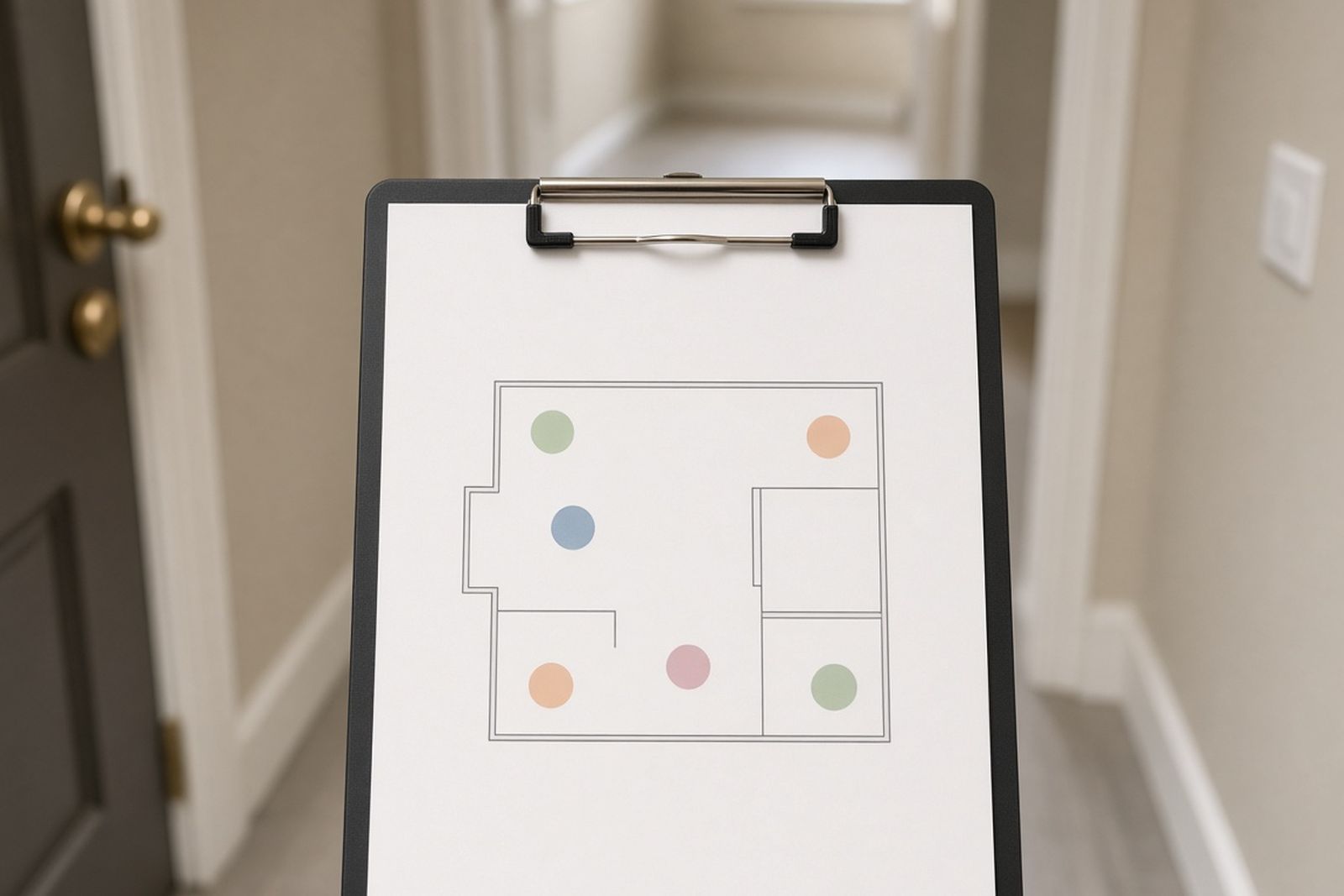
Clipboard showing a room plan with color-coded dots marking high-touch surfaces
Illustrative photo, not a job record. Clipboard showing a room plan with color-coded dots marking high-touch surfaces.
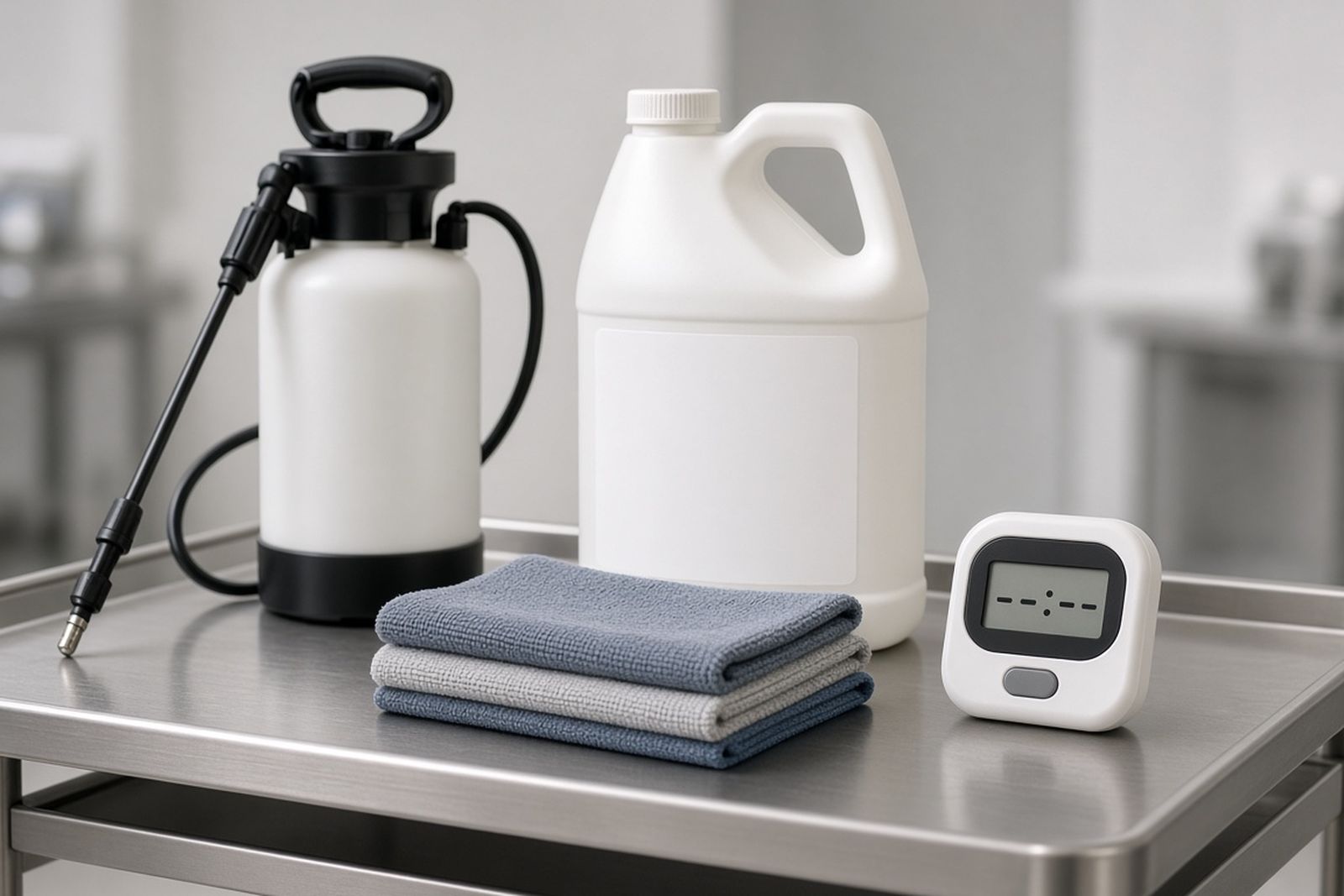
Pump sprayer, disinfectant jug, folded cloths and a contact-time timer on a steel cart
Illustrative photo, not a job record. Pump sprayer, disinfectant jug, folded cloths and a contact-time timer on a steel cart.

Infectious Disease Disinfection figures to keep in mind

National and research figures, not New York data. Local conditions, rules and providers vary; use these for scale and context only.

$0.10-$0.30 per sq ft

ISSA's commercial cleaning pricing guide lists electrostatic disinfection at $0.10 to $0.30 per square foot and medical facility cleaning at $0.14 to $0.29 per square foot.

Read with care: Trade-association ranges; actual quotes vary by region, square footage and frequency.

Source: ISSA (2025)United States commercial facilities, industry-wide ranges, December 2025

$15-$400+

HomeAdvisor reports that disinfecting a home to reduce germs, bacteria and viruses costs anywhere from $15 to $400 or more depending on DIY versus professional service.

Read with care: Broad range mixing DIY supplies and professional visits; specialized biohazard work costs more.

Source: HomeAdvisor (2026)United States residential, cost guide updated June 2026

72 hours

In a 2020 NEJM study, viable SARS-CoV-2 was detected up to 72 hours on plastic and 48 hours on stainless steel, but not after 24 hours on cardboard or 4 hours on copper.

Read with care: Viral titers dropped sharply over time; CDC later judged surface transmission to be a low risk relative to airborne spread.

Source: New England Journal of Medicine (2020)Laboratory study, controlled conditions

These figures are public research and agency data, not this network's own job records. Keep each number with its population, year and limits; none of them predicts cost, timing or outcome at a specific property.

Plan before you reach out

Use the first 24 hours planner for immediate steps and the provider vetting checklist to confirm any New York provider's training, insurance and waste path in writing.

What research has found

Findings from published studies of people and properties in situations like this one. They describe what researchers observed in a specific group; they are not predictions for your case.

Small/medium amines or alcohol in formulations were linked with greater cracking propensity.
Who was studied: Eight wipe formulations tested on healthcare plastics under fixed strain for seven days.Limits: Accelerated test conditions; not a failure rate for installed equipment.Chemical resistance testing of plastics: compatibility of detergent and disinfectant pro… (2024)
The most common reported disinfection frequency shifted from between patients to twice daily.
Who was studied: 137 healthcare-professional respondents; convenience/purposive online sample across the pandemic.Limits: Reported knowledge and practices, not observed compliance or infection outcomes.Infection prevention control in practice: a survey of healthcare professionals’ knowledg… (2024)

Infectious Disease Disinfection community polls

Poll results

Every count is a real visitor vote; nothing is seeded or padded. One vote per poll per device, and you can change your answer.

Your experience

When your facility had an illness cluster, how did you handle cleaning?

No visitor votes yet
Process

How did you decide whether to close all or part of the facility?

No visitor votes yet

Planning cleanup in New York?

Send a short message about the property to the follow-up inbox. A coordinator can reply by email with next steps.

Your request is sent to the follow-up inbox. A coordinator can reply by email.

If anyone is hurt or in danger, call 911 first.