South · US

Infectious Disease Disinfection Planning in Potomac, MD

Planning infectious disease disinfection in Potomac, MD

Potomac, MD estate disinfection planning. Covers lane entries, EPA label claims, List N limits, how long surfaces stay wet, and lowering risk at home. This is planning guidance, not a claim of a local office or crew in Potomac.

Get an email reply about infectious disease disinfection

Send a short message to the follow-up inbox. A coordinator can reply by email. This form does not send emergency help; call 911 first if anyone is in danger.

Tell us what you need help with. Share a short description; please leave out medical details, access codes, and other sensitive information.

A request does not confirm a booking. For immediate danger, contact local emergency services.

Or email info@prompartybuses.com

Direct answer

The short answer for Potomac, MD

Potomac's Montgomery County HOA lanes, private-school carpool loops, and humid Chesapeake-area guest wings need careful records. Keep association notices apart from medical privacy. Match EPA labels to what made people sick. Refuse sterile-estate sales talk after a pool-house wipe.

Editorial guide · Biohazard Remediation NetworkUpdated 2026-07-22Location focus: Potomac, MD

Local planning context

Association lanes and private-school drop-off loops move germs differently than downtown elevator banks. Mailbox clusters, shared tennis-pavilion restrooms, and guest-wing baths see a stream of weekend visitors. After an illness, list which association amenities and household rooms people actually used. Don't fog a formal living room that stayed empty. Montgomery County Department of Health and Human Services can help spread factual HOA notices. It doesn't certify a private address as sterile.

Chesapeake humidity keeps wet surfaces damp longer on shaded porches and in air-conditioned hallways. Board calendars tempt people to wipe surfaces dry early so a tennis court can reopen. That cuts the label's wet time short. Outdoor cushions stored in mudrooms, guest bedding, and fabric banquettes usually need washing or temporary removal. A scented pass after a weekend party is not a sterilization certificate. If a tennis or pool injury leaves blood on an association surface, the crew needs an OSHA bloodborne pathogen plan.

HOA messages must stick to operations, like closed amenity hours and reopening times. They must not publish diagnoses. Maryland Department of Health resources can help with wider community questions. Medical decisions stay with doctors.

Property considerations

Map mailbox clusters, tennis-pavilion restroom taps, and guest-wing baths before formal living-room decor.

Decide whether association amenities are included, separately from the private home.

Wash outdoor cushions stored indoors and guest bedding before any product goes on.

Home kitchen counters may need a rinse; the tennis pavilion restroom does not.

Post one amenity reopening time so board members can't release courts mid-wet-time.

Keep medical details out of HOA email blasts. Share only empty-period and SDS facts.

Response-planning framework

Keep HOA amenities separate from the private home

Write two lists. One covers household rooms used while someone was contagious. The other covers any association amenity people touched. Choose EPA-registered products labeled for the illness reported at the pavilion or guest wing. List N is about COVID-19. A stomach bug passed around at the tennis pavilion may need a product with its own stomach-germ claim. Refuse sterile-estate slogans in board packets.

Clean humid film off pavilion fixtures first

CDC guidance for community spaces says to wash off grime first, before disinfecting pavilion restrooms. Pavilion grit, bath film, and sticky kitchen residue shield germs if you skip this. Keep the product wet for the printed time, even when Chesapeake humidity slows drying. Soft cushions come off the hard-surface list.

Plan empty time around the board calendar

One written clock shared with the association manager beats rushed buffing for a tennis booking. Air out with care when the AC keeps windows shut. Older relatives, or anyone with breathing problems, may need more time away than the label's minimum.

A Montgomery County packet without medical gossip

Give the board a short packet. List products and labels, the pavilion and guest-wing surfaces treated, wet times, and reopening times. A pavilion tap swab reads film, not germs. Leave out any resident's name or illness. Health questions go to a doctor.

Documentation checklist

  1. 1Split list: private rooms versus association amenities in the plan
  2. 2What happened, without naming anyone
  3. 3EPA numbers and the germ claims chosen
  4. 4Detergent steps on pavilion fixtures and household baths
  5. 5Wet-time records showing surfaces stayed wet in humid weather
  6. 6HOA reopening time for courts or pavilion restrooms
  7. 7Notes on washing or removing cushions and guest bedding
  8. 8Draft board notice with empty-period facts and no medical details

Official resources

Questions for this location

Can an HOA reopen a tennis pavilion after a lunchtime spray before afternoon lessons?

Only if the pavilion stayed closed for the product's full wet time and return period. And only on surfaces cleaned first. A quick spray while players keep using the same restroom taps fails. Block the pavilion on the booking calendar and move lessons if needed. Keep the product names and times in the HOA file. Tell members the pavilion was cleaned, never that it was sterilized.
Does treating a guest wing clear association mailbox clusters automatically?

No. The plan follows where people went. If mailbox clusters and pavilion restrooms were used while someone was contagious, they need their own cleaning and a product matched to the germ. Don't call amenities sterile because a guest wing smelled like cleaner. Write down what's included and left out. List N is not a key to every germ.

What should HOA emails say without violating medical privacy?

Name the closed courts and pavilion rooms. Give the label-based reopening hour. Don't name residents or share diagnoses. Make clear that treating the pavilion lowers risk on those surfaces but can't stop future illness. Point wider questions to Montgomery County DHHS.

Someone in our Potomac home had COVID-19. What does a List N product actually do for us?

In a Potomac home, as anywhere, List N identifies products EPA has listed for the COVID-19 virus, and only when used as directed. Check the EPA number. Follow the label's contact time and surface directions for granite and stainless steel in a River Road kitchen. List N doesn't stretch to cover every stomach bug that follows a school event or a guest weekend. Scrub the River Road counters first, shut the kitchen while it works, and open the house to the breeze. Isolation decisions stay with doctors and Montgomery County DHHS.

Is pool shock the same as EPA-registered indoor disinfection?

No. Pool shock products follow the chemistry rules for swimming water. They don't replace reading an EPA-registered disinfectant label for indoor hard surfaces. Match the indoor product's germ claim to the concern. Keep surfaces wet for the printed contact time. Store pool chemicals apart from indoor wipe products. Never mix household cleaners into pool chemicals.

How should a Potomac homeowner clean a guest wing after visitors leave sick?

Strip the beds and bag the linens and towels without shaking them. Use the hottest cycle each fabric can take. Soap-scrub the wing's bath and kitchenette. Then disinfect handles, taps, remotes, and light switches with a labeled product. Keep the wing closed until the contact time has passed. Vacuum and air out mattresses and upholstered chairs. They don't need a hard-surface disinfectant spray.

What can a Potomac HOA do to reduce illness spread at community events?

Put hand sanitizer at entrances and food tables. Use serving utensils instead of shared bowls. Clean pavilion restroom fixtures before and after the event. Ask volunteers who feel sick to stay home. When the event ends, clean tables and chairs with detergent and disinfect the spots people touch most. Keep a short list of what was cleaned. If several people get sick after an event, the county health department can advise on next steps.

Contact

Get help by email

Send a short message for an email reply about infectious disease disinfection planning questions for the Washington DC area.

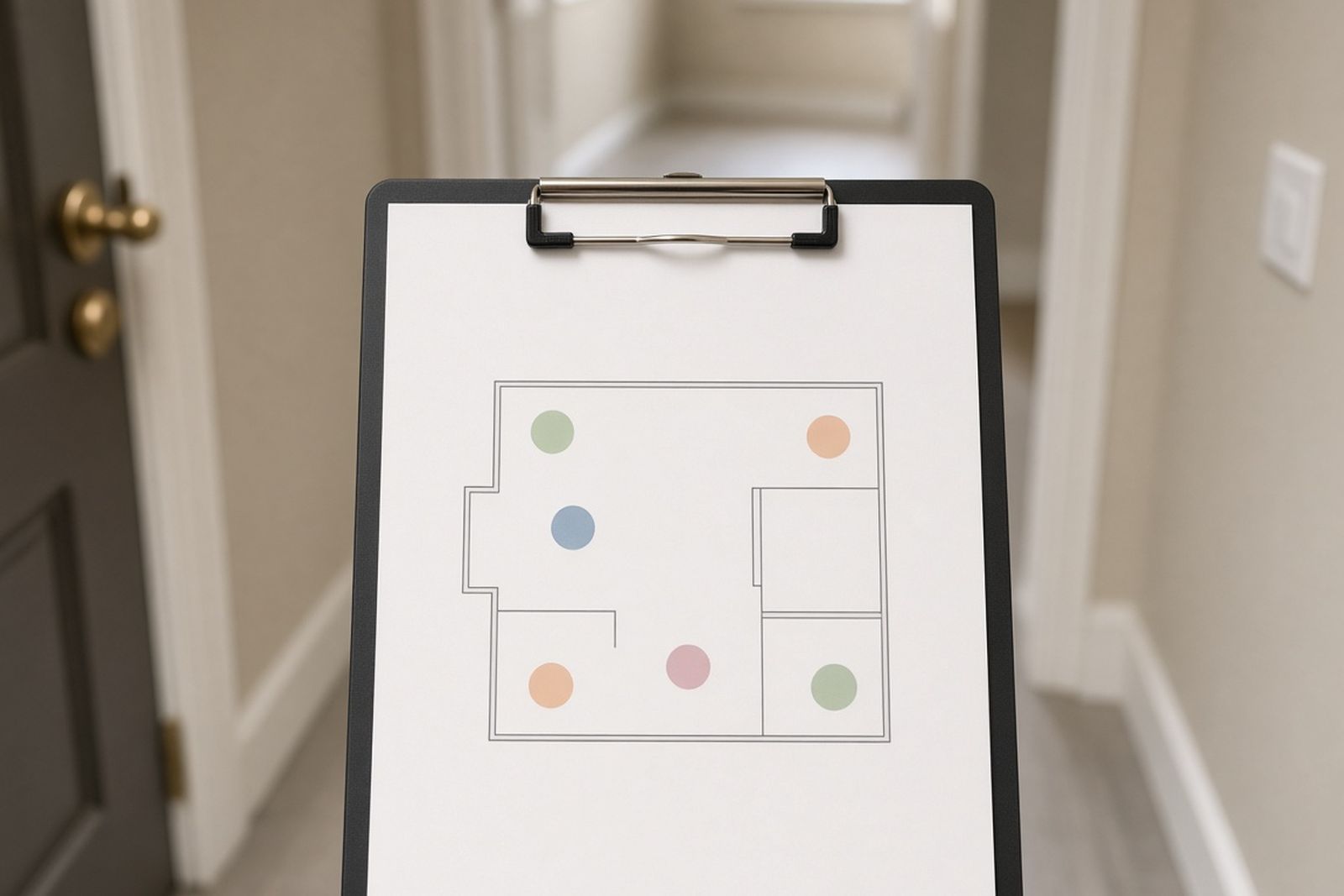
Clipboard showing a room plan with color-coded dots marking high-touch surfaces
Illustrative photo, not a job record. Clipboard showing a room plan with color-coded dots marking high-touch surfaces.
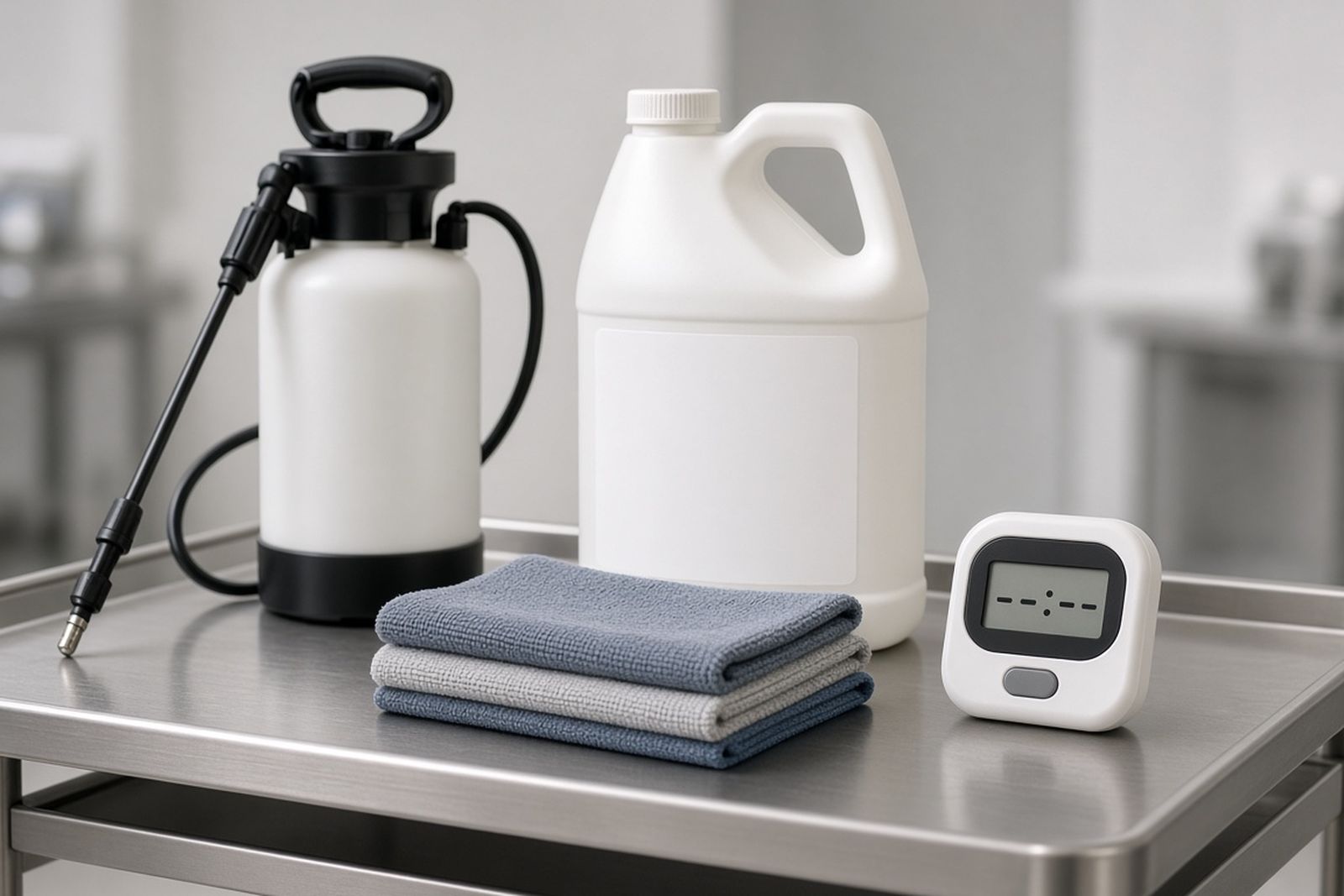
Pump sprayer, disinfectant jug, folded cloths and a contact-time timer on a steel cart
Illustrative photo, not a job record. Pump sprayer, disinfectant jug, folded cloths and a contact-time timer on a steel cart.

Infectious Disease Disinfection figures to keep in mind

National and research figures, not Potomac data. Local conditions, rules and providers vary; use these for scale and context only.

$0.10-$0.30 per sq ft

ISSA's commercial cleaning pricing guide lists electrostatic disinfection at $0.10 to $0.30 per square foot and medical facility cleaning at $0.14 to $0.29 per square foot.

Read with care: Trade-association ranges; actual quotes vary by region, square footage and frequency.

Source: ISSA (2025)United States commercial facilities, industry-wide ranges, December 2025

$15-$400+

HomeAdvisor reports that disinfecting a home to reduce germs, bacteria and viruses costs anywhere from $15 to $400 or more depending on DIY versus professional service.

Read with care: Broad range mixing DIY supplies and professional visits; specialized biohazard work costs more.

Source: HomeAdvisor (2026)United States residential, cost guide updated June 2026

7 months

A systematic review found MRSA can persist on dry surfaces for 7 days to 7 months, C. difficile spores for 5 months, norovirus for 8 hours to 7 days, and influenza for 1 to 2 days.

Read with care: Persistence under lab conditions does not equal infectivity in real settings; ranges are wide.

Source: BMC Infectious Diseases (2006)Systematic review of laboratory persistence studies, published 2006

These figures are public research and agency data, not this network's own job records. Keep each number with its population, year and limits; none of them predicts cost, timing or outcome at a specific property.

Plan before you reach out

Use the first 24 hours planner for immediate steps and the provider vetting checklist to confirm any Potomac provider's training, insurance and waste path in writing.

What research has found

Findings from published studies of people and properties in situations like this one. They describe what researchers observed in a specific group; they are not predictions for your case.

Most respondents used microfiber cloths and mops.
Who was studied: 47 US hospital environmental-services respondents across 26 states; 2019 survey.Limits: 47 of 273 contacted participated; practices were reported rather than observed.Environmental cleaning and disinfection of hospital rooms: A nationwide survey (2021)
Respondents described confusion about which disinfectant to use after infectious patients.
Who was studied: 96 Australian nurses and midwives in clinical settings.Limits: Self-report; small volunteer sample.Nurses’ and midwives’ cleaning knowledge, attitudes and practices: An Australian study (2021)

Infectious Disease Disinfection community polls

Poll results

Every count is a real visitor vote; nothing is seeded or padded. One vote per poll per device, and you can change your answer.

Your experience

When your facility had an illness cluster, how did you handle cleaning?

No visitor votes yet
Process

How did you decide whether to close all or part of the facility?

No visitor votes yet

Planning cleanup in Potomac?

Send a short message about the property to the follow-up inbox. A coordinator can reply by email with next steps.

Your request is sent to the follow-up inbox. A coordinator can reply by email.

If anyone is hurt or in danger, call 911 first.