Alpharetta, GA

Infectious Disease Disinfection Planning in Alpharetta, GA

What to do, who to contact, and what to ask in Alpharetta.

Illness in your Alpharetta townhome or carpool? See what to clean first, how to time it around school runs, and what to tell your HOA.

Get an email reply about infectious disease disinfection

Send a short message to the follow-up inbox. A coordinator can reply by email. This form does not send emergency help; call 911 first if anyone is in danger.

Tell us what you need help with. Share a short description; please leave out medical details, access codes, and other sensitive information.

A request does not confirm a booking. For immediate danger, contact local emergency services.

Or email info@infectiousdiseasecleanup.online

The short answer for Alpharetta, GA

After a bug goes through your Alpharetta household or carpool, the mudroom is where to look first: the cleat bench, backpack hooks, garage keypad and powder room. Clean those before the formal den. Here is how to plan the work around school drop-offs and GA 400 traffic, and what to share with your HOA.

What to do, step by step

  1. 1

    Sketch where hands went on tournament weekend

    Think back to where your kids went after the tournament. For most families it is the mudroom bench, the garage keypad, the powder room and the fridge. Sketch that path and hand it to the company, and ask that those spots be treated before anything else. Then check the label of the product it plans to use, to see that it lists the kind of germ your family had. When you message other families, do not promise a germ-free home or a sterile neighborhood.

  2. 2

    Get the clay off the cleat bench first

    Red clay under the backpacks blocks a spray from reaching the surface. So the bench, the hooks and the bath need washing before any disinfectant goes on. A good crew does that, then leaves the kids' taps and the garage keypad damp for the bottle's full time. Ask for the wet period to be logged with a start and a stop. You should have that in writing, so a citrus smell in the mudroom never stands in for a finished job.

  3. 3

    Hold the rooms through the GA 400 drop-off

    Nobody walks through the treated mudroom or half bath until two things allow it: the label timer and the notes on the safety data sheet. Make one family schedule. That beats wiping panels dry before a North Point carpool. The hall bath only counts as a backup if it was treated, or if nobody sick used it. If your air system has a fresh-air setting, use it afterward. The house will smell better. Do not tell your family the air is sterile.

  4. 4

    Give your HOA board a short summary

    If the clubhouse was cleaned because of the illness, your board should get a short summary of that work. Four facts are enough: what was used, on which clubhouse fixtures, for how long, and when the doors reopened. If a fridge handle was swabbed, the reading shows film only. Leave out names and illnesses, your own family's included. For general health questions, neighbors can turn to the Fulton County Board of Health. Keep a copy of the summary with your own records at home.

What cleanup is like in Alpharetta

In Windward-style cul-de-sacs and around the tech-campus badge readers, germs collect in the mudroom. Wet soccer cleats, backpacks and fridge runs after practice all end up there. Your formal den stays quiet, while the powder-room lever and garage keypad see hands all day. Write down those spots for the days someone was sick, and skip fogging a den nobody used. Think about your week too. Evenings at Avalon and youth tournament weekends change which clubhouse fixtures get touched most. Pickup runs to the North Point stores add another round of keypad presses after practice.

School carpools and backups on GA 400 squeeze your timing. A parent racing to school may towel off a damp tap, and the product then stops working early. Plan the cleaning for after drop-off if you can. Sealed cooling also holds smells indoors for a while after products go on. Team jerseys, entry runners and fabric sectionals need washing or a spell out of the room. A lemon-scented wipe of the mudroom bench is fine, but it does not make your house sterile. If a soccer injury left blood on the mudroom floor, tell the company, because its workers need an OSHA bloodborne pathogen plan.

Your HOA clubhouse is its own case. Key fobs and pool gates lead whole families to the same restrooms, in a way no private den ever does. If someone in your household was sick and used the clubhouse, let the board know which rooms, without giving a name. The board can then have those fixtures cleaned before the calendar reopens. When the HOA emails the neighborhood, it should keep to closing and reopening times. Words about sterilizing devices belong in clinics and have no place in an HOA email.

What to expect for your type of home

  • Townhomes with a mudroom: The cleat bench, backpack hooks, garage keypad and powder-room lever come first. Tell the company which of these your kids touched after practice that week.
  • Homes with team gear by the door: Jerseys and entry runners get washed or taken out before any product goes on. Ask the company to start once your laundry is bagged and moved.
  • Homes with a kids' bath: Have the kids' bath treated after drop-off, not before. That gives the product its full wet time while the house is empty.
  • Family kitchens: Counters may need a rinse after disinfecting, which the garage keypad and powder-room levers do not. Ask to see the label's line about food surfaces.
  • Carpool households and clubhouse users: Carpool traffic and clubhouse fob use stay blocked until the wet time is done. Tell the other drivers to pick up at the curb that day.
  • Homes with a sitter or an HOA contact: Notes to the HOA and to your sitter should skip the name of any illness. Share the closed rooms and the reopening hour, and leave it there.

Papers and records to keep

  • A sketch of how people moved past the cleat bench and the powder room
  • A note on the tournament or carpool illness, with no children named
  • EPA registration numbers and germ claims for what was used in the mudroom and baths
  • A note that clay was washed off the benches and baths first
  • When each powder room's wet period started and when it ended
  • The family reopening schedule, tied to GA 400 drop-offs
  • Whether jerseys and entry runners were washed or bagged
  • The HOA clubhouse note, which should leave private dens out of the job

Local offices and official help

Common questions in Alpharetta

A stomach bug went through our soccer carpool. Where should we start in our townhome?

Start with the powder room the kids used, the fridge pulls on that path, and the cleat bench where backpacks landed. Jerseys go to the laundry and not under a spray bottle. Check that the bottle you use lists stomach germs on its label. If your HOA sends a notice, it should not suggest that List N covers every stomach virus from a carpool. Handwashing still matters at the cleat bench.
The clubhouse restroom was wiped down. Are our upstairs bedrooms done too?

No. Each place is its own job. At home, trace the laundry baskets, the kitchen pulls and the mudroom keypad. Treat only the high-touch things that were on the path while someone was sick, and keep them wet for the labeled time. A lemon smell in a powder room does nothing for the upstairs. A shared washer needs its own line. List what was in the job and what was out.

What should our nanny tell the grandparents while the mudroom is closed?

She can name the closed rooms and the return time from the safety data sheet, and say nothing about a diagnosis. Surface work lowers germs on treated objects. It is not a vaccine or a test result. No fog should be used near a frail grandparent. A bloody scrape changes the rules and calls for trained help. Nobody should promise hospital-grade sterilizing of a suburban townhome.

Why do North Point drop-offs end up cutting the wet time short?

Sealed cooling holds the smell in, so someone wipes the fixtures dry on the way out to GA 400. That ends the disinfecting early. Let the full wet time run, even if carpool pickup means the house sits empty a little longer. Air it out with care afterward. Runners may need longer to dry. Write down the schedule you really used. Carpool calendars do not widen what List N covers.

What should we send an insurer after a cleanup during the school week?

Send a list of each bottle, its EPA number and every room. Show how red clay and field dirt were cleaned off first, the wet times, and what happened to jerseys and runners. Add the fresh-air steps and the reopening times. Photos of the prep help. A swab only hints at leftover grime. No townhome is germ-free on paper. Keep children's names and illnesses out of all of it.

How do we clean our minivan after a stomach illness in the Alpharetta carpool?

Take out soiled items first and bag them. Wipe the seat-belt buckles, door handles, window buttons, cupholders and sliding-door handles with detergent. Follow with a spray made for car cabins. Fabric seats and floor mats may need a carpet or upholstery cleaner, or a wash if the mats come out. Leave the doors open to air the van while products work. Let the other carpool families know the van was cleaned.

Our Alpharetta HOA clubhouse has a birthday party booked after an illness report. What should happen first?

Before the party, the restroom fixtures, door handles, kitchen counters and tables should be cleaned and disinfected, with each product given its full wet time. Put out hand sanitizer and ask the hosts to use serving utensils. The HOA does not need to cancel unless public health staff advise it. After the party, the same surfaces get cleaned again. If several guests get sick afterward, the county health department can help look into it.

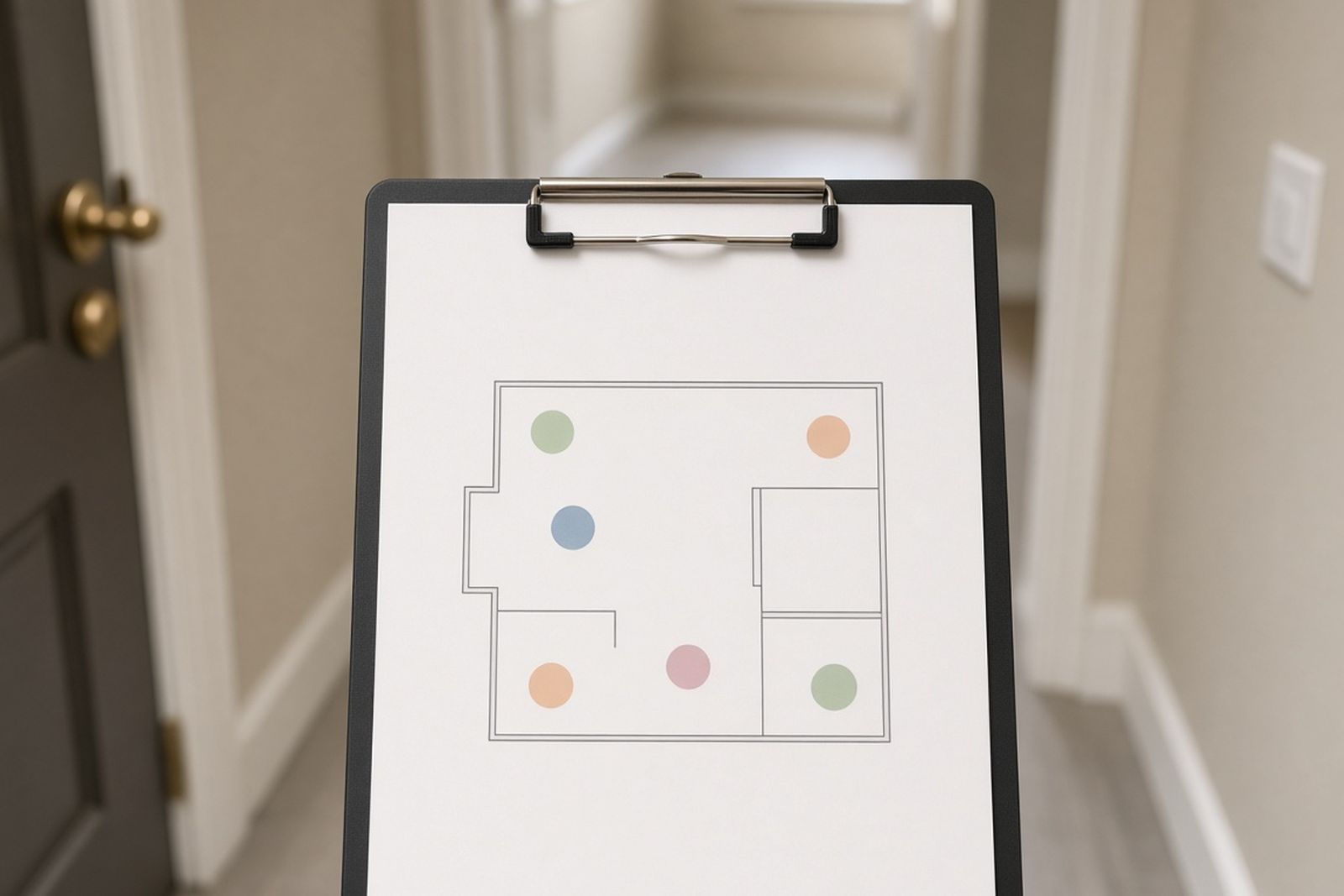
Clipboard showing a room plan with color-coded dots marking high-touch surfaces
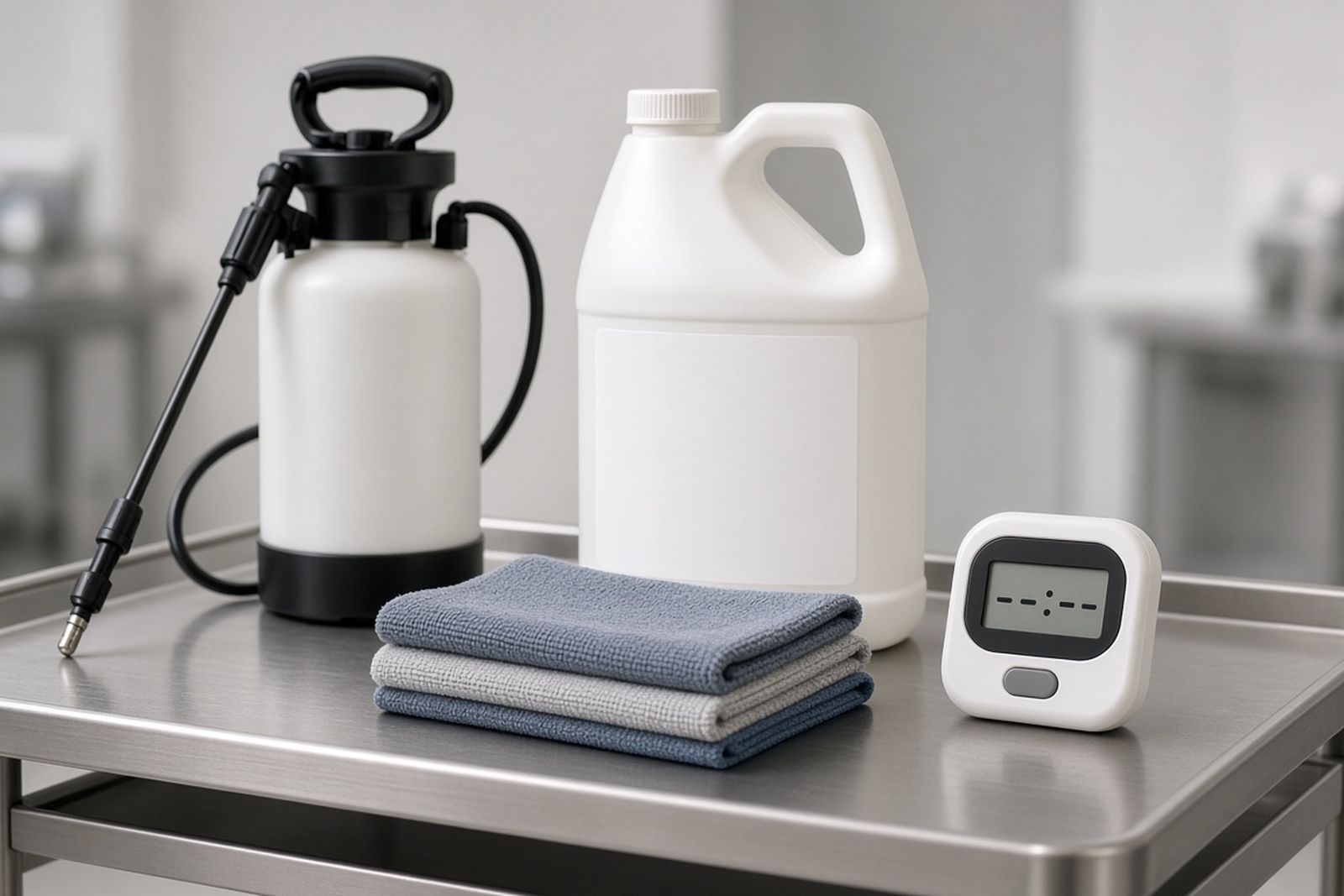
Pump sprayer, disinfectant jug, folded cloths and a contact-time timer on a steel cart

Facts worth knowing

  • In a lab test published in 2020, hydrogen-peroxide wipes killed more C. difficile spores than the quaternary-ammonium wipes tested.

    Why it matters: Not every disinfectant works well on C. diff, so ask what product will be used in your home or building.

    Source: Nkemngong et al., 2020

  • In a lab test of six commercial wipe products, published in 2020, wiping larger areas with one wipe raised concern about spreading bacteria further.

    Why it matters: If you wipe surfaces yourself, use each wipe on a small area and then throw it away.

    Source: Voorn et al., 2020

  • In a small Arizona study, six of 11 cleaning workers interviewed described worries or problems from breathing in cleaning chemicals.

    Why it matters: Ask what products will be used and how long you should stay out of the treated space while it airs out.

    Source: Wilson et al., 2023

Tools that help right now

What would you do?

Poll results

Vote to see how other people answered. You can change your answer at any time.

Your experience

When your facility had an illness cluster, how did you handle cleaning?

Be the first to vote
Process

How did you decide whether to close all or part of the facility?

Be the first to vote

Need help in Alpharetta?

Send a short message about the property to the follow-up inbox. A coordinator can reply by email with next steps.

Your request is sent to the follow-up inbox. A coordinator can reply by email.

If anyone is hurt or in danger, call 911 first.