Northeast · US

Infectious Disease Disinfection Planning in Brooklyn, NY

Planning infectious disease disinfection in Brooklyn, NY

Disinfection planning for Brooklyn brownstones and walk-ups. Covers shared stairs, EPA labels, List N's true scope, wet times, and CDC community cleaning. This is planning guidance, not a claim of a local office or crew in Brooklyn.

Get an email reply about infectious disease disinfection

Send a short message to the follow-up inbox. A coordinator can reply by email. This form does not send emergency help; call 911 first if anyone is in danger.

Tell us what you need help with. Share a short description; please leave out medical details, access codes, and other sensitive information.

A request does not confirm a booking. For immediate danger, contact local emergency services.

Or email info@prompartybuses.com

Direct answer

The short answer for Brooklyn, NY

Brooklyn brownstones with stoops, courtyard washers, and landlord-run walk-ups need plans built for the borough. Go after stair spindles and small baths first. Keep List N inside its COVID-19 limits. Refuse sterile-parlor certificates after a quick turnover spray.

Editorial guide · Biohazard Remediation NetworkUpdated 2026-07-22Location focus: Brooklyn, NY

Local planning context

On brownstone blocks, daily contact runs through stoop ironwork, vestibule buzzers, painted stair spindles, and coin-op basement washers under sidewalk hatches. After an illness, those matter more than a parlor mantel nobody touched. In a cold snap, windows stay shut. Chemical smells hang in narrow halls and tempt people to wipe surfaces dry before school backpacks hit the rail again. Stuffed toys, throw blankets, and fabric dining chairs usually need washing or bagging for a while. Hard-surface labels don't cover them. NYC Health can support factual notes to neighbors. It doesn't turn a walk-up into a sterile clinic.

In some areas, short-stay guests come and go fast, and outbreak work shrinks into a quick scent-and-linen turnover. Real risk reduction still means detergent cleaning, an EPA-registered product matched to the germ, and an empty unit until the wet time ends. That holds even when a host calendar wants same-day keys. Courtyard garden gates and trash alley doors create side paths that skip the stoop. Include them if guests or tenants used those routes. Ordinary cold and flu wipe-downs don't justify sterilization language.

Daycare storefronts and sidewalk clinics sometimes share vestibules with apartments. Stair and laundry work for the homes stays under CDC community cleaning guidance. Whatever cleaning a storefront clinic does for its tools has nothing to do with clearing a brownstone's stairs. Needles, or other items and fluids that can carry disease, shift the job to an OSHA bloodborne pathogen plan for workers.
Property considerations

Rank stoop ironwork, vestibule buzzers, stair spindles, and basement washer knobs above parlor decor.

Bag or wash stuffed toys and throw blankets before any product comes out.

Keep shared baths and landings empty for the full labeled wet time.

Follow the rinse rules for kitchen food counters separately from general wiping.

Don't let school-morning backpack traffic interrupt the wet time on narrow stairs.

Include courtyard gates and trash-alley doors when people used those routes.

Response-planning framework

Sketch the stoop-to-basement path

Walk the tenant's route from the sidewalk ironwork through the vestibule and stairs to the unit bath and basement washer. Mark vomit spots as detergent-first zones. Say which floors and courtyard doors are included, so no one assumes untreated parlors are done. Note whether the concern is a stomach bug or a cold or flu, without naming neighbors.

Match the bottle to the illness, not the scent

List N is about the COVID-19 virus when you follow directions. It isn't a master key for norovirus. Refuse sterile-parlor sales talk after a scented fog. Soft items get washed or bagged. Hard-surface germ claims don't apply to them.

One clock for everyone on the stairs

Post a single reopening time for all tenants in the walk-up. Keep rails and baths wet for the printed contact time. Another exit only helps if its rails were treated. When cold weather keeps windows shut, air out as the SDS directs.

A landlord packet without medical gossip

A residue swab on a fridge handle only checks for leftover grime. It can't detect germs. Send medical questions to doctors and NYC Health. Notices should name closed stairs, not people.

Documentation checklist

  1. 1List of stoop-to-basement contact spots, with notes on where the mess centered
  2. 2What the tenant or host said happened, with names left out
  3. 3Labels for the products used on the stoop, stairs, and basement washers
  4. 4Detergent cleaning done on stoop rails, buzzers, and basement washers before any disinfectant
  5. 5Timed wet periods for baths, spindles, and washer controls
  6. 6Reopening time for the shared stairs, posted for tenants
  7. 7Decisions to wash or bag stuffed toys and throws
  8. 8Waste notes when vomit was removed

Official resources

Questions for this location

Which objects on a stoop walk-up deserve attention first after vomiting illness?

Start with the bathroom the sick person used. Next come the fridge handle and kitchen faucet, the hallway light switches, and the stair rail and stoop railing where hands and backpacks land. Clean off the mess first. Then disinfect with a product labeled for the illness. Bag stuffed toys and throws for the washer instead of spraying them. Keep washing hands. The goal is lowering risk in a brownstone, not sterilizing it.

Can a host reopen a short-stay unit the same afternoon after a turnover spray?

Not if the only step was a quick spray while sheets were changed. The host needs time to clean the bath and kitchen and apply a labeled product. Then the unit must stay empty as long as the label requires before new guests arrive. Block the calendar for that window. Keep product names and wet times in your host records. Never describe a brownstone unit to guests as sterilized.

How should courtyard gates figure into a walk-up outbreak scope?

If tenants or guests used the courtyard or trash alley while someone was contagious, those gate latches and alley doors become hand-contact spots. They need the same clean-then-disinfect steps as the stoop. If nobody used them, write down that they were left out. Then no one reads a stair invoice as treatment of the whole lot. Soft outdoor seat cushions usually need washing or setting aside. Hard-surface claims don't cover them.

What does List N actually buy a brownstone household after COVID-19 exposure?

It tells you EPA has listed a product for use against the COVID-19 virus when used as directed. That's useful after a COVID-19 case at home. It doesn't cover stomach bugs or other illnesses that may come later. Decisions about isolation and testing belong with your doctor and NYC Health, not the cleaning plan. Write down which surfaces were treated and which soft items were set aside or washed.

When does a walk-up cleanup become bloodborne-pathogens work?

It does when there's blood or other body fluids that could carry bloodborne germs. A fall on the stoop steps or a cut in the kitchen are examples. That's not the same as a post-cold desk wipe. Describe what was spilled before anyone starts. Then workers can bring gloves, eye protection, and sealed waste bags, and follow OSHA bloodborne pathogen rules. Ordinary illness cleanup doesn't need those steps.

How should a Brooklyn brownstone owner handle the shared stoop after a tenant was sick?

Clean the stoop railing, front door handle, and buzzer panel with soap and water to remove city grime. Then disinfect with a product labeled for painted metal and outdoor use. Keep it wet for the full contact time. On windy or hot days, that may mean putting on more. Tenants can use the door as usual once the product dries. Leave a short note in the vestibule saying the entry was cleaned, without mentioning who was sick.

What should a Brooklyn family do if a sick person shares a small apartment with no second bathroom?

When you can, have the sick person use the bathroom last. After each use, clean the toilet flush, faucet, and door handle with a labeled disinfectant wipe. Give them their own towel and hand towel. Open the bathroom window or run the fan. Keep a lined, lidded wastebasket nearby for tissues. Wash hands well after every trip. Once they've recovered, do a full clean of the bathroom and kitchen touch points.

Contact

Get help by email

Send a short message for an email reply about infectious disease disinfection planning questions for the New York City area.

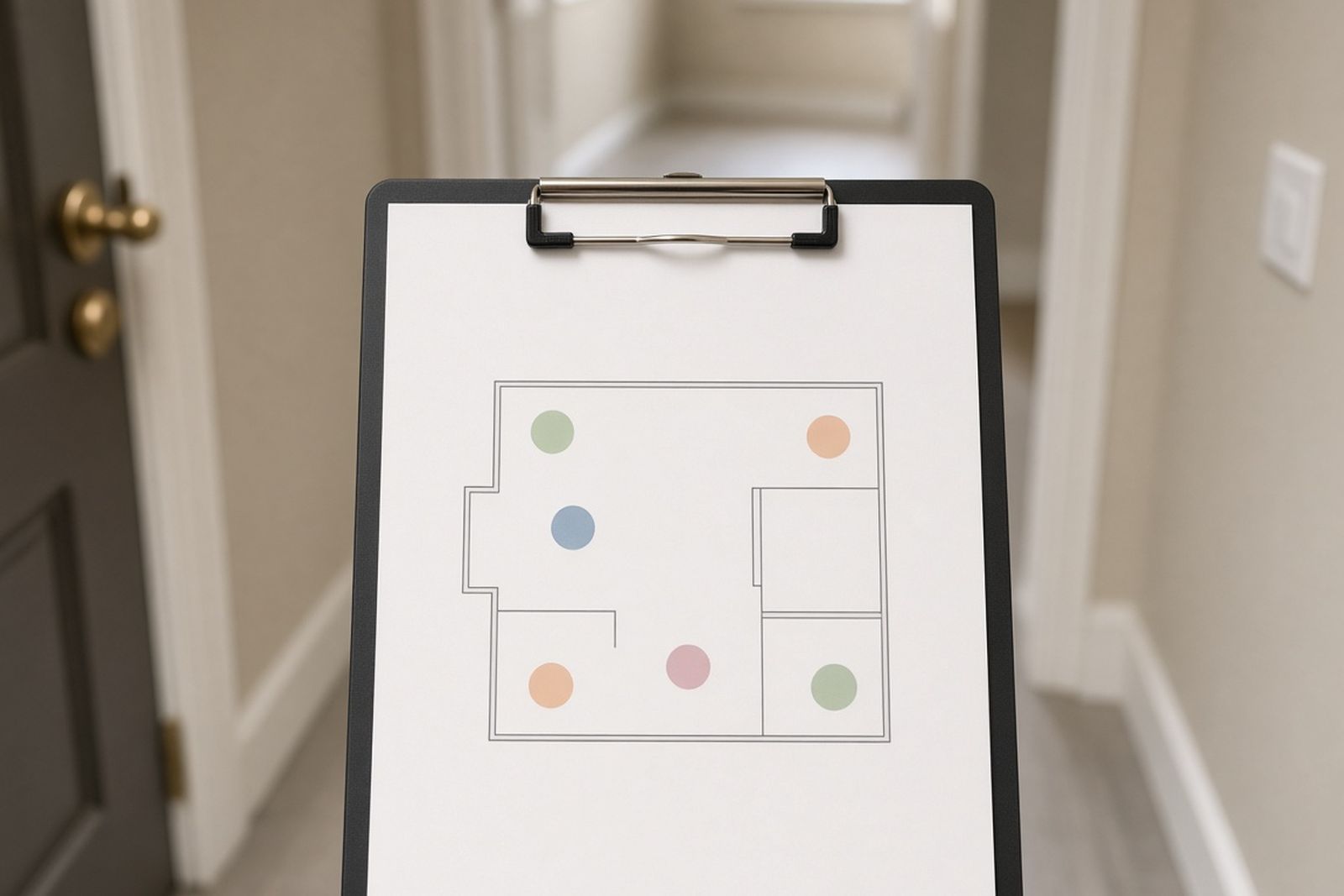
Clipboard showing a room plan with color-coded dots marking high-touch surfaces
Illustrative photo, not a job record. Clipboard showing a room plan with color-coded dots marking high-touch surfaces.
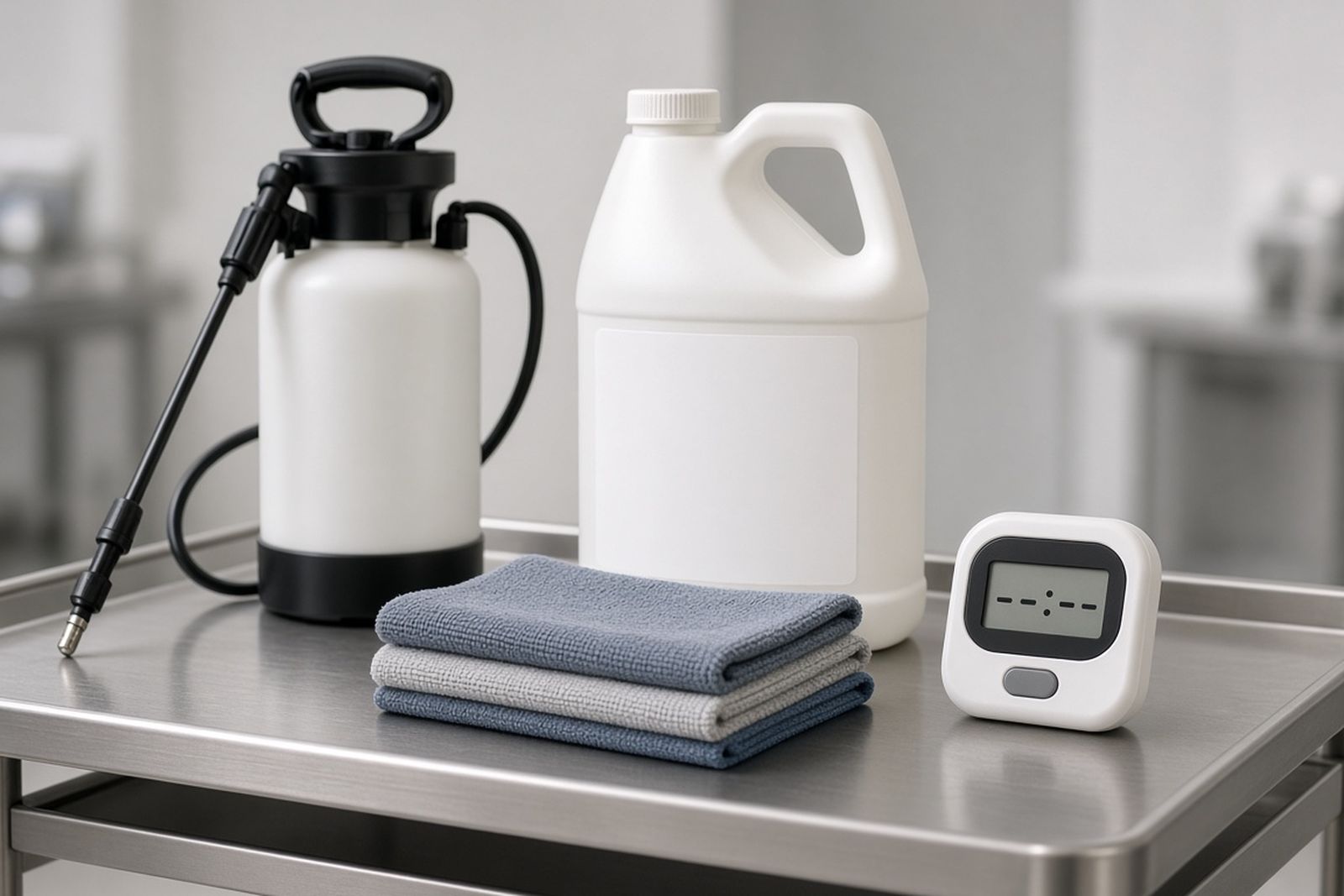
Pump sprayer, disinfectant jug, folded cloths and a contact-time timer on a steel cart
Illustrative photo, not a job record. Pump sprayer, disinfectant jug, folded cloths and a contact-time timer on a steel cart.

Infectious Disease Disinfection figures to keep in mind

National and research figures, not Brooklyn data. Local conditions, rules and providers vary; use these for scale and context only.

19.

The most common reported cleaning frequency increased after COVID-19.

Read with care: Reported knowledge and practices, not observed compliance or infection outcomes.

Source: Centeleghe et al. (2024)137 healthcare-professional respondents; convenience/purposive online sample across the pandemic.

53%

53% reported changes in application type, such as fogging, spraying or wiping.

Read with care: Small voluntary sample; no causal inference; survey item nonresponse substantial.

Source: Wilson et al. (2023)59 Arizona survey respondents and 11 interviewees from maid services and a school district.

42%

An American Cleaning Institute survey found 42% of Americans were not letting disinfectant sprays and wipes stay wet long enough to work, with 26% wiping immediately after spraying.

Read with care: Trade-association survey conducted early in the pandemic; self-reported behavior.

Source: American Cleaning Institute (2020)United States, 1,005 adults surveyed March 18-19, 2020

These figures are public research and agency data, not this network's own job records. Keep each number with its population, year and limits; none of them predicts cost, timing or outcome at a specific property.

Plan before you reach out

Use the first 24 hours planner for immediate steps and the provider vetting checklist to confirm any Brooklyn provider's training, insurance and waste path in writing.

What research has found

Findings from published studies of people and properties in situations like this one. They describe what researchers observed in a specific group; they are not predictions for your case.

One worker described skin irritation despite improvised arm coverings while fogging.
Who was studied: 59 Arizona survey respondents and 11 interviewees from maid services and a school district.Limits: Small voluntary sample; no causal inference; survey item nonresponse substantial.COVID-19 cleaning protocol changes, experiences, and respiratory symptoms among cleaning… (2023)
Small/medium amines or alcohol in formulations were linked with greater cracking propensity.
Who was studied: Eight wipe formulations tested on healthcare plastics under fixed strain for seven days.Limits: Accelerated test conditions; not a failure rate for installed equipment.Chemical resistance testing of plastics: compatibility of detergent and disinfectant pro… (2024)

Infectious Disease Disinfection community polls

Poll results

Every count is a real visitor vote; nothing is seeded or padded. One vote per poll per device, and you can change your answer.

Your experience

When your facility had an illness cluster, how did you handle cleaning?

No visitor votes yet
Process

How did you decide whether to close all or part of the facility?

No visitor votes yet

Planning cleanup in Brooklyn?

Send a short message about the property to the follow-up inbox. A coordinator can reply by email with next steps.

Your request is sent to the follow-up inbox. A coordinator can reply by email.

If anyone is hurt or in danger, call 911 first.