Northeast · US

Infectious Disease Disinfection Planning in East Hampton, NY

Planning infectious disease disinfection in East Hampton, NY

East Hampton cottage disinfection planning. Covers guest turnover, EPA label claims, List N limits, how long surfaces stay wet, and seasonal empty times. This is planning guidance, not a claim of a local office or crew in East Hampton.

Get an email reply about infectious disease disinfection

Send a short message to the follow-up inbox. A coordinator can reply by email. This form does not send emergency help; call 911 first if anyone is in danger.

Tell us what you need help with. Share a short description; please leave out medical details, access codes, and other sensitive information.

A request does not confirm a booking. For immediate danger, contact local emergency services.

Or email info@prompartybuses.com

Direct answer

The short answer for East Hampton, NY

East Hampton's closed-up dune-road compounds, artist workrooms, and winter caretaker visits need their own plans. A long shutdown can help keep rooms empty for the wet time. It does not make anything sterile. Record the holiday reopening without sterile-cottage certificates.

Editorial guide · Biohazard Remediation NetworkUpdated 2026-07-22Location focus: East Hampton, NY

Local planning context

Compounds farther east often close from late fall to early spring. Writing rooms, guest bunkhouses, and outdoor rinse stalls sit unused while a caretaker checks pipes and mouse traps. A shutdown after a late-season illness can easily cover the wet times. But months of emptiness don't sterilize mattresses or worktables. Chart which bunkhouse baths and studio sinks were touched. Then decide whether mattress toppers stored in damp spots need washing or tossing. The Suffolk County Department of Health can share community messages. It doesn't clear homes as sterile.

The usual pressure point here is the holiday reopening, not Saturday rental turnovers. Storm windows stay down for weeks. Caretakers may buff fixtures dry early so relatives arriving for a feast smell something "fresh." That cuts the label's wet time short. Canvas drop cloths in studios, wool throws in bunkhouses, and window-seat cushions sealed in plastic bins usually need airing or washing first. Do that before any hard-surface product. Scented fog doesn't replace detergent on sinks that sat idle.

Lockboxes on dune posts, outdoor rinse valves, and studio dimmer switches pass germs along without anyone crossing the main foyer. Include those items if late-season visitors used them. Opening a shut house may turn up blood or other body fluids that can carry disease. OSHA's blood rules may then apply to the caretaker crew. CDC's pages on hospital disinfection and sterilization describe clinics. They're not a standard for clearing a bunkhouse.

Property considerations

List bunkhouse baths, studio sinks, outdoor rinse valves, and dune-post lockboxes before formal rooms.

Give each separate workroom and bunkhouse its own line in the plan.

Air, wash, or throw out damp-stored toppers and canvas drop cloths before any product goes on.

Use shutdown weeks to finish the wet time. Never use them to skip detergent on idle sinks.

Keep studio worktables off the food-surface rinse steps meant for kitchenettes.

Record caretaker lockbox use before a Thanksgiving or year-end reopening.

Response-planning framework

Shutdown weeks cover the wet time, not germ claims

A closed-up calendar can keep rooms empty while the product stays wet for the label's time. Emptiness alone doesn't clear germs from fabrics or idle fixtures. Record the owner's account of the late-season illness without diagnosing visitors. List N answers a COVID-19 question only. Other germs need their own label claims. Reject sterile-bunkhouse slogans.

Wake up idle fixtures with detergent first

CDC community cleaning steps still start with removing grime. A bunkhouse bath that sat unused can hold film that shields germs. Wash those fixtures, then keep the disinfectant wet for the printed time. Log start and stop times, so caretakers don't mistake a lemon scent for a finished job.

Holiday-week reopening steps

Give caretakers one written clock before holiday guests arrive. Open windows a little at a time under the storm sash. Owner messages should list closed outbuildings and reopening hours, not visitor names.

A caretaker packet for insurers

Save EPA numbers, germ claims, maps of each outbuilding, detergent notes, wet-time logs, and fabric decisions. A quick swab of a studio faucet can flag leftover grime. It can't prove any germ was killed. Send community questions to the Suffolk County Department of Health. Mark untreated workrooms, so a bunkhouse invoice isn't read as treatment of the whole compound.

Documentation checklist

  1. 1The late-season illness story, without naming visitors
  2. 2List of the bunkhouse, studio, and main-house areas included
  3. 3EPA numbers plus the germ claims used
  4. 4Detergent wake-up steps on idle fixtures
  5. 5Wet-time start and stop, tied to caretaker rounds
  6. 6Decisions to air, wash, or throw out fabrics
  7. 7Holiday reopening time given to caretakers
  8. 8Notes on any blood or body fluids found while opening the compound

Official resources

Questions for this location

Does a mothballed winter mean a bunkhouse is already safe for holiday guests?

No. A shutdown can make it easier to keep rooms empty during the wet time. But emptiness doesn't sterilize mattresses, sink film, or sealed-up throws. If a late-season visitor was sick, wake the fixtures up with detergent. Apply an EPA-registered product whose label matches the germ. Keep surfaces wet for the full label time before holiday guests arrive. Air or wash fabrics that were stored damp. Don't describe the bunkhouse as sterile because the heat was off.
Should a caretaker fog a studio that was locked all winter after one autumn illness?

Fog doesn't replace cleaning the sinks and switches the sick visitor actually used. If the studio was locked and unused after they left, write that down as an exclusion. Still handle the shared lockboxes, outdoor rinse valves, or laundry that linked the studio to the main house. If the studio was used, clean it, then disinfect with a timed wet period. List N doesn't automatically cover every germ of concern. Leave medical advice to doctors.

How should Thanksgiving reopen messages be worded for relatives?

Name the dune-road outbuildings still shut. Give the hour the product timer ends, then the hour the SDS lets family in. Leave out diagnoses and graphic details. Offer the SDS to anyone arriving soon after products go on. Point community questions to the Suffolk County Department of Health rather than making up medical advice.

What role can List N play when opening a dune-road compound after COVID-19 exposure?

Use List N to confirm EPA has listed a product for COVID-19 use when directions are followed. Then follow its contact time and surface limits in the bunkhouse, studio, and main house. Months of winter closure don't replace that step for surfaces touched just before the house shut. Don't stretch the same bottle to cover a stomach bug later. Write down which outbuildings were treated and which blankets or cushions were set aside.

Which records should a caretaker keep after waking a shut compound?

Keep the product names and labels and which bunkhouses and studios were treated. Note the cleaning done on fixtures that sat idle all winter, how long surfaces stayed wet, and what happened to blankets and cushions. Record how the house was aired and when relatives may arrive for the holiday. Swab readings, if any, only point to grime. Skip certificates promising the compound is germ-free.

How should an East Hampton caretaker protect themselves when opening a house after an illness last season?

Open windows first to air out the house. Wear gloves while you gather leftover linens and trash. Look for signs of mice, mold, or water damage. These are more common after a winter closure and may need their own cleanup. Wash your hands before eating or driving. If you feel sick after working in the house, see a doctor and tell them what you were cleaning.

Can an East Hampton family skip cleaning a guest bunkhouse that no one used after the sick visitor left?

If no one went into the bunkhouse during or after the illness, it doesn't need disinfecting for that illness. Write down that it stayed closed and untouched, so a caretaker doesn't treat it by mistake. Dust and air it out before the next guests, as usual. If you're not sure who went in, clean the door handle, light switches, and bathroom fixtures. That takes little time and settles the question.

Contact

Get help by email

Send a short message for an email reply about infectious disease disinfection planning questions for the New York City area.

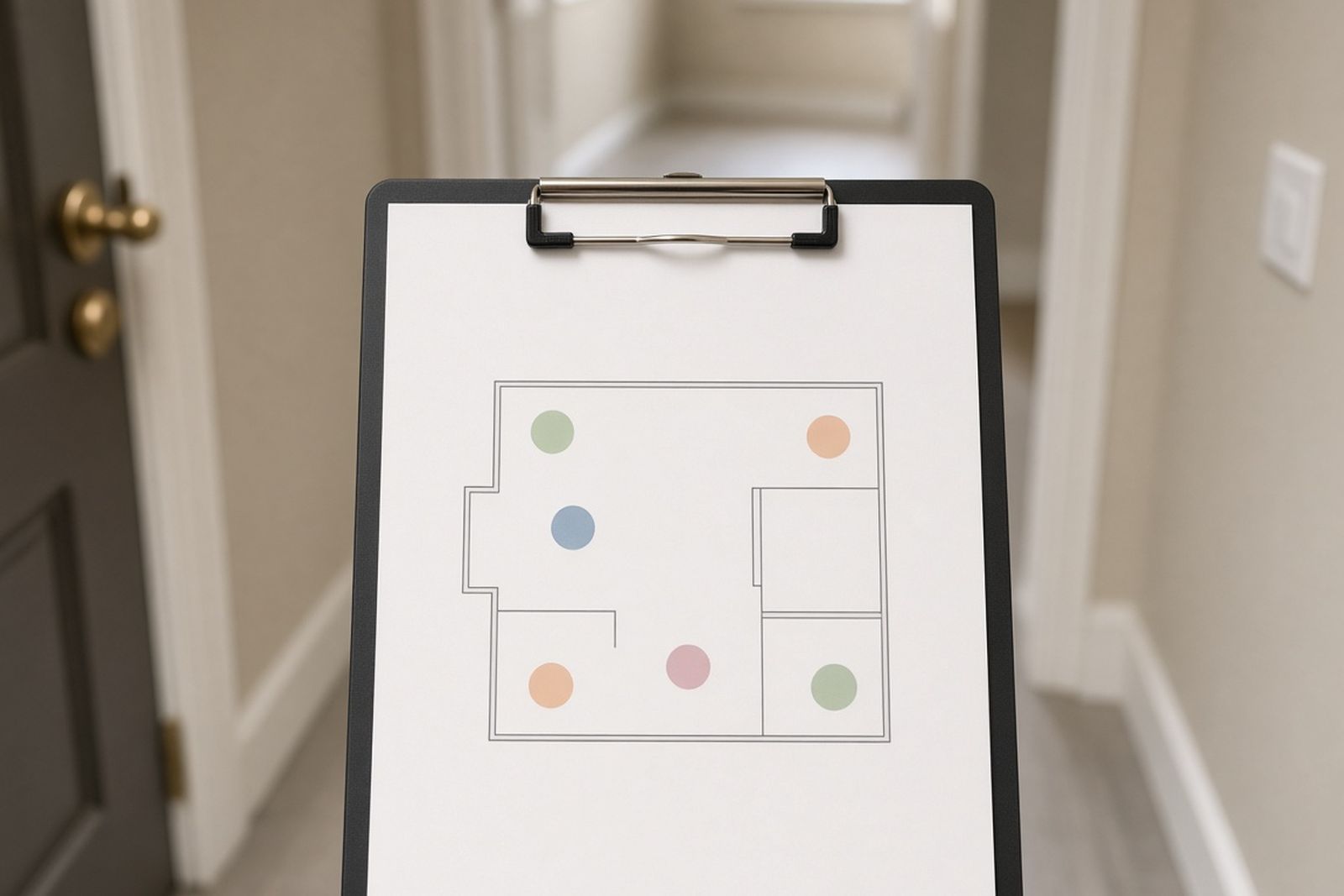
Clipboard showing a room plan with color-coded dots marking high-touch surfaces
Illustrative photo, not a job record. Clipboard showing a room plan with color-coded dots marking high-touch surfaces.
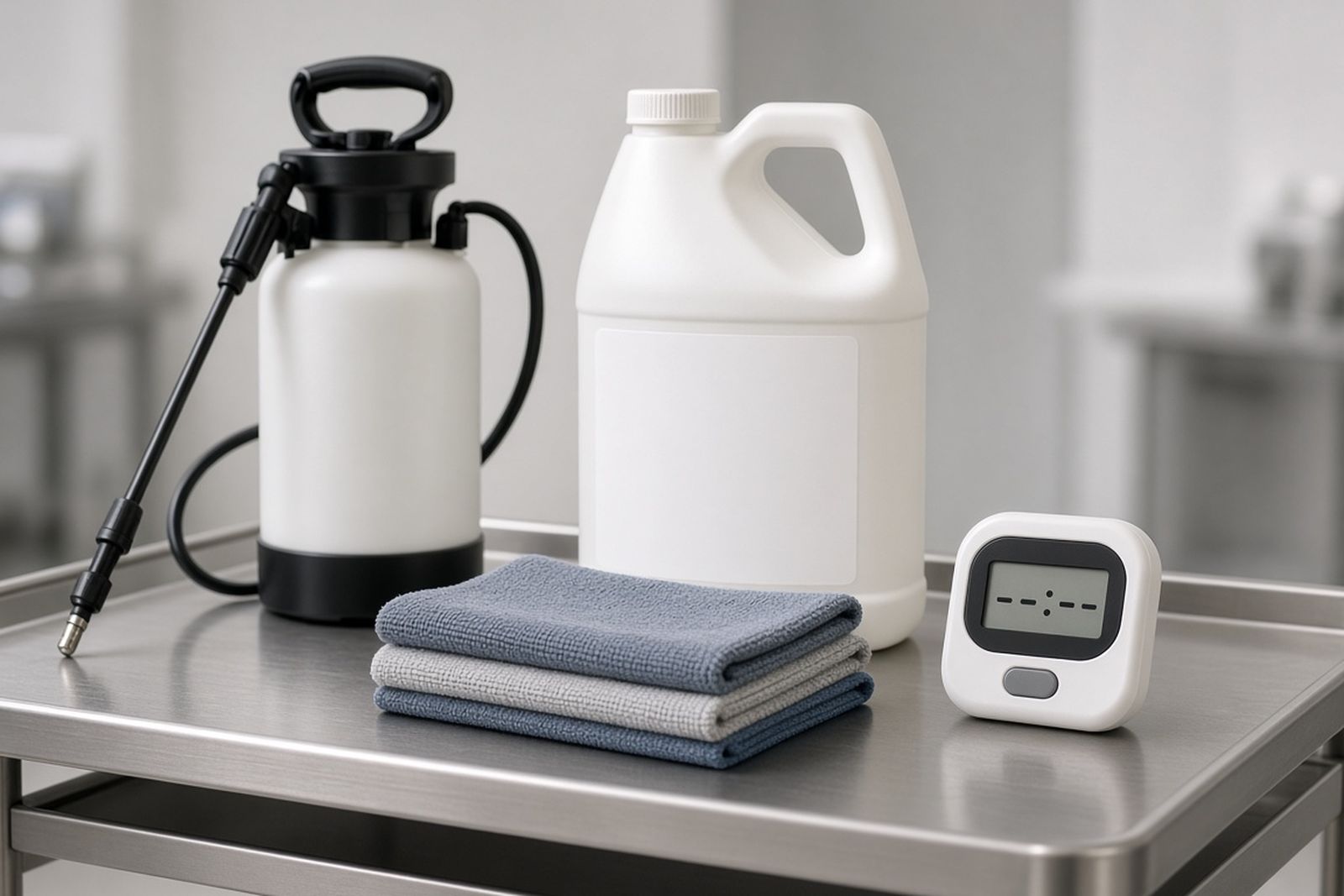
Pump sprayer, disinfectant jug, folded cloths and a contact-time timer on a steel cart
Illustrative photo, not a job record. Pump sprayer, disinfectant jug, folded cloths and a contact-time timer on a steel cart.

Infectious Disease Disinfection figures to keep in mind

National and research figures, not East Hampton data. Local conditions, rules and providers vary; use these for scale and context only.

7 months

A systematic review found MRSA can persist on dry surfaces for 7 days to 7 months, C. difficile spores for 5 months, norovirus for 8 hours to 7 days, and influenza for 1 to 2 days.

Read with care: Persistence under lab conditions does not equal infectivity in real settings; ranges are wide.

Source: BMC Infectious Diseases (2006)Systematic review of laboratory persistence studies, published 2006

72 hours

In a 2020 NEJM study, viable SARS-CoV-2 was detected up to 72 hours on plastic and 48 hours on stainless steel, but not after 24 hours on cardboard or 4 hours on copper.

Read with care: Viral titers dropped sharply over time; CDC later judged surface transmission to be a low risk relative to airborne spread.

Source: New England Journal of Medicine (2020)Laboratory study, controlled conditions

$15-$400+

HomeAdvisor reports that disinfecting a home to reduce germs, bacteria and viruses costs anywhere from $15 to $400 or more depending on DIY versus professional service.

Read with care: Broad range mixing DIY supplies and professional visits; specialized biohazard work costs more.

Source: HomeAdvisor (2026)United States residential, cost guide updated June 2026

These figures are public research and agency data, not this network's own job records. Keep each number with its population, year and limits; none of them predicts cost, timing or outcome at a specific property.

Plan before you reach out

Use the first 24 hours planner for immediate steps and the provider vetting checklist to confirm any East Hampton provider's training, insurance and waste path in writing.

What research has found

Findings from published studies of people and properties in situations like this one. They describe what researchers observed in a specific group; they are not predictions for your case.

Used wipes retained spores during and after wiping.
Who was studied: Non-sporicidal-claim wipes tested on Formica with C. difficile spores.Limits: Not a comparison of all sporicidal products; physical removal is not complete inactivation.Disinfectant wipes transfer Clostridioides difficile spores during the disinfection proc… (2020)
Both methods reduced cultured bacterial contamination.
Who was studied: Naturally contaminated surfaces in a comparative field test.Limits: Specific device, protocol and success criterion; no patient infection endpoint.Superiority of manual disinfection using pre-soaked wipes over automatic UV-C without pr… (2023)

Infectious Disease Disinfection community polls

Poll results

Every count is a real visitor vote; nothing is seeded or padded. One vote per poll per device, and you can change your answer.

Your experience

When your facility had an illness cluster, how did you handle cleaning?

No visitor votes yet
Process

How did you decide whether to close all or part of the facility?

No visitor votes yet

Planning cleanup in East Hampton?

Send a short message about the property to the follow-up inbox. A coordinator can reply by email with next steps.

Your request is sent to the follow-up inbox. A coordinator can reply by email.

If anyone is hurt or in danger, call 911 first.