South · US

Infectious Disease Disinfection Planning in McLean, VA

Planning infectious disease disinfection in McLean, VA

Disinfection planning for McLean homes and Tysons-area offices. Badge readers, keypads, and reception counters are mapped as the high-touch spots. This is planning guidance, not a claim of a local office or crew in McLean.

Get an email reply about infectious disease disinfection

Send a short message to the follow-up inbox. A coordinator can reply by email. This form does not send emergency help; call 911 first if anyone is in danger.

Tell us what you need help with. Share a short description; please leave out medical details, access codes, and other sensitive information.

A request does not confirm a booking. For immediate danger, contact local emergency services.

Or email info@prompartybuses.com

Direct answer

The short answer for McLean, VA

McLean homes and workplaces near Tysons need a disinfection plan that maps high-touch spots and records wet times from the label. Use Fairfax County and Virginia Department of Health as local sources. Don't treat List N as covering every germ, and don't promise sterile results.

Editorial guide · Biohazard Remediation NetworkUpdated 2026-07-22Location focus: McLean, VA

Local planning context

McLean's quiet residential streets sit next to Tysons Corner's busy office floors. Large single-family homes and crowded commercial suites call for different plans. A home office after a family illness is one thing. A shared suite, where reception counters and conference room remotes pass through many hands, is another.

Many McLean-area buildings use complex security hardware. That can mean keypads, turnstiles, and restricted contractor offices near secure rooms. These create high-touch spots, and they limit when crews can get in. Arrange limited-time access for cleaning and the full wet period. Don't prop doors open in ways that break security rules. Cleaning off grime still comes first. Security pressure is no reason to cut the wet time short.

Some McLean households include federal or contractor workers who want records for their workplace files. Give them product registrations and wet-time logs. Don't invent lab clearance results or sterile-facility certificates. Keep community surface disinfection apart from hospital sterilization. If a cleanup involves blood or other body fluids that can carry disease, OSHA rules may cover the crew, clearance level or not.

Property considerations

In offices, list security keypads, badge readers, and reception counters as top high-touch spots.

Work with building security so no one interrupts the wet time.

Map the home mudroom and garage doors that commuters use as places germs can travel through.

List secure rooms no one treated as excluded. Don't imply the whole floor was sterilized.

Plan fresh air for tightly sealed office spaces after products go on.

In mixed buildings, keep any health care tenant's duties separate from the general office plan.

Response-planning framework

Map touch points around access limits

Find the surfaces hands touch at entry, in meetings, and in restrooms. Record any rooms crews couldn't enter because of security. Then nobody assumes they were treated.

Keep List N in its lane

Use List N for the COVID-19 virus when it fits. Don't stretch it to every germ. Keep sterilization wording out of workplace memos.

Stage returns for offices and homes

Close treated zones through the wet time and the return period. Bring hybrid staff back in waves. Ventilate each suite per the label and SDS. Give facilities staff and family members plain reopening times without sharing diagnoses.

Records for audit-heavy workplaces

Your Tysons facilities team should get zone maps, EPA numbers, timed logs, and a list of skipped rooms. Did the crew run a residue swab? Note that it only flags organic film left on a surface, never germs. Send public health questions to the Fairfax County Health Department or VDH. Keep medical advice out of vendor reports.

Documentation checklist

  1. 1Access limits and untreated secure areas, listed by name
  2. 2High-touch list for entry hardware, restrooms, and conference room controls
  3. 3A copy of every label, so a contractor's security or HR office can see what was applied
  4. 4Proof of cleaning before disinfecting
  5. 5Wet-time logs matched to escorted access windows
  6. 6Fresh-air steps and written return instructions
  7. 7Line drawn between the family's rooms and the secured home office
  8. 8Copies of messages sent to employers or household staff, free of medical details

Official resources

Questions for this location

How can a McLean office complete disinfection without violating security door policies?

Book escorted access windows long enough for cleaning, applying the product, and the label's full wet time. Don't prop secure doors open to save time. If some rooms can't be entered, list them as untreated. Don't imply the whole floor was done. Elevator and restroom work may need after-hours planning with building engineering. Records should show which badge-controlled areas were included. Cutting the wet time short because an escort's shift ended is a failed job. Plan security needs and disinfection timing together, before anyone mixes a product. Escort logs should show enough unbroken minutes for cleaning plus the full wet period. Name any untreated rooms near secure areas as exclusions in the closeout packet.

Is fogging a Tysons-adjacent open office a substitute for wiping conference controllers in McLean workplaces?

No. Remotes, keyboards, and shared phones are high-touch. Many can't handle heavy spray. A good response maps those items and cleans off any grime. Then it uses a wipe the label allows and keeps it wet for the full contact time. Fogging may add coverage on some hard surfaces only if the product and method are labeled for it and the room is empty. It doesn't sterilize the office. It doesn't turn List N into a promise against every germ. Reopening while controllers go untreated brings back the main hand-contact path right away. Shared phones and AV clickers need wipe methods that are safe for electronics. Skip them in an evening fog and the first morning meeting spreads germs by hand again.

What should McLean homeowners document after a household respiratory illness disinfection?

Record the products, EPA registration numbers, rooms treated, and cleaning steps. Add contact times and whether soft items were washed or left out. Note the fresh-air steps and reopening time. Include the garage entry and mudroom handles if commuters use them. Skip certificates that say the house is sterile or that List N covered every germ. If a workplace asks for records, give the factual packet without any diagnosis. For community questions, refer to the Fairfax County Health Department or Virginia Department of Health. Routine cleaning still matters after the job ends. Notes on the mudroom and garage keypad help commuters show employers which spots were handled. They don't claim anyone is medically cleared.

How do verification limits protect audit-heavy McLean employers from false confidence?

Audit-minded workplaces sometimes want number-based proof the method can't give. Swabbing a badge reader for organic residue shows how well it was scrubbed. It says nothing about viruses. Surface lab cultures are easy to misread unless an infection-prevention program designs them. The record that holds up is a record of the process. Show the right product for the claim, cleaning before disinfecting, timed wet periods, and clear exclusions. Employers should reject sterile-campus letters. They should also reject the opposite mistake, which is doing nothing on record when mapping and label-based work are possible. Being honest about limits is part of managing risk. Risk files should favor wet-time logs and exclusion maps. Lab culture reports ordered without a clear infection-prevention question to answer are much less useful.

When should a McLean disinfection scope invoke OSHA bloodborne pathogens requirements?

Bring them in when workers may touch blood or other body fluids that can carry disease during the job. That can happen after injuries or some body-fluid spills. It isn't automatic for every wipe-down after COVID-19 or a cold. Name the kinds of mess in the plan. If those fluids are present, plan protective gear, cleaning order, and waste handling under the ideas in 29 CFR 1910.1030. With no such fluids, the job is simpler. Scrub, apply a product whose label names the germ, keep it wet the full time, ventilate, and set return times. Mixing the two approaches either leaves workers under-protected or falsely claims hospital sterility. An injury cleanup on a loading dock or in a fitness room triggers the blood rules. Wiping keyboards after cold season does not, and the two shouldn't share the same gear checklist by default.

How should a McLean household plan disinfection around a nanny or housekeeper's schedule?

Talk with your nanny or housekeeper before work starts. Tell them which rooms will close, when products go on, and when they can safely come back. If they'll help, give them gloves and a copy of the product's safety data sheet. Don't ask a household employee to fog rooms or handle soiled items without training and protective gear. If they were exposed to the illness, let them decide with their own doctor whether to come in that day.

Should a McLean home office used for contractor work be cleaned differently from the rest of the house?

The cleaning method is the same, but the planning may differ. Ask your employer who may enter the office and whether sensitive papers must be locked away first. Ask whether the equipment can be wiped at all. Keyboards, docking stations, and phones usually need a product the maker allows. Keep a simple record of when the office was cleaned and with what. Employers sometimes ask for it after an exposure.
Contact

Get help by email

Send a short message for an email reply about infectious disease disinfection planning questions for the Washington DC area.

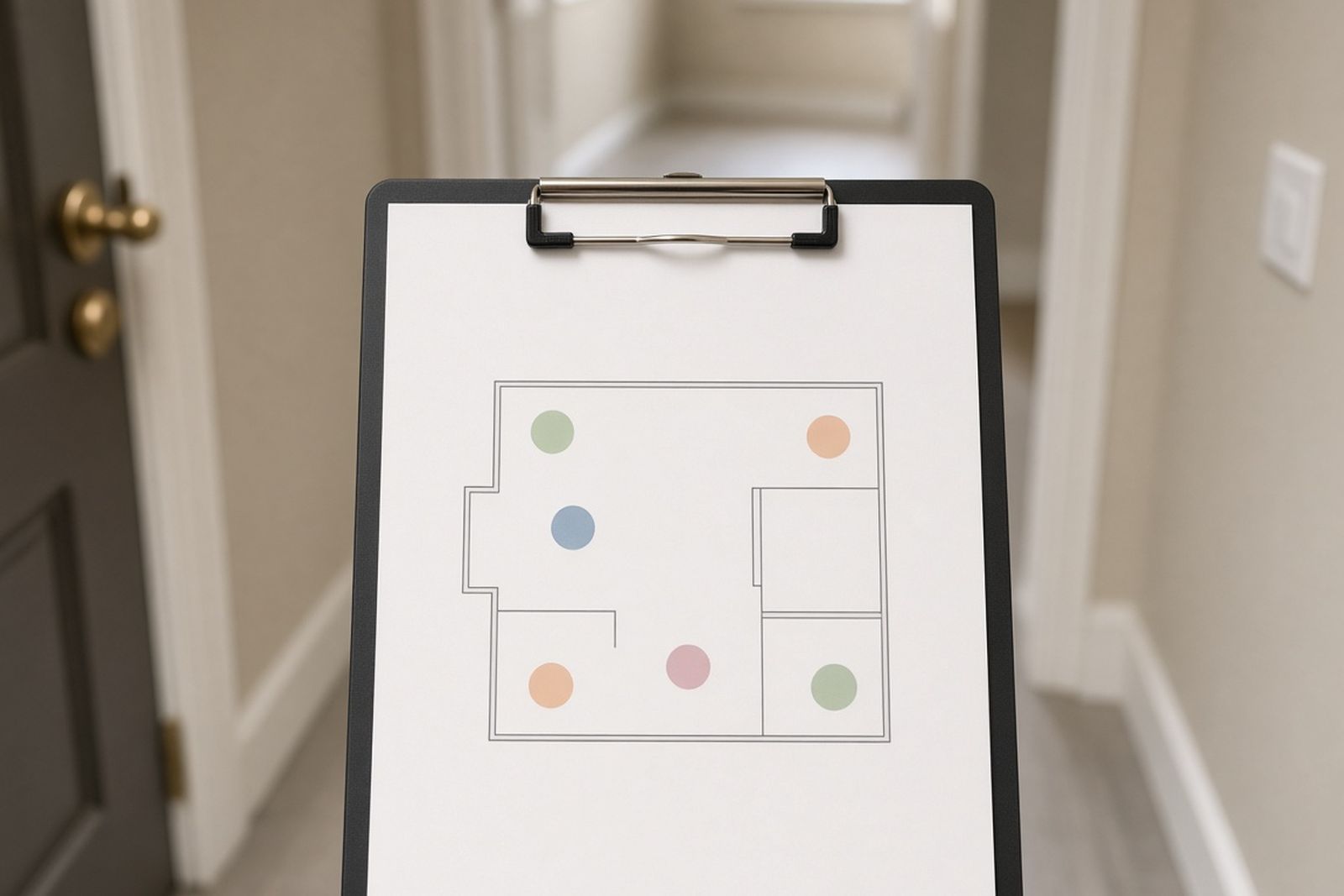
Clipboard showing a room plan with color-coded dots marking high-touch surfaces
Illustrative photo, not a job record. Clipboard showing a room plan with color-coded dots marking high-touch surfaces.
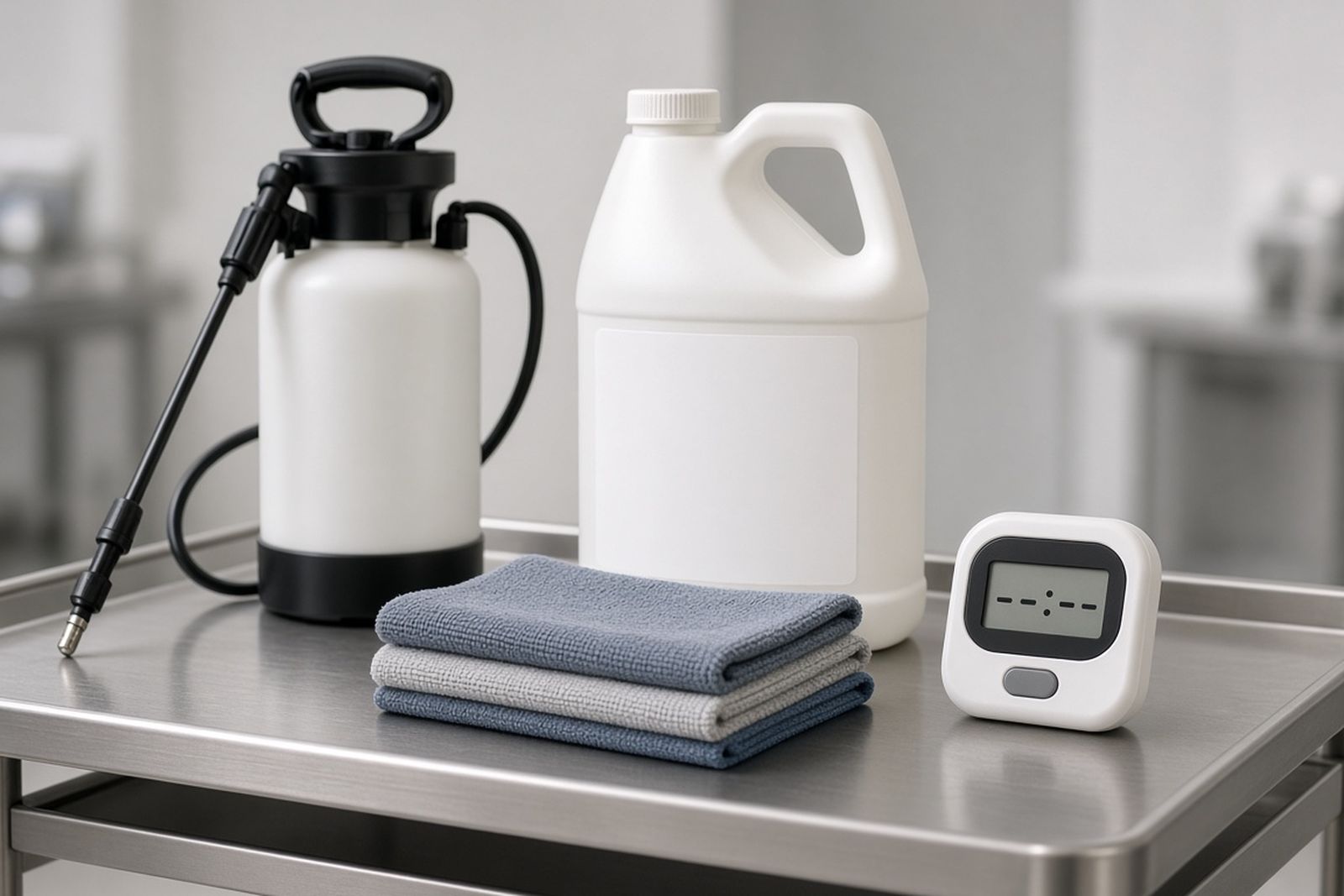
Pump sprayer, disinfectant jug, folded cloths and a contact-time timer on a steel cart
Illustrative photo, not a job record. Pump sprayer, disinfectant jug, folded cloths and a contact-time timer on a steel cart.

Infectious Disease Disinfection figures to keep in mind

National and research figures, not McLean data. Local conditions, rules and providers vary; use these for scale and context only.

323,700

CDC estimated 323,700 MRSA cases in hospitalized patients and 10,600 deaths in 2017, with $1.7 billion in attributable healthcare costs.

Read with care: Excludes many uncultured skin infections; hospitalized cases only.

Source: CDC (2019)United States, hospitalized patients, 2017 data

9.4-51 million

CDC estimates seasonal flu caused 9.4 million to 51 million illnesses, 120,000 to 710,000 hospitalizations and 6,300 to 52,000 deaths annually in the U.S. between 2010 and 2025.

Read with care: Ranges reflect large season-to-season variation and are modeled estimates.

Source: CDC (2025)United States, annual range across 2010-2025 seasons

223,900

CDC's 2019 Antibiotic Resistance Threats Report estimated 223,900 C. difficile cases in hospitalized patients and 12,800 deaths in 2017, with $1 billion in attributable healthcare costs.

Read with care: Counts hospitalized cases only; costs cover hospital-onset cases only.

Source: CDC (2019)United States, hospitalized patients, 2017 data

These figures are public research and agency data, not this network's own job records. Keep each number with its population, year and limits; none of them predicts cost, timing or outcome at a specific property.

Plan before you reach out

Use the first 24 hours planner for immediate steps and the provider vetting checklist to confirm any McLean provider's training, insurance and waste path in writing.

What research has found

Findings from published studies of people and properties in situations like this one. They describe what researchers observed in a specific group; they are not predictions for your case.

Used wipes retained spores during and after wiping.
Who was studied: Non-sporicidal-claim wipes tested on Formica with C. difficile spores.Limits: Not a comparison of all sporicidal products; physical removal is not complete inactivation.Disinfectant wipes transfer Clostridioides difficile spores during the disinfection proc… (2020)
Larger wiped areas created concerns about continued cross-contamination.
Who was studied: Six commercial wipe products; two bacterial strains on nonporous Formica.Limits: Specific products and strains; no general maximum area or disease outcome established.Cross-contamination by disinfectant towelettes varies by product chemistry and strain (2020)

Infectious Disease Disinfection community polls

Poll results

Every count is a real visitor vote; nothing is seeded or padded. One vote per poll per device, and you can change your answer.

Your experience

When your facility had an illness cluster, how did you handle cleaning?

No visitor votes yet
Process

How did you decide whether to close all or part of the facility?

No visitor votes yet

Planning cleanup in McLean?

Send a short message about the property to the follow-up inbox. A coordinator can reply by email with next steps.

Your request is sent to the follow-up inbox. A coordinator can reply by email.

If anyone is hurt or in danger, call 911 first.