South · US

Infectious Disease Disinfection Planning in Naples, FL

Planning infectious disease disinfection in Naples, FL

Disinfection planning for Naples seasonal homes and golf clubhouses. Work is timed around house-manager schedules and the humid indoor air of Gulf homes. This is planning guidance, not a claim of a local office or crew in Naples.

Get an email reply about infectious disease disinfection

Send a short message to the follow-up inbox. A coordinator can reply by email. This form does not send emergency help; call 911 first if anyone is in danger.

Tell us what you need help with. Share a short description; please leave out medical details, access codes, and other sensitive information.

A request does not confirm a booking. For immediate danger, contact local emergency services.

Or email info@prompartybuses.com

Direct answer

The short answer for Naples, FL

Seasonal Naples homes, golf-community amenities, and humid, air-conditioned interiors need a plan that pairs cleaning with labeled disinfection. Time the work around snowbird calendars and use Florida DOH-Collier as your local source. No one can sterilize a lanai home.

Editorial guide · Biohazard Remediation NetworkUpdated 2026-07-22Location focus: Naples, FL

Local planning context

Naples has seasonal estates, living rooms that open onto lanais, and gated golf communities. Clubhouses, gyms, and shared restrooms get heavy use in peak season. Suppose a stomach bug is tied to an amenity. Follow residents from the bag drop and cart return, through the locker rooms, to the dining room. Fogging an empty ballroom while restroom grime stays put does little. House managers often hold key schedules for guest suites that reopen on different flight days. Plans for keeping rooms empty must fit those calendars. The Florida Department of Health in Collier County is the local public health office. Statewide guidance comes from the Florida Department of Health.

Gulf humidity and sealed-up air conditioning keep some surfaces damp, which germs can like. They also make disinfectant smells last longer. Before seasonal guests fly in, finish the wet time and air the house out. Spraying scented product into a great room full of people is not the answer. Lanai cushions, slider tracks full of grit, and beach-style fabrics often need washing or should be left off hard-surface claims.

Golf carts, shared pool gates, outdoor shower handles, and club bag-drop counters are outdoor spots people touch. Then they carry that indoors on sunscreen-coated hands. Your plan should decide whether these controls are included. It should also check that the product label allows weathered plastic and metal. Hospital sterilization wording doesn't belong on a community clubhouse job. If blood or other body fluids that can carry disease turn up in the clubhouse, OSHA's worker rules on blood come into play. Ordinary illness work stays simple: clean, then disinfect, with honest label claims.

Property considerations

Line up the work with house-manager key schedules and arrival dates so guest suites stay empty through the wet time and airing out.

Put clubhouse restrooms, pool gates, bag-drop counters, and gym grips on the amenity high-touch list.

Humid, sealed, air-conditioned rooms dry slowly. Allow extra time for surfaces to dry and smells to clear.

Decide whether lanai cushions get washed or set aside, and whether slider tracks and outdoor shower handles are included.

In your records, keep private homes separate from HOA amenities, especially when crews only entered the clubhouse.

Don't suggest that fogging a cart path or pool deck sterilizes indoor great rooms or the air in the ducts.

Response-planning framework

Seasonal arrivals and house-manager empty periods

Schedule work when guest suites or amenities can stay empty for cleaning, the wet time, and the label's return period. Coordinate the house managers who handle key handoffs with the HOA calendar. Early linen drops or early check-ins put hands back on handles before the wet time ends.

Clean, then disinfect, in humid air

Remove bathroom and kitchen grime first, including gritty film on lanai sliders that can block the product. Apply an EPA-registered disinfectant matched to the germ of concern. Keep surfaces wet for the full time, even with pressure to reopen for snowbird check-ins. Air the rooms out as the safety data sheet (SDS) directs before luggage arrives in the great room.

Amenity outbreaks versus colds and flu

When you are choosing a product for the COVID-19 virus, EPA List N fits only if you follow directions. After a stomach bug tied to dining or the locker room, check that the label lists norovirus or another germ that fits. Don't assume a COVID list covers it. Never sell club air or soft cushions as sterilized.

Board notices and proof limits for golf communities

Post plain closure notices and reopening times for the clubhouse, gym, and pool gates. Don't name residents. Keep product and wet-time records for the board, including which outdoor controls were treated or left out. A residue swab of a bag-drop counter only shows leftover film. It can't find germs. Send community questions to DOH-Collier or Florida DOH.

Documentation checklist

  1. 1House-manager key schedule tied to empty times and reopening times for guest suites
  2. 2Line between amenity work and private-home work (clubhouse-only notes when that applies)
  3. 3High-touch list that includes pool gates, bag-drop counters, and club restrooms
  4. 4Which bottle went on lanai furniture versus clubhouse restrooms, and how long each stayed wet
  5. 5Cleaning notes plus decisions on lanai fabrics and slider tracks
  6. 6Wet-time logs in humid, air-conditioned rooms
  7. 7Fresh-air steps and written return instructions for house managers
  8. 8Golf-community board notices limited to amenity reopening facts (no personal health details)

Official resources

Questions for this location

How should Naples HOAs time clubhouse disinfection around seasonal arrivals?

Set aside an empty period long enough for mess removal, detergent cleaning, the wet time, and the label's return period. Finish before the busy check-in days. Share the reopening time with members without saying who was sick. If arrivals can't move, shrink the job to areas that can truly stay empty. Don't fog dining rooms with people in them. Humidity may slow how fast smells clear, so plan fresh air. Record products and wet times for the board. Remind members that surface work doesn't sterilize the club or replace staying home when sick. List N only helps when the virus behind COVID-19 is the concern. House managers can schedule linen deliveries after reopening. Then arriving seasonal staff won't cut the wet time short to make beds.

Do outdoor pool gates and cart steering wheels need the same products as indoor Naples kitchens?

Add them to the high-touch map if people touched them while someone was contagious. But the product must match the use sites and materials on its label. Some outdoor plastics and weathered metals can't take every disinfectant. Clean off sunscreen and dirt film that can block the product. Then, if the label allows, apply a suitable product for the full contact time. Don't assume indoor fogging reached outdoor hardware. Write down any surface that can't be properly disinfected. Hands often go straight from the pool deck to indoor fridge handles, so both areas may matter. Cart steering wheels travel between the bag drop and club dining. Wipe them with a labeled method or take them out of service until a safe process is available.

Why is sterilization language especially misleading for humid Naples interiors?

Sterilization is a defined process that destroys all germs on medical devices. It is not another word for spraying a living room. Humid Gulf homes full of soft furniture have many porous spots that hard-surface disinfectants were never tested to sterilize. Even on hard surfaces, results depend on cleaning, the right germ on the label, and the wet time, not the scent. Claiming more gives false comfort when seasonal guests arrive. Honest plans describe the treated surfaces, products, and times. They send medical questions to doctors and the Florida Department of Health in Collier County. The closeout packet should still say lanai cushions and drapes need washing or setting aside. Then boards won't mistake a clubhouse fog for sterile fabrics.

What verification is reasonable after disinfection of a Naples seasonal estate?

Reasonable proof includes EPA numbers, rooms treated, cleaning notes, wet-time logs, fabric decisions, fresh-air steps, and the time house managers may reopen. Photos help. A residue swab test on a few counters can show that grime went down. It cannot show that any specific germ was killed. Lab cultures of surfaces are rarely right for a routine illness at home, unless a clinic or public health office has a specific question. Turn down sterile-estate certificates. Keep records for insurers or family offices without made-up lab clearance. Restart routine cleaning when people move back in. Family offices should keep SDS copies next to the wet-time logs. Note which outbuildings crews never entered because of peak-season humidity delays. Record which lanai rooms, guest suites, and cart-barn controls were left untreated. Add the owner's own description of the illness and the arrival date the schedule was built around. Then a seasonal manager reading the file next winter will know what the work did and did not cover.

When should OSHA bloodborne pathogens planning appear in a Naples amenity cleanup?

It belongs in the plan when blood or other body fluids that can carry disease are part of the mess. An injury in the fitness center is one example. Staff cleaning it then fall under OSHA's blood guidance. Vomit cleanup during a stomach bug also calls for careful gear and waste choices, even though the formal blood rule may not apply. Name the kinds of mess and follow the rules and labels that fit. Ordinary wipe-downs after a mild cold, with no such fluids, remain clean-then-disinfect jobs. Writing down the hazard prevents both weak protection and hospital-sterile sales talk. Log a gym injury cleanup and a routine cold-season wipe request as separate tickets. Then waste packing and gear match what actually happened.

What should a Naples owner do about a lanai after a sick guest spent time there?

First clean the lanai table, chair arms, door handles, and outdoor kitchen controls with detergent and water. Pollen, sunscreen, and pool water leave a film. Then use a disinfectant whose label allows outdoor use on those materials. Keep it wet for the full contact time, which may mean working in the shade. Wash the seat cushion covers or set them aside for a few days. The screen enclosure itself rarely needs disinfecting unless it's visibly dirty.

How should a Naples seasonal resident prepare a home that sat closed after an illness last spring?

Months of closure leave the house quiet, but they don't replace cleaning. Before you arrive, have someone open the house, run the air conditioning, and check for moisture or mold. In a closed Gulf Coast home, mold is the more likely problem. Then clean kitchens and baths with detergent and disinfect the spots people touch most. If last season's illness was a stomach bug, wash any bedding or towels left behind. Don't assume time took care of them.
Contact

Get help by email

Send a short message for an email reply about infectious disease disinfection planning questions for the Naples area.

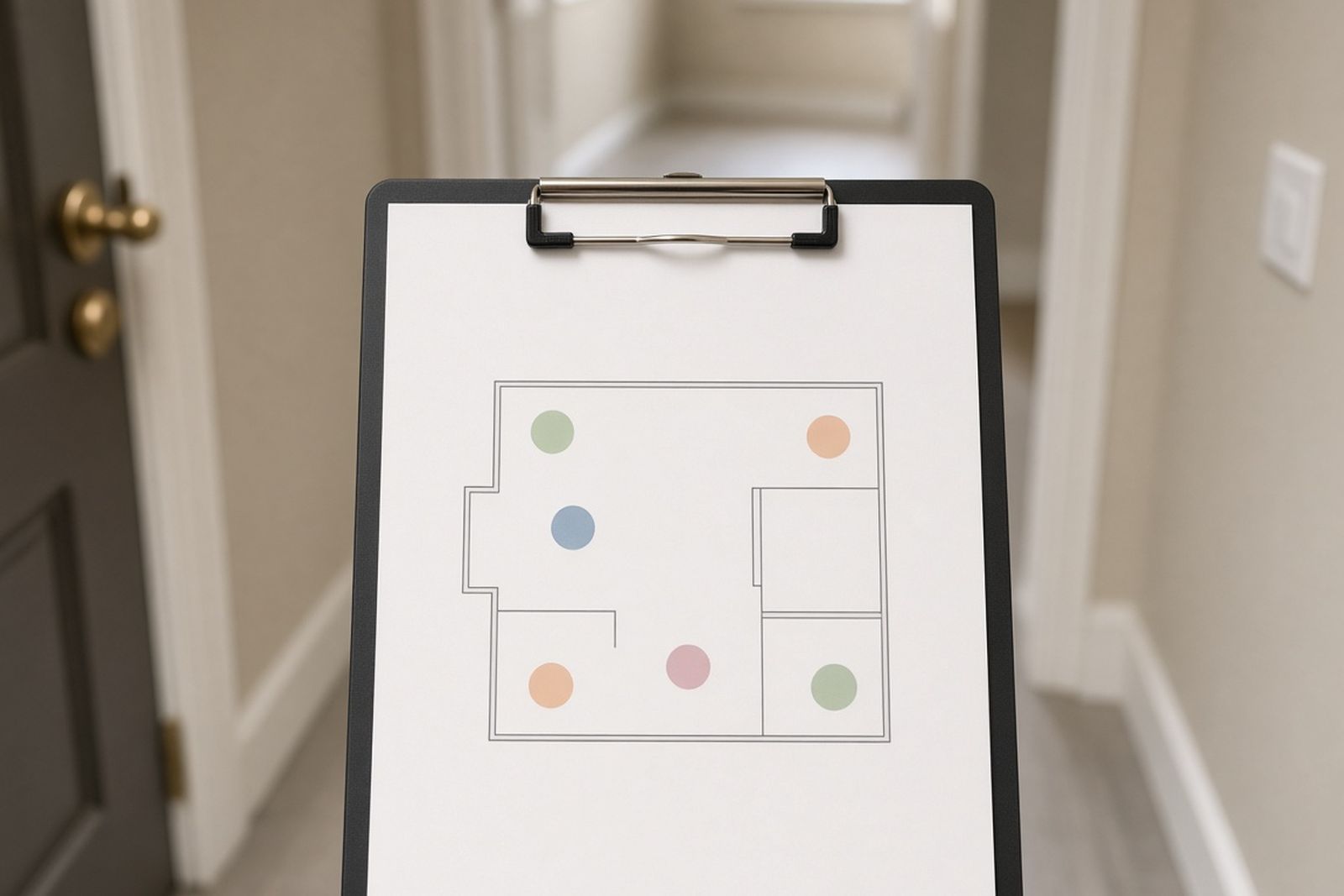
Clipboard showing a room plan with color-coded dots marking high-touch surfaces
Illustrative photo, not a job record. Clipboard showing a room plan with color-coded dots marking high-touch surfaces.
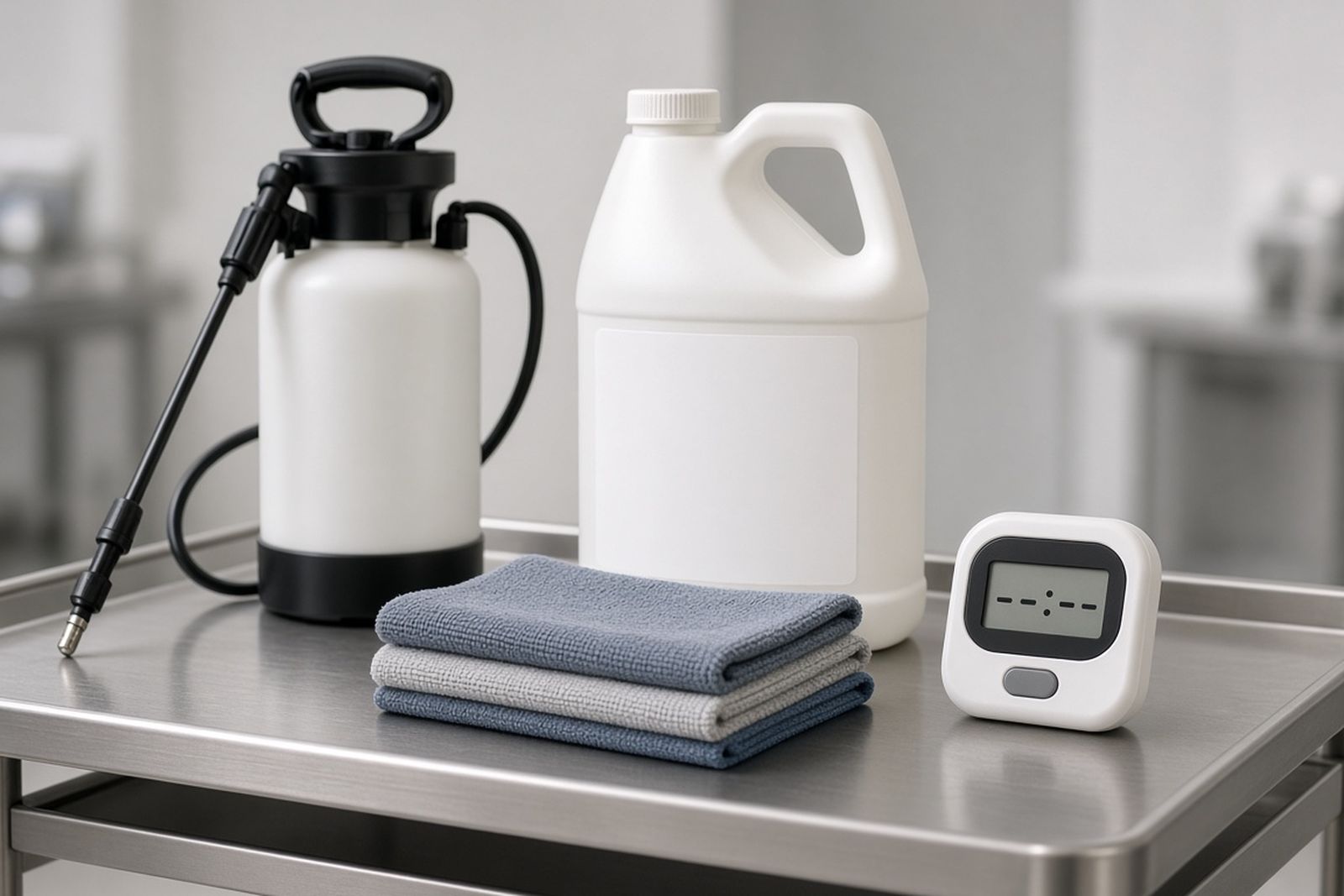
Pump sprayer, disinfectant jug, folded cloths and a contact-time timer on a steel cart
Illustrative photo, not a job record. Pump sprayer, disinfectant jug, folded cloths and a contact-time timer on a steel cart.

Infectious Disease Disinfection figures to keep in mind

National and research figures, not Naples data. Local conditions, rules and providers vary; use these for scale and context only.

19-21 million

Norovirus causes an estimated 19 to 21 million illnesses, 109,000 hospitalizations and 900 deaths in the United States each year, costing about $2 billion.

Read with care: Modeled estimates, not lab-confirmed counts; most cases are never reported.

Source: CDC (2024)United States, annual average, all ages

5 tablespoons per gallon

CDC advises mixing 5 tablespoons (1/3 cup) of bleach per gallon of water, leaving it on surfaces at least 1 minute, and making a fresh solution daily because it loses effectiveness after 24 hours.

Read with care: Assumes 5-9% household bleach; bleach can damage surfaces and must never be mixed with ammonia.

Source: CDC (2024)General household guidance, United States

18

CDC states that as few as 18 norovirus particles are thought to be sufficient to cause infection.

Read with care: Infectious dose estimates come from limited human challenge studies and vary by strain.

Source: CDC (2011)General virology statement, applies to all settings

These figures are public research and agency data, not this network's own job records. Keep each number with its population, year and limits; none of them predicts cost, timing or outcome at a specific property.

Plan before you reach out

Use the first 24 hours planner for immediate steps and the provider vetting checklist to confirm any Naples provider's training, insurance and waste path in writing.

What research has found

Findings from published studies of people and properties in situations like this one. They describe what researchers observed in a specific group; they are not predictions for your case.

All tested formulations contained agents capable of environmental stress cracking.
Who was studied: Eight wipe formulations tested on healthcare plastics under fixed strain for seven days.Limits: Accelerated test conditions; not a failure rate for installed equipment.Chemical resistance testing of plastics: compatibility of detergent and disinfectant pro… (2024)
Both methods reduced cultured bacterial contamination.
Who was studied: Naturally contaminated surfaces in a comparative field test.Limits: Specific device, protocol and success criterion; no patient infection endpoint.Superiority of manual disinfection using pre-soaked wipes over automatic UV-C without pr… (2023)

Infectious Disease Disinfection community polls

Poll results

Every count is a real visitor vote; nothing is seeded or padded. One vote per poll per device, and you can change your answer.

Your experience

When your facility had an illness cluster, how did you handle cleaning?

No visitor votes yet
Process

How did you decide whether to close all or part of the facility?

No visitor votes yet

Planning cleanup in Naples?

Send a short message about the property to the follow-up inbox. A coordinator can reply by email with next steps.

Your request is sent to the follow-up inbox. A coordinator can reply by email.

If anyone is hurt or in danger, call 911 first.