Northeast · US

Infectious Disease Disinfection Planning in Scarsdale, NY

Planning infectious disease disinfection in Scarsdale, NY

Scarsdale home disinfection planning. Covers mudroom paths, EPA label claims, List N limits, how long surfaces stay wet, and lowering risk at home. This is planning guidance, not a claim of a local office or crew in Scarsdale.

Get an email reply about infectious disease disinfection

Send a short message to the follow-up inbox. A coordinator can reply by email. This form does not send emergency help; call 911 first if anyone is in danger.

Tell us what you need help with. Share a short description; please leave out medical details, access codes, and other sensitive information.

A request does not confirm a booking. For immediate danger, contact local emergency services.

Or email info@prompartybuses.com

Direct answer

The short answer for Scarsdale, NY

Harlem Line colonials with garage mudrooms and finished media dens need Westchester-specific records. Keep suburban risk reduction apart from clinical sterilization language. Keep List N inside its COVID-19 limits.

Editorial guide · Biohazard Remediation NetworkUpdated 2026-07-22Location focus: Scarsdale, NY

Local planning context

In Scarsdale's stone colonials, the real germ path often runs through the garage mudroom. Wet boots, sports bags, and fridge runs follow each Harlem Line arrival. Formal living rooms stay quiet, while bath taps and remotes in the finished media den see constant hands. Chart those spots for the contagious days instead of fogging crown molding. The Westchester County Department of Health can help spread factual notices. It doesn't certify a colonial as sterile.

Carpool loops and train times squeeze reopening choices. Storm windows trap smells after products go on. People buff fixtures dry so everyone can leave in the morning, and that cuts the label's wet time short. Gaming chairs, den throws, and fabric sectional covers usually need washing or temporary removal. A winter wipe-down is not a sterilization certificate.

A private caregiver or tutor may visit without turning the house into a licensed clinic. Still, don't fog rooms with medically fragile people in them. Pick products by the germs on the label. Keep reopening notes free of diagnosis words. Lots are close together here, so keep notices private and factual.

Property considerations

Start with garage mudroom benches, sports-bag drop spots, fridge handles, and family bath taps.

Wash or remove media-den throws and gaming-chair cushions before any product goes on.

Keep main baths empty through the labeled wet time around school departures.

Keep kitchen food-surface rinse steps apart from wiping the den remotes.

Don't let the Harlem Line morning rush cut wet times short.

Take diagnosis words out of caregiver reopening notes. Keep only SDS and empty-room facts.

Response-planning framework

Base the plan on mudroom and media-den traffic

Read each bottle's list of germs and pick the one that names the family's illness. List N was built for COVID-19. A stomach bug going around may need a stomach-germ claim that List N alone doesn't give. Reject sterile-colonial sales talk.

Detergent on the boots-and-bags zones first

CDC community steps put cleaning ahead of disinfecting. If you skip it, mudroom grit and bath film shield germs. Keep the product wet for the printed time on taps, benches, and remotes. Note the start and stop times, so a lemon scent isn't taken as proof the job is done.

An empty-room clock built around trains and carpools

Doors on treated Scarsdale rooms stay shut until the product's clock and the SDS notes are both done. One household clock beats rushed buffing before someone leaves. Was the spare bath treated? If not, skip it. Air the house out under the storm windows, without claiming the air is sterile.

A Westchester household file

Keep product IDs, wet-time logs, maps of the den and mudroom, and copies of notices. A residue swab on a faucet only checks for grime, not germs. Send community questions to the Westchester County Department of Health or the New York State Department of Health. Tell caregivers the empty-room hours and where the SDS sheets are. Don't hand them do-it-yourself fog recipes.

Documentation checklist

  1. 1Contact map of the mudroom and media den
  2. 2What happened, without naming anyone
  3. 3EPA numbers and the germ claims chosen
  4. 4Detergent steps on gritty benches and baths
  5. 5Wet-time start and stop for baths and kitchenettes
  6. 6Household reopening time tied to the Harlem Line or carpool
  7. 7Notes on washing or removing soft den items
  8. 8Caregiver note that keeps medical care apart from empty-room facts

Official resources

Questions for this location

Where should a colonial start after a carpool stomach-illness cluster?

Begin with the baths used during the illness. Then do fridge handles, the switches along that path, and the mudroom benches where sports bags land. Remove grit and grime with detergent. Use an EPA-registered product meant for gut germs on the bath and bench, and leave it wet as long as the bottle says. Wash den throws instead of spraying them. Being on List N doesn't show a product works on norovirus unless its own label says so. Handwashing after the carpool and before meals still matters. This work lowers risk. It doesn't sterilize the house.
Does treating a media den clear upstairs bedrooms automatically?

No. Follow how people moved through the laundry, kitchen, and mudroom. Disinfect high-touch objects on those paths and keep them wet for the full time. Don't call upstairs bedrooms sterile because the den smelled like cleaner. Don't skip a shared laundry either. Write down what's included and left out. Germ claims must match the concern. List N is not a key to every germ.

How should a visiting caregiver discuss environmental steps?

Say which rooms are closed and when the SDS return time lets people back in. Don't ask cleaning workers for a diagnosis. A labeled product lowers germs on the surfaces it treats. It isn't a vaccine or a test. Don't fog around medically fragile people who stay in the house. Blood or other body fluids that can carry disease may call for a bloodborne pathogen plan. Never claim the house was sterilized like hospital tools.

Why does storm-window season tempt people to cut the wet time short?

With storm windows down, smells linger. Families buff fixtures dry before a school or train departure. That habit ruins the disinfecting. Let the den stay shut longer instead. Air the house out with care in cold weather. Soft den items may need extra drying. Write down the clock you actually used. Cold weather doesn't widen what List N covers.

What belongs in a Westchester insurer-ready packet?

Insurers usually want to see what was done, not promises. Include the products used and their labels, the rooms treated in the colonial, the cleaning steps, wet times, and reopening times. Photos of the prep help. A residue swab reading, if taken, only shows leftover grime. Skip any certificate claiming the house is germ-free for good. Send wider health questions to the Westchester County Department of Health or your doctor.

How should a Scarsdale household clean a finished basement playroom after a child's stomach illness?

Pick up hard toys. Wash them in hot, soapy water, or in the dishwasher if they're dishwasher-safe. Disinfect any that can't be washed with a product labeled for toys, and rinse if the label says to. Put play mats and stuffed toys in the washing machine. Clean and disinfect the stair rail, light switch, and door handle. Basements hold smells, so run a fan and give the room extra time before children come back.

What should a Scarsdale family tell a cleaning service arriving after a household illness?

Tell the cleaning service someone at home was sick, so workers can pick gloves and products that fit. Don't share personal details. Say which rooms the sick person used and which they didn't. Ask what products they plan to use and whether the labels cover the concern your doctor mentioned. Agree on which soft items you'll wash yourselves. Tell them when family members will be home so the work can finish first.

Contact

Get help by email

Send a short message for an email reply about infectious disease disinfection planning questions for the New York City area.

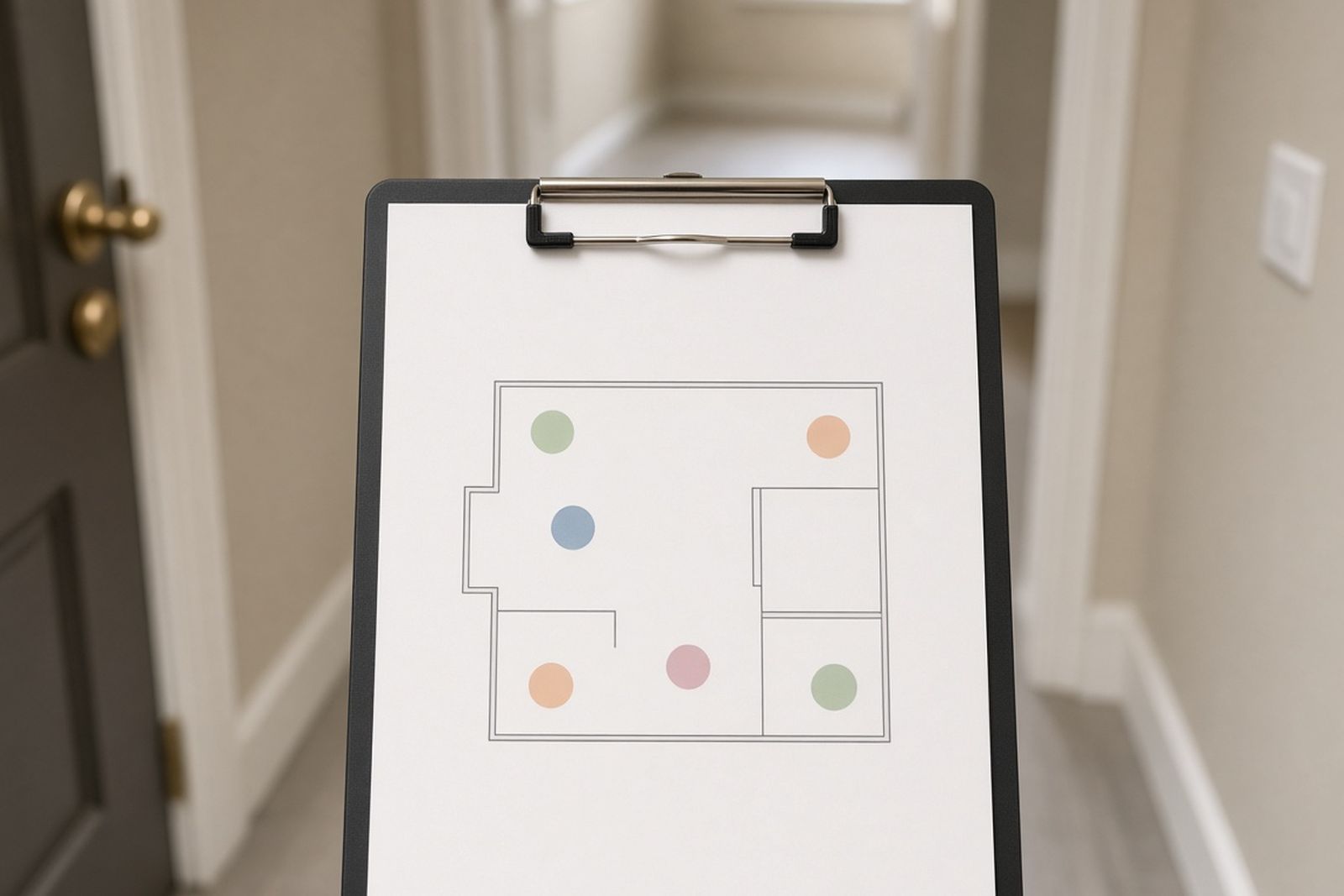
Clipboard showing a room plan with color-coded dots marking high-touch surfaces
Illustrative photo, not a job record. Clipboard showing a room plan with color-coded dots marking high-touch surfaces.
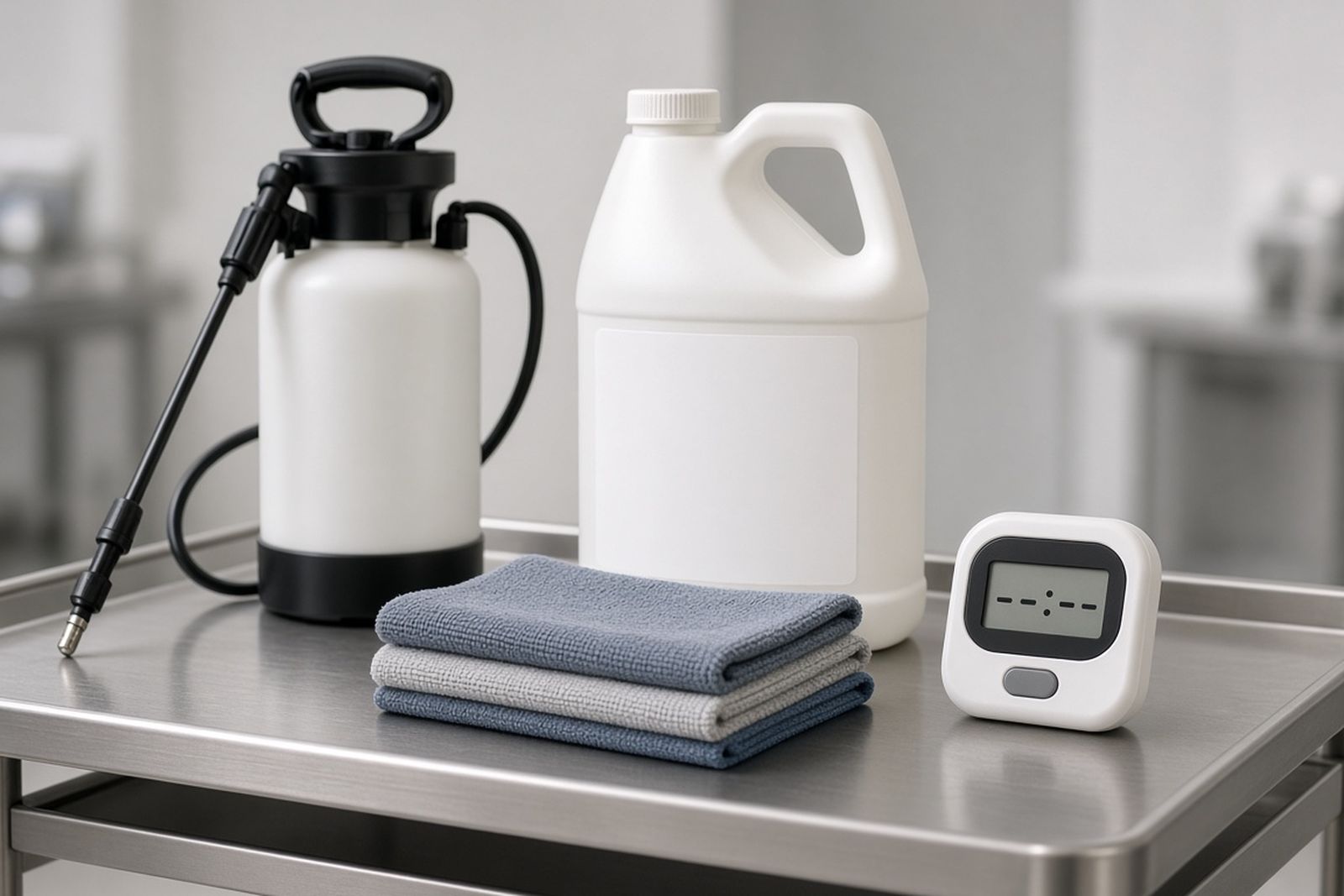
Pump sprayer, disinfectant jug, folded cloths and a contact-time timer on a steel cart
Illustrative photo, not a job record. Pump sprayer, disinfectant jug, folded cloths and a contact-time timer on a steel cart.

Infectious Disease Disinfection figures to keep in mind

National and research figures, not Scarsdale data. Local conditions, rules and providers vary; use these for scale and context only.

18

CDC states that as few as 18 norovirus particles are thought to be sufficient to cause infection.

Read with care: Infectious dose estimates come from limited human challenge studies and vary by strain.

Source: CDC (2011)General virology statement, applies to all settings

$9.8 billion

A JAMA Internal Medicine meta-analysis estimated the five major healthcare-associated infections cost the U.S. health system $9.8 billion annually, with C. difficile at about $11,285 per case.

Read with care: 2012 dollars; based on published studies rather than national claims data.

Source: JAMA Internal Medicine (2013)United States, adult inpatients, literature 1986-2013

19-21 million

Norovirus causes an estimated 19 to 21 million illnesses, 109,000 hospitalizations and 900 deaths in the United States each year, costing about $2 billion.

Read with care: Modeled estimates, not lab-confirmed counts; most cases are never reported.

Source: CDC (2024)United States, annual average, all ages

These figures are public research and agency data, not this network's own job records. Keep each number with its population, year and limits; none of them predicts cost, timing or outcome at a specific property.

Plan before you reach out

Use the first 24 hours planner for immediate steps and the provider vetting checklist to confirm any Scarsdale provider's training, insurance and waste path in writing.

What research has found

Findings from published studies of people and properties in situations like this one. They describe what researchers observed in a specific group; they are not predictions for your case.

Used wipes retained spores during and after wiping.
Who was studied: Non-sporicidal-claim wipes tested on Formica with C. difficile spores.Limits: Not a comparison of all sporicidal products; physical removal is not complete inactivation.Disinfectant wipes transfer Clostridioides difficile spores during the disinfection proc… (2020)
All tested formulations contained agents capable of environmental stress cracking.
Who was studied: Eight wipe formulations tested on healthcare plastics under fixed strain for seven days.Limits: Accelerated test conditions; not a failure rate for installed equipment.Chemical resistance testing of plastics: compatibility of detergent and disinfectant pro… (2024)

Infectious Disease Disinfection community polls

Poll results

Every count is a real visitor vote; nothing is seeded or padded. One vote per poll per device, and you can change your answer.

Your experience

When your facility had an illness cluster, how did you handle cleaning?

No visitor votes yet
Process

How did you decide whether to close all or part of the facility?

No visitor votes yet

Planning cleanup in Scarsdale?

Send a short message about the property to the follow-up inbox. A coordinator can reply by email with next steps.

Your request is sent to the follow-up inbox. A coordinator can reply by email.

If anyone is hurt or in danger, call 911 first.