South · US

Infectious Disease Disinfection Planning in Washington, DC

Planning infectious disease disinfection in Washington, DC

Washington DC row-house disinfection planning. Covers shared building cores, EPA labels, List N limits, how long surfaces stay wet, and CDC hygiene advice. This is planning guidance, not a claim of a local office or crew in Washington.

Get an email reply about infectious disease disinfection

Send a short message to the follow-up inbox. A coordinator can reply by email. This form does not send emergency help; call 911 first if anyone is in danger.

Tell us what you need help with. Share a short description; please leave out medical details, access codes, and other sensitive information.

A request does not confirm a booking. For immediate danger, contact local emergency services.

Or email info@prompartybuses.com

Direct answer

The short answer for Washington, DC

Capitol Hill English basements, Dupont co-op freight elevators, and row houses near the embassies need District records. Protect the label's wet time from dog walkers and package chaos. Keep List N inside its COVID-19 limits. A lobby scent machine sterilizes nothing.

Editorial guide · Biohazard Remediation NetworkUpdated 2026-07-22Location focus: Washington, DC

Local planning context

English basements and narrow row-house stairs put most hands on painted spindles, the door levers under the stoop, and trash-alley latches. That's a very different layout from a Crystal City hot-desk floor.

Doorman and porter shift changes create pressure to reopen when late packages pile up. Summer humidity and sealed winter heat both slow how fast smells clear. So reopening times should come from the label, not from the delivery rush or the next dog walk.

Near downtown, street-level clinics share lobbies with apartments. Cleaning in co-op lobbies and row-house stairwells follows CDC guidance for ordinary community buildings, not hospitals.

Property considerations

Do under-stoop levers, trash-alley latches, and elevator call buttons before decorative nooks.

Book co-op move-outs for a different day than the hallway disinfection.

Block amenity gym props through the full labeled wet time.

In basement units with a kitchenette, check whether the counter needs rinsing after treatment.

Post one reopening time for overnight porters that covers the package rooms.

Nothing in a co-op notice should mention the ground-floor clinic's instruments.

Response-planning framework

Map English-basement and stoop traffic first

Start at the sidewalk and follow the hand path. That's the stoop rail, the lever on the door under the stoop, the basement light switch, and the bath inside. List N speaks only to COVID-19. Other illnesses need products labeled for them. Keep any board letter free of sterile-campus wording.

Clean alley and basement grime before any product

CDC advice for community buildings puts grime removal before disinfecting basement doors and stair rails. Clean basement bath film and alley-door grit before any product goes on. Wiping the package room dry early so residents can grab deliveries undoes the work. Fogging a tight row-house stair doesn't take the place of scrubbing first.

A porter-shift reopening clock in humid weather

Boards need written reopening times that night staff can't casually override for dog walkers or late packages. Air out as the label and SDS direct. Sensitive residents may need more time. Co-op notices should list closed floors, the package room, and reopening times without naming any resident. Send public health questions to DC Health.

A co-op packet fit for insurers

A residue swab, if used, only points to grime. Don't add lab results to a District co-op file when no samples were ever taken.

Documentation checklist

  1. 1List of contact spots at the stoop, English basement, and elevator core
  2. 2Which jobs stayed with building staff and which went to the outside crew
  3. 3Label copies for products used in row-house stairs and co-op halls
  4. 4Proof of detergent cleaning on row-house stairs, basement doors, and co-op package rooms before disinfecting
  5. 5Timed wet-period logs for basement baths and kitchenettes
  6. 6Porter reopening time shared across shifts
  7. 7Resident notices with no personal health details
  8. 8Freight-elevator booking notes when move-outs were pushed back

Official resources

Questions for this location

Does fogging a Dupont corridor sterilize English-basement units?

No. Sterilization is a hospital process for certain tools. It shouldn't appear on a notice about a fogged row-house hallway. Fog in a narrow hallway can leave people breathing the product while the English basement's bathroom fixtures still have grime on them. Basement tenants are better served by cleaning their own bath and kitchen handles. Clean stair rails and door levers leading down to their entrance help too.
How should co-op boards handle package-room pressure while surfaces must stay wet?

Keep the package room closed if it was treated. Or leave it out of the job and say so in writing. Overnight porters need one reopening time that isn't overridden for late deliveries. The package shelves stay wet as long as the label says. Don't tell residents the building was sterilized just so packages can move.

After a COVID-19 case in our Capitol Hill row house, is any List N product good enough?

List N is a COVID-19 list, and only that. It doesn't reach the stomach bugs that sometimes follow a busy holiday week in the District. Scrub the counters first. Keep the family out while the product works, and open the back windows onto the alley.

Our building has a clinic on the ground floor. How do we word the notice for residents?

Use separate notices. A street-level clinic follows its own infection-prevention and instrument rules. Those don't set a standard for the co-op units above. The residential notice should cover the lobby, elevator, and package room. Those get ordinary clean-then-disinfect work with EPA-registered products and recorded wet times. Give reopening times, leave out anyone's health, and never call the building sterilized.

What verification packet fits a District co-op file?

The co-op file names EPA numbers and each treated hall, stair, and basement bath. Add timed wet periods, freight-elevator booking notes if used, photos of the prep, and written return instructions. A residue swab can flag leftover organic grime. It can't certify sterility. Reject germ-free-forever certificates. Point wider questions to DC Health.

How should a District row-house owner clean the English basement unit between tenants after an illness?

Treat the basement unit as its own home. Clean the bathroom and kitchen with detergent. Then disinfect handles, taps, switches, and the door lever under the stoop with a labeled product. Basements can be damp and slow to dry. Run a fan or dehumidifier and give surfaces the full contact time. Wash or replace any linens you provide. Check for mold, which is often a bigger worry in a closed basement. Keep a simple record for the next tenant.

What should a Washington office worker do if they get sick while commuting by Metro?

Go home as soon as you can and follow your doctor's advice about going back to work. Let your employer know you're sick, without sharing details. At home, clean your phone, keys, and bag handles, and wash your hands often. You don't need to worry about disinfecting Metro trains or stations. That's the transit system's job. If coworkers ask, your employer can say the office is being cleaned without naming you.

Contact

Get help by email

Send a short message for an email reply about infectious disease disinfection planning questions for the Washington DC area.

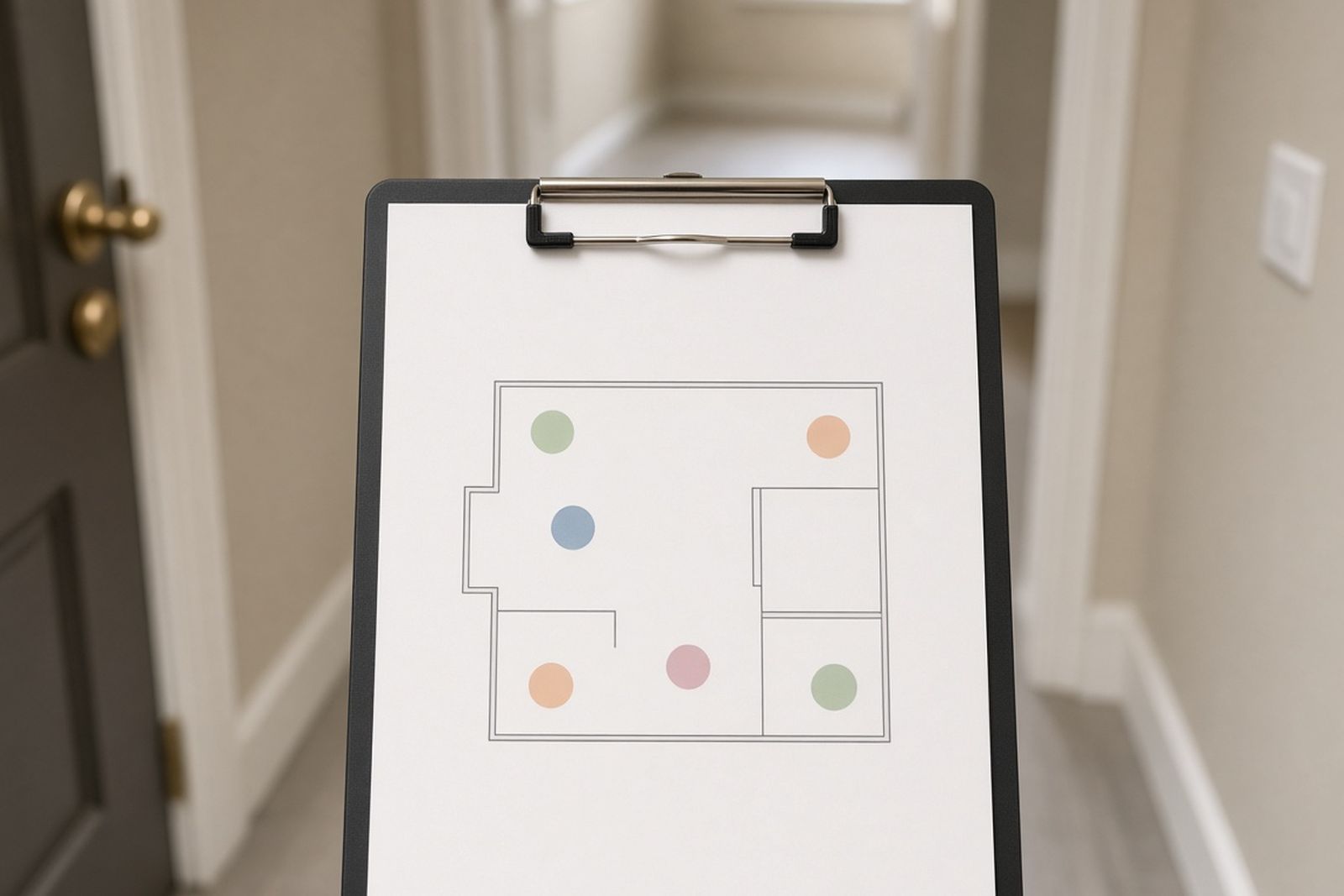
Clipboard showing a room plan with color-coded dots marking high-touch surfaces
Illustrative photo, not a job record. Clipboard showing a room plan with color-coded dots marking high-touch surfaces.
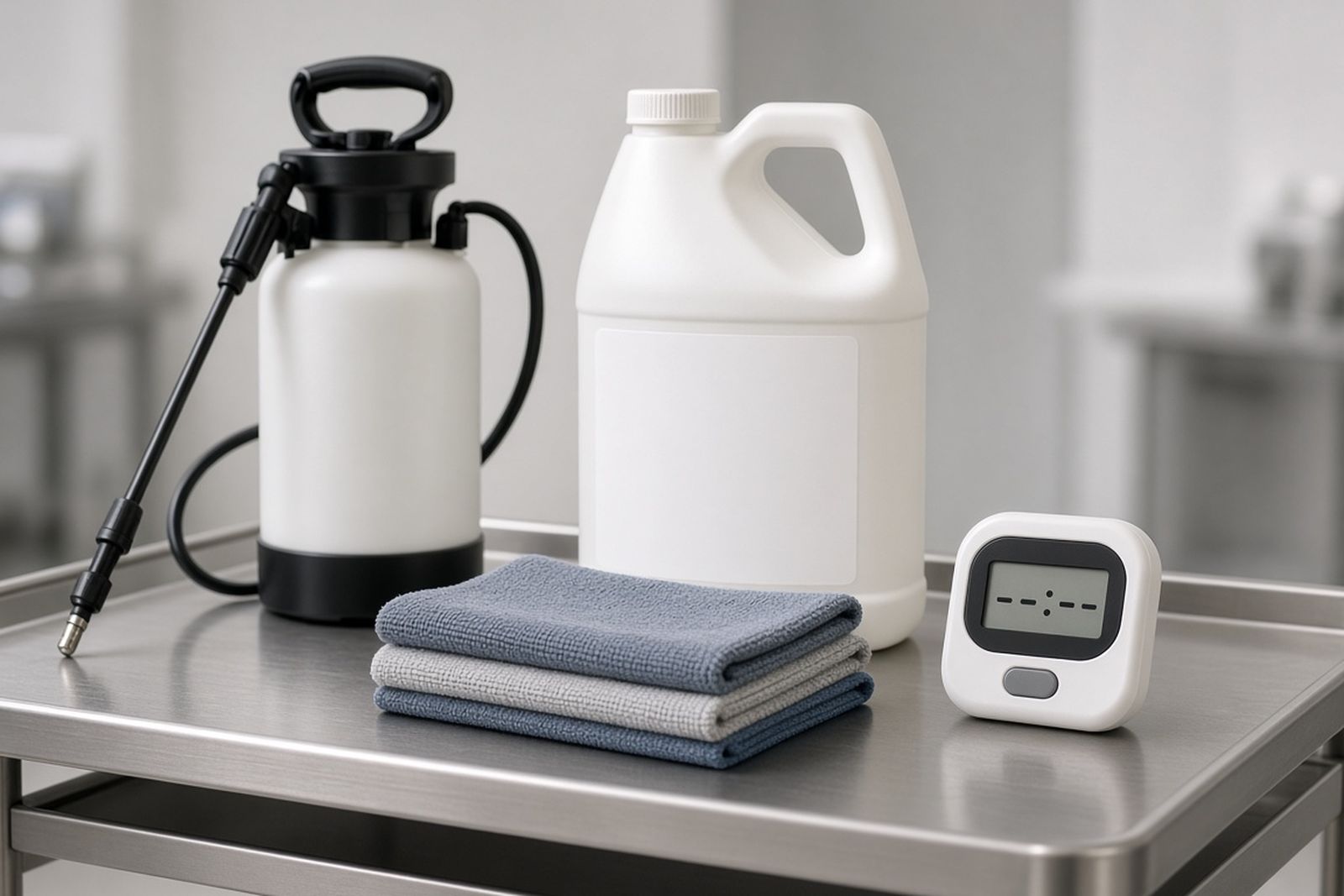
Pump sprayer, disinfectant jug, folded cloths and a contact-time timer on a steel cart
Illustrative photo, not a job record. Pump sprayer, disinfectant jug, folded cloths and a contact-time timer on a steel cart.

Infectious Disease Disinfection figures to keep in mind

National and research figures, not Washington data. Local conditions, rules and providers vary; use these for scale and context only.

11

Six of 11 interviewees described concerns or problems from inhaling cleaning chemicals.

Read with care: Small voluntary sample; no causal inference; survey item nonresponse substantial.

Source: Wilson et al. (2023)59 Arizona survey respondents and 11 interviewees from maid services and a school district.

19.

The most common reported cleaning frequency increased after COVID-19.

Read with care: Reported knowledge and practices, not observed compliance or infection outcomes.

Source: Centeleghe et al. (2024)137 healthcare-professional respondents; convenience/purposive online sample across the pandemic.

42%

An American Cleaning Institute survey found 42% of Americans were not letting disinfectant sprays and wipes stay wet long enough to work, with 26% wiping immediately after spraying.

Read with care: Trade-association survey conducted early in the pandemic; self-reported behavior.

Source: American Cleaning Institute (2020)United States, 1,005 adults surveyed March 18-19, 2020

These figures are public research and agency data, not this network's own job records. Keep each number with its population, year and limits; none of them predicts cost, timing or outcome at a specific property.

Plan before you reach out

Use the first 24 hours planner for immediate steps and the provider vetting checklist to confirm any Washington provider's training, insurance and waste path in writing.

What research has found

Findings from published studies of people and properties in situations like this one. They describe what researchers observed in a specific group; they are not predictions for your case.

Conferences and study days were a major source of biofilm knowledge.
Who was studied: 137 healthcare-professional respondents; convenience/purposive online sample across the pandemic.Limits: Reported knowledge and practices, not observed compliance or infection outcomes.Infection prevention control in practice: a survey of healthcare professionals’ knowledg… (2024)
Floors were disinfected less consistently than high-touch surfaces.
Who was studied: 47 US hospital environmental-services respondents across 26 states; 2019 survey.Limits: 47 of 273 contacted participated; practices were reported rather than observed.Environmental cleaning and disinfection of hospital rooms: A nationwide survey (2021)

Infectious Disease Disinfection community polls

Poll results

Every count is a real visitor vote; nothing is seeded or padded. One vote per poll per device, and you can change your answer.

Your experience

When your facility had an illness cluster, how did you handle cleaning?

No visitor votes yet
Process

How did you decide whether to close all or part of the facility?

No visitor votes yet

Planning cleanup in Washington?

Send a short message about the property to the follow-up inbox. A coordinator can reply by email with next steps.

Your request is sent to the follow-up inbox. A coordinator can reply by email.

If anyone is hurt or in danger, call 911 first.