Short answer
Environmentally responsible infectious disease disinfection targets the surfaces and organisms that actually matter, uses registered products at label strength for the labeled contact time, favors cleaning plus targeted wiping over blanket fogging, protects indoor air for occupants and workers, and disposes of wipes, concentrates, and rinse water properly. Doing less, but doing it correctly, usually lowers both health risk and environmental impact.
Can disinfection be both effective and environmentally responsible?
Yes, and the two goals usually point the same way. The most effective disinfection is precise: the right product, on a clean surface, for the full contact time, in the places people actually touch. That same precision cuts down on chemical use, packaging, fumes, and wasted labor.
Problems arise when disinfection becomes a show of effort rather than a targeted task. Spraying every wall and ceiling, fogging an entire building several times a week, or rotating through multiple products at once can feel protective. In practice, it often adds exposure for occupants and workers without adding much protection against the illness of concern.
Thinking about environmental impact is really a way of thinking about waste of every kind: wasted chemical, wasted money, and wasted time on surfaces that were never a risk.
Lessons from the pandemic about overuse
The pandemic reshaped cleaning almost overnight. The number of products approved for use against the new coronavirus exploded: EPA reported in 2020 that its List N grew from 85 products in March 2020 to more than 500 by October 2020. Businesses and households bought and used disinfectants at a pace few had seen before.
Workers felt the change. In a 2023 study of cleaning services personnel, Wilson and colleagues found 83% of respondents answering the item reported changed cleaning protocols. The same research noted that eight of 11 interviewees were unaware of asthma risk associated with cleaning work.
Many of those changes were reasonable responses to uncertainty. As understanding of respiratory spread improved, public health guidance shifted toward ventilation, masking, and targeted surface cleaning. The lesson for today is that heavy, frequent, blanket disinfection is not automatically safer, and it carries real costs for people who breathe the air.
Product choice and dilution
Every EPA-registered disinfectant has a label that lists which organisms it is proven against, at what strength, and for how long. Choosing a product whose claims match the illness at hand avoids stacking several chemicals in the hope that one of them works.
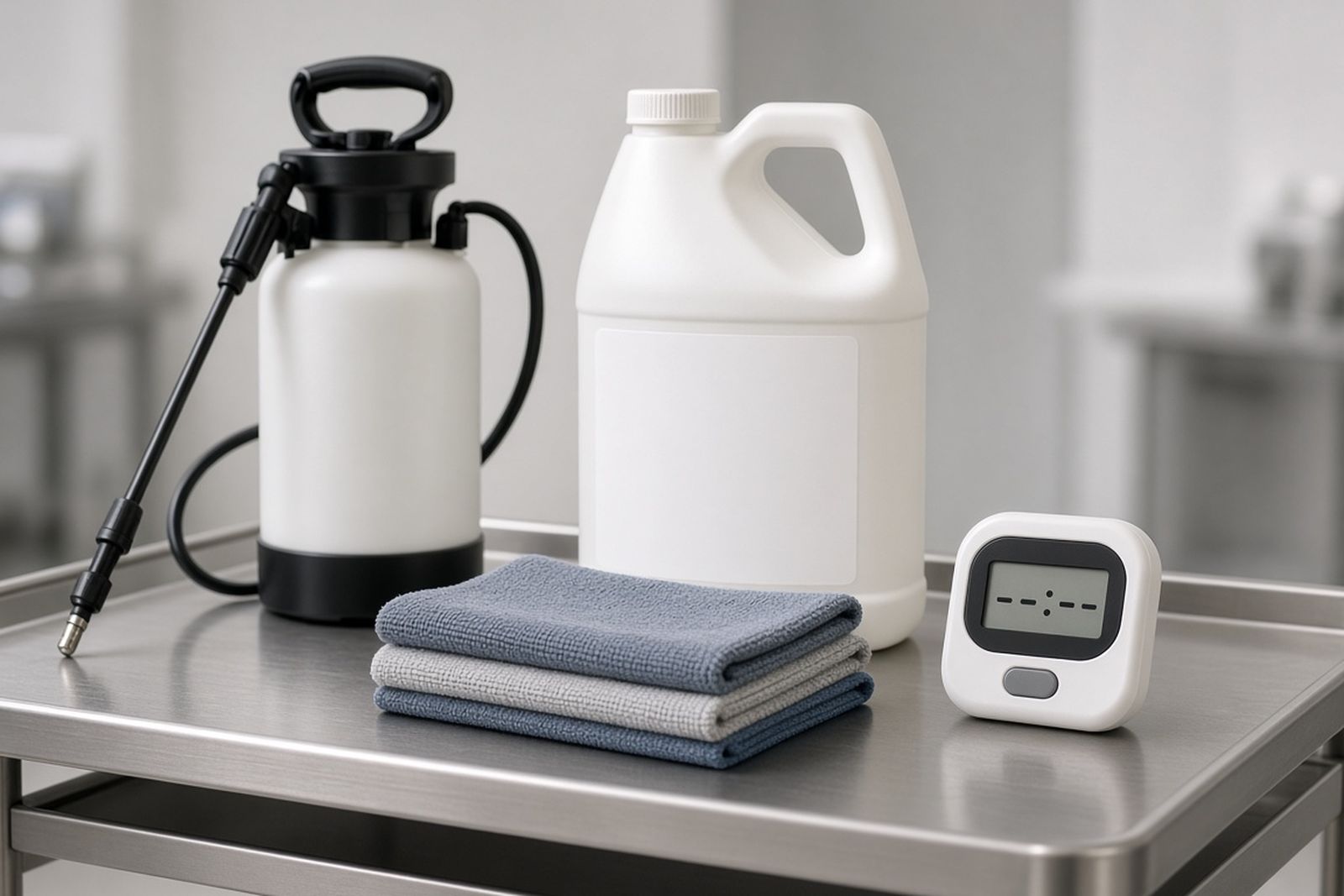
Dilution accuracy matters. Concentrate mixed stronger than the label directs does not kill more germs in any useful way, but it does leave more residue and release more fumes. Concentrate mixed weaker may fail to disinfect at all, which leads to repeat treatments. Measuring devices and premeasured packets help keep dilution on target.
Some product types raise specific concerns. Quaternary ammonium compounds can build up as residue on surfaces with repeated use. Chlorine products can react with other chemicals to form harmful gases and can damage finishes. Hydrogen peroxide and some organic acid products break down into simpler compounds, which some facilities prefer, though they still require careful handling. None of these is automatically right or wrong; the point is to choose deliberately.
- Match the label claim to the organism of concern.
- Mix exactly to the label's dilution, using a measuring device.
- Avoid using multiple disinfectants on the same surface at the same time.
- Prefer ready-to-use or closed dispensing systems where they reduce spills and waste.
- Store concentrates securely so they do not leak or get mixed by accident.
Is fogging or electrostatic spraying ever the greener option?
Sometimes. Electrostatic sprayers can coat complex objects, like a room full of chairs or gym equipment, using less product than hand wiping would require for the same coverage. For large open areas that were genuinely exposed, they can be efficient.
The trade-offs are real, though. Sprayed and fogged droplets can be inhaled, drift onto surfaces that did not need treatment, and settle on electronics or fabrics. Spraying does not remove soil, so cleaning is still required first for disinfection to work. And the product must be registered for that application method, with the area kept empty for the time stated on the label.
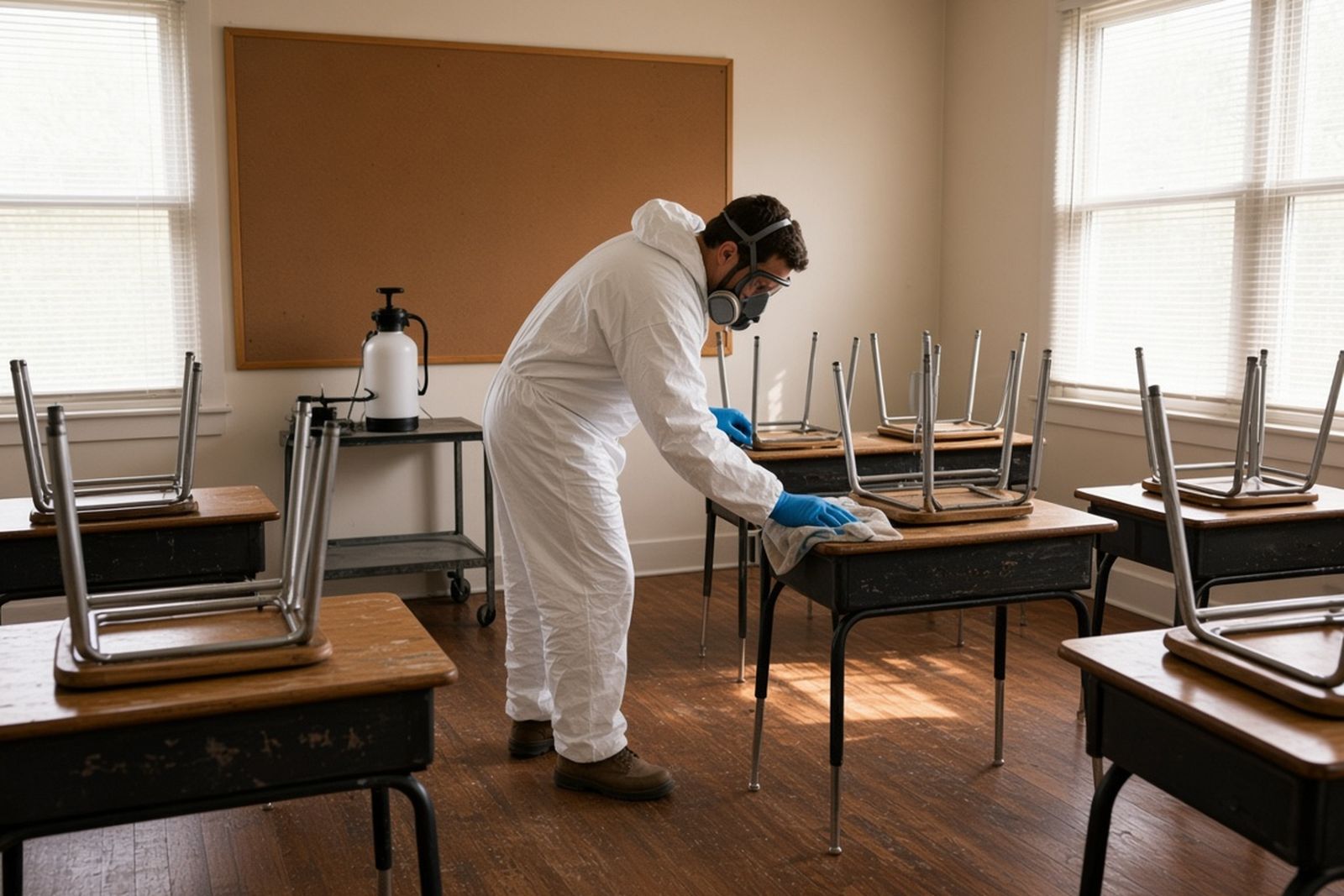
A responsible provider uses these tools where they fit, such as a classroom after a confirmed norovirus case, rather than as a default for every job. Ask why the method was chosen for your space and how the provider will protect air quality for the people who come back in.
Protecting indoor air during and after treatment
Indoor air is where many disinfection side effects show up. Fumes from strong products can irritate eyes, noses, and lungs, and some ingredients can trigger asthma symptoms. Children, older adults, and people with lung conditions are often most affected.
Simple practices help. Ventilate during and after treatment by opening windows or running exhaust fans, if weather and building systems allow. Apply products by wiping rather than spraying into the air when possible. Keep occupants out until surfaces are dry and any odor has faded, or for the time stated on the label.
Workers need the same attention. Protective equipment appropriate to the product and method, training on safe mixing, and reasonable work schedules that avoid long stretches in enclosed treated spaces all reduce exposure.
HVAC systems deserve a thought as well. Running the building's ventilation during and after treatment, and replacing filters on schedule, helps clear fumes and airborne particles. For respiratory illnesses in particular, better ventilation and filtration do more to reduce spread than extra rounds of surface spraying, and they add no chemical load to the space.
Used wipes, rinse water, and leftover chemicals
Used wipes, gloves, and disposable gowns from routine disinfection are generally handled as ordinary solid waste, unless they are contaminated with blood or other materials that local rules treat differently. They should be bagged securely and never flushed, since wipes are a common cause of sewer clogs.
Rinse water and leftover diluted solution should go down a drain connected to the sanitary sewer, not onto the ground or into a storm drain, where they can reach waterways untreated. Unused concentrate should be kept in its original labeled container for future use rather than poured out.
Empty containers and unusable concentrate may have specific disposal instructions on the label, and larger quantities may fall under hazardous waste rules. Check with your county's household hazardous waste program or your waste hauler before disposing of bulk chemicals.
Reusable microfiber cloths are another option for routine work. Laundered properly, they can replace many disposable wipes. Many facilities use color-coded cloths so the ones used in restrooms never end up on kitchen counters. For outbreak response involving hardy organisms, single-use wipes may still be the safer choice, and the provider can explain where each makes sense.
Scaling back a heavy fogging program
Some schools and offices that adopted nightly fogging during the pandemic never stopped. When occupants start reporting headaches or a sticky film on desks, a review of the program tends to turn up the same problems: surfaces fogged without being cleaned first, so soil and residue build up together; a quat-based product with no claim for norovirus, even though stomach bugs are the most frequent outbreak concern; and nobody measuring whether surfaces stay wet long enough.
The fix is usually a shift in routine rather than a new product. Daily cleaning with detergent, targeted wiping of high-touch points with a product that carries a claim for the organisms the building actually sees, and electrostatic application only when the health department confirms an outbreak in a specific area should cut chemical purchases and remove the source of the residue. Keep an outbreak playbook ready so the building can scale up quickly when it genuinely needs to.
Signs a provider takes environmental responsibility seriously
Listen for specifics. A provider who explains how they choose products, why they will or will not fog, and where their waste goes has thought it through. A provider who promises to kill everything with a single spray, or who touts a product as totally safe with no qualifications, is likely overselling.
Ask these questions before you sign:
- What organism is this plan designed for, and does the product's label list it?
- Will you clean surfaces before disinfecting them?
- Why is spraying or fogging needed here, instead of wiping?
- How long must people stay out, and how will you ventilate?
- How do you mix and store concentrates to avoid spills and errors?
- Where will used wipes, rinse water, and empty containers go?
The bottom line for homes and businesses
Environmental responsibility in disinfection is less about finding a perfect green product and more about discipline. Clean first, choose a product that matches the threat, use it exactly as labeled, target the surfaces that matter, protect the air, and dispose of what is left properly.
That approach tends to protect health better as well, because every step is aimed at the real risk rather than at looking busy. It is a standard worth asking for, whether you are hiring help for a sick household or managing a building full of people.
If you manage a building, consider writing these expectations into your cleaning contract. Specify that products must carry label claims for the organisms you care most about, that contact times will be logged during outbreaks, and that fogging requires your approval. Clear contract language turns good intentions into routine practice and gives you a way to check it.