Short answer
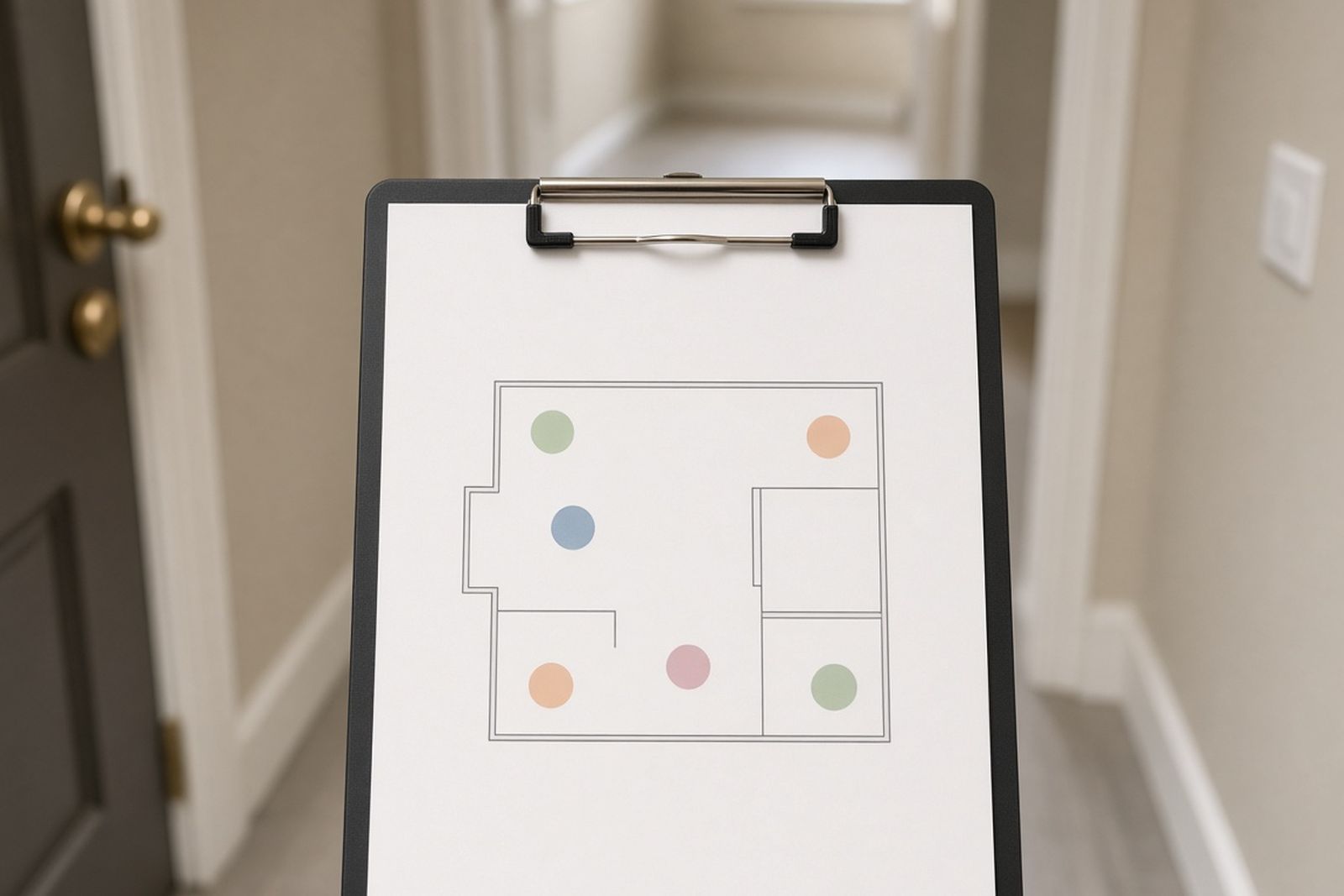
Watch for vendors who promise to eliminate an outbreak, cannot name an EPA-registered product with a claim for your organism, skip pre-cleaning, rely on fogging alone, ignore label contact times, avoid written scopes, or offer no documentation afterward. A good outbreak disinfection provider asks what organism is involved, maps high-touch surfaces in your building, and explains exactly how each product will be applied and verified.
Why outbreak vendors are hard to evaluate
When a stomach bug sweeps through a classroom or a cluster of staff call in sick with the same respiratory illness, administrators are under pressure to act visibly and fast. Parents want reassurance, employees want to know the building is safe, and leadership wants a vendor on site by evening.
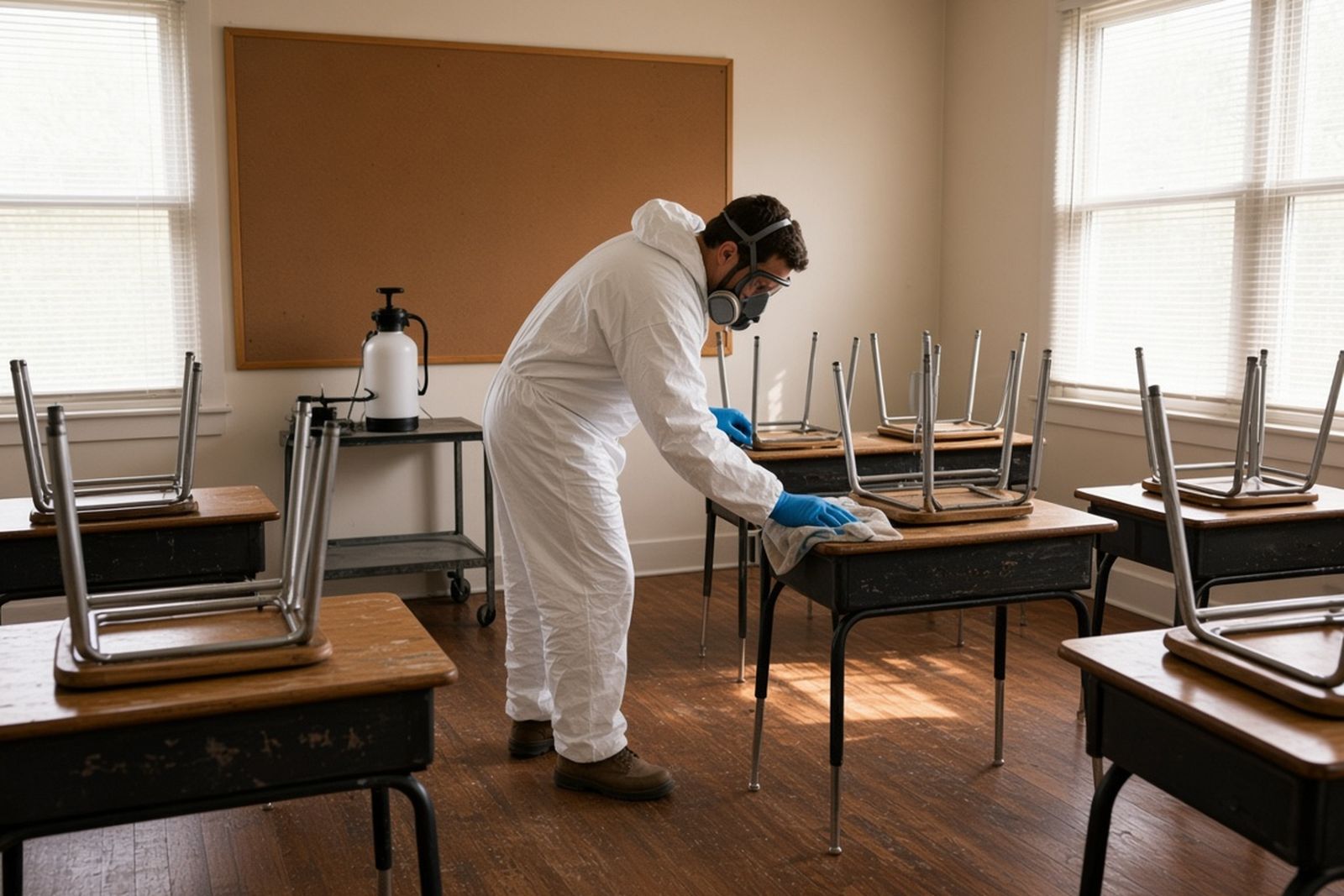
That pressure creates an opening for providers who sell the appearance of disinfection rather than the substance. Mist hanging in a hallway looks impressive. A crew in full suits looks serious. Neither tells you whether the right chemical touched the right surfaces for long enough.
The good news is that most of the warning signs show up in the first conversation. If you know what to listen for, you can separate a thoughtful provider from one that is simply busy.
Red flag 1: no question about the organism
Disinfectants are not interchangeable. A product that inactivates influenza quickly may have no claim at all against norovirus, and very few products are registered against C. difficile spores. A vendor who does not ask whether you are responding to a gastrointestinal outbreak, a respiratory cluster, a skin infection, or a general precaution cannot choose a product that fits.
The organism also shapes where the crew should focus. Norovirus spreads heavily through restrooms, shared food areas, and anywhere someone was sick. Respiratory illnesses shift attention to desks, shared keyboards, door hardware, and fitness equipment. A single generic plan for every building and every illness is a sign the vendor is not thinking about your situation.
If you do not know the organism yet, a good provider will say so and choose a broad-claim product while you wait for guidance from your local health department.
Red flag 2: a fogging-only or UV-only pitch
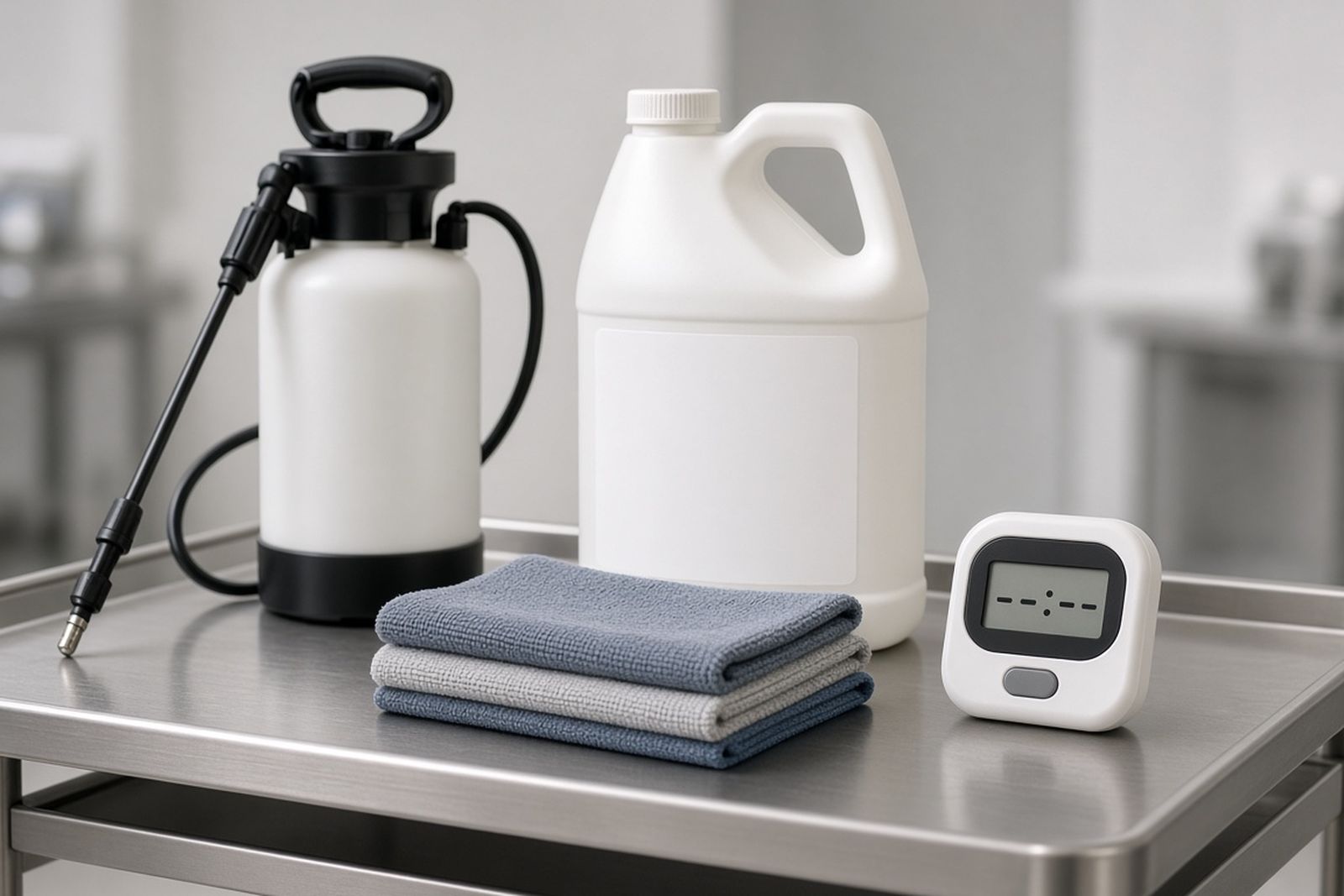
Foggers, electrostatic sprayers, and ultraviolet devices can all play a role in a disinfection program. The warning sign is when a vendor offers one of them as the entire service, with no mention of cleaning surfaces first or wiping high-touch points by hand.
The problem is not that the technology is useless. It is that devices work best as a supplement to physical cleaning, not a replacement for it.
Ask the vendor what happens before the device runs. If soil, residue, and fingerprints stay in place, many organisms stay protected underneath them. Ask also how the vendor confirms that sprayed or fogged product reached the undersides of desks, the backs of chairs, and the inside of door pulls.
Red flag 3: product claims no label supports
Every disinfectant legally sold in the United States must carry an EPA registration number and label directions. Legitimate vendors will give you the product name and registration number without hesitation and share the label or safety data sheet on request.
Be cautious when you hear any of the following:
- A proprietary formula with no registration number
- Claims that one treatment protects surfaces for weeks or months, unless the product carries that specific residual claim on its label
- Promises to make the building virus-free or guaranteed germ-free
- Kill percentages quoted without naming the organism or product
- Assurance that a product is completely nontoxic and needs no ventilation or reentry time
- Dilutions mixed on site by eye rather than measured to label directions
Red flag 4: silence on contact time, occupants, and materials
A disinfectant only achieves its labeled kill if the surface stays visibly wet for the full contact time. That period can be under a minute or several minutes, depending on the product and the organism. When crews spray and immediately wipe dry, the label claim no longer applies.
This is one of the most common failures in disinfection generally, not only among vendors. A 2020 American Cleaning Institute survey found 42% of Americans were not letting disinfectant sprays and wipes stay wet long enough to work, with 26% wiping immediately after spraying. A professional provider should do better than the general public and be able to explain how.
Ask how the crew will keep large surfaces wet, whether they reapply on vertical surfaces, and how supervisors verify dwell times on a large job. A vague answer here is a red flag regardless of how polished the rest of the pitch sounds.
Schools, clinics, gyms, and group homes are full of people who react differently to chemicals. Children, older residents, and staff with asthma may be sensitive to strong oxidizers, quaternary ammonium compounds, or chlorine. A provider should ask about occupants, discuss reentry timing based on the label, and plan ventilation.
Materials matter too. Some products can cloud plastics, damage electronics, or degrade vinyl upholstery over repeated use. A thoughtful vendor asks what surfaces are in the building and whether equipment manufacturers have compatibility guidance, especially in clinics and fitness centers.
When a vendor treats every building the same way and dismisses these questions as overcautious, the risk is not only a poor outcome but also complaints, damaged equipment, and staff who are reluctant to return.
Another warning sign is a crew that arrives without asking where people will be during the service. Treating an occupied wing, a daycare room during nap time, or a gym during open hours without a plan for reentry creates exposure risk for the very people you are trying to protect. Ask when the work will happen, which areas will be closed, and who will tell staff when it is safe to return.
Two bids for the same school
A composite example shows the contrast. At an elementary school, a dozen students go home with vomiting and diarrhea over two days. The principal calls two vendors on the same afternoon.
The first vendor offers to fog the entire building overnight for a flat rate and says the product kills virtually all germs. When the principal asks whether it works on norovirus, the salesperson says it kills everything. There is no mention of cleaning restrooms first, no product name, and no written plan.
The second vendor asks which classrooms were affected, whether anyone was sick on buses or in the cafeteria, and whether the local health department has confirmed an organism. They propose cleaning and disinfecting restrooms, affected classrooms, and cafeteria surfaces by hand with a product carrying a norovirus claim, followed by electrostatic application in lower-risk areas. They name the product, state its contact time, and offer a completion report listing each room and the surfaces treated.
The first bid is cheaper and easier to explain in a parent email. The second one is the only bid that ties the work to the actual illness and gives the principal something specific to report.
Paperwork gaps, and what a trustworthy vendor sounds like
After an outbreak, you may need to show a health inspector, a board, a licensing agency, or worried families what was done. A vendor who does not provide a written scope in advance or a completion report afterward leaves you with nothing to share.
At a minimum, expect the product name and registration number, contact time, areas treated, the application method used in each area, and the date and time of service. Some facilities also want crew names and a note on any areas that were inaccessible. If a vendor treats documentation as an optional extra, consider whether they are equally casual about the work itself.
Documentation also protects you if the outbreak continues. If new cases appear a week later, a detailed report lets you and your health department see whether a room was missed, whether the product matched the organism, or whether the source is more likely person-to-person spread. Without that record, every follow-up conversation starts from guesswork, and you may end up paying for the same service twice.
Local requirements for outbreak response differ, particularly in licensed care settings and schools. Ask your licensing agency or county health department what records you are expected to keep, and make sure the vendor's report covers them.
The best providers in this field sound more like infection preventionists than salespeople. They ask about the organism, the building, the occupants, and the timeline. They talk about cleaning before disinfecting, choosing a product with a label claim that matches the threat, and meeting contact time on every surface.
They are honest about limits. No vendor can promise that nobody else in your building will get sick, because illness also spreads person to person and from people who are not yet showing symptoms. A good vendor will encourage handwashing, exclusion policies, and communication from your health department alongside their work.
If a provider leaves you with a clear written plan, a product you can look up, and realistic expectations, you have probably found one worth keeping on call before the next outbreak.