Infectious Disease Disinfection: Education
Science and technology used in some infectious disease disinfection scopes, with explicit limits for ATP, disinfectants, enzymes, fogging, air equipment, and moisture tools.
The education category explains the ideas behind infectious disease disinfection. That way you can follow a vendor's thinking instead of taking it on faith. Posts cover the difference between cleaning, sanitizing, and disinfecting. They explain why viruses with an outer coat are often easier to kill than norovirus or bacterial spores. They show how an EPA registration number ties a product to its claims. They explain how long the disinfectant must stay wet on a busy counter, and what that really means. Other articles look at how illness spreads through shared surfaces in schools, gyms, and clinics. They explain why a hand-washing campaign often matters as much as any spray.
Get an email reply about infectious disease disinfection
Send a short message to the follow-up inbox. A coordinator can reply by email. This form does not send emergency help; call 911 first if anyone is in danger.
This background matters because outbreak choices are often made fast by people who have never faced one before. A clear grasp of the basics helps you read labels, judge proposals, and explain choices to staff and families. None of it replaces advice from a doctor or your health department. But it helps you feel steadier in those talks.
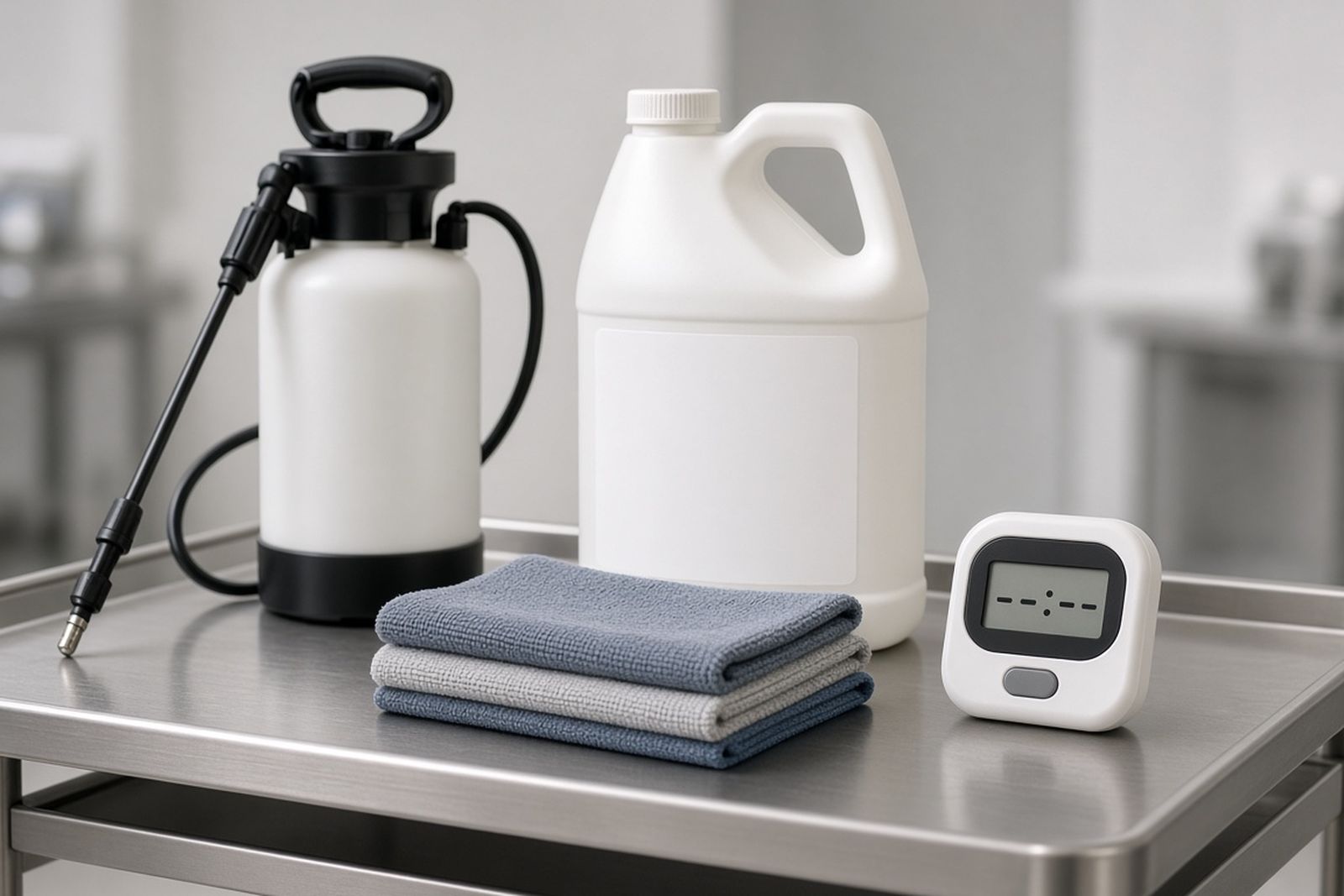
The Science Behind Infectious Disease Disinfection
Why some germs die in a minute while spores shrug off common cleaners, and how kill claims, dwell time, and soil removal decide if disinfection really works.
Infectious disease disinfection works by chemically damaging a microbe's outer structures or internal machinery. Organisms differ widely in resistance: enveloped viruses such as flu are easier to inactivate, non-enveloped viruses such as norovirus are harder, and bacterial spores such as C. difficile are hardest. Success depends on cleaning first, choosing a registered product with the right label claim, and keeping surfaces wet for the full contact time.
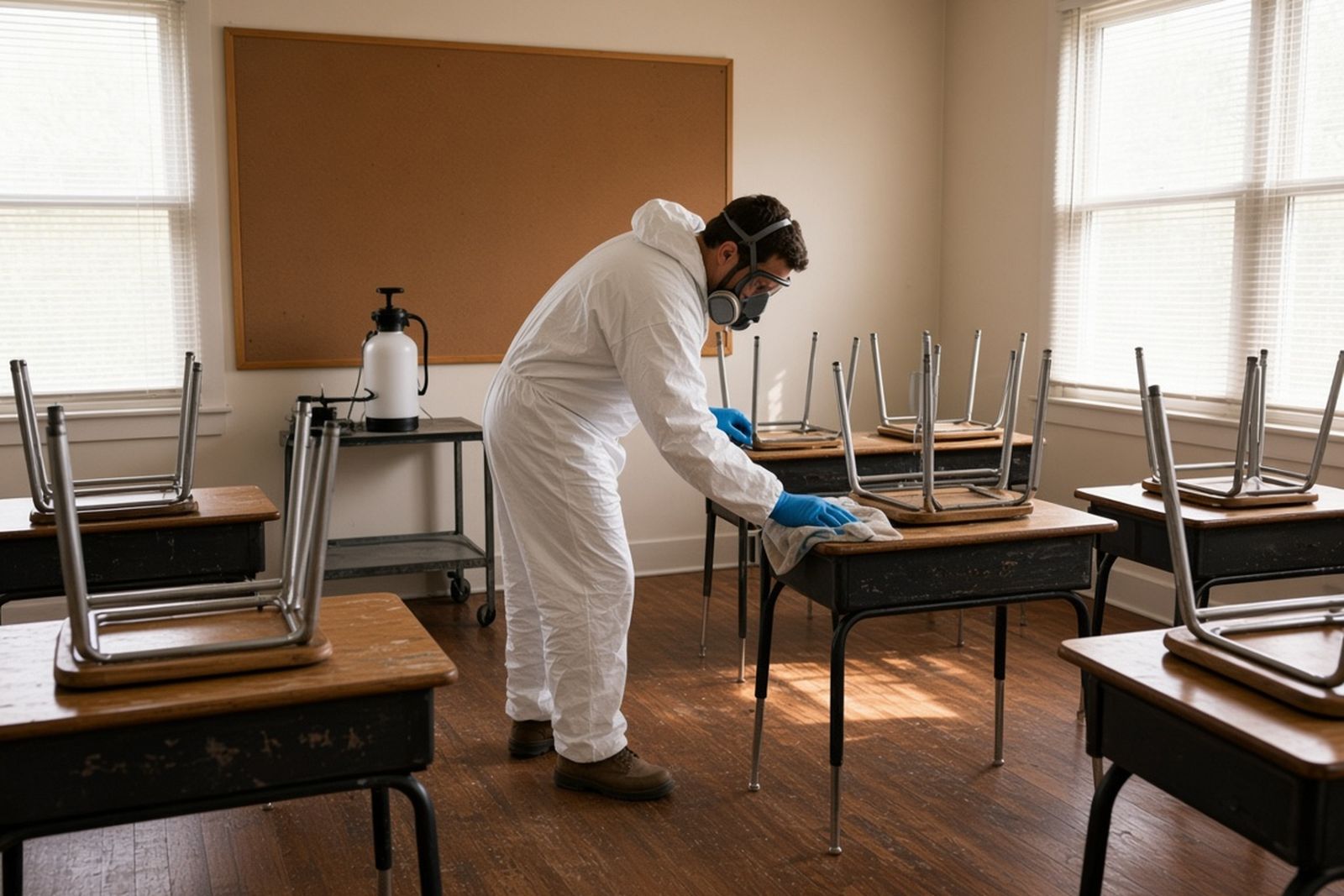
How to Evaluate Equipment Proposed for Infectious Disease Disinfection
Electrostatic sprayers, UV-C robots, and peroxide foggers are pitched for outbreak response. Here is how to judge whether proposed equipment fits your space.
To evaluate equipment proposed for infectious disease disinfection, check that each disinfectant is EPA-registered for the organism and the application method, that the device supports rather than replaces cleaning, that the labeled contact time can be met, and that re-entry and respiratory safety are addressed. Ask for independent field evidence, material compatibility, and a clear plan to verify results.
The Difference Between Cleaning and Disinfection in Infectious Disease Disinfection
Why outbreak response in schools, clinics, gyms, and care homes depends on cleaning before disinfecting, and how contact time and biofilms decide the outcome.
In outbreak response, cleaning removes soil, body fluids, and residue that protect germs, while disinfection uses an EPA-registered product with a claim for the target organism to inactivate what remains. Disinfection only works as labeled on a cleaned surface kept wet for the full contact time. Facilities that skip cleaning, rely on spraying alone, or wipe too soon get the look of disinfection without the result.
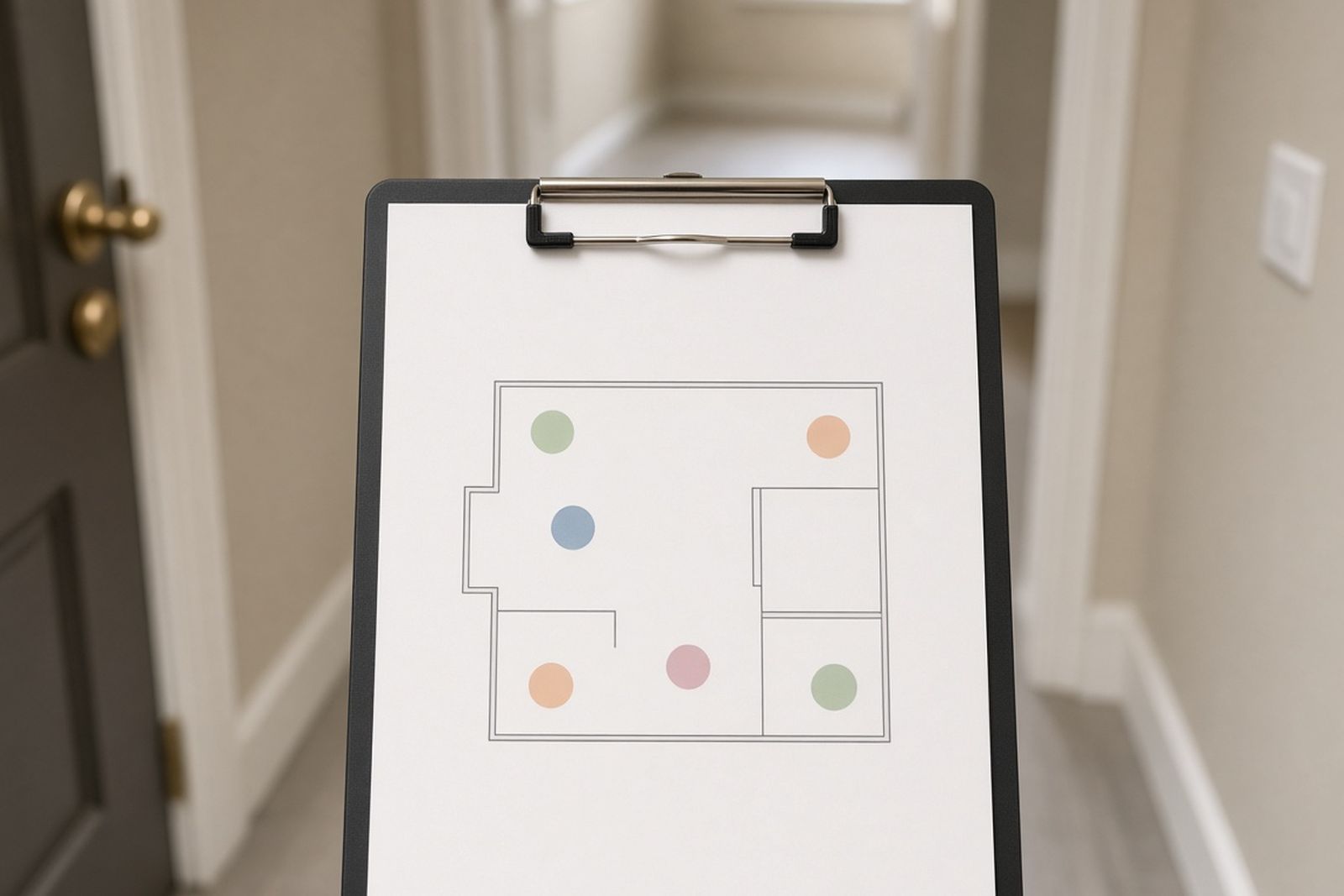
When ATP Testing Helps—and When It Does Not—in Infectious Disease Disinfection
ATP meters measure leftover organic soil, not live viruses or spores. Here is how they can support an outbreak disinfection plan and where they fall short.
ATP testing is a fast way to check whether surfaces were actually cleaned before disinfection, because it detects organic soil that can shield germs. It cannot tell you whether influenza, norovirus, SARS-CoV-2, or C. difficile spores are still present or alive. Use ATP to audit cleaning thoroughness and coverage, and rely on correct product claims and contact times for the actual disinfection step.
How to Evaluate Technology Used in Infectious Disease Disinfection
Electrostatic sprayers, UV-C robots, peroxide vapor, and air purifiers promise faster disinfection. Here is how to judge them against real outbreak needs.
To evaluate disinfection technology, ask which organism it targets, what independent evidence supports it under realistic conditions, whether surfaces must be cleaned first, what the re-entry time is, and what it cannot reach. Electrostatic sprayers, UV-C, and vapor systems can supplement manual cleaning in the right setting, but none replaces cleaning, correct product claims, and contact time. Air filtration addresses a different route of spread.
When Enzymes or Microbial Products Fit Infectious Disease Disinfection
Enzymatic detergents and probiotic cleaners are marketed for germ control. Learn where they help infectious disease disinfection and why they never replace it.
Enzymatic detergents can loosen proteins, fats, and biofilm so a registered disinfectant can reach the germs underneath, which makes them useful in the cleaning step. Probiotic or microbial cleaners are a newer idea with limited evidence and no disinfectant registration. For infectious illness, neither replaces a disinfectant whose label lists the organism of concern, applied to a clean surface for its full contact time.
Sourced figures on education
- 42%
An American Cleaning Institute survey found 42% of Americans were not letting disinfectant sprays and wipes stay wet long enough to work, with 26% wiping immediately after spraying.
Read with care: Trade-association survey conducted early in the pandemic; self-reported behavior.
Source: American Cleaning Institute (2020)United States, 1,005 adults surveyed March 18-19, 2020
- 9.4-51 million
CDC estimates seasonal flu caused 9.4 million to 51 million illnesses, 120,000 to 710,000 hospitalizations and 6,300 to 52,000 deaths annually in the U.S. between 2010 and 2025.
Read with care: Ranges reflect large season-to-season variation and are modeled estimates.
Source: CDC (2025)United States, annual range across 2010-2025 seasons
- 323,700
CDC estimated 323,700 MRSA cases in hospitalized patients and 10,600 deaths in 2017, with $1.7 billion in attributable healthcare costs.
Read with care: Excludes many uncultured skin infections; hospitalized cases only.
Source: CDC (2019)United States, hospitalized patients, 2017 data
These figures are public research and agency data, not this network's own job records. Keep each number with its population, year and limits; none of them predicts cost, timing or outcome at a specific property.
What research has found
Findings from published studies of people and properties in situations like this one. They describe what researchers observed in a specific group; they are not predictions for your case.
Larger wiped areas created concerns about continued cross-contamination.
Tested wipes moved C. difficile spores onto previously clean areas.
Education: common questions
What is the difference between sanitizing and disinfecting?
Sanitizing lowers the number of certain bacteria on a surface to a level a regulator finds acceptable. It is common on surfaces that touch food. Disinfecting is a stronger claim aimed at certain germs named on the label, including viruses. It usually needs the surface to stay wet longer. A product may carry both claims, with different directions for each. So read which set of directions fits your goal.
Why does the organism matter so much when choosing a product?
Germs differ in how well they stand up to chemicals. Viruses with a fatty outer coat tend to break down under many common disinfectants. Norovirus lacks that coat and holds up better. Bacterial spores, such as those from C. difficile, are tougher still. A label lists the germs the product was tested against. The contact time for each can differ. So the illness involved narrows down which products fit.
Is a product labeled hospital grade enough for any outbreak?
Not on its own. The phrase suggests the product passed tests against certain bacteria common in healthcare settings. But it does not promise a claim against norovirus, spores, or a certain virus. Treat it as a starting point. Look for the germ you are worried about among the claims on the label. Also look for the contact time needed to meet that claim.
Why do some disinfectants list different contact times for different organisms?
Germs vary in how fast a given chemical kills them. Viruses with an outer coat often need less time. Tougher viruses and bacterial spores need longer. The maker tests each claim on its own, so the label lists a time for each germ. When you are dealing with a certain illness, use the contact time listed for that germ. Do not use the shortest time on the label.
What is a biofilm, and why does it matter for everyday surfaces?
A biofilm is a group of germs wrapped in a protective layer they make themselves. Biofilms form in drains, on damp equipment, and even on dry surfaces that get touched often. Germs inside a biofilm hold up to disinfectants better than exposed ones. Scrubbing with detergent breaks biofilms apart so the disinfectant can reach what is left. That is why cleaning first is never optional.
How can surfaces spread illness if most germs die on their own?
Some germs live on surfaces long enough to reach the next person who touches them. A few cause illness from very small amounts. High-touch surfaces in shared spaces are handled by many people in a short time. That raises the chance that germs pass from one person to the next. Disinfecting surfaces lowers that chance. Hand washing and keeping sick people home deal with other ways germs spread.
Where can I read a product's full label if the bottle is hard to read?
Search the product's EPA registration number in the agency's online label database. It gives you the approved label as a document. Makers also post labels and safety data sheets on their websites. Print the label and keep it with your outbreak file. That helps staff and inspectors check the directions without relying on a worn bottle.
Related community polls
Every count is a real visitor vote; nothing is seeded or padded. One vote per poll per device, and you can change your answer.
When your facility had an illness cluster, how did you handle cleaning?
How did you decide whether to close all or part of the facility?
More on infectious disease disinfection
Infectious Disease Disinfection services
Learn how expert outbreak disinfection works in schools, offices, clinics, gyms, and care homes. See each step, from mapping high-touch spots to checking contact times and records.
Costs explained
What drives the price, published cost ranges, and how to read a written quote line by line.
Insurance and payment
Which policies may respond, how to document a claim, and what to do if coverage is denied.
Planning tools
Hands-on tools help you see cost drivers, check vendors, and organize a claim file. They also help you plan the first day, sort waste, and judge if staff can do the work.
Community polls
See how other facility managers handled closing, vendors, and telling people during outbreaks. Then take the questions that come up to your own team.
Knowledge quiz
Test what you know about product labels, contact times, keeping germs contained, and records. Do it before you approve a disinfection plan or brief your leaders.
City guides
Find disinfection providers who serve your area for facility outbreaks. Learn what to confirm about products, training, and records before you hire.