Short answer
ATP testing is a fast way to check whether surfaces were actually cleaned before disinfection, because it detects organic soil that can shield germs. It cannot tell you whether influenza, norovirus, SARS-CoV-2, or C. difficile spores are still present or alive. Use ATP to audit cleaning thoroughness and coverage, and rely on correct product claims and contact times for the actual disinfection step.
What an ATP swab measures
Every living cell uses a molecule called adenosine triphosphate to power its activity. Skin cells, bacteria, mucus, and food scraps all carry it. An ATP test looks for that molecule on a surface as a stand-in for how much organic material is left behind.
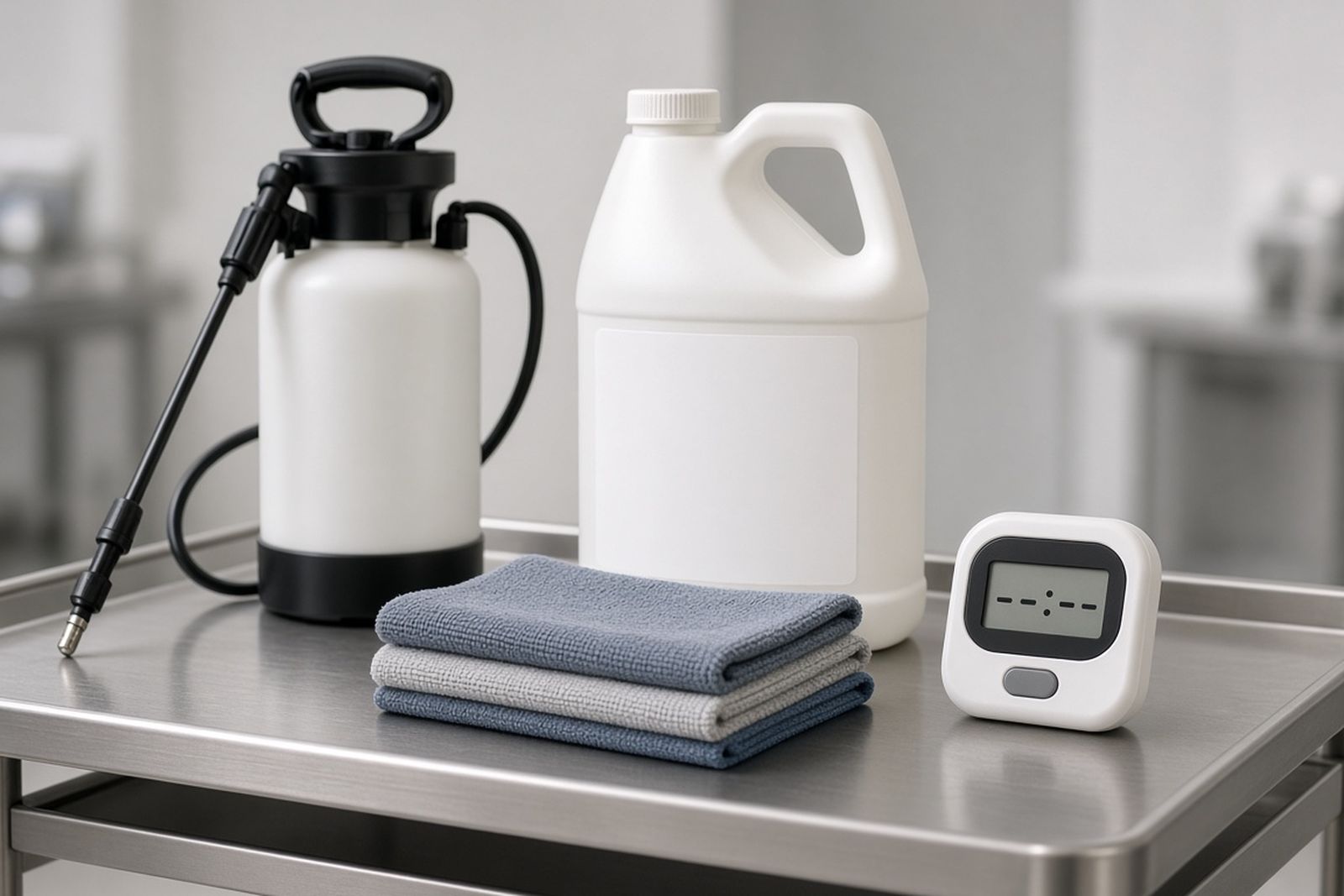
A technician swabs a set area, activates the swab so its reagent reacts with any ATP collected, and inserts it into a small handheld reader. The reader measures the faint light produced and reports a number. Bigger numbers mean more organic soil; smaller numbers mean less.
The result appears within seconds. That speed is the main reason hospitals, schools, and food facilities use ATP checks to audit cleaning. It gives a supervisor something objective to look at instead of relying on whether a surface looks shiny.
Think of it as a flashlight for grime rather than a germ detector. It shows you where cleaning fell short, which is useful information, but it cannot name what might be living in that grime.
Can an ATP reader detect viruses like flu, COVID, or norovirus?
No, and this is where many people get confused. Viruses do not generate their own ATP. They borrow the machinery of the cells they infect. A surface could carry infectious virus particles and still produce a low ATP reading.
Bacterial spores are a similar problem. C. difficile spores are dormant and carry very little ATP, so a surface contaminated with them can read clean. Yet those spores are notoriously long-lived on dry surfaces.
Even with viruses that do not last long, the dose needed for illness can be tiny. CDC's fact sheet on norovirus in healthcare facilities notes that only a very small number of norovirus particles is thought to be enough to cause infection. No ATP reader is built to see that level of contamination, and it was never meant to.
That is why a provider who offers ATP results as proof that a room is free of COVID or flu is overstating what the test can do. The claim may be made in good faith, but it misreads the technology.
What ATP is good for, and when it misleads
ATP testing answers a narrower but still important question: was the surface cleaned well enough for the disinfectant to work? Organic soil physically blocks disinfectant from reaching microbes and, in the case of chlorine products, chemically uses up some of the active ingredient. A high ATP reading after cleaning is a warning that the disinfection step may not perform as its label promises.
It is also a good way to check coverage. During a norovirus or influenza response, crews are moving quickly across many rooms. Random ATP checks on high-touch points can reveal whether a crew skipped the backs of chairs, the underside of bed rails, or a set of light switches.
Finally, it supports training. When staff see a before-and-after number for a surface they just wiped, they understand the difference between a quick pass and a thorough one. That feedback can change habits faster than written instructions.
ATP checks also help between outbreaks. A facility that swabs a handful of high-touch surfaces each month builds a picture of what normal looks like for its own meter and its own building. When an illness does arrive, that history makes it easier to spot a cleaning shortfall quickly.
Several factors can push readings up or down without reflecting how well the surface was cleaned. A provider who uses ATP should know these and account for them.
- Some disinfectant chemistries can suppress the light reaction, so swabbing right after disinfection may undercount soil.
- Surfaces still wet from cleaning dilute the sample; testing works best once the surface is dry.
- Rough or porous materials, such as fabric upholstery or unsealed wood, do not release residue evenly onto a swab.
- Readings from one manufacturer's meter cannot be compared with another's, because scales differ.
- Inconsistent swab pressure or area size between tests makes trends unreliable.
- Residue from lotions, food, or cleaning products can raise readings without indicating risk from the illness of concern.
Where to swab, with an office example
Focus on hard surfaces that sick people or their caregivers touched often. Those are the surfaces most likely to transfer organisms to the next person, and they give the most readable ATP results.
In a home, think about the bathroom faucet, toilet flush handle, bedside table, remote controls, refrigerator handle, and door levers along the path the ill person used. In an office, check shared phones, conference table edges, break room appliance handles, and restroom fixtures. In a care facility, add bed rails, call buttons, overbed tables, and shared equipment such as blood pressure cuffs.
Choose a few reference spots as well. A surface in a room the sick person never entered gives you a local baseline, which is useful because normal readings vary between buildings and surface types.
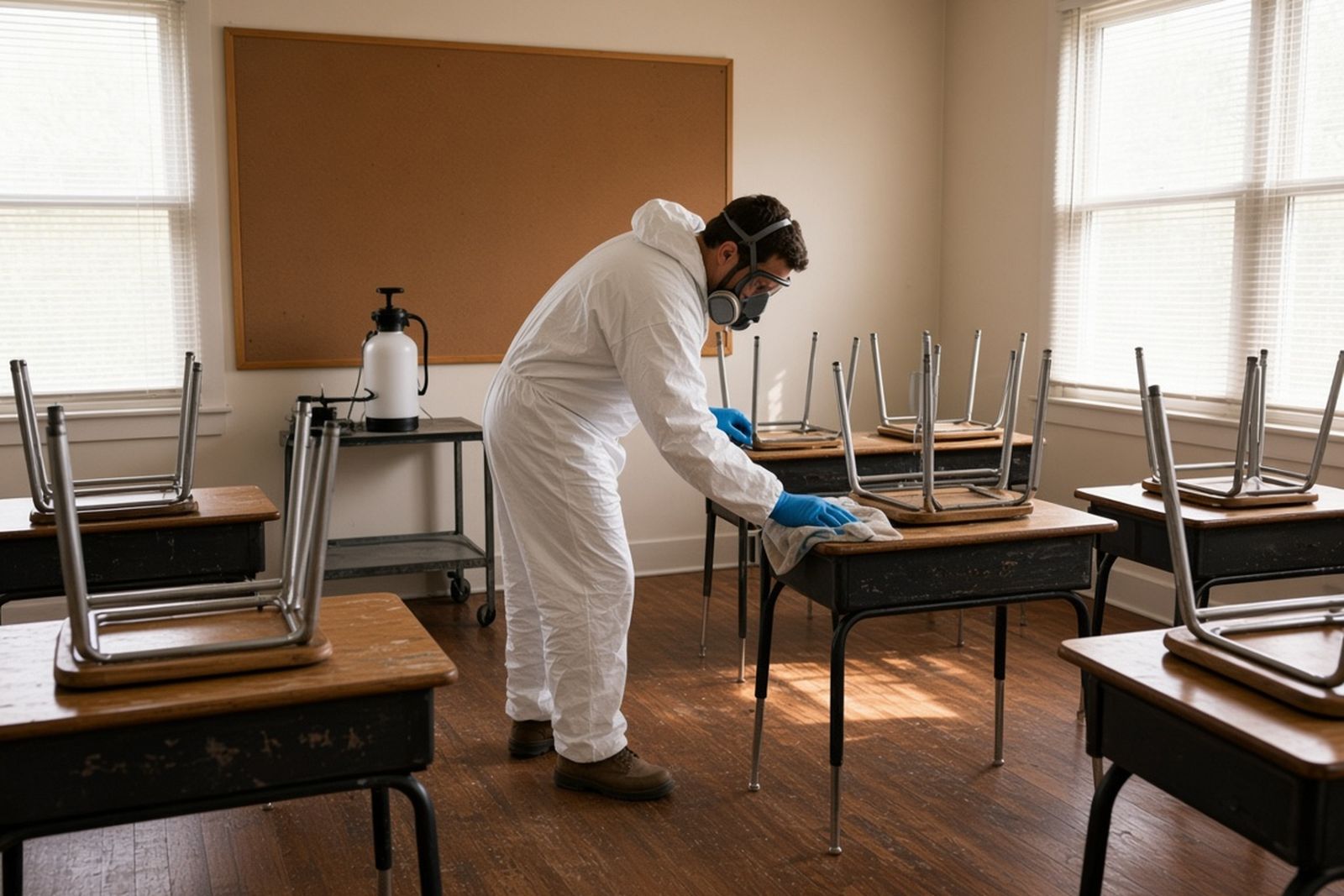
In one illustrative case, several employees at an accounting office of about 40 people come down with influenza within a week. Management arranges an after-hours disinfection of workstations, meeting rooms, and restrooms. A week later, two more people fall ill.
The office manager asks a second provider to audit the space. That provider takes ATP swabs on a sample of surfaces the first crew said they treated. Desks and restroom fixtures read low. The break room coffee machine buttons, the refrigerator handle, and the microwave keypad read high, suggesting they were never cleaned before disinfection, or were skipped entirely.
The provider cleans and disinfects the break room with a product that carries an influenza claim, observing the labeled wet time. The manager adds the break room to the janitorial checklist and encourages sick employees to stay home. The ATP audit did not show where the flu virus was, but it revealed a gap in coverage that everyone had assumed was handled.
Recording ATP data, and verifying the disinfection step
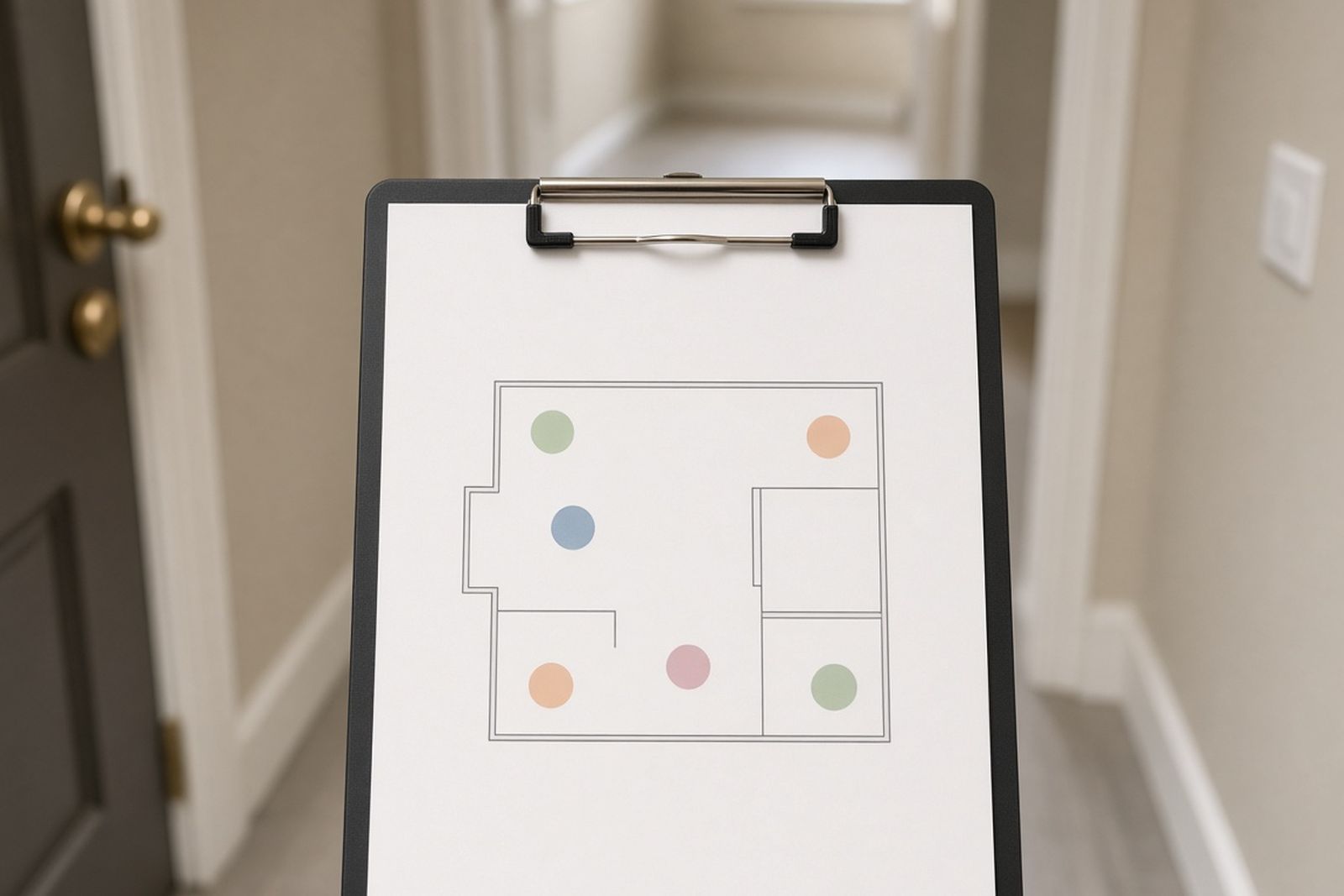
A clear record lists each swab location, the surface material, the date and time, whether it was taken before cleaning, after cleaning, or after disinfection, and the reading. It should also name the meter brand and model so future tests use the same scale.
The provider should state the pass or fail level they applied and explain where it came from, such as the meter maker's guidance or an internal benchmark. There is no single number that applies to every setting, so the explanation is what makes the result meaningful.
Failed spots should show a reclean and a retest. A report where everything passed on the first try, with no retests at all, may be accurate, but it is fair to ask how many locations were sampled and how they were chosen.
Because ATP checks only cleaning, the disinfection step needs its own evidence. That evidence is mostly about process: the right product, used the right way, on the right surfaces.
Contact time is the part most often skipped. Crews under pressure to move fast wipe surfaces dry too soon, so a log that records dwell time is more useful than any after-the-fact swab.
Some providers also use test cards or fluorescent marking gel, which a supervisor dabs on surfaces before cleaning and checks with a small UV light afterward. If the mark is still there, the surface was not wiped. Like ATP, this checks thoroughness rather than kill, but it is a cheap way to confirm that every assigned surface was touched.
- The product name and EPA registration number
- The organism claim on the label that matches the illness of concern
- The labeled contact time and how the crew kept surfaces wet for it
- Which rooms and surfaces were treated, and which were excluded
- How soft items were laundered, cleaned, or set aside
- Re-entry timing if a spray or fog application was used
Is it worth asking for ATP testing on your job?
For a single sick household with a short illness, ATP testing may be more than you need. Careful cleaning, a product with the right claim, and attention to contact time will do most of the work.
For care settings, schools, offices with repeat cases, or any job where you want proof that a crew was thorough, ATP audits can be well worth it. They are especially helpful when you are comparing providers or checking a janitorial contract's performance over time.
Budget matters too. Swabs are consumables, and a thorough audit of a large building can use many of them. Ask the provider how many locations they suggest testing, how they chose that number, and whether they will leave you the readings so you can repeat a smaller set of checks later with your own staff or janitorial vendor.
If your facility is regulated, ask your licensing agency or local health department what verification they expect.