Malibu, CA

Infectious Disease Disinfection Planning in Malibu, CA

What to do, who to contact, and what to ask in Malibu.

Guest or family illness at your Malibu home? See how to clean casitas, mudrooms and outdoor kitchens, allow for damp air, and what to ask a company.

Get an email reply about infectious disease disinfection

Send a short message to the follow-up inbox. A coordinator can reply by email. This form does not send emergency help; call 911 first if anyone is in danger.

Tell us what you need help with. Share a short description; please leave out medical details, access codes, and other sensitive information.

A request does not confirm a booking. For immediate danger, contact local emergency services.

Or email info@infectiousdiseasecleanup.online

The short answer for Malibu, CA

If a guest or family member was sick at your Malibu home, casita or event space, plan for cleaning first and disinfecting second. Damp ocean air and closed-up rooms will stretch the timing. See what to ask a company, how to handle beach gear, and why nobody can sell you sterile indoor air.

What to do, step by step

  1. 1

    Rank the surfaces from the beach path inward

    Ask yourself which surfaces hands hit most during the sick days. Mudroom hardware, outdoor kitchen controls, restroom fixtures and remotes usually lead, with dining surfaces close behind. Heavy mess is removed first. Sandy, sunscreen-coated hardware is washed, and then an EPA-registered product labeled for your concern goes on and stays wet for the full contact time. Shared beach gear and towels that belong in the washer come off the hard-surface list.

  2. 2

    Hold the company to the label

    If a guest tests positive for COVID-19, EPA's List N is a fair place to start choosing a product, as long as the label is followed. For a stomach bug after a party, ask to see that the label lists the germ involved. Be firm about promises. No one can deliver sterile guest casitas, sterile coastal air or sterile upholstery, and a company that offers them is selling a scent.

  3. 3

    Tell guests and staff what is closed

    Let your guests and household staff know plainly which casita rooms and outdoor areas are closed and when they reopen. Do not say who was sick. Medical questions go to doctors and to Los Angeles County Department of Public Health resources. Use the same reopening time for the outdoor kitchen as for the indoor bathrooms. Otherwise someone will cook outside and then walk into a bathroom that is still wet.

  4. 4

    Collect real records and skip the certificate

    Ask for the product labels, the rooms treated and the start and finish times for each bath and the mudroom. A swab on a casita shower valve can show leftover grime. It cannot tell you which germs, if any, remain. Keep a note of what happened to towels, wetsuits and cushions. If you are handed a certificate that calls your home sterile, give it back. It says nothing your insurer or your next guest can rely on.

What cleanup is like in Malibu

Malibu estates often link the main house to guest casitas, an outdoor kitchen and a beach-gear mudroom. Sandy hands hit that door hardware long before anyone reaches a bedroom. So when you think about where illness may have traveled, start at the mudroom latch and the casita entry, not the pillow. Tell the company about every building your guests used. A larger property means more hours and more rooms to keep closed, and you will want that settled before you agree on a price or a date.

Wildfire smoke and closed-up houses can shrink the empty time you would like to give a room before guests arrive. That pressure is real, but the basics do not bend. The product should match the germ, it must stay wet for the full label time, and you should get a return time in writing. A scent machine does not count. Neither does fogging a room with people in it. If smoke keeps your windows shut, ask the company how the rooms will be aired and how long that adds.

Pacific Coast Highway also brings lodging and event spaces, where there is pressure to turn rooms fast. If you run one, hold the line on the wet time. A surf or trail injury that leaves blood on your mudroom floor or in a guest bath is a different job. The workers who handle it need an OSHA bloodborne pathogen plan, so ask about it. For colds, flu or a stomach bug, the plan is simpler: wash, then disinfect, and be honest about what each label lists.

What to expect for your type of home

  • Beach houses with a gear mudroom: Mudroom handles, outdoor kitchen controls, casita entries and shared restroom fixtures get the first sandy touch. Ask that all four be written onto the list.
  • Bluff and beachfront homes: Marine layer mornings slow drying and hold odor. Leave extra time before your family moves back into treated rooms, and do not judge by smell.
  • Homes full of beach gear: Make a simple list of beach towels, patio cushions and canvas bags. Mark each one wash, set aside or leave alone, and give the crew a copy.
  • Outdoor kitchens and dining areas: Food surfaces have label rules about rinsing. Ask that the hard surfaces there be done in an order that meets those rules before meals resume.
  • Guest casitas: Check the arrival dates on your calendar before booking the work. Check-in pressure is the most common reason a wet time gets cut short.
  • Homes with a first-aid room: A room used for surf or hiking injuries deserves its own line on the quote. It should not be folded in with the casita and kitchen work.

Papers and records to keep

  • A site map of the main house, guest casita, outdoor kitchen and mudroom areas treated
  • The high-touch list, with notes on guest arrivals or busy times in gathering spaces
  • Labels for products used on casita tile, outdoor kitchen steel and mudroom benches
  • Notes showing each area was cleared of heavy mess and washed
  • Start and finish times for each casita bath and the beach mudroom
  • What happened to towels, wetsuits and cushions after the illness
  • When guests may return to each casita, set around arrival dates
  • Messages sent to guests and staff, with no one's diagnosis in them

Local offices and official help

Common questions in Malibu

Does the marine layer slow down cleanup in my closed-up house?

Yes, it can. In a closed-up house on the bluff, plan a longer empty period. Surfaces still need to stay wet for the full labeled time, and the house should be aired as the safety data sheet directs before guests come back from the beach. Damp sea air never replaces scrubbing sand, sunscreen film and grime out of casita showers. Towels, casita bedding and outdoor cushions hold salty moisture, so note which were washed, bagged or pulled from use.

Can we rely on a scented fogger after a guest was sick?

No. An ocean-breeze scent tells you nothing about germs or about whether a product stayed wet long enough. If a guest was sick in a casita bath or the outdoor dining area, the mess is removed and the area washed with detergent. An EPA-registered product labeled for your germ follows. A fogger is acceptable only if the label names that method. Everyone, pets included, stays out of the casita as long as the label requires. Soft items still need washing.

Do the beach mudroom and outdoor kitchen really belong on the cleaning list?

Yes. Guests come off the sand and go straight to the mudroom latch, the outdoor sink and the grill handles, and only then walk inside. Those spots matter even though they are far from the bedrooms. Salt crust and sunscreen residue are scrubbed off first. Disinfecting follows only with a product whose label allows weathered steel, stone or plastic. Ask for a note on which towels and patio cushions went to the wash and which were stored.

Several guests got a stomach bug after our beach party. Will a coronavirus product handle it?

Probably not by itself. List N only covers products for the COVID-19 virus under label directions. A stomach bug that spreads through a party or family weekend may call for a product whose label lists norovirus, and many List N products do not. Read the label before anyone wipes the casita counters. Sand, food and grime left on outdoor kitchen counters can block the product. Keep hand-cleaning supplies out, and ask sick guests to stay home next weekend.

What changes if a surf or trail injury left blood in the house?

Blood from a wipeout or a trail fall makes the cleanup a bloodborne pathogen job under OSHA rules. That is very different from wiping remotes after a guest's cold. Tell the company up front whether blood or a similar fluid is involved. If it is, expect gloves and other protective gear, sealed waste bags and trained workers in the casita or mudroom plan. With no blood involved, you are back to detergent, a product whose label fits, and time for it to work.

A power outage or road closure is delaying help. What can we do after an illness?

Focus on basics you can do yourself. If possible, keep the sick person in one room with one bathroom. Clean grime with soap and water. Use a household disinfectant on handles, taps and the toilet flush, following its label. Bag soiled items and keep them outside in a lidded bin until trash pickup resumes. Save any bigger cleanup until roads reopen and you can air the house out properly. For medical concerns, call a doctor or 911, not a cleaning service.

Should I disinfect the outdoor showers after guests with a stomach bug used them?

Yes, if the sick guests used them. Outdoor shower handles, valves, benches and door latches are hard surfaces. They can be cleaned and then disinfected with a product labeled for outdoor use on those materials. Rinse off sand and salt first. The product must stay wet for the full label time, which takes more care in wind or sun. Do not let rinse water with disinfectant run onto plants or toward the beach. Follow the label's disposal directions.
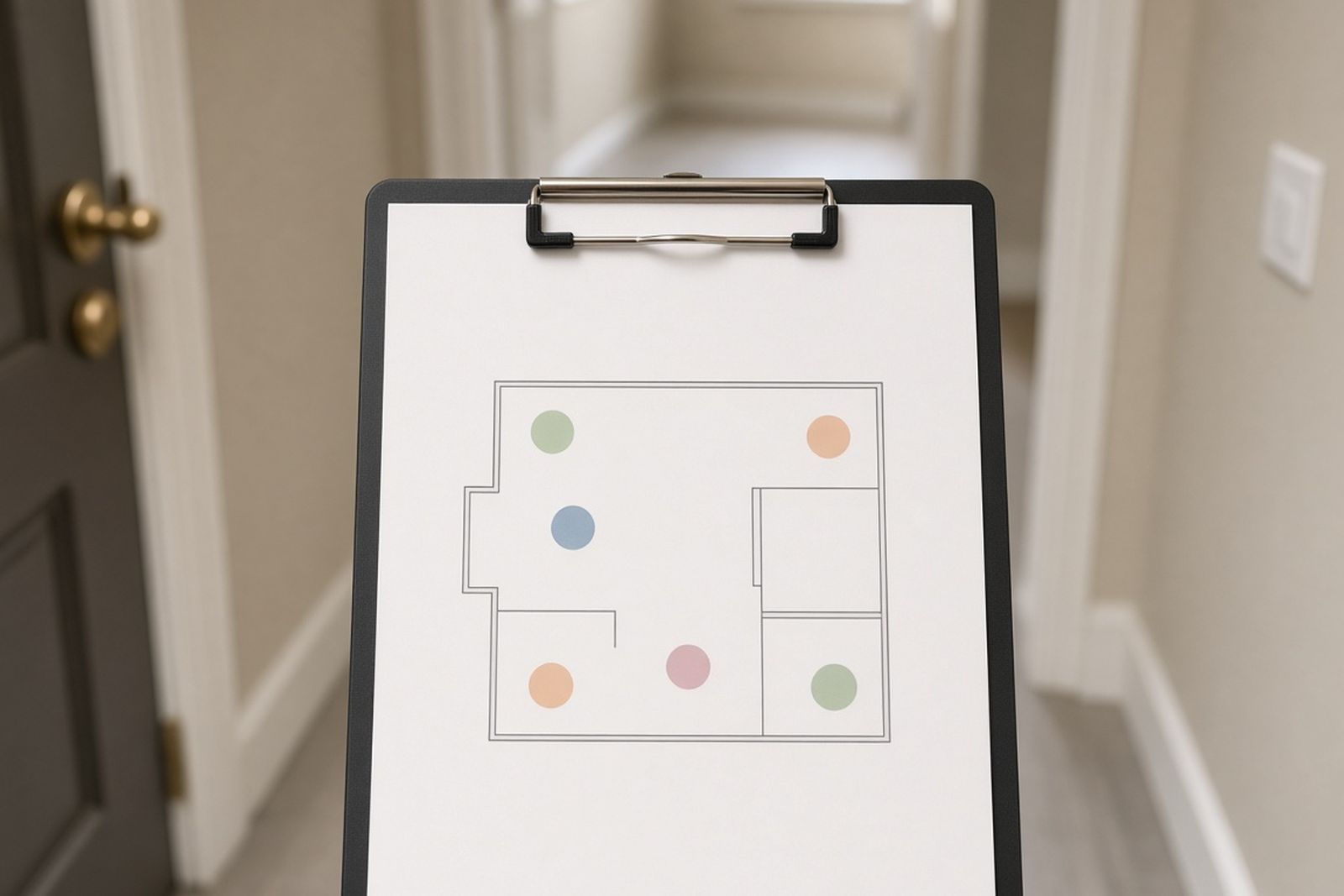
Clipboard showing a room plan with color-coded dots marking high-touch surfaces
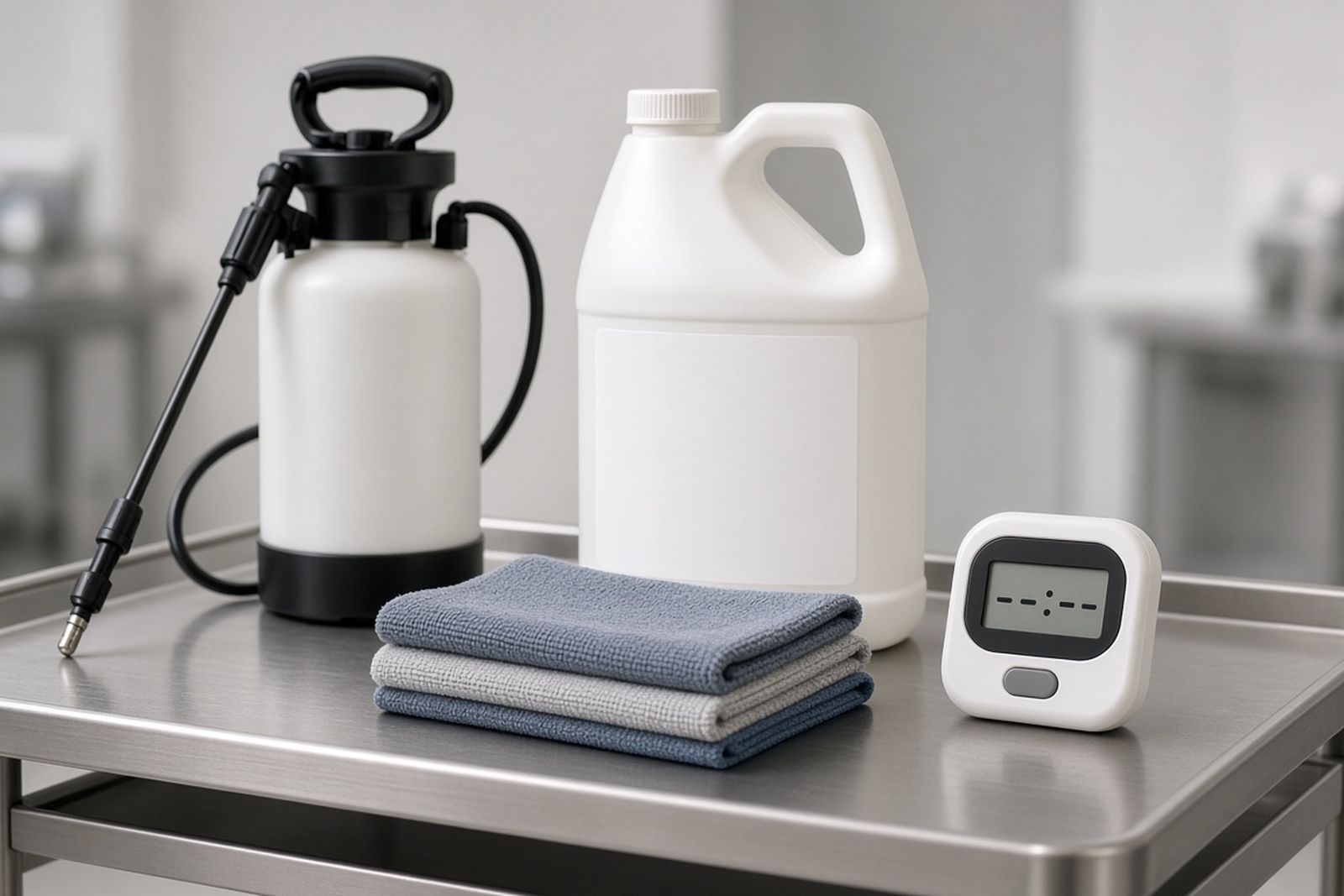
Pump sprayer, disinfectant jug, folded cloths and a contact-time timer on a steel cart

Facts worth knowing

  • In a March 2020 U.S. survey, 42% of people did not leave disinfectant sprays and wipes wet long enough to work, and 26% wiped right after spraying.

    Why it matters: Read the label for how long the surface must stay wet, and do not wipe your disinfectant off early.

    Source: American Cleaning Institute, 2020

  • In a small Arizona study, six of 11 cleaning workers interviewed described worries or problems from breathing in cleaning chemicals.

    Why it matters: Ask what products will be used and how long you should stay out of the treated space while it airs out.

    Source: Wilson et al., 2023

  • In a lab test published in 2020, wipes not sold as spore-killing moved C. difficile spores onto areas that had been clean.

    Why it matters: If you are dealing with C. diff, ask which spore-killing product the crew will use and how they avoid spreading spores.

    Source: Nkemngong et al., 2020

Tools that help right now

What would you do?

Poll results

Vote to see how other people answered. You can change your answer at any time.

Your experience

When your facility had an illness cluster, how did you handle cleaning?

Be the first to vote
Process

How did you decide whether to close all or part of the facility?

Be the first to vote

Need help in Malibu?

Send a short message about the property to the follow-up inbox. A coordinator can reply by email with next steps.

Your request is sent to the follow-up inbox. A coordinator can reply by email.

If anyone is hurt or in danger, call 911 first.