Newport Beach, CA

Infectious Disease Disinfection Planning in Newport Beach, CA

What to do, who to contact, and what to ask in Newport Beach.

Sickness at your Newport Beach home, boat or club? Learn what gets cleaned first, from dock gates to locker rooms, and what to ask before anyone sprays.

Get an email reply about infectious disease disinfection

Send a short message to the follow-up inbox. A coordinator can reply by email. This form does not send emergency help; call 911 first if anyone is in danger.

Tell us what you need help with. Share a short description; please leave out medical details, access codes, and other sensitive information.

A request does not confirm a booking. For immediate danger, contact local emergency services.

Or email info@infectiousdiseasecleanup.online

The short answer for Newport Beach, CA

If illness has hit your Newport Beach harbor home, club or office, three things come first. Clean before anything is disinfected. Check that the product label lists your germ. Agree on who stays out and for how long. You will also see what to ask a company and which papers to hold on to.

What to do, step by step

  1. 1

    Start with the harbor paths and dock carts

    Think about where hands went while someone was contagious. Dock gates, cart handles, restroom fixtures and railings usually top the list, with dining tables and chairs after them. Share that order with the company. Heavy mess should be removed and surfaces washed before an EPA-registered disinfectant goes on. Check that its label lists your germ and ask how the wet time is tracked. If a dock cart cannot be treated the way the label allows before the next seating, ask that it be pulled from use.

  2. 2

    Read the label, not the sales sheet

    If COVID-19 is your concern, EPA's List N is a real help in choosing a product, as long as directions are followed. If members fell ill with vomiting after a club meal, norovirus may be involved. In that case, ask to see that the label covers it. Do not agree to fogging for the scent alone. And do not accept promises of sterile boat cabins, sterile club air or sterile upholstery. No label says that.

  3. 3

    Move events and tell members the facts

    Postpone your gatherings, valet rushes and private dinners that would bring people back too soon. If you help run the club, send a short notice with the closed rooms and the reopening time. Leave out who was sick. Medical questions belong with doctors and with Orange County Health Care Agency resources. Use the same reopening time for the dock as for dining and lockers, so nobody walks from a treated room into one that is still wet.

  4. 4

    Ask for records, and turn down a sterile-marina certificate

    You should receive a product list, EPA numbers, wet-time logs and a map of the zones treated. It should say whether dock hardware and carts were treated or left out. A swab test on restroom taps can check that grime was removed. It cannot find germs or tell you which one was there. Say no to any paper calling the marina sterile. Keep the real records for your insurer or board.

What cleanup is like in Newport Beach

Life in Newport Beach often ties a waterfront home to a club. You pass a dock gate keypad, a valet or drop-off counter, and shared restrooms near the marina. Locker rooms and dining rooms see many hands on race weekends. If a stomach bug followed a gathering, think about the real path people took, from the parking stand to the restroom and on to the tables. Fogging an empty dining room does little if dock carts and railings are skipped. The Orange County Health Care Agency is your local public health contact. It does not hand out sterilization certificates for private clubs.

Salt air and sunny windows lead many homes here to run climate control all day. That changes when you can go back inside and how long product smells last. Your rooms stay empty for the label's contact time. Afterward they are aired out the way the safety data sheet allows. Outdoor cushions brought in, boat bags and locker-room towels usually fall outside hard-surface labels. Ask the company to write down whether each gets washed or set aside. It matters most when your family carries sandy gear from the dock to the dining room the same afternoon.

Around Newport Center and Coast Highway you will find offices and suites next to medical practices. Your home or club cleanup is not the same job as cleaning medical devices, so do not pay for it as if it were. If blood shows up after a first-aid call or an injury, ask how the company protects its workers under OSHA bloodborne pathogen rules. For a cold, flu or stomach bug, the plan stays simple: wash surfaces, then disinfect. Expect honest answers about which germs each label lists. List N is only about the COVID-19 virus.

What to expect for your type of home

  • Harbor homes with dock access: Dock gates, cart handles and card readers get touched with salty, sunscreen-coated hands. Ask that they go on the high-touch list along with the restroom fixtures.
  • Boats and boat gear: Hard-surface labels do not cover cabin fabrics, boat bags or outdoor cushions. Ask for a written note on whether each one is washed, set aside or left out.
  • Club dining and locker rooms: Food surfaces have label rules about rinsing and where a product may be used. Ask how those are met before meal service starts again.
  • Clubs on race weekends: Busy days tempt staff to seat the next group early. Ask for the work to be timed around events so no wet period is cut short.
  • Clubs with a first-aid room: That room has its own duties. Ask that it be described apart from the general amenity cleaning, so the paperwork does not blur the two.
  • Closed-up coastal houses: Ask the company to record the HVAC settings and which doors were opened to air the rooms. You will want that note if smells linger.

Papers and records to keep

  • A site map of the club, dock access, valet area and any homes included
  • The high-touch list, with notes on race weekends and other busy times
  • Product labels showing the germs listed, contact times and where each may be used
  • A record of heavy-mess removal and cleaning before disinfecting
  • Wet times for restrooms, lockers, dock hardware and dining surfaces
  • What was decided for boat bags and fabrics: washed, set aside or left out
  • The reopening time for the clubhouse or home, set after the label's airing period
  • Letters to members and neighbors, with no one's diagnosis in them

Local offices and official help

Common questions in Newport Beach

Our club wants to use a scented fogger after members got sick. Is that enough?

No. A pleasant smell tells you nothing about germs or about how long surfaces stayed wet. After illness in shared restrooms or dining areas, the mess is removed and surfaces are washed with detergent. Next comes an EPA-registered disinfectant whose label lists the germ of concern. Fogging is fine only when the label allows it and the rooms are empty. Fabrics still need washing. As proof, ask the board to request registration numbers and wet-time logs, not a scent.
Do the dock gate keypad and carts really need to be on the list?

Yes. People touch these outdoor controls with sandy, salty or sunscreen-coated hands, then carry that into cars and homes. Residue is cleaned off first, since it can block the product. Disinfecting follows if the label covers that kind of surface. A fog in the dining room will not reach gate hardware. Ask for a note on whether carts and shared gear were wiped, pulled from use or saved for later. On regatta weekends these controls matter even more.

When can my family go back into our house after it is treated?

Go back at the written time the company gives you, based on the product label and safety sheet. Coastal homes that stay shut may need fans or a longer empty period, so smells fade and surfaces dry. Children, pets and sensitive people should wait for that time. A floor that only looks dry does not count. The time should cover the pool-house bathrooms as well as the main kitchen. Share it with everyone who comes home at different hours.

Does a List N product cover any summer stomach bug at our club?

No. EPA built List N around one virus, the one behind COVID-19. A stomach outbreak may involve a germ that needs a different label claim, and some products list norovirus. Read the germ list and contact time for the illness you are dealing with. Cleaning comes first, because grime blocks many products. Keep sinks and sanitizer stocked at the buffet line and ask sick members to stay away. Surface work cannot stop a new illness arriving next weekend.

When do OSHA's bloodborne rules come into a job like ours?

They apply when workers can expect contact with blood or other body fluids that can carry disease. Cleaning up after a locker-room injury is one example. Wiping club desks after a cold is not. Tell the company up front whether such fluids are present. If they are, expect protective gear, sealed waste bags and trained workers. If they are not, the job is cleaning, labeled disinfectant, wet time and fresh air. Hospital terms have no place in either case.

Someone had a stomach bug on our boat. How do we clean the cabin?

Treat the head, galley and cabin grab rails like a small bathroom and kitchen. Take away the mess and wash with detergent. Next, pick a product labeled for marine surfaces, and check that it lists the germ involved. Keep hatches open for fresh air if the label calls for it. Wash cushion covers and towels on shore. Never pour leftover disinfectant overboard. Check the label's disposal directions and ask the marina office how to handle the waste.

What should the club tell members when a locker room is closed?

Keep it short. Post a notice at the locker-room door and in the member app. Say the space is closed for cleaning, when it will reopen, and where members can shower or change for now. Do not mention who was sick or what the illness was. Tie the reopening time to the product's contact time and return directions, not to a tee time or a race start. Members with health questions can call their own doctor or the county health agency.

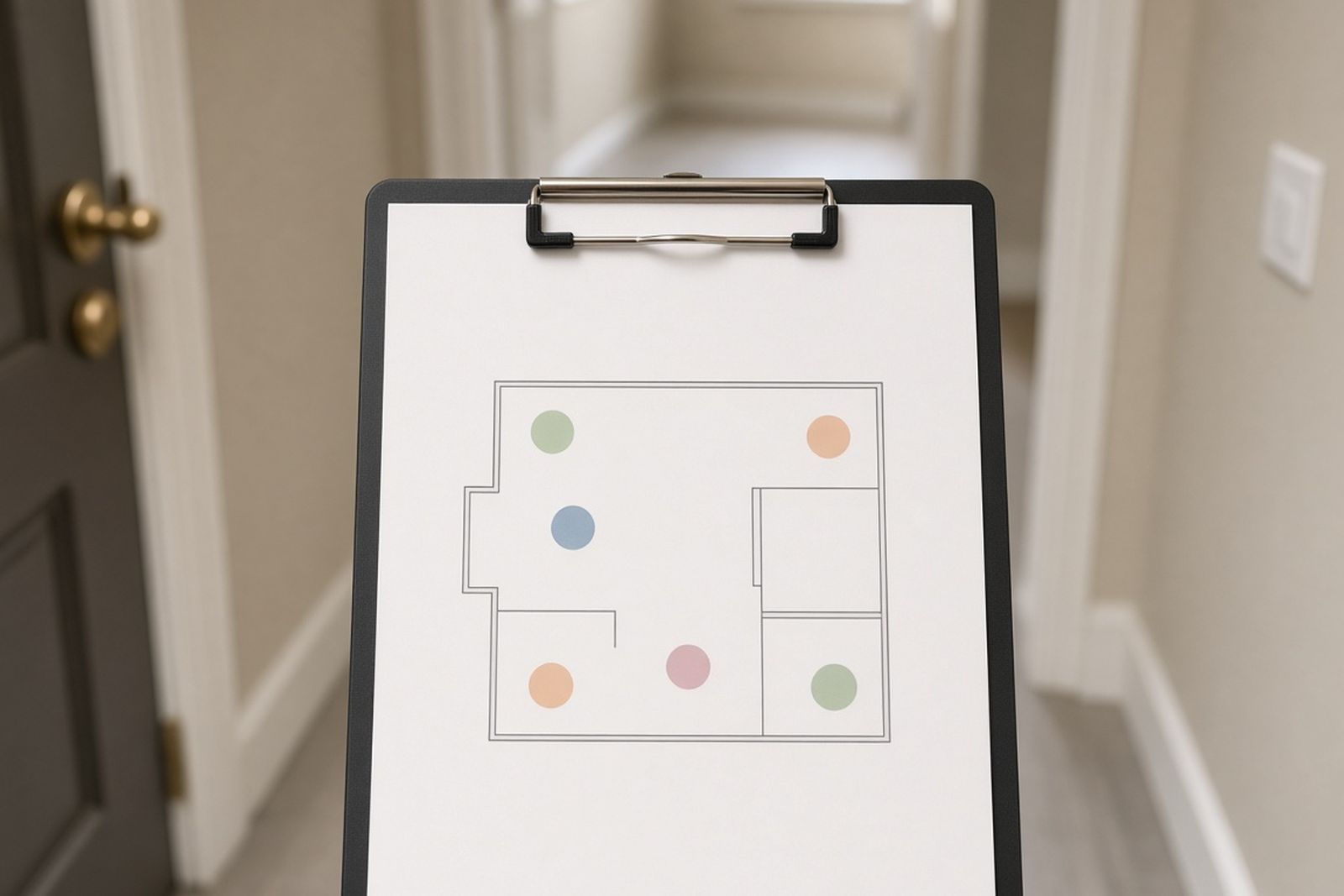
Clipboard showing a room plan with color-coded dots marking high-touch surfaces
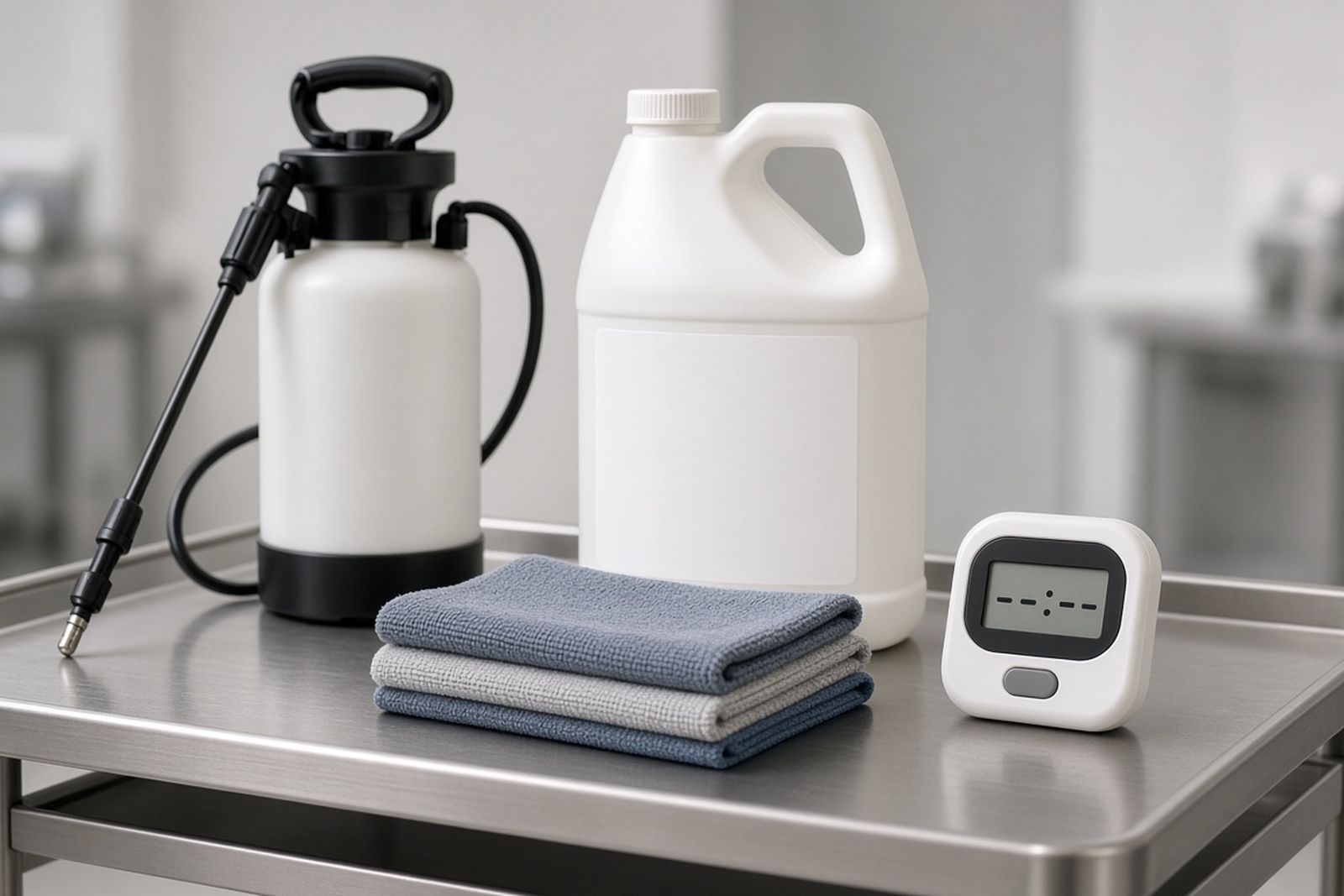
Pump sprayer, disinfectant jug, folded cloths and a contact-time timer on a steel cart

Facts worth knowing

  • In a small Arizona survey of cleaning staff published in 2023, changing how disinfectant was applied, such as fogging or spraying, was linked with being woken by coughing.

    Why it matters: If you or your staff fog or spray disinfectant, ask about breathing protection and airing out the room.

    Source: Wilson et al., 2023

  • In a March 2020 U.S. survey, 42% of people did not leave disinfectant sprays and wipes wet long enough to work, and 26% wiped right after spraying.

    Why it matters: Read the label for how long the surface must stay wet, and do not wipe your disinfectant off early.

    Source: American Cleaning Institute, 2020

  • In a 2019 survey of 47 US hospital cleaning departments, spore-killing products were common in contact-isolation rooms but uncommon in ordinary rooms.

    Why it matters: Not every disinfectant kills spores; if your germ forms spores, ask whether the product used is rated for them.

    Source: Han et al., 2021

Tools that help right now

What would you do?

Poll results

Vote to see how other people answered. You can change your answer at any time.

Your experience

When your facility had an illness cluster, how did you handle cleaning?

Be the first to vote
Process

How did you decide whether to close all or part of the facility?

Be the first to vote

Need help in Newport Beach?

Send a short message about the property to the follow-up inbox. A coordinator can reply by email with next steps.

Your request is sent to the follow-up inbox. A coordinator can reply by email.

If anyone is hurt or in danger, call 911 first.