West · US

Infectious Disease Disinfection Planning in Sacramento, CA

Planning infectious disease disinfection in Sacramento, CA

Sacramento disinfection planning for Capitol offices and homes. Covers smoke-day HVAC, EPA label claims, List N limits, wet times, and county health advice. This is planning guidance, not a claim of a local office or crew in Sacramento.

Get an email reply about infectious disease disinfection

Send a short message to the follow-up inbox. A coordinator can reply by email. This form does not send emergency help; call 911 first if anyone is in danger.

Tell us what you need help with. Share a short description; please leave out medical details, access codes, and other sensitive information.

A request does not confirm a booking. For immediate danger, contact local emergency services.

Or email info@prompartybuses.com

Direct answer

The short answer for Sacramento, CA

Sacramento's Capitol-area offices, Central Valley apartments, and family homes need outbreak plans that work within smoke-day HVAC limits. Record which EPA product went on and which germ its label names. Treat disinfection as a way to lower risk, not a sterile all-clear for a campus.

Editorial guide · Biohazard Remediation NetworkUpdated 2026-07-22Location focus: Sacramento, CA

Local planning context

Sacramento outbreak work often covers meeting floors near the Capitol, midtown apartments, and suburban family kitchens. In all three, courtyard gates, badge readers, and shared fridge handles collect the most hands. Summer heat and wildfire smoke often keep buildings sealed. So disinfectant smells may linger longer than managers expect. Sacramento County Public Health and CDPH can help with factual community messages. Neither agency turns an office wipe-down into a sterile lab.

Hybrid legislative and agency calendars mean a room may sit empty at noon and fill up for a hearing or shift change later. If the cleaning ignores that rhythm, the first wave of returning badges re-soils everything. Empty the building zone by zone and don't cut the wet time short. Write a reopening time facilities staff can enforce, without hallway gossip about who was sick.

Some Sacramento workplaces keep special equipment people loosely call "lab gear." Wiping desks and restrooms is still everyday community cleaning, not device sterilization. Say a staffer trips near the Capitol dais and bleeds. Now the mop-up near the dais involves blood, a fluid that can spread disease. Staffers who clean it follow OSHA steps. Ordinary cold or flu surface work does not.

Property considerations

At Capitol-area sites, put badge readers, hearing-room door hardware, shared kitchenette appliances, and courtyard gates first.

On smoke days the HVAC recirculates. Plan for that when clearing smells and running fans after products go on.

Leave sound panels and fabric lounge seats out of hard-surface claims unless another process covers or cleans them.

Block hybrid calendars so no drop-in meeting opens a treated zone mid-wet-time.

Break-room counters used for food need their own rinse step after disinfecting.

Make clear whether apartment amenities and private units are one job or billed separately.

Response-planning framework

List hearing-day and shift-change touch points

Rank surfaces by the busiest times. Badge readers, restroom fixtures, shared microphone controls, and kitchenette handles lead the list. Where a stomach bug centered, remove the mess before any product goes on. Low-touch decor can wait until the high-touch wet times are locked in.

Pick the product for the germ, even in Valley heat

Use EPA-registered products whose labels support the stated concern. List N helps for COVID-19 when you follow directions. It isn't a master list for every germ. Heat and smoke don't change that science. Turn down sterile-campus sales talk, even when smells feel urgent.

Plan empty time and fresh air around smoke

Close zones for the full wet time. Once surfaces meet the label's dry and return steps, air them out as the SDS allows. Weigh the smoke outside against the need to clear chemical smells inside. Sensitive staff may need extra time. Post one facilities reopening time.

Keep audit files honest

Keep the facilities file to what was actually done: products, surfaces, wet times, and reopening times for each hearing room or apartment amenity. Leave out any claim that the building is germ-free. Questions from staff or residents about their own health belong with their doctor or the county public health office, not the cleaning vendor or the building manager.

Documentation checklist

  1. 1How the agency or landlord described the illness, without staff names
  2. 2Zone map of hearing rooms, kitchenettes, and apartment amenities, as they apply
  3. 3Each product used on hearing-room and apartment surfaces, and whether its label allows spraying or wiping
  4. 4Photos or notes showing smoke dust and grime were wiped off before disinfecting
  5. 5When each restroom and break room went wet, and when it reopened
  6. 6Hybrid or hearing calendar showing when rooms stayed empty
  7. 7Smoke-day HVAC and fresh-air notes, with the written reopening time
  8. 8Any residue swab or visual check notes, marked as not proving germs are gone

Official resources

Questions for this location

How should a Capitol-adjacent Sacramento office time disinfection around hearing schedules?

Block the treated rooms for the whole wet period and the label's return time. Then reopen them on a single facilities clock. Don't squeeze the work into a lunch break while badges keep touching the same handles. Announce closures without sharing private health details. Restart routine cleaning afterward. One job doesn't replace daily hand-cleaning supplies or a culture of staying home sick.
Does wildfire smoke change which EPA product Sacramento facilities should buy?

Smoke changes airing out and how long smells last. It doesn't change the basic rule: the germ on the label must match the event. Still pick EPA-registered products for the concern at hand. List N fits COVID-19 cases. Look for other label claims when a stomach bug or another germ is the problem. Keep surfaces wet for the full time, even if rooms stay empty longer because windows are shut. Log the HVAC and fan settings. Don't claim those steps sterilize the air.

Can Sacramento facilities fog an open-plan floor instead of wiping keyboards?

No. Fogging is just one way to apply a product, when the label allows it. It doesn't remove grime and often isn't safe for electronics. Keyboards, mice, and badge readers still need wipe methods that suit them. Clean them first if they're dirty. The label's timer governs the rest. Fogging rooms with people inside can expose them to fumes. At best, spray adds to wiping. It's never a shortcut to a sterile campus.

What should apartment managers in Sacramento tell residents after amenity disinfection?

Share which amenities closed, when the wet time ends, and when they should reopen. Don't name sick residents. Explain that surface disinfection lowers risk on treated hard surfaces. It doesn't sterilize the building or stop every future illness. Keep EPA numbers and wet-time logs in the property file for insurers or the owners to review.

When does an injury cleanup in a Sacramento workplace change the disinfection scope?

If blood or other body fluids that can carry disease are present, stop using ordinary illness wipe-down wording. Switch to OSHA bloodborne pathogen planning for workers, with protective gear, waste packing, and training. That's a different hazard from cold-season desk cleaning. Describe the mess first. If no such fluids are present, stay with detergent cleaning, labeled disinfection, the wet time, and fresh air. Don't borrow hospital-sterile claims.

How should a Sacramento family clean when triple-digit heat makes drying too fast for the label?

In very hot, dry rooms, a disinfectant can dry up before its contact time ends. Work in the cooler morning and keep the air conditioning on. Use enough product that the surface stays visibly wet. Check partway through and reapply if it has dried, as long as the label allows. Pre-moistened wipes may dry very fast, so use more than one on large areas. Never shut off fresh air you need just to slow drying.

What should a Sacramento office do with shared break-room appliances after a stomach illness at work?

Clean and disinfect the fridge handle, microwave door and keypad, coffee machine buttons, and sink faucet. Use products labeled for food-contact areas where needed, and rinse if the label says to. Throw out open shared food, like snacks in bowls. Post a sign on the break room with the reopening time. Encourage staff to use their own mugs and wash their hands before eating. Ask anyone who is sick to stay home as their doctor advises.

Contact

Get help by email

Send a short message for an email reply about infectious disease disinfection planning questions for the Sacramento area.

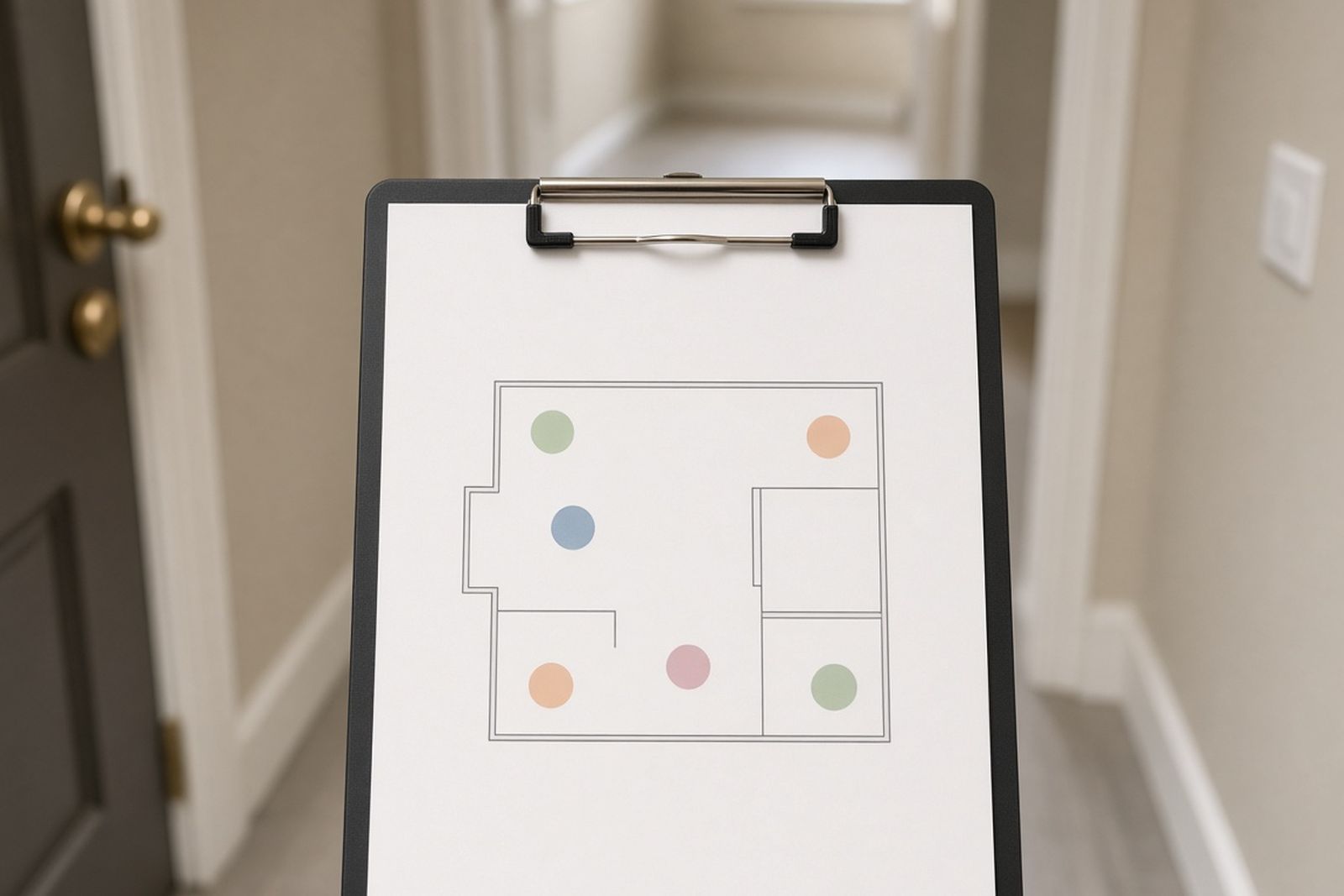
Clipboard showing a room plan with color-coded dots marking high-touch surfaces
Illustrative photo, not a job record. Clipboard showing a room plan with color-coded dots marking high-touch surfaces.
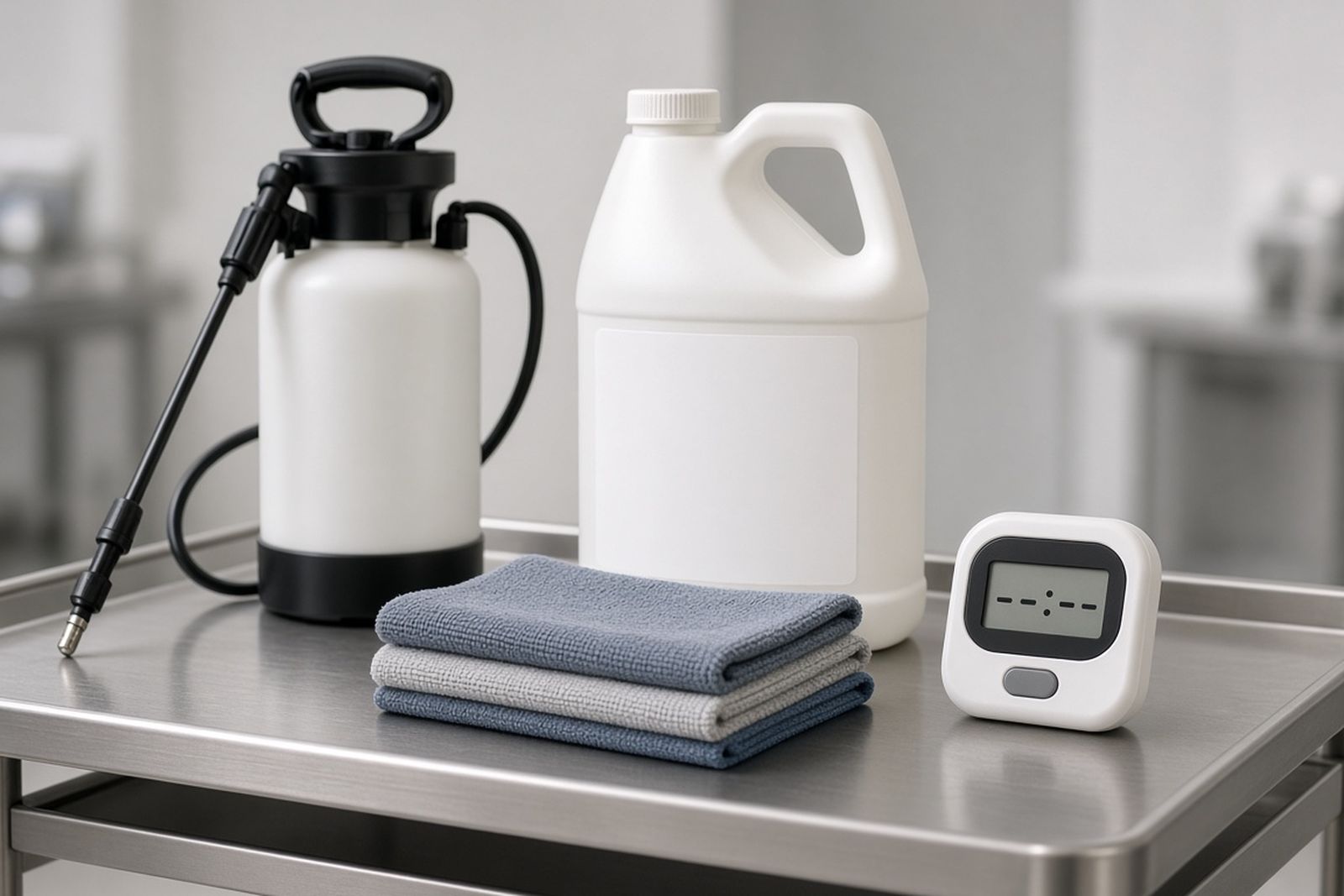
Pump sprayer, disinfectant jug, folded cloths and a contact-time timer on a steel cart
Illustrative photo, not a job record. Pump sprayer, disinfectant jug, folded cloths and a contact-time timer on a steel cart.

Infectious Disease Disinfection figures to keep in mind

National and research figures, not Sacramento data. Local conditions, rules and providers vary; use these for scale and context only.

8

Products above pH 8 accounted for 74% of failures in the experiment.

Read with care: Accelerated test conditions; not a failure rate for installed equipment.

Source: Jennings et al. (2024)Eight wipe formulations tested on healthcare plastics under fixed strain for seven days.

81%

81% reported bleach use on high-touch surfaces in contact-isolation rooms.

Read with care: 47 of 273 contacted participated; practices were reported rather than observed.

Source: Han et al. (2021)47 US hospital environmental-services respondents across 26 states; 2019 survey.

98.1%

Manual wiping met the study's disinfection-success criterion on 98.1% of surfaces versus 75.5% for UV-C.

Read with care: Specific device, protocol and success criterion; no patient infection endpoint.

Source: Knobling et al. (2023)Naturally contaminated surfaces in a comparative field test.

These figures are public research and agency data, not this network's own job records. Keep each number with its population, year and limits; none of them predicts cost, timing or outcome at a specific property.

Plan before you reach out

Use the first 24 hours planner for immediate steps and the provider vetting checklist to confirm any Sacramento provider's training, insurance and waste path in writing.

What research has found

Findings from published studies of people and properties in situations like this one. They describe what researchers observed in a specific group; they are not predictions for your case.

Used wipes retained spores during and after wiping.
Who was studied: Non-sporicidal-claim wipes tested on Formica with C. difficile spores.Limits: Not a comparison of all sporicidal products; physical removal is not complete inactivation.Disinfectant wipes transfer Clostridioides difficile spores during the disinfection proc… (2020)
Both methods reduced cultured bacterial contamination.
Who was studied: Naturally contaminated surfaces in a comparative field test.Limits: Specific device, protocol and success criterion; no patient infection endpoint.Superiority of manual disinfection using pre-soaked wipes over automatic UV-C without pr… (2023)

Infectious Disease Disinfection community polls

Poll results

Every count is a real visitor vote; nothing is seeded or padded. One vote per poll per device, and you can change your answer.

Your experience

When your facility had an illness cluster, how did you handle cleaning?

No visitor votes yet
Process

How did you decide whether to close all or part of the facility?

No visitor votes yet

Planning cleanup in Sacramento?

Send a short message about the property to the follow-up inbox. A coordinator can reply by email with next steps.

Your request is sent to the follow-up inbox. A coordinator can reply by email.

If anyone is hurt or in danger, call 911 first.