West · US

Infectious Disease Disinfection Planning in San Diego, CA

Planning infectious disease disinfection in San Diego, CA

Outbreak guide for San Diego convention lodging and naval housing. Covers cabana latches, turnover versus disinfection, List N limits, and CDC hygiene advice. This is planning guidance, not a claim of a local office or crew in San Diego.

Get an email reply about infectious disease disinfection

Send a short message to the follow-up inbox. A coordinator can reply by email. This form does not send emergency help; call 911 first if anyone is in danger.

Tell us what you need help with. Share a short description; please leave out medical details, access codes, and other sensitive information.

A request does not confirm a booking. For immediate danger, contact local emergency services.

Or email info@prompartybuses.com

Direct answer

The short answer for San Diego, CA

San Diego convention hotels, busy naval-family housing, and bay-side pools need outbreak plans that keep quick housekeeping apart from real disinfection. Match the product to the germ. Keep cabana latches closed through the label's wet time. Say no to sterile-air sales pitches, even with a tour bus waiting.

Editorial guide · Biohazard Remediation NetworkUpdated 2026-07-22Location focus: San Diego, CA

Local planning context

Convention crowds, bay promenade tourists, and naval-family neighborhoods put pool latch plates in the spotlight. Cabana restrooms, ice-machine switches, and community-center taps come next, long before anyone wipes a single bedroom. Warm weather outside doesn't change the recirculated hallway air inside. Chemical smells can still linger after treatment. So base the reopening time on the product's SDS, not on the next shuttle drop-off. For wording a plain closure notice at a bayfront hotel, managers can lean on the County of San Diego Health and Human Services Agency. It doesn't certify hotels or condo pools as sterile.

Brand standards reward speed. Pillowcases get changed, bathrooms get wiped, and scent machines keep running. That's room turnover, not an outbreak response. Outbreak work still needs detergent to remove grime and EPA-registered products matched to the illness. Labeled hard surfaces must stay wet for the full time, with rooms kept empty until then. Soft cabana pads, blackout drapes, and gym mats need washing or should be left out. A deck mist doesn't cover them.

Military moves and visiting relatives bring a rush of hands onto fridge handles, shared washers, and restrooms near playgrounds over a few crowded days. CDC community hygiene materials treat those spaces as clean-then-disinfect places, not as sites for medical-device sterilization. Nearby outpatient clinics handle their own infection-prevention duties. Even in ordinary lodging or barracks-style housing, a crew may come across blood or other body fluids that can carry disease. OSHA's blood rules then set the crew's steps.
Property considerations

Rank pool latch plates, cabana restroom chrome, ice-machine switches, and washer controls above decorative deck sculpture.

Keep brand housekeeping linen sheets separate from outbreak product logs and wet-period timers.

Plan fire-stair signs ahead of time if lobby doors stay closed, so arriving guests don't grab untreated handrails.

Remove or wash cabana pads and gym mats that don't fit the hard-surface uses on the label.

Give night auditors one reopening time that holds up through convention check-in rushes.

Keep clinic device language off pool-deck and community-center flyers.

Response-planning framework

Start at the pool latches, not the pillow scent

Follow people's hands from the sidewalk or parking garage, across pool gates, cabana doors, ice machines, and laundry switches, and then to unit doors. If someone vomited in a cabana restroom, remove the mess and bag the waste before any product goes on. Putting equal effort into high ceilings while latch plates dry early wastes labor. Post which decks and washers are closed so no one assumes untreated areas are done.

Read the stomach-germ claims when pools are involved

Pick EPA-registered bottles for the illness described. For COVID-19, List N is useful. For a stomach bug at the pool or in the laundry, the label should list norovirus or an accepted stand-in. Don't assume a COVID list covers everything. Scent misters don't create any record of germs killed. Don't advertise sterile air above a sun deck.

Hold room keys and PCS move-ins through the wet time

Hold keys and amenity wristbands until the wet periods and the SDS return notes are done. Give night audit and the housing office one time stamp. Then late check-ins and arriving families won't reopen gates partway through. Air things out as the label says. Some travelers need a longer wait.

Brand files without sterile certificates

Keep EPA numbers, zones, cleaning notes, wet-period timers, and whether pool latches were included. Swab a cabana faucet? It shows grime, not germs. Nor does it prove sterility. Send medical questions to doctors and County of San Diego HHSA. Keep personal illness details off public flyers.

Documentation checklist

  1. 1Contact map of pool latches, cabanas, ice machines, and laundry, with notes on where the mess centered
  2. 2File that separates same-day housekeeping turnover from outbreak disinfection
  3. 3EPA registration numbers, germ claims, and how long the label says to stay wet
  4. 4Proof that cabana restrooms were cleaned before any disinfectant
  5. 5Wet-period timers for amenity chrome, laundry switches, and lobby door pulls
  6. 6Night-auditor reopening time shared across front-desk shifts
  7. 7Front-desk and housing flyers, with no guest or family identified
  8. 8How cabana or guest-room cleanup waste was bagged and hauled

Official resources

Questions for this location

Is misting a sun deck enough after a poolside gastrointestinal incident?

No. Mist or fog doesn't replace grime removal and the labeled wet time on the latch plates, restroom chrome, and grips people really touch. Close the deck. Bag visible mess while wearing the right protective gear. Clean hard surfaces with detergent. Then apply an EPA-registered disinfectant whose label covers stomach germs, and keep those items wet for the full time. Cabana pads may need washing or removal. Being on List N says nothing about norovirus. Only the bottle's label can. Reopen only after the auditor's time stamp, and don't name any household.

Why can't convention-week housekeeping double as outbreak disinfection?

Housekeeping aims to make rooms look guest-ready fast. Outbreak disinfection adds a product matched to the germ and recorded wet periods. Rooms stay empty during those periods, and soft items outside the label's hard-surface uses are left out. Brand auditors may still ask for EPA numbers and timers. Those files should describe the chrome and tile treated and the linens washed. They shouldn't claim sterile guest-room air. Wiping surfaces dry early to fit in a late arrival breaks the disinfection step.

What should naval-family housing keep on file after visiting relatives fall ill?

Note the dates rooms stayed empty and the detergent cleaning steps. Record the disinfectant name, its EPA registration number, the germ claim used, and how long surfaces stayed wet. Add laundry handling, items thrown out, airing-out steps, and the next allowed entry time from the label. Don't claim medical clearance. If blood or a used needle turns up in a cabana restroom or guest room, hand that part to workers trained under OSHA bloodborne pathogen rules. Tell housing staff only practical facts, such as whether washers or community restrooms were left out. Keep personal health details private.

Is one List N product enough for every downtown winter illness wave?

No. List N is EPA's list for the COVID-19 virus. Downtown offices and hotels see flu, colds, and stomach bugs every winter. Those may need a product whose label lists that germ. Treat each report on its own. Find out what the illness seems to be and choose a product whose label matches. Clean first and keep surfaces wet for the stated time. Encourage sick workers to stay home. No product lets a manager promise the office is sterile.

How can lodging flyers describe surface work without sterile-air claims?

Name the closed decks or rooms, how long they must stay empty for the wet period, and the expected reopening time from the label's return notes. Don't identify sick guests or print diagnoses. Say that surface disinfection is one step, along with handwashing and public health advice. It is not a promise against future illness. Point wider questions to County of San Diego HHSA or CDPH. Product and timer logs go in the office file. Never equate community cleaning with hospital sterilization.

How should a San Diego military family clean before a household move after someone was ill?

Clean as you pack. Wipe down toys, kitchen items, and bathroom supplies before they go into boxes. Wash bedding and towels before you pack them. On the final clean, scrub the bathrooms and kitchen with detergent first. Then disinfect handles, taps, and switches. If the illness was recent, tell the movers a room was used by someone who was sick. They can then wear gloves if they want. Don't share any medical details.

What should a San Diego host do about beach gear guests left behind after being sick?

Rinse sand and salt off hard items like coolers, umbrellas, and boogie boards. Wash them with soap and water. Then disinfect them with a product labeled for those plastics. Towels and fabric chairs go in the washer on the warmest safe setting. Wear gloves while handling items that may be soiled. If something is badly soiled or hard to clean, it's fine to throw it away in a sealed bag rather than spend hours on it.

Contact

Get help by email

Send a short message for an email reply about infectious disease disinfection planning questions for the San Diego area.

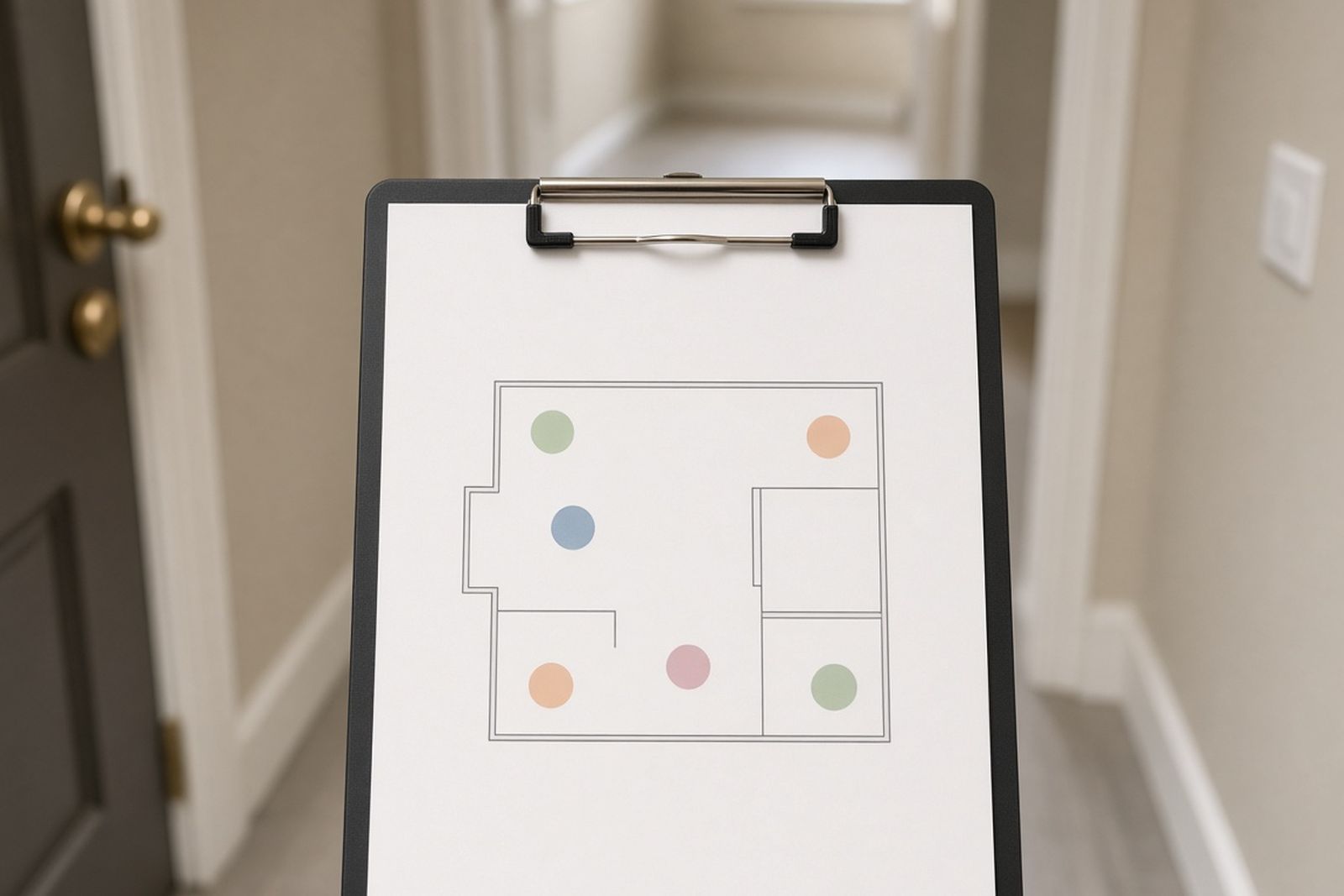
Clipboard showing a room plan with color-coded dots marking high-touch surfaces
Illustrative photo, not a job record. Clipboard showing a room plan with color-coded dots marking high-touch surfaces.
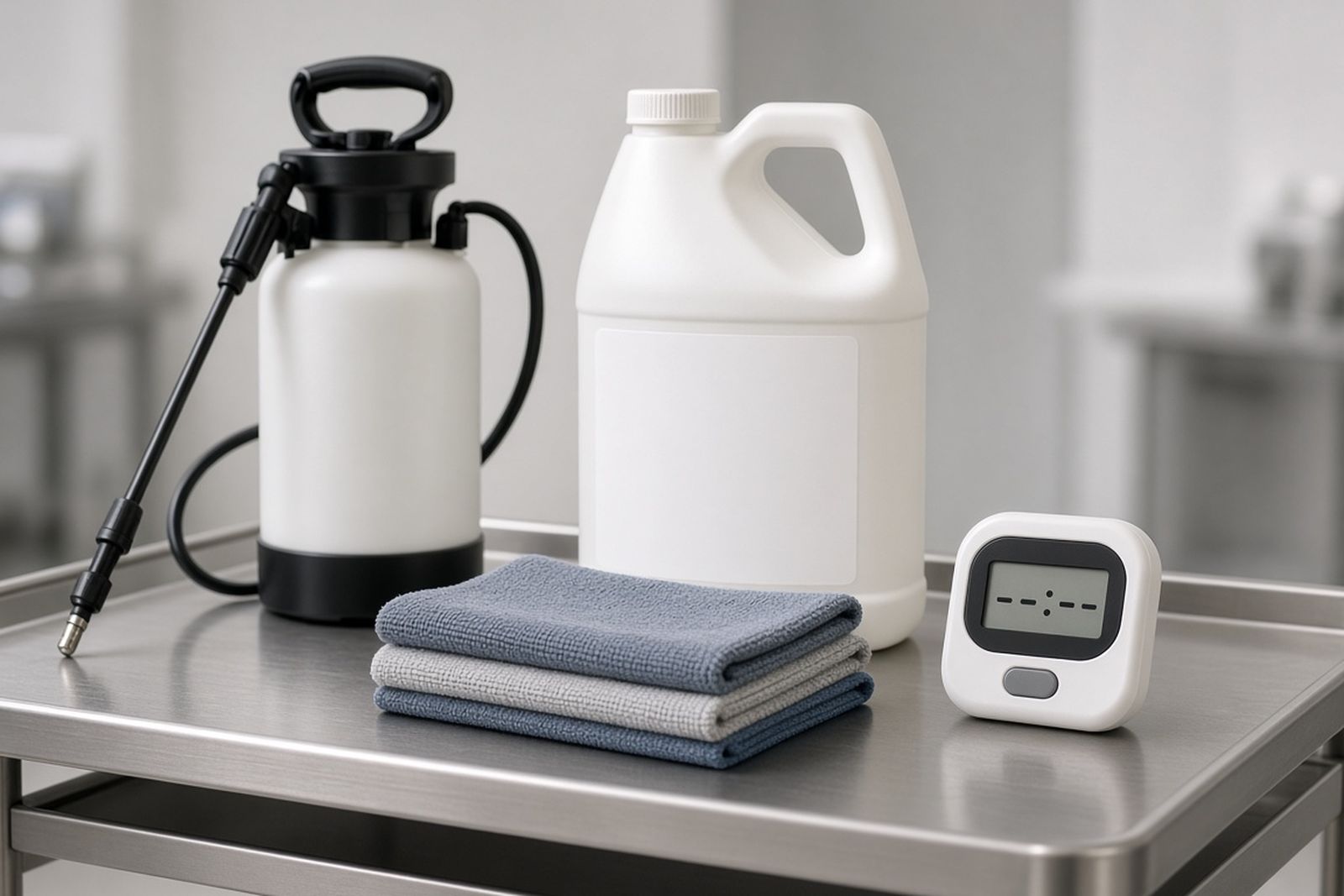
Pump sprayer, disinfectant jug, folded cloths and a contact-time timer on a steel cart
Illustrative photo, not a job record. Pump sprayer, disinfectant jug, folded cloths and a contact-time timer on a steel cart.

Infectious Disease Disinfection figures to keep in mind

National and research figures, not San Diego data. Local conditions, rules and providers vary; use these for scale and context only.

$15-$400+

HomeAdvisor reports that disinfecting a home to reduce germs, bacteria and viruses costs anywhere from $15 to $400 or more depending on DIY versus professional service.

Read with care: Broad range mixing DIY supplies and professional visits; specialized biohazard work costs more.

Source: HomeAdvisor (2026)United States residential, cost guide updated June 2026

$0.10-$0.30 per sq ft

ISSA's commercial cleaning pricing guide lists electrostatic disinfection at $0.10 to $0.30 per square foot and medical facility cleaning at $0.14 to $0.29 per square foot.

Read with care: Trade-association ranges; actual quotes vary by region, square footage and frequency.

Source: ISSA (2025)United States commercial facilities, industry-wide ranges, December 2025

7 months

A systematic review found MRSA can persist on dry surfaces for 7 days to 7 months, C. difficile spores for 5 months, norovirus for 8 hours to 7 days, and influenza for 1 to 2 days.

Read with care: Persistence under lab conditions does not equal infectivity in real settings; ranges are wide.

Source: BMC Infectious Diseases (2006)Systematic review of laboratory persistence studies, published 2006

These figures are public research and agency data, not this network's own job records. Keep each number with its population, year and limits; none of them predicts cost, timing or outcome at a specific property.

Plan before you reach out

Use the first 24 hours planner for immediate steps and the provider vetting checklist to confirm any San Diego provider's training, insurance and waste path in writing.

What research has found

Findings from published studies of people and properties in situations like this one. They describe what researchers observed in a specific group; they are not predictions for your case.

Used wipes retained spores during and after wiping.
Who was studied: Non-sporicidal-claim wipes tested on Formica with C. difficile spores.Limits: Not a comparison of all sporicidal products; physical removal is not complete inactivation.Disinfectant wipes transfer Clostridioides difficile spores during the disinfection proc… (2020)
Responsibility for cleaning differed across workplaces.
Who was studied: 96 Australian nurses and midwives in clinical settings.Limits: Self-report; small volunteer sample.Nurses’ and midwives’ cleaning knowledge, attitudes and practices: An Australian study (2021)

Infectious Disease Disinfection community polls

Poll results

Every count is a real visitor vote; nothing is seeded or padded. One vote per poll per device, and you can change your answer.

Your experience

When your facility had an illness cluster, how did you handle cleaning?

No visitor votes yet
Process

How did you decide whether to close all or part of the facility?

No visitor votes yet

Planning cleanup in San Diego?

Send a short message about the property to the follow-up inbox. A coordinator can reply by email with next steps.

Your request is sent to the follow-up inbox. A coordinator can reply by email.

If anyone is hurt or in danger, call 911 first.