Direct answer
The short answer for Stamford, CT
Harbor Point condos, downtown corporate conference floors, and Transportation Center commuters need workplace-aware plans. Keep rooms empty for the label's wet time. Treat kitchenette rinse rules apart from desk wipe-downs. See List N as a COVID-19 reference, not a sterile-campus badge.
Editorial guide · Biohazard Remediation NetworkUpdated 2026-07-22Location focus: Stamford, CT
Local planning context
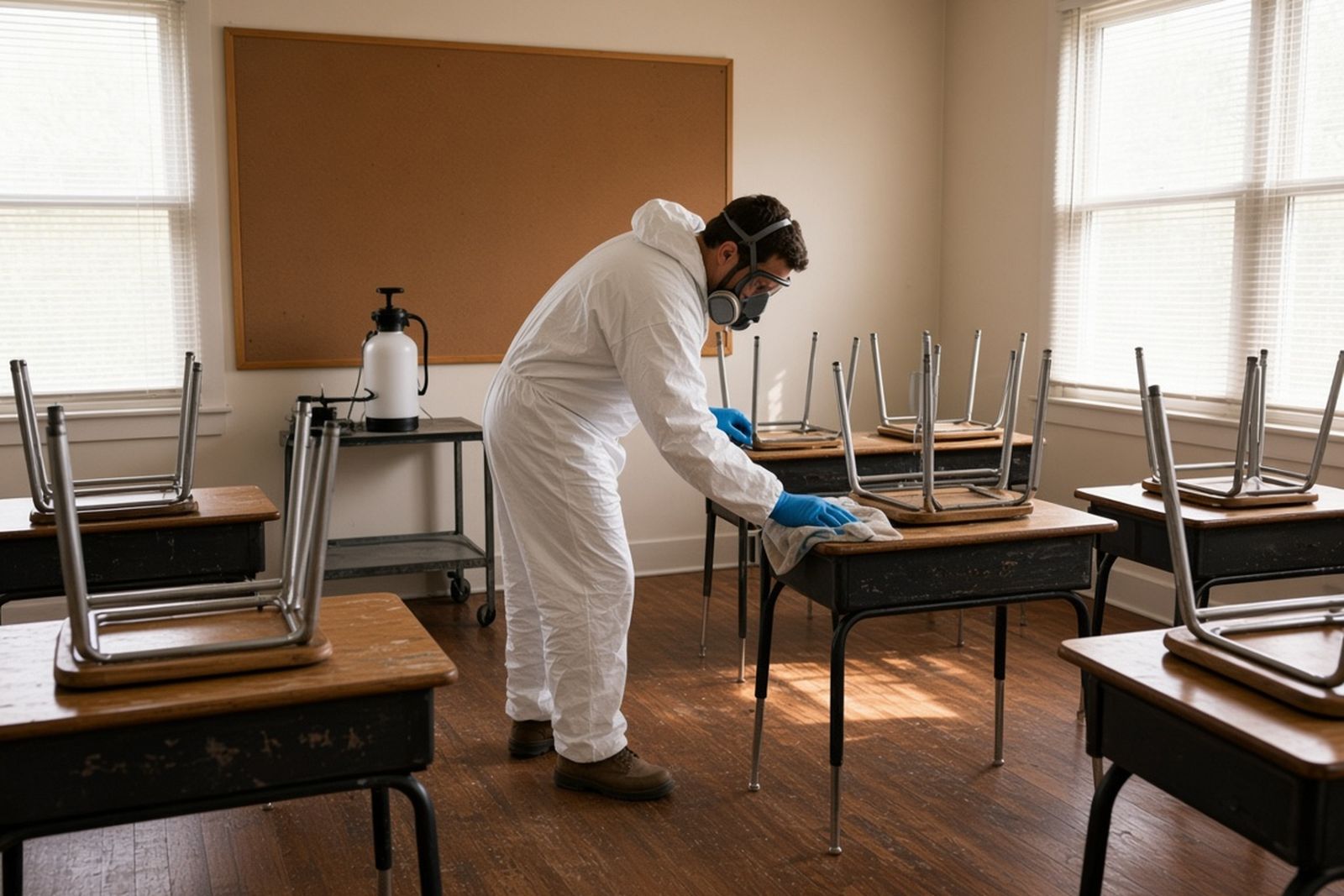
Stamford is Connecticut's largest city. Here, weekday illness questions come from hybrid offices and waterfront condo amenity decks more than private-lane barns. Conference tables, shared mousepads, touchscreen room boards, and gym consoles pass through many hands between Metro-North arrivals and late video calls. When one floor reports a stomach bug, clean those office and amenity spots with detergent first. Then use a product matched to the germ. That comes before anyone sells a scented fog of the whole podium. The City of Stamford Health Department and Connecticut DPH can support factual tenant notices. They don't turn a condo gym into a sterile clinic.
Harbor-area amenity decks add poolside showers, bike rooms, and package lockers. Overnight staff feel pressure to reopen them. On a Stamford hybrid floor, someone may spray at noon while a coworker keeps typing. That desk is dirty again within minutes. Sealed-up winter buildings and chilled summer air both trap smells if you skip the SDS fresh-air steps.
Near the downtown office towers, some wellness tenants share lobbies with apartments. Medical device cleaning language belongs to clinic tenants. It isn't a standard for clearing homes or ordinary offices. If blood turns up in a harbor-side office restroom or amenity locker room, workers may need an OSHA bloodborne pathogen plan, even though no one would call the space a clinic.