Northeast · US

Infectious Disease Disinfection Planning in Westport, CT

Planning infectious disease disinfection in Westport, CT

Westport home disinfection that covers mudroom benches, shared taps, and backpack drop zones. Plan how long surfaces stay wet around the school run. This is planning guidance, not a claim of a local office or crew in Westport.

Get an email reply about infectious disease disinfection

Send a short message to the follow-up inbox. A coordinator can reply by email. This form does not send emergency help; call 911 first if anyone is in danger.

Tell us what you need help with. Share a short description; please leave out medical details, access codes, and other sensitive information.

A request does not confirm a booking. For immediate danger, contact local emergency services.

Or email info@prompartybuses.com

Direct answer

The short answer for Westport, CT

Westport family homes, households near schools, and downtown workplaces need a plan that cleans first and then disinfects. Use labels that name the germ and stage who comes back when. Lean on Aspetuck Health District and CT DPH. Skip sterile claims and the idea that List N covers every germ.

Editorial guide · Biohazard Remediation NetworkUpdated 2026-07-22Location focus: Westport, CT

Local planning context

Westport's neighborhoods and the workplaces around downtown Saugatuck share a family rhythm. There are carpools, youth sports bags in the mudroom, and open kitchens that double as homework spots. After a stomach bug at home or an exposure linked to a classroom, look past the sick child's bed frame. Your high-touch list should include fridge handles, bathroom taps, device chargers, and the surfaces around backpack zippers. Aspetuck Health District is Westport's local public health office. Connecticut DPH gives state-level guidance.

Older Colonial and mid-century homes in Westport may have small bathrooms and shared HVAC that spreads smells fast after a disinfectant goes on. Move children and pets out while surfaces stay wet, and air the house out before they return. Stuffed animals, couch throws, and fabric chair cushions usually can't be covered by a hard-surface label. Write washing or temporary removal into the plan.

Downtown offices and shops near the train line get commuter traffic. That traffic can re-soil surfaces after one evening of disinfecting if the morning reopening skips handwashing and routine cleaning. Keep a targeted illness response separate from nightly janitor work. Hospital sterilization language doesn't belong in a Main Street office plan. A cut in a Saugatuck shop can leave blood or other body fluids that can carry disease, and then OSHA's worker rules on blood apply. Ordinary illness surface work doesn't justify a sterile-building certificate.

Property considerations

Add mudroom benches, backpack drop spots, and shared bathroom taps to the family high-touch map.

Plan the washing of bedding, throws, and washable stuffed toys before saying rooms are ready.

Time things so surfaces finish their wet period overnight, before the school-morning rush, when you can.

In small bathrooms, don't let a tight schedule push anyone to wipe surfaces dry too soon.

Keep a downtown office illness plan separate from the routine nightly cleaning checklist.

At home, leave fabric school-style chair cushions out of hard-surface germ claims unless they are washed.

Response-planning framework

Family high-touch and soft-item plan

List the surfaces children and caregivers touch most. Remove any visible mess and clean. Then disinfect the hard surfaces the label covers and keep them wet for the full time. Bag soft items to be washed or set aside. Fogging a playroom is no substitute for washing soiled fabrics.

Match the product to the germ, without stretching List N

Match products to the illness you're dealing with. For a stomach bug, check that the label claims fit that situation. Say plainly that disinfecting is not sterilizing.

Work around school and commute times

Plan empty rooms around school pickup and work-from-home days. Post simple house rules about which bathrooms are closed during the wet time. Air rooms out before the morning rush. Keep children's medical details out of shared parent chats.

Records and where to ask health questions

Keep records of products and wet times. A residue swab test on faucet handles only checks that grime was removed. It does not detect germs. Send community outbreak questions to Aspetuck Health District or CT DPH. Don't issue sterile-home letters for school forms.

Documentation checklist

  1. 1Room list with the spots children touch most and decisions on soft items
  2. 2EPA-registered products with the germs listed and contact times
  3. 3Proof that bathrooms and kitchens were cleaned first
  4. 4Start and stop times for each wet period
  5. 5Record of how bedding and washable fabrics were washed or thrown out
  6. 6Fresh-air and return instructions for caregivers
  7. 7A line between office and home plans if both came up
  8. 8Saved copies of each household or office notice, names left out

Official resources

Questions for this location

After a Westport child's stomach illness, which home surfaces matter most?

Start with bathrooms, toilet handles, faucet grips, light switches, remotes, fridge handles, and any surface hit by vomit. Clean off visible mess first. Next, use an EPA-registered disinfectant suited to the illness. It has to sit wet for as long as the label says. Wash or set aside stuffed toys and throws instead of spraying them and calling them sterile. Kitchen food surfaces must be handled the way the label says, including any rinse step. Write down what was done so caregivers don't walk in during the wet time. Surface work supports handwashing and the doctor's advice about when the child can go back to school. It doesn't replace them. When homework and snacks share one counter, give device chargers on the kitchen island and shared tablet screens the same care as bathroom taps.

Can Westport parents use a List N product for every school-year illness?

List N is not a promise that a product works on every cold, flu, or stomach germ going around schools. Always read the germs listed and the contact time for the situation you face. Cleaning still comes first. Don't fog children's rooms while anyone is in them. Don't count on one evening of work to keep the house germ-free all semester. For news on local outbreaks, use Aspetuck Health District and Connecticut DPH rather than product lists on social media. Classroom exposures change from week to week. Don't reuse last month's product for a new stomach bug without reading the current label.

How should a Westport downtown office reopen after evening disinfection?

Confirm that the wet time ended and the label's return instructions were met. Air the space out as needed. Restart routine cleaning instead of assuming the office is now germ-proof. Put hand-cleaning supplies at the entrance and in kitchenettes. If hybrid staff arrive in waves, don't unlock every conference room before treated surfaces have dried as planned. Keep the product records in the facilities file. Don't tell employees the workplace was sterilized. Doctors answer the health questions. The front desk should unlock only the areas that finished their wet time. Keep treated conference rooms marked unavailable until the written reopening minute. Record the germ concern as the requester described it, the rooms left untreated, and the reopening time given to staff. Then anyone reviewing the job later can see both the science limits and the job's boundaries.

What are honest verification limits for a Westport residential disinfection invoice?

An honest invoice or report lists products, EPA numbers, rooms, cleaning steps, and wet times. It also lists what was left out, such as an untreated attic or fabric items. It may include photos. It should not claim lab proof of sterility unless a separate, well-designed sampling plan was ordered and read by qualified people. That is rare after a routine illness at home. If a residue swab test result is shown, it must be explained as a grime check that does not detect germs. Parents and landlords should reject wording that promises no one will get sick after coming back. Landlords reviewing invoices should expect a list of what was left out, like unfinished basements or fabric toys. A blanket sterile-home stamp for school forms is not honest.

When does bloodborne pathogens planning apply in a Westport home disinfection request?

It applies when the work includes blood or other body fluids that can carry disease, such as cleanup after a bleeding injury. Then workers need protective gear and exposure-control steps that follow OSHA's bloodborne pathogen rules. A routine wipe-down after cold symptoms, with no such fluids, is different. The plan should say which kinds of mess are present. Mixing the two can leave out needed blood controls or invent hospital sterilization duties that don't apply. Soaked materials may need special regulated waste packing, while ordinary wipe trash may not. Put the difference in writing before work starts. A nosebleed or injury cleanup in the mudroom is a body-fluid question. Wiping counters after a cold is not. The written plan should say which one you have.

How should a Westport family clean youth sports gear after a teammate's stomach illness?

Wash hard items like helmets, shin-guard shells, and water bottles with soap and water. Then disinfect them with a product whose label allows those plastics. Fabric bags, jerseys, and pads usually go in the washer on the warmest setting the tags allow, then a full dryer cycle. Wipe the mudroom bench and the back seat where the bag rode home. You don't need to fog the whole house because one duffel came back from the field.

What should a Westport household do if the sick person is a grandparent staying in a guest room?

Keep one bathroom just for the grandparent if you can. Clean it daily with detergent, then disinfect handles, taps, and the toilet flush. Leave a lidded wastebasket with a bag liner by the bed. Ask the grandparent's doctor whether to avoid any products or strong smells because of breathing problems. Wash their bedding and towels separately on warm settings. Once they're well, clean and disinfect the guest room hardware before the next visitor comes.
Contact

Get help by email

Send a short message for an email reply about infectious disease disinfection planning questions for the New York City area.

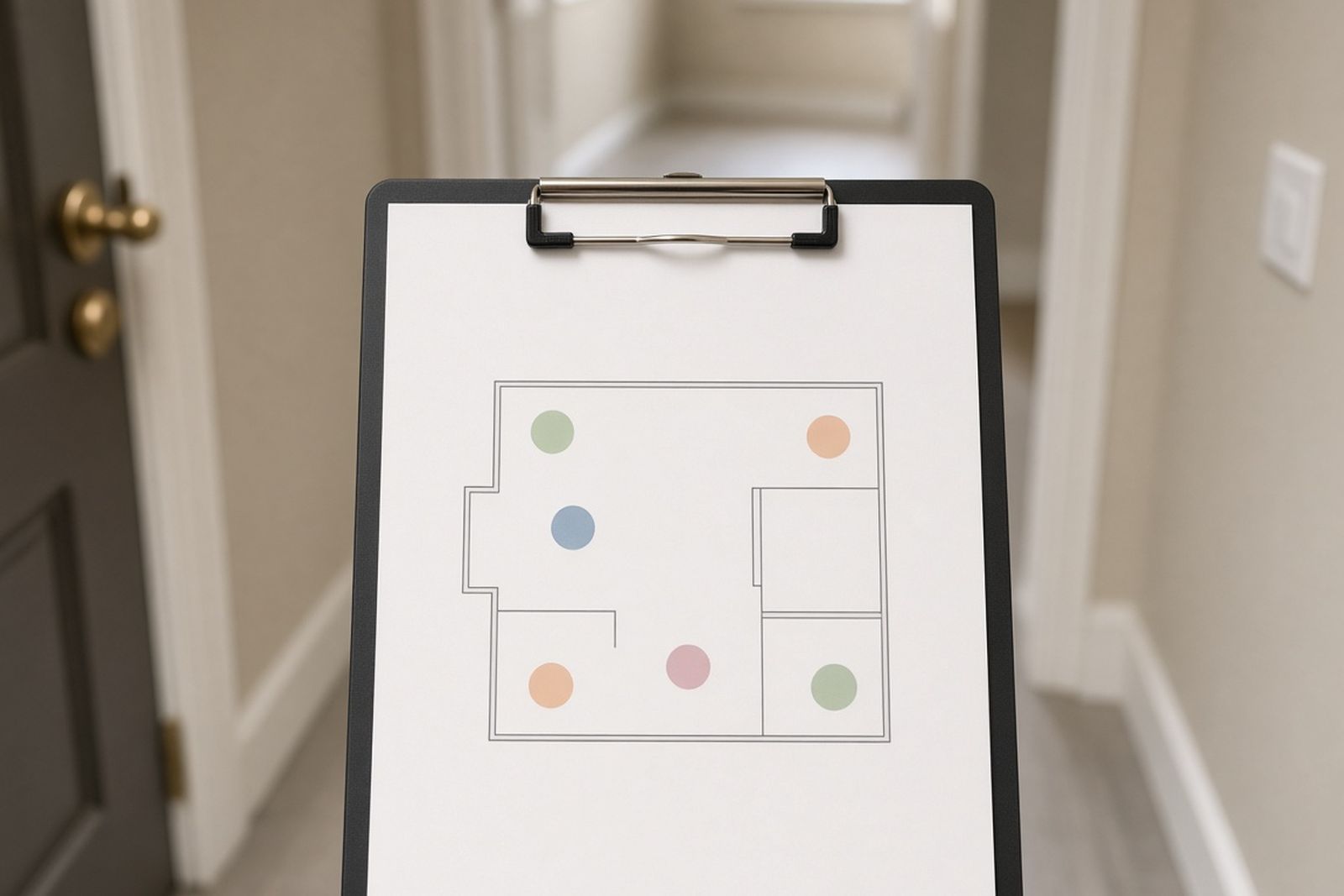
Clipboard showing a room plan with color-coded dots marking high-touch surfaces
Illustrative photo, not a job record. Clipboard showing a room plan with color-coded dots marking high-touch surfaces.
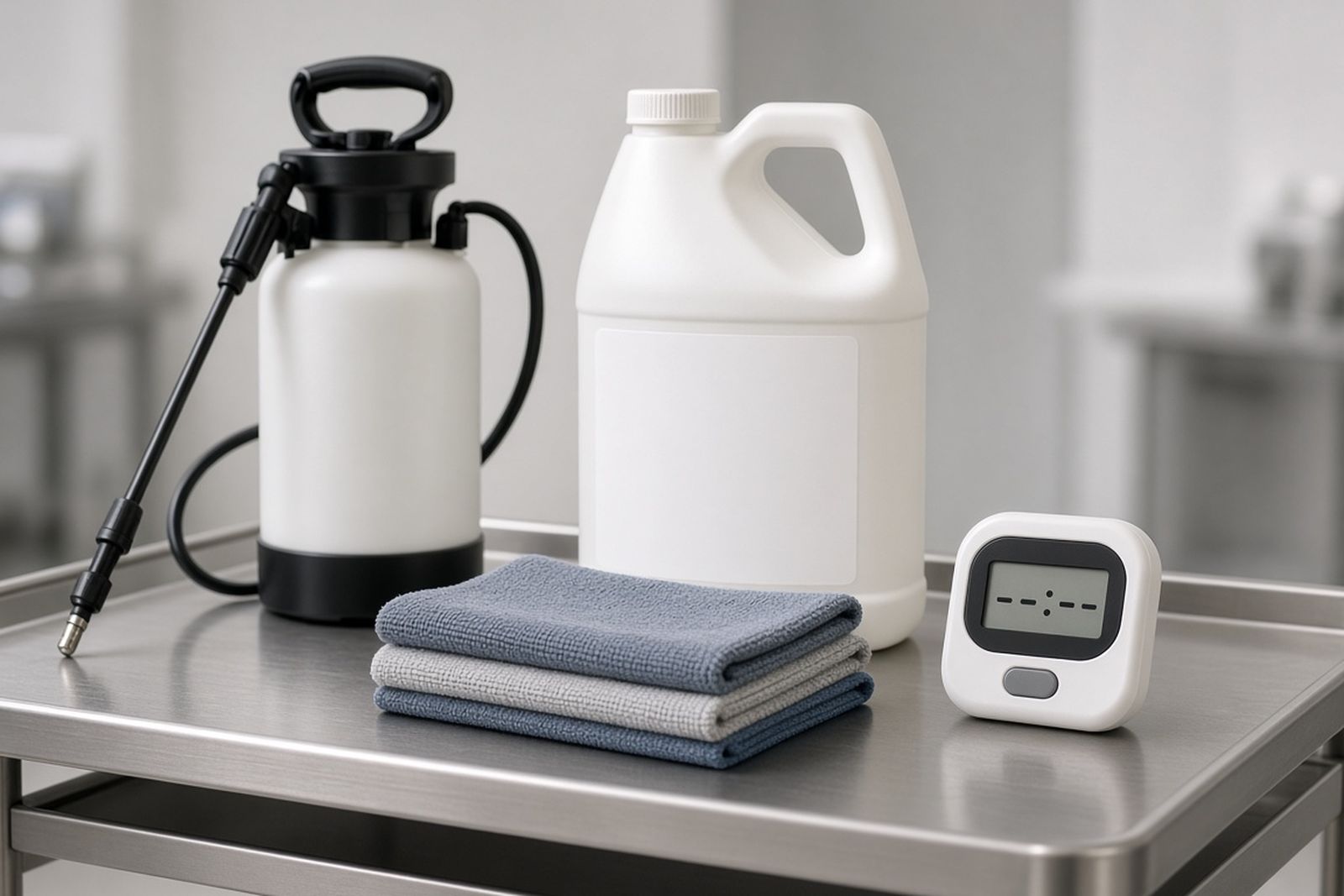
Pump sprayer, disinfectant jug, folded cloths and a contact-time timer on a steel cart
Illustrative photo, not a job record. Pump sprayer, disinfectant jug, folded cloths and a contact-time timer on a steel cart.

Infectious Disease Disinfection figures to keep in mind

National and research figures, not Westport data. Local conditions, rules and providers vary; use these for scale and context only.

6 log10

A 2020 study found an electrostatic sprayer applying 0.25% sodium hypochlorite reduced C. difficile spores by 6 log10 or more with a 5-minute contact time and disinfected a 15-20 chair waiting room in about 5 minutes.

Read with care: Results are specific to the tested sprayer and disinfectant; efficacy depends on the chemical, not the sprayer alone.

Source: American Journal of Infection Control (2020)Laboratory and hospital field testing, single device and disinfectant

223,900

CDC's 2019 Antibiotic Resistance Threats Report estimated 223,900 C. difficile cases in hospitalized patients and 12,800 deaths in 2017, with $1 billion in attributable healthcare costs.

Read with care: Counts hospitalized cases only; costs cover hospital-onset cases only.

Source: CDC (2019)United States, hospitalized patients, 2017 data

$9.8 billion

A JAMA Internal Medicine meta-analysis estimated the five major healthcare-associated infections cost the U.S. health system $9.8 billion annually, with C. difficile at about $11,285 per case.

Read with care: 2012 dollars; based on published studies rather than national claims data.

Source: JAMA Internal Medicine (2013)United States, adult inpatients, literature 1986-2013

These figures are public research and agency data, not this network's own job records. Keep each number with its population, year and limits; none of them predicts cost, timing or outcome at a specific property.

Plan before you reach out

Use the first 24 hours planner for immediate steps and the provider vetting checklist to confirm any Westport provider's training, insurance and waste path in writing.

What research has found

Findings from published studies of people and properties in situations like this one. They describe what researchers observed in a specific group; they are not predictions for your case.

All tested formulations contained agents capable of environmental stress cracking.
Who was studied: Eight wipe formulations tested on healthcare plastics under fixed strain for seven days.Limits: Accelerated test conditions; not a failure rate for installed equipment.Chemical resistance testing of plastics: compatibility of detergent and disinfectant pro… (2024)
Both methods reduced cultured bacterial contamination.
Who was studied: Naturally contaminated surfaces in a comparative field test.Limits: Specific device, protocol and success criterion; no patient infection endpoint.Superiority of manual disinfection using pre-soaked wipes over automatic UV-C without pr… (2023)

Infectious Disease Disinfection community polls

Poll results

Every count is a real visitor vote; nothing is seeded or padded. One vote per poll per device, and you can change your answer.

Your experience

When your facility had an illness cluster, how did you handle cleaning?

No visitor votes yet
Process

How did you decide whether to close all or part of the facility?

No visitor votes yet

Planning cleanup in Westport?

Send a short message about the property to the follow-up inbox. A coordinator can reply by email with next steps.

Your request is sent to the follow-up inbox. A coordinator can reply by email.

If anyone is hurt or in danger, call 911 first.