South · US

Infectious Disease Disinfection Planning in Bethesda, MD

Planning infectious disease disinfection in Bethesda, MD

Bethesda disinfection guidance that keeps condo and office work in the everyday community lane. It stays apart from hospital sterilization claims. This is planning guidance, not a claim of a local office or crew in Bethesda.

Get an email reply about infectious disease disinfection

Send a short message to the follow-up inbox. A coordinator can reply by email. This form does not send emergency help; call 911 first if anyone is in danger.

Tell us what you need help with. Share a short description; please leave out medical details, access codes, and other sensitive information.

A request does not confirm a booking. For immediate danger, contact local emergency services.

Or email info@prompartybuses.com

Direct answer

The short answer for Bethesda, MD

Bethesda homes and offices sit near a major medical research corridor. That makes it extra important to keep everyday disinfection separate from hospital sterilization. Use CDC, EPA, OSHA, Montgomery County, and Maryland health sources as your guides.

Editorial guide · Biohazard Remediation NetworkUpdated 2026-07-22Location focus: Bethesda, MD

Local planning context

Bethesda sits close to large medical research campuses and clinics. That can tempt vendors to call ordinary condo or office cleaning "hospital sterilization." Careful plans avoid that wording. CDC's health care disinfection and sterilization guideline covers clinics and medical devices. CDC's community cleaning pages cover homes, offices, and similar places. A Wisconsin Circle office or a high-rise near the Metro usually falls in the community group. The exception is a space that is itself a regulated health care facility.

High-rise living along Rockville Pike and Wisconsin Avenue crowds many hands onto elevator buttons, package rooms, gyms, and trash-room doors. After illness spreads on one floor, focus on the elevators and stairs people share. Fogging unused guest closets matters far less. The Montgomery County Department of Health and Human Services and the Maryland Department of Health are the local and state sources for outbreak messages.

Many Bethesda households include someone with a weak immune system, or a clinical worker who changes clothes at the door. Surface disinfection can help lower risk. It doesn't replace a doctor's advice, vaccine choices, or workplace infection-prevention programs. Products still have to match the germs on the label and stay wet for the full time. EPA List N helps you pick a product for the virus that causes COVID-19 when used as directed. In a medical household, it doesn't prove a product works on every germ you might discuss.

Property considerations

Say plainly whether the site is a home or office in the community, or a regulated health care space.

In high-rises, map elevators, trash rooms, package rooms, and the gym before private decorative surfaces.

Talk with medically fragile residents about when to stay out and how strong smells might affect them.

Keep medical device sterilization and instrument cleaning out of home plans.

Note how the HVAC recirculates air, since that can make chemical smells last longer.

Keep building-wide amenity notices free of any private medical details from a unit.

Response-planning framework

Settle clinic versus home first

Write the property type at the top of the plan. If it isn't a licensed clinical space, clean first and then disinfect, as community guidance says. Mention hospital sterilization guidance only to explain what you are not claiming. A Wisconsin Avenue crew may meet blood or other body fluids that can carry disease. If so, it needs a plan under OSHA's blood rules.

Elevators and stairs first

Start with elevators, stair rails, trash rooms, and amenity doors. Clean off grime, then disinfect with a timed wet period. Reopen floors in stages so residents don't brush past wet panels. Fogging the lobby doesn't replace wiping elevator buttons if the method skips the wet time.

Product claims, List N, and notices

Match the product to the germ of concern. Use List N for the COVID-19 virus without hinting that it covers everything. Send plain HOA notices. Point residents to Montgomery County HHS or the Maryland Department of Health for community advice. Don't diagnose anyone.

Proof limits for a science-minded audience

Residents who know lab language may ask for sterility levels. Those levels apply to medical devices, not condo hallways. Give them label-based records and wet-time logs. Some ask about a residue swab. Tell them it reads leftover organic film on a hallway rail. It can't find germs. Turn down any sterile-tower certificate.

Documentation checklist

  1. 1Property type: community home or office, or regulated health care space
  2. 2High-touch map for elevators, amenities, and the paths to unit doors
  3. 3Label sheet for each bottle used in the condo hallway, showing its germ list and wet time
  4. 4Cleaning record and decisions on soft items
  5. 5Wet-time logs for elevator and stair surfaces
  6. 6Plan for when medically sensitive residents stay out
  7. 7Written return and fresh-air instructions
  8. 8Copies of HOA or employer notices, with no personal health information

Official resources

Questions for this location

Why shouldn't a Bethesda condo advertise "hospital-grade sterilization" after corridor disinfection?

Hospital sterilization and disinfection programs deal with medical devices and clinic cleaning rules, overseen by infection-prevention staff. Condo hallways are community spaces. EPA-registered disinfectants can lower germs on treated hard surfaces. That depends on cleaning first, the right label, and the full contact time. It still isn't sterilization of the building, the air, or apartments no one treated. Claiming more confuses residents, especially those who work in medical research. It can also give false comfort. Write down what was treated. Only cite List N for the COVID-19 virus, and only when that's the product path you used. Doctors field the medical questions. Association newsletters should describe elevator and amenity work in plain community-cleaning terms. Point residents to Montgomery County or Maryland health pages for outbreak news.
How should Bethesda high-rises prioritize surfaces after a floor-level illness cluster?

Start with elevator panels and the door handles on the affected floor. Then do trash-room access, package lockers, and the laundry or gym doors those residents use. Clean off grime and film first. Apply disinfectant so it stays wet for the full time. Private units need the resident's permission and may be outside a building-only job. Fabric items in amenity rooms need washing or should be left out. Reopen elevators only after the contact time ends and it's safe to return. Notices should not name any household. Elevators are the main shared path, and fogging an unused party room won't make up for skipping the buttons. Keep the trash-room doors and package lockers that floor uses in the first round of work.

What should immunocompromised Bethesda residents ask before chemical disinfection proceeds?

Ask which products will be used and ask to see the safety data sheets (SDS). Confirm in writing that you'll be out during spraying and the wet time. Get the fresh-air steps and the reopening time in writing too. Ask whether soft items in your unit will be sprayed or removed. Surface cleaning is not a medical all-clear. Keep following any precautions your doctor gave you. If smells or asthma triggers worry you, a longer time away may make sense. A promise of sterility is no substitute for medical advice. Montgomery County HHS and Maryland Department of Health pages explain local outbreaks. Your personal health decisions stay with your care team. You can ask for fragrance-free or lower-odor products when the label allows. Make sure pets and visitors will keep to the same time away.

Does EPA List N cover every pathogen discussed in Bethesda medical households?

No. Medical households may talk about many other germs. Proof that a product works must come from its label, for the germ or use you need. Spore-forming bacteria and some tougher viruses may need a different product. Cleaning still has to come first. Even correct disinfecting doesn't sterilize soft items or promise no future illness. Keep records exact so residents who know the science see what the label truly says, not sales stretch. Talk about uncommon germs still calls for reading labels. A bottle bought for COVID-19 isn't an answer for every later worry. Write the illness concern in the resident's own words. List the floors and amenity rooms left untreated and the reopening time given to the building. Then a condo board or employer reading it later sees exactly where the work stopped.

When do OSHA bloodborne pathogens rules intersect with Bethesda office disinfection requests?

If a job includes blood or body fluids that can carry disease, employers and contractors should follow OSHA's bloodborne pathogen rules on exposure control. That includes protective gear and waste handling as needed. Disinfecting after a cold or flu, with no such fluids, is a different task. It centers on cleaning and labeled surface disinfection. Plans for offices near clinic tenants should still ask what kind of mess is present. Don't assume every wipe-down is a blood event, and don't assume none are. Naming the hazard clearly prevents both too little protection and false hospital-sterile claims. Clinic tenants upstairs may have their own body-fluid procedures. Plans for the building lobby should still ask what mess is present in that work zone.

How should a Bethesda family clean after a household member comes home from a hospital stay?

Follow the hospital's discharge instructions first. They may give cleaning or laundry steps for that person's condition. In the rest of the home, clean the bathroom and bedroom surfaces the person uses with detergent. Then disinfect handles, taps, and bedside surfaces with a product labeled for the concern the care team named. Ask the doctor or home-health nurse before using strong products near someone recovering from lung or heart problems. Keep medical supplies apart from household cleaning supplies.

What should a Bethesda condo resident expect from building management after an illness on the floor?

Expect a factual notice about which common areas are closed and when they reopen. It shouldn't say who was sick. Management may clean elevator buttons, trash-room doors, and hallway handles more often for a while. You can ask which products they use. If you have asthma or chemical sensitivity, ask for the safety data sheet. Your own unit is your job unless your lease or bylaws say otherwise, so check before assuming staff will go in.

Contact

Get help by email

Send a short message for an email reply about infectious disease disinfection planning questions for the Washington DC area.

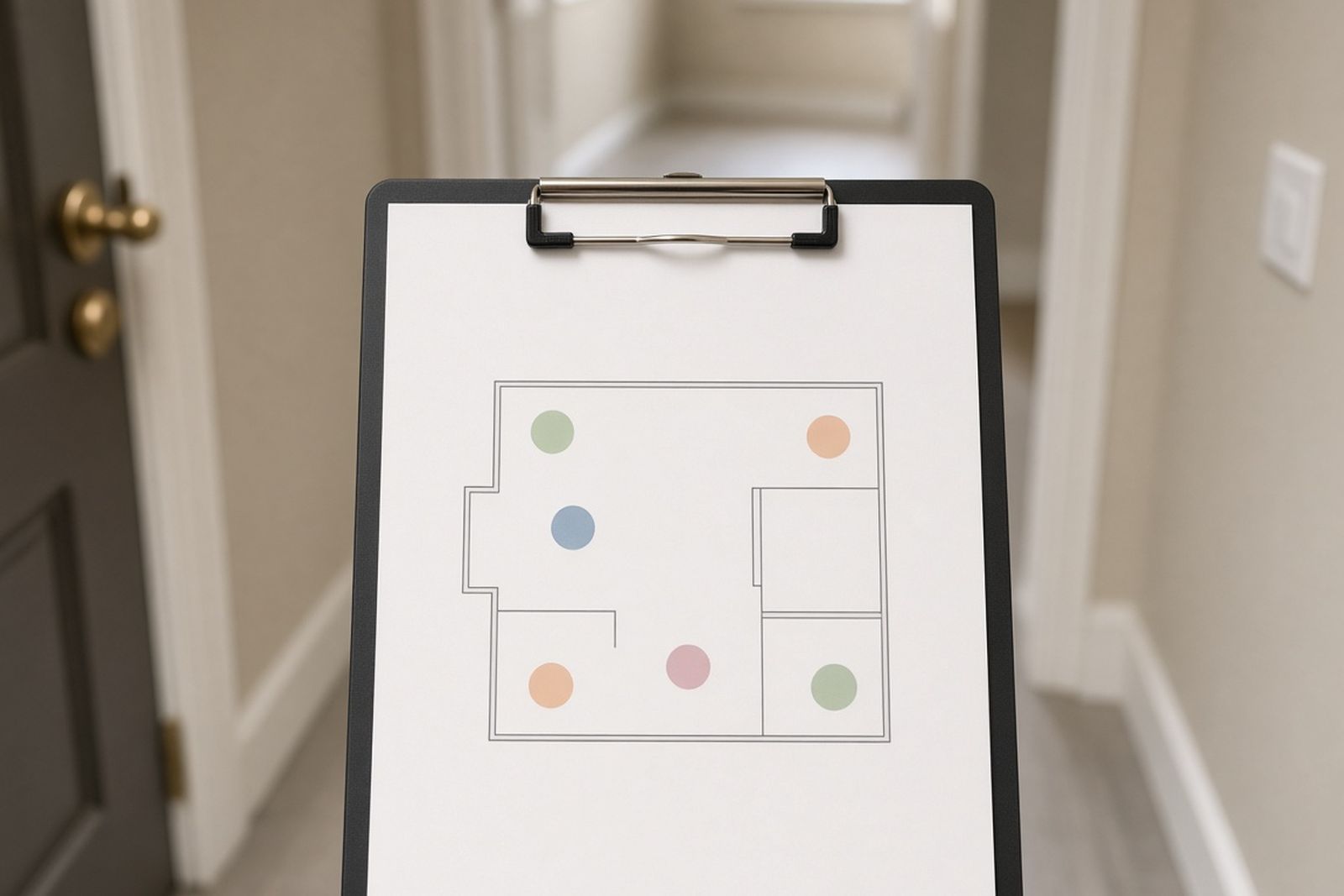
Clipboard showing a room plan with color-coded dots marking high-touch surfaces
Illustrative photo, not a job record. Clipboard showing a room plan with color-coded dots marking high-touch surfaces.
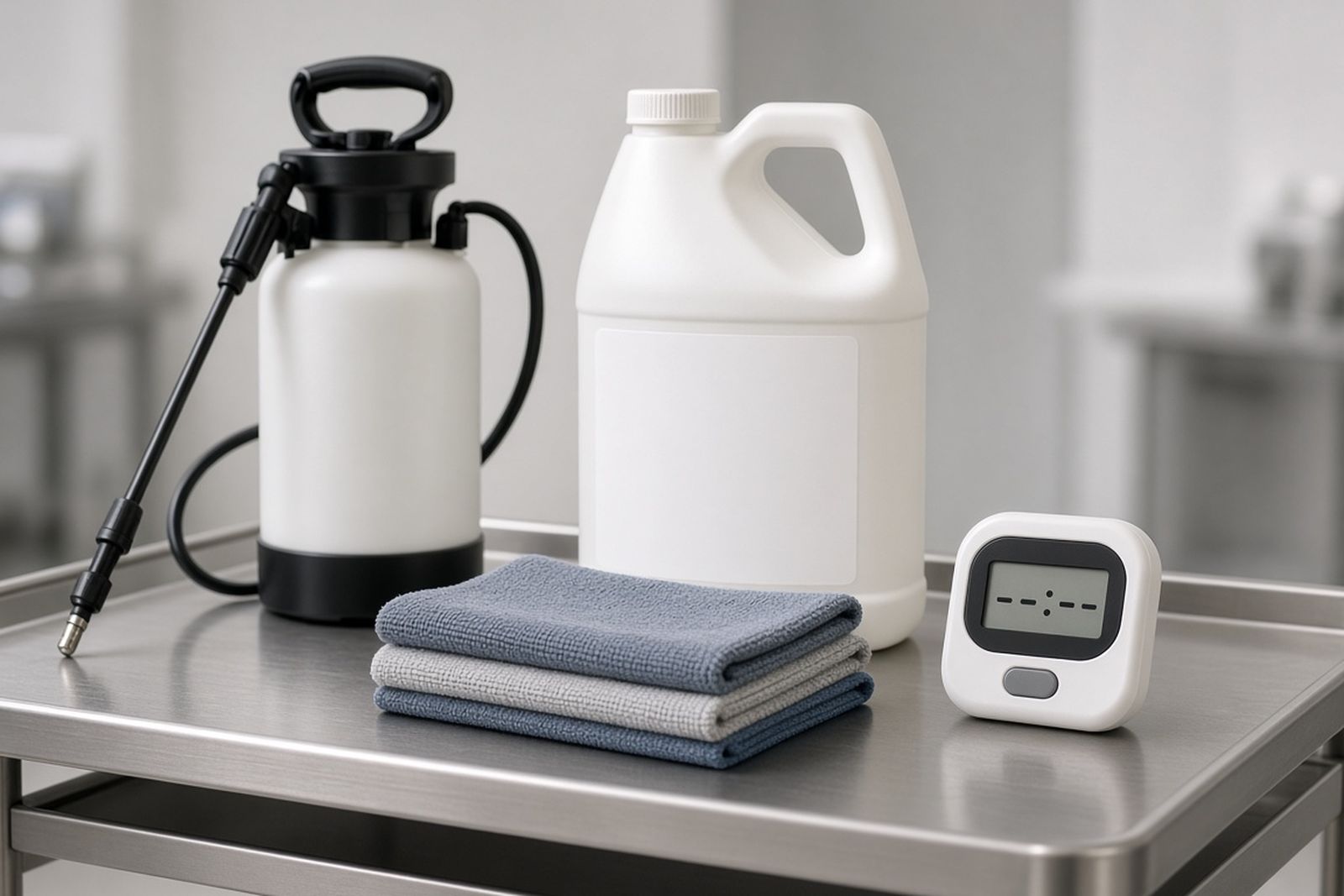
Pump sprayer, disinfectant jug, folded cloths and a contact-time timer on a steel cart
Illustrative photo, not a job record. Pump sprayer, disinfectant jug, folded cloths and a contact-time timer on a steel cart.

Infectious Disease Disinfection figures to keep in mind

National and research figures, not Bethesda data. Local conditions, rules and providers vary; use these for scale and context only.

11

Eight of 11 interviewees were unaware of asthma risk associated with cleaning work.

Read with care: Small voluntary sample; no causal inference; survey item nonresponse substantial.

Source: Wilson et al. (2023)59 Arizona survey respondents and 11 interviewees from maid services and a school district.

42%

An American Cleaning Institute survey found 42% of Americans were not letting disinfectant sprays and wipes stay wet long enough to work, with 26% wiping immediately after spraying.

Read with care: Trade-association survey conducted early in the pandemic; self-reported behavior.

Source: American Cleaning Institute (2020)United States, 1,005 adults surveyed March 18-19, 2020

19.

The most common reported cleaning frequency increased after COVID-19.

Read with care: Reported knowledge and practices, not observed compliance or infection outcomes.

Source: Centeleghe et al. (2024)137 healthcare-professional respondents; convenience/purposive online sample across the pandemic.

These figures are public research and agency data, not this network's own job records. Keep each number with its population, year and limits; none of them predicts cost, timing or outcome at a specific property.

Plan before you reach out

Use the first 24 hours planner for immediate steps and the provider vetting checklist to confirm any Bethesda provider's training, insurance and waste path in writing.

What research has found

Findings from published studies of people and properties in situations like this one. They describe what researchers observed in a specific group; they are not predictions for your case.

Cleaning of shared medical equipment was identified as a potential gap.
Who was studied: 96 Australian nurses and midwives in clinical settings.Limits: Self-report; small volunteer sample.Nurses’ and midwives’ cleaning knowledge, attitudes and practices: An Australian study (2021)
Severity of plastic damage varied between wipe formulations.
Who was studied: Eight wipe formulations tested on healthcare plastics under fixed strain for seven days.Limits: Accelerated test conditions; not a failure rate for installed equipment.Chemical resistance testing of plastics: compatibility of detergent and disinfectant pro… (2024)

Infectious Disease Disinfection community polls

Poll results

Every count is a real visitor vote; nothing is seeded or padded. One vote per poll per device, and you can change your answer.

Your experience

When your facility had an illness cluster, how did you handle cleaning?

No visitor votes yet
Process

How did you decide whether to close all or part of the facility?

No visitor votes yet

Planning cleanup in Bethesda?

Send a short message about the property to the follow-up inbox. A coordinator can reply by email with next steps.

Your request is sent to the follow-up inbox. A coordinator can reply by email.

If anyone is hurt or in danger, call 911 first.