Northeast · US

Infectious Disease Disinfection Planning in Boston, MA

Planning infectious disease disinfection in Boston, MA

Disinfection planning for Boston brownstones and condos. Covers sealed winter homes, EPA labels, List N limits, wet times, and CDC community hygiene advice. This is planning guidance, not a claim of a local office or crew in Boston.

Get an email reply about infectious disease disinfection

Send a short message to the follow-up inbox. A coordinator can reply by email. This form does not send emergency help; call 911 first if anyone is in danger.

Tell us what you need help with. Share a short description; please leave out medical details, access codes, and other sensitive information.

A request does not confirm a booking. For immediate danger, contact local emergency services.

Or email info@prompartybuses.com

Direct answer

The short answer for Boston, MA

Triple-decker stairwells, Beacon Hill brick walk-ups, and housing near Longwood need New England plans. They must fit houses sealed up against Nor'easters. Keep List N claims honest. Refuse sterile-building claims near the hospital campuses.

Editorial guide · Biohazard Remediation NetworkUpdated 2026-07-22Location focus: Boston, MA

Local planning context

Triple-deckers and stacked brick walk-ups put most hands on painted spindles, vestibule buzzers, and basement laundry pull-chains. That's neither a Midtown elevator bank nor a Hamptons pool pavilion. After an illness, go after those spots before a parlor mantel. Nor'easter storm windows and radiator heat trap chemical smells. Keep the stairs closed for the labeled wet time, even when Green Line or Commuter Rail departures push for an early reopening. The Boston Public Health Commission and Massachusetts DPH can support factual notices. They don't hand out sterile clearance for a residential stair.

With students and young professionals moving in and out, landlords are tempted to do a quick scent-and-wipe between leases. A Back Bay or Dorchester unit still needs soap first, a registered product that fits the illness, and a closed door until the timer is up. Futon covers and throws go in the wash. Fabric dining chairs can leave for a while. A quick wipe of the spindles between leases doesn't sterilize a triple-decker.

Housing near Longwood and other medical areas shares sidewalks, and sometimes lobbies, with clinical campuses. Device sterilization language belongs inside licensed clinical programs. It isn't a standard for clearing homes. Notices must not suggest a triple-decker was sterilized because a nearby hospital wiped its exam rooms.

Property considerations

Rank spindles, vestibule buzzers, laundry pull-chains, and shared bath taps above parlor decor.

Wash futon covers and throws before any product goes on.

Keep shared stairs and baths empty through the labeled wet time on transit mornings.

A triple-decker kitchen counter may need rinsing after disinfecting, unlike the stair spindles.

Plan Nor'easter airing-out so people return on the label's timing, with no early wiping dry.

Near medical areas, keep hospital device language out of notices about reopening residential stairs.

Response-planning framework

Trace the triple-decker's up-and-down path

List the baths, kitchens, and stair spots used while someone was contagious, without publishing diagnoses. Buy for the germ in this report. Don't just grab whatever the last lease turnover used. Refuse sterile-home sales talk.

Detergent first, even under radiator heat

CDC advice for homes and community buildings puts scrubbing off grime before any disinfectant touches a stair rail. Small New England baths build up film that blocks the product if you skip this step. Keep each spindle, buzzer, and tap wet for the contact time printed on the label. A clean smell isn't a clock. Stair rails deserve the same honesty as fixtures.

A reopening clock for transit mornings

Keep treated hallways and the laundry room closed until the wet time and the label's return time are both over. One written clock for neighbors sharing a stair beats rushed wiping to catch a train. A back stair or fire escape only helps if its rails were treated too. Under storm windows, air out as the SDS directs.

Landlord and board records

A residue swab on a shared laundry pull-chain only tells you about leftover grime. Point public questions to the Boston Public Health Commission or Massachusetts DPH. List soft items left out in the same packet.

Documentation checklist

  1. 1List of contact spots from the triple-decker stairs down to the laundry
  2. 2Illness pattern as the tenant or landlord described it, with no names or unit numbers
  3. 3EPA registration numbers and germ claims
  4. 4Proof of detergent cleaning first
  5. 5How long each floor's bath and the basement laundry stayed wet
  6. 6Stair reopen hour, chosen around the T schedule and school bells
  7. 7Washing decisions for futon covers and throws
  8. 8Notes that split the plan when housing sits near clinical campuses

Official resources

Questions for this location

Which triple-decker objects come first after school-linked stomach illness?

Scrub grime off the bath fixtures and laundry pull-chains with detergent. Then use an EPA-registered product labeled for stomach-illness germs, and keep it wet for the full labeled time. Stuffed toys need washing or setting aside. List N and norovirus are separate questions. Everyone on each floor still needs to wash hands. The cleanup lowers risk. It doesn't sterilize the building.
How do Nor'easter storm sash change wet-contact practice?

Closed storm windows slow drying and trap smells in stacked stairs. People wipe surfaces early so they can make the morning train, which ruins the label's wet time. Plan longer empty periods. Keep surfaces wet for the full printed time, and air out as the SDS directs. One reopening clock keeps neighbors from opening the stair early.

How should notices near Longwood separate hospital cleaning from residential stairs?

Keep them separate. Hospitals and clinics near Longwood clean their rooms under their own programs. That has nothing to do with the stairs of a triple-decker down the street. A residential notice should say which hallways, laundry, or entries were cleaned and when they reopen. It must never say a triple-decker was sterilized because a clinical building wiped its exam rooms. Keep tenants' health out of it.

What does List N cover in a Beacon Hill walk-up after COVID-19 exposure?

In a Beacon Hill walk-up, List N points you to products EPA has listed for the COVID-19 virus, used as the label directs. Check the EPA number. Follow the contact time and surface directions, especially on painted wood and old radiators. Add detergent cleaning, an empty unit during the wet time, and storm windows cracked open for fresh air. Medical decisions stay with doctors and the Boston Public Health Commission. Record the treated objects and the soft items set aside.

What verification packet is realistic after walk-up disinfection?

Keep what a landlord or insurer might reasonably ask for. That means the products and their labels and which floors, baths, and laundry controls were treated. Add the cleaning done first, wet times, washing decisions, and written reopening times. Photos of the setup help. Reject certificates claiming the building is germ-free. For health questions, point tenants to their doctor, the Boston Public Health Commission, or the Massachusetts Department of Public Health.

How should a Boston triple-decker landlord handle a sick tenant's trash during the winter?

Ask the tenant to double-bag and tie soiled waste before carrying it to the shared bins. Put the bins where tenants can reach them without a long walk through snow or ice. Clean and disinfect the bin lids and the back-door handle more often during the illness. Anyone who handles the bins should wear gloves and wash hands afterward. City trash rules still apply. Call the city's service line with questions about pickups.

What should a Boston student renter do after being sick in a shared apartment?

Once you feel better, clean the bathroom and kitchen spots you used. Start with detergent. Then use a labeled disinfectant on handles, taps, the toilet flush, and the fridge door. Wash your bedding and towels. Tell your roommates what you cleaned so they don't have to guess. If you share a basement laundry with other units, wipe the machine doors after your loads. Take health questions to the student health service or your doctor.

Contact

Get help by email

Send a short message for an email reply about infectious disease disinfection planning questions for the Boston area.

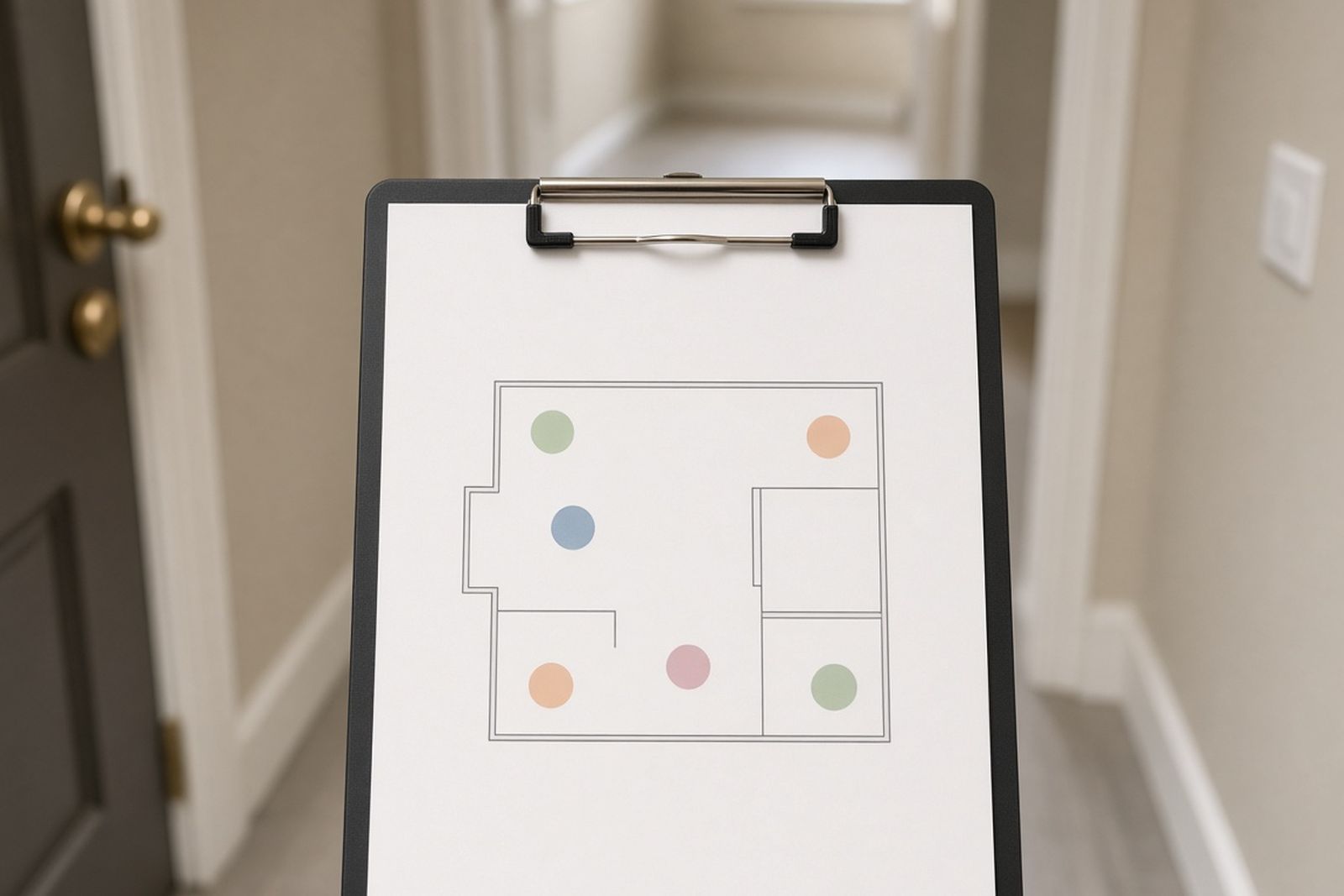
Clipboard showing a room plan with color-coded dots marking high-touch surfaces
Illustrative photo, not a job record. Clipboard showing a room plan with color-coded dots marking high-touch surfaces.
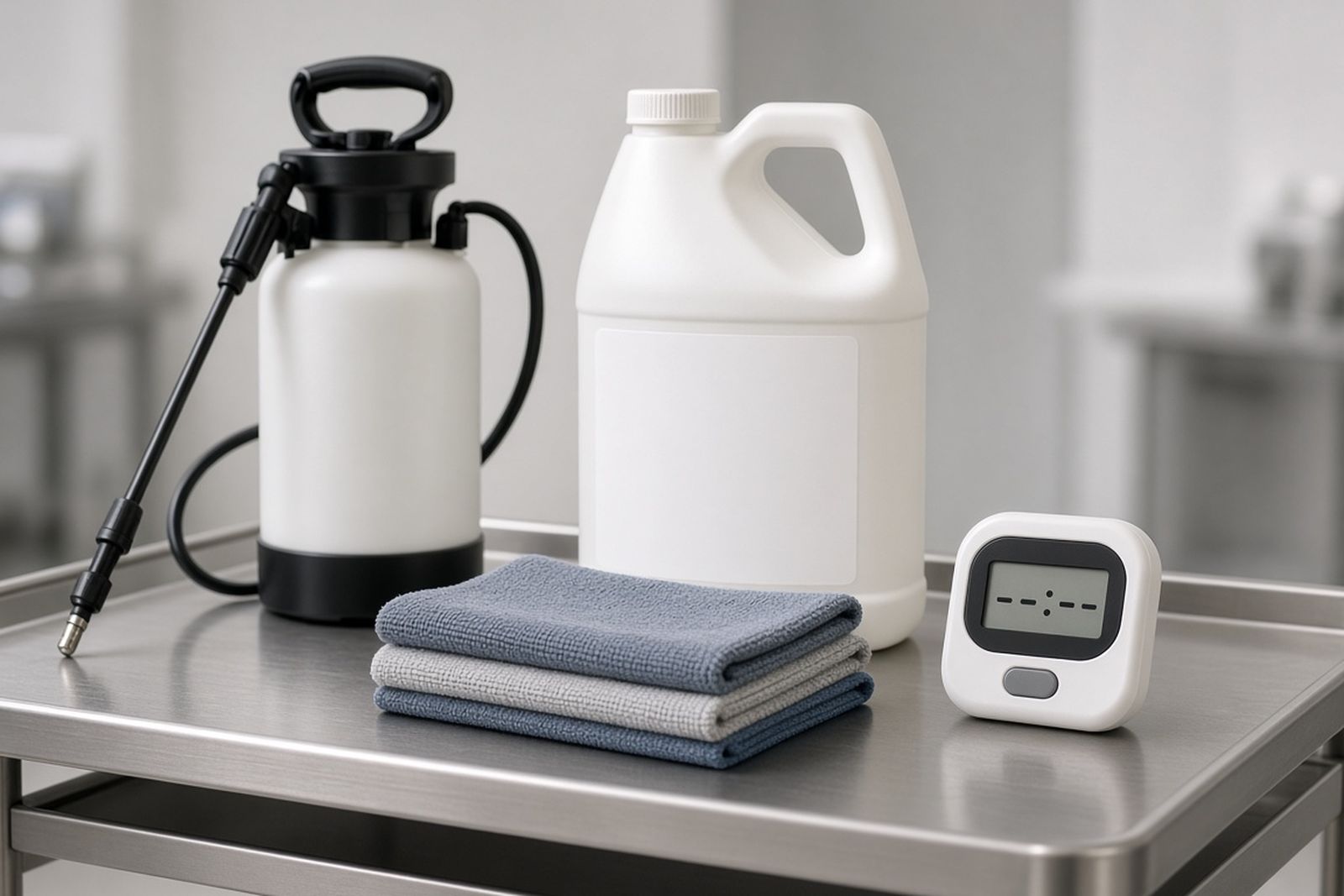
Pump sprayer, disinfectant jug, folded cloths and a contact-time timer on a steel cart
Illustrative photo, not a job record. Pump sprayer, disinfectant jug, folded cloths and a contact-time timer on a steel cart.

Infectious Disease Disinfection figures to keep in mind

National and research figures, not Boston data. Local conditions, rules and providers vary; use these for scale and context only.

9.4-51 million

CDC estimates seasonal flu caused 9.4 million to 51 million illnesses, 120,000 to 710,000 hospitalizations and 6,300 to 52,000 deaths annually in the U.S. between 2010 and 2025.

Read with care: Ranges reflect large season-to-season variation and are modeled estimates.

Source: CDC (2025)United States, annual range across 2010-2025 seasons

323,700

CDC estimated 323,700 MRSA cases in hospitalized patients and 10,600 deaths in 2017, with $1.7 billion in attributable healthcare costs.

Read with care: Excludes many uncultured skin infections; hospitalized cases only.

Source: CDC (2019)United States, hospitalized patients, 2017 data

223,900

CDC's 2019 Antibiotic Resistance Threats Report estimated 223,900 C. difficile cases in hospitalized patients and 12,800 deaths in 2017, with $1 billion in attributable healthcare costs.

Read with care: Counts hospitalized cases only; costs cover hospital-onset cases only.

Source: CDC (2019)United States, hospitalized patients, 2017 data

These figures are public research and agency data, not this network's own job records. Keep each number with its population, year and limits; none of them predicts cost, timing or outcome at a specific property.

Plan before you reach out

Use the first 24 hours planner for immediate steps and the provider vetting checklist to confirm any Boston provider's training, insurance and waste path in writing.

What research has found

Findings from published studies of people and properties in situations like this one. They describe what researchers observed in a specific group; they are not predictions for your case.

Conferences and study days were a major source of biofilm knowledge.
Who was studied: 137 healthcare-professional respondents; convenience/purposive online sample across the pandemic.Limits: Reported knowledge and practices, not observed compliance or infection outcomes.Infection prevention control in practice: a survey of healthcare professionals’ knowledg… (2024)
Floors were disinfected less consistently than high-touch surfaces.
Who was studied: 47 US hospital environmental-services respondents across 26 states; 2019 survey.Limits: 47 of 273 contacted participated; practices were reported rather than observed.Environmental cleaning and disinfection of hospital rooms: A nationwide survey (2021)

Infectious Disease Disinfection community polls

Poll results

Every count is a real visitor vote; nothing is seeded or padded. One vote per poll per device, and you can change your answer.

Your experience

When your facility had an illness cluster, how did you handle cleaning?

No visitor votes yet
Process

How did you decide whether to close all or part of the facility?

No visitor votes yet

Planning cleanup in Boston?

Send a short message about the property to the follow-up inbox. A coordinator can reply by email with next steps.

Your request is sent to the follow-up inbox. A coordinator can reply by email.

If anyone is hurt or in danger, call 911 first.