Coral Gables, FL

Infectious Disease Disinfection Planning in Coral Gables, FL

What to do, who to contact, and what to ask in Coral Gables.

Illness in your Coral Gables courtyard home or duplex? See what to clean first, how to time it around classes, and what to tell neighbors.

Get an email reply about infectious disease disinfection

Send a short message to the follow-up inbox. A coordinator can reply by email. This form does not send emergency help; call 911 first if anyone is in danger.

Tell us what you need help with. Share a short description; please leave out medical details, access codes, and other sensitive information.

A request does not confirm a booking. For immediate danger, contact local emergency services.

Or email info@infectiousdiseasecleanup.online

The short answer for Coral Gables, FL

In a Coral Gables courtyard home or duplex, illness spreads by the gate latch, the breezeway switch and the shared bath, not the tiled loggia. Start your list there. Grit and grime come off first, and then a disinfectant with the right label goes on. Here is how to plan around class times, housemates and neighbors.

What to do, step by step

  1. 1

    List the arcade and breezeway touch points

    Walk the path from the street gate through the arcade and breezeway to the bath. Write down what hands touched. Then ask your roommates one question: was it a stomach bug with vomiting, or more like a cold or flu? You do not need to publish names. Take both notes to the company and ask to see the label of the disinfectant it plans. Check it for an EPA registration and for a claim that covers your roommates' illness. Near campus you may hear sales talk about a sterile Mediterranean home. Ignore it.

  2. 2

    Have the coral-rock thresholds washed first

    CDC's methods put detergent cleaning of bath grime and banyan grit ahead of any disinfectant. If the film on a wrought-iron latch is skipped, the bottle is wasted. A good crew scrubs the stone and iron, then keeps the pool-bath fixtures wet for the full labeled time. Ask for the start and stop times on paper. With those in hand, nobody can point to the smell of courtyard perfume and tell you the job was done.

  3. 3

    Hold the reopening around class times

    Treated gates and baths stay closed through two periods: the labeled wet time and the return time on the safety data sheet. Make one schedule that every housemate shares. That beats wiping a latch dry early for an 8 a.m. lecture. An extra bath only helps when it was part of the job or was never used by the sick person. A sealed duplex should then be aired the way the sheet directs. The air will be fresher, though nobody should call it sterile.

  4. 4

    Ask for a landlord packet you can keep

    Renters near the University can request this record from the landlord. It should hold the product registrations, a sketch of the breezeway, the notes on grit removal and the timed wet-period log. If you own the home, keep the same papers yourself. Neighbors who have questions about illness in the area can call the Miami-Dade health office. Anything about a person's own care is a matter for their doctor, not for the landlord or the cleaning company.

What cleanup is like in Coral Gables

Coral Gables has old-style courtyard homes, duplexes near the campus and lofts off Miracle Mile. In a courtyard home, germs sit on the breezeway switches, the wrought-iron latches, the pool-bath levers and the bike hooks where campus bags land. The upper loggia with its decorative tile matters far less. Ask each housemate which bath they used, and write it down. Coral rock thresholds and banyan-leaf grit on the courtyard benches are layers of grime a product cannot work through, so they must be washed first. For a plain family notice, the county's state health office can help. It does not give a villa a health clearance.

Humid evenings and sealed-up air conditioning change how your surfaces dry. The bigger risk is the morning rush. A student heading to class or a caregiver leaving for an appointment pushes the courtyard gate open while it is still wet. That breaks the wet time on the label. Agree on a time with your housemates before the work starts. Keep your own aims modest too, because an everyday wipe-down does not sterilize anything. If a fall on the courtyard tile left blood, say so when you call a company. Its workers need an OSHA bloodborne pathogen plan for that.

Near Miracle Mile, some street-level clinics share a parking garage with the apartments above. If you live in one of those buildings, you do not need to worry about how the clinic cleans. Your shared courtyard and parking area are ordinary community spaces, and CDC's everyday advice covers them. A notice for neighbors can be short. It should state the facts about what is closed and for how long, and it should not carry a diagnosis. You are free to ask your landlord to see a notice before it is posted on your gate.

What to expect for your type of home

  • Courtyard homes: The gate latches, breezeway switches and pool-bath levers come before any unused loggia decor. Point out to the company the gates and baths that saw use during the illness.
  • Homes with patio furniture and toys: Patio cushions and toys get washed first. Ask the company to start on hard surfaces only after the fabric is bagged and out of the courtyard.
  • Student duplexes: Arrange another bath for housemates who leave early for class. Agree on it the night before, so nobody opens a treated bath at dawn because they are running late.
  • Duplex kitchens: Each unit's kitchen counter may need a rinse after treatment. Ask the company what the label requires, and wait for that step before you set food on the counter.
  • Homes with shared iron gates: A departure for class or an appointment should not interrupt the wet time on a shared gate. Use another exit for those hours, and tell your neighbors which one.
  • Lofts near Miracle Mile clinics: A notice about your courtyard does not need to mention nearby clinics at all. Ask your landlord to keep it to your building's own doors and gates.

Papers and records to keep

  • A list of the breezeway latches and pool baths that were touched
  • The pattern of illness among roommates, written without names
  • EPA registrations and label germ claims for what was used on tile, iron and stone
  • A note that coral rock and wrought iron were washed before disinfecting
  • Timed wet-period logs for each bath your housemates share
  • The reopening schedule you built around class times
  • Notes on outdoor cushions and stuffed toys that were set aside
  • A line stating that Miracle Mile clinic floors were not part of the job

Local offices and official help

Common questions in Coral Gables

We had a stomach illness in our duplex near campus. What comes first?

The bath used during the illness comes first. Next are the fridge pulls, the breezeway switches and the wrought-iron latches where backpacks land before lecture. Coral-rock grit and bath grime get washed off. Then a registered product whose label lists stomach germs goes on the latches and taps and stays wet for its time. Stuffed toys need washing or bagging. Being on the COVID list does not make a bottle right for norovirus. Its label has to say so.
Can a tutor come back the same afternoon after the courtyard study nook is sprayed?

Yes, once the study nook has been washed, treated and kept empty until the label says people can return. A spray during the lesson does nothing useful. A shady spot in the courtyard can serve for one afternoon in the meantime. Keep a note of the product and the times. When you describe it to the tutor's family, call it a cleaning, since no home is ever sterile.

What should we tell courtyard neighbors while the gates are closed?

Tell them which courtyard gates or shared areas are closed. Say when the product's safety sheet allows use again, which you may have timed around class schedules. Never share who is sick or what the illness is. If neighbors are worried, suggest they wash hands after using shared latches and talk to their doctor about their own health. A short, calm message keeps a courtyard building friendly.

What does List N really mean after a COVID-19 exposure near our courtyard kitchen?

It means EPA has put certain products on its COVID-19 list, and that they count when used as directed. That is all it means. Look up the EPA number from your bottle. Then follow the wet time and the surface directions for tile, wrought iron and stone. Wash with detergent first. Keep the kitchen window closed while the product sits wet, and bring in fresh air once the time is up.

Someone was hurt at our villa. When does the cleanup need trained workers?

It needs them when an injury leaves blood, or a body fluid like it, on your courtyard tile or in the kitchen. Describe what was spilled before anyone picks gloves and other protection. Trained workers should handle it under OSHA's bloodborne pathogen rules. A kitchen wiped after a cold or stomach bug, with no blood, just needs cleaning and then a labeled disinfectant. You can describe that in everyday words.

Our child was sick near the courtyard fountain in Coral Gables. How do we clean that area?

Clean any hard surface your child touched, such as the fountain rim, the bench or the gate latch, with soap and water. Rinse off algae or grime first. Follow with an outdoor product that is safe for stone. Do not pour disinfectant into the fountain water. If your child was sick into the fountain, drain it and clean it the way its maker directs. Keep children away until the surfaces have dried.

I'm a Coral Gables landlord. One duplex tenant is ill and the other unit has a newborn. What should I do?

Encourage both households to talk with their doctors, above all the family with the newborn. Have the shared entry doors, gates, mailboxes and laundry surfaces cleaned and disinfected more often during the illness. Ask the sick household to stay out of shared spaces when it can and to use the laundry at different times. Keep medical details private between the two households. A short written plan of who cleans what helps everyone feel safer.

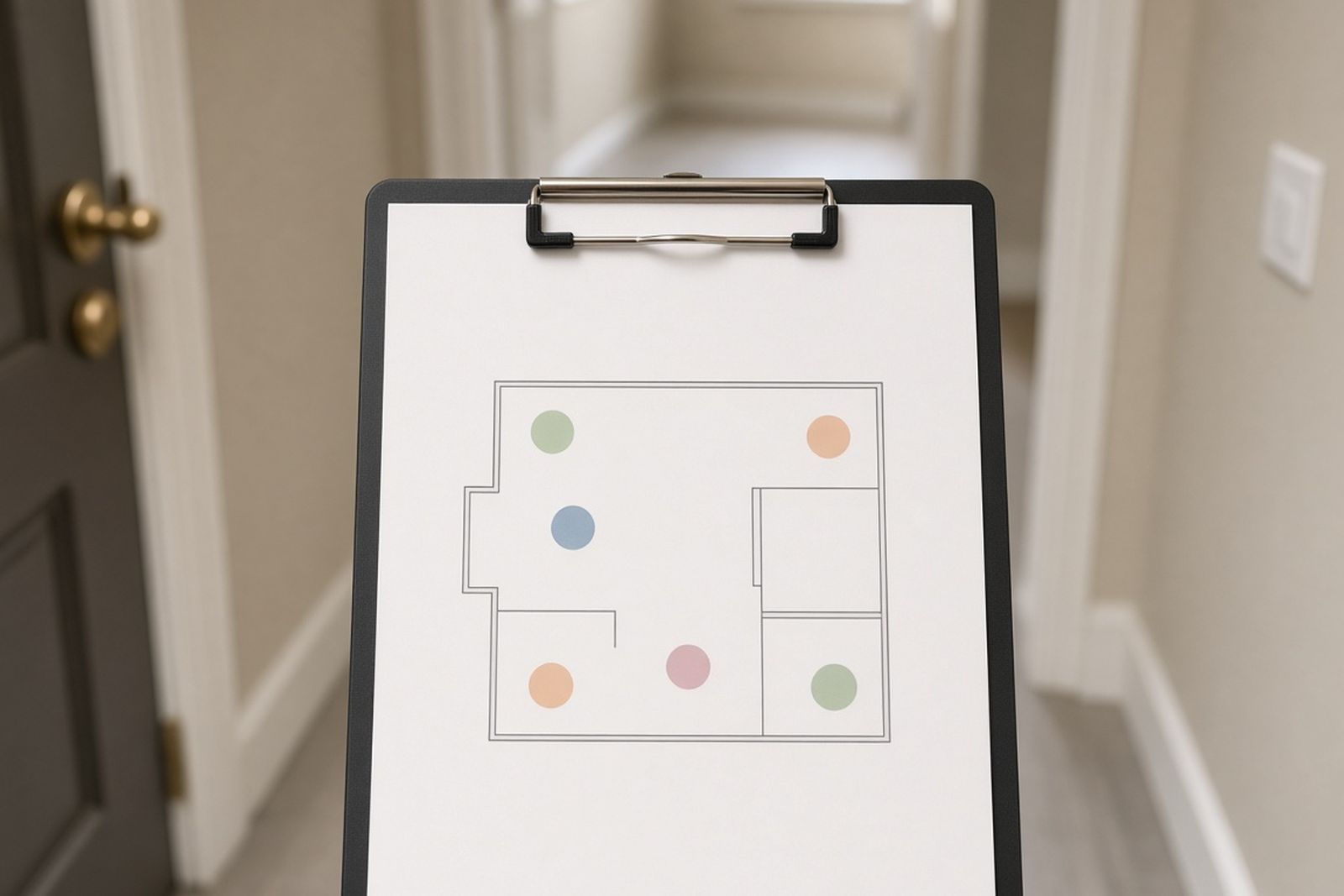
Clipboard showing a room plan with color-coded dots marking high-touch surfaces
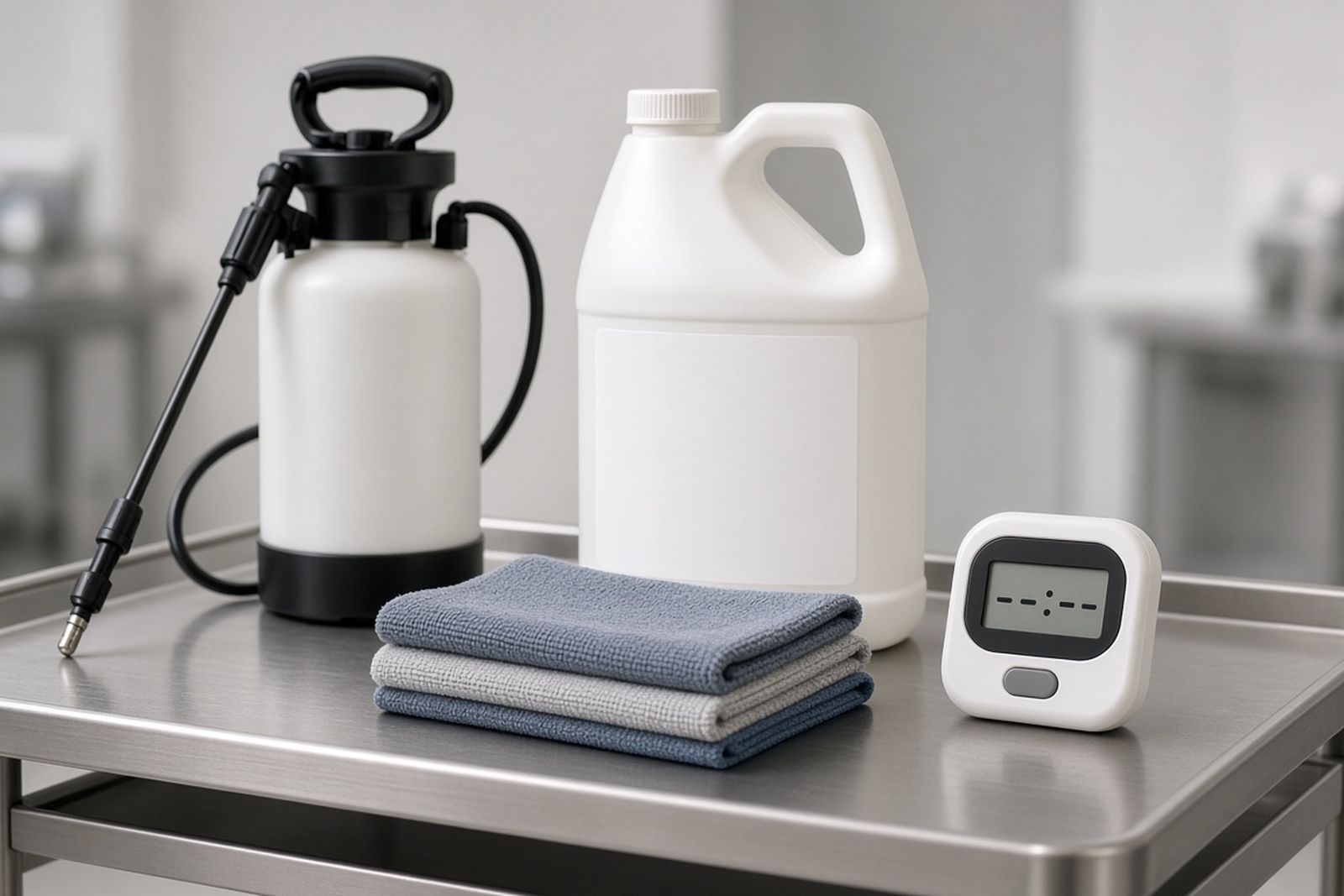
Pump sprayer, disinfectant jug, folded cloths and a contact-time timer on a steel cart

Facts worth knowing

  • A disinfectant must be registered with the EPA before it can be sold in the U.S., and more than 4,000 germ-killing products are registered.

    Why it matters: Registration does not mean a product kills every germ, so check that the label lists the germ you are worried about.

    Source: EPA, 2025

  • OSHA requires employers whose workers may contact blood to keep a written safety plan, offer hepatitis B shots within 10 working days, and train workers at least yearly.

    Why it matters: When you hire a cleanup company, you can ask whether its workers have this training and a written plan.

    Source: OSHA, 1991

  • CDC school guidance says flu virus can live on a surface, and possibly infect someone, for up to 48 hours.

    Why it matters: If someone in your home or building has flu, wipe down shared surfaces often while they are sick.

    Source: CDC, 2019

Tools that help right now

What would you do?

Poll results

Vote to see how other people answered. You can change your answer at any time.

Your experience

When your facility had an illness cluster, how did you handle cleaning?

Be the first to vote
Process

How did you decide whether to close all or part of the facility?

Be the first to vote

Need help in Coral Gables?

Send a short message about the property to the follow-up inbox. A coordinator can reply by email with next steps.

Your request is sent to the follow-up inbox. A coordinator can reply by email.

If anyone is hurt or in danger, call 911 first.