South · US

Infectious Disease Disinfection Planning in Great Falls, VA

Planning infectious disease disinfection in Great Falls, VA

Great Falls, VA disinfection planning. Covers river-lot homes, EPA labels, honest List N limits, how long surfaces stay wet, and CDC clean-first steps. This is planning guidance, not a claim of a local office or crew in Great Falls.

Get an email reply about infectious disease disinfection

Send a short message to the follow-up inbox. A coordinator can reply by email. This form does not send emergency help; call 911 first if anyone is in danger.

Tell us what you need help with. Share a short description; please leave out medical details, access codes, and other sensitive information.

A request does not confirm a booking. For immediate danger, contact local emergency services.

Or email info@prompartybuses.com

Direct answer

The short answer for Great Falls, VA

Great Falls has contractor home offices off Georgetown Pike, wooded lots on septic, and weekend guests who come for the overlook. Fairfax-specific plans should protect the label's wet time from delivery-gate pressure. Keep List N inside its COVID-19 limits. Refuse sterile-lot certificates after a generator-room wipe.

Editorial guide · Biohazard Remediation NetworkUpdated 2026-07-22Location focus: Great Falls, VA

Local planning context

Many wooded Great Falls lots hold hybrid federal-contractor desks, generator rooms, and the odd overlook guest who never enters the formal dining room. The real hand path often runs through garage boot rooms, home-office keyboards, and utility switches near the septic system. Map those spots for the time someone was contagious. Don't fog formal rooms nobody used.

Long driveways bring delivery pressure. Packages and landscapers show up while surfaces are still wet. Shade and humidity slow drying, so people buff fixtures dry early and break the label's contact time. Studio throws, outdoor cushions stored indoors, and desk-chair cushions usually need washing or setting aside. A quick wipe of the boot room is not sterilization.

A septic system or private well doesn't turn surface disinfection into a wastewater engineering job. But waste from heavy mess still needs a legal way off the property. Surface work is still clean-then-disinfect under CDC community guidance.

Property considerations

Map garage boot rooms, home-office keyboards, and septic-shed switches before formal dining decor.

Write separate lines for the main house, the studio office, and any guest loft.

Wash chair pads and porch cushions brought in for winter before treating hard surfaces.

Kitchen counters may need a rinse; the home-office desk and keyboard need an electronics-safe wipe instead.

Keep the driveway gate closed to nonessential deliveries through the wet time.

Note the legal waste packing used when heavy mess is removed near septic fields.

Response-planning framework

Map contractor-desk and boot-room traffic

Describe whether it's a stomach bug or a cold or flu without naming coworkers or classmates. Use EPA-registered products labeled for that specific illness. List N speaks to COVID-19. A stomach bug moving through a wooded-lot household may need a product with a stomach-germ claim instead. Reject sterile-lot sales talk on insurer letters.

Detergent on grit and keyboard film first

CDC community guidance puts removing grime first, before disinfecting boot rooms and baths. Boot-room grit and sticky keyboard film shield germs if you skip this step.

Keep rooms empty despite the long-driveway deliveries

Keep treated Great Falls rooms off-limits to family and couriers until both the product's timer and the SDS return notes are done. One household clock beats rushed buffing so a courier can reach the porch. A guest bath helps only if it was treated as part of the job.

A Fairfax file with waste notes

A residue swab on a faucet only checks that grime went down. Record how waste was packed when heavy mess left the property. Tell vendors the empty-room hours. Don't give them do-it-yourself fog recipes.

Documentation checklist

  1. 1Contact map of the boot room, home office, and septic shed
  2. 2What happened, without naming anyone
  3. 3EPA numbers and the germ claims chosen
  4. 4Detergent steps on gritty entries and desks
  5. 5Wet-time records for baths and hard desk surfaces
  6. 6Household reopening time tied to deliveries or school runs
  7. 7What was washed, aired, or stored away
  8. 8How soiled waste was bagged and taken off the lot instead of going down a drain

Official resources

Questions for this location

Does wiping a generator room clear a home-office keyboard upstairs?

No. Follow where hands went while someone was contagious. Keyboards, boot-room levers, and bath taps on that path need cleaning first. Then use a product matched to the germ and keep it wet the full time. Don't call an office sterile because a utility room smelled like cleaner. Write down what's included and left out. List N is not a key to every germ.
Can a courier come up the long driveway while treated rooms are still wet?

Not into rooms that are still drying. Ask regular couriers to leave packages at the garage or a porch you didn't treat. Hold the gate for anything that can wait. Keep treated rooms closed until the wet time and return period on the label have passed. Wiping a surface dry early so someone can come in cancels the work. Note the times you actually used.

How should septic-lot owners talk about waste after vomit cleanup?

Talk about it as ordinary waste. Soiled towels and cleanup materials go into sealed bags and out with the trash. They don't go down the toilet or a sink that drains to the septic tank. That keeps large amounts of mess and cleaning chemicals out of the system. Surface disinfection doesn't change how the septic system works. Keep the product safety sheet handy, and bring medical questions to a doctor.

What does List N cover after a COVID-19 exposure in a Fairfax home office?

For a Fairfax home office, List N marks products EPA has listed for the COVID-19 virus when label directions are followed. Confirm the EPA number. Follow the contact time and surface directions for the keyboard, desk, and utility switches. List N doesn't extend to stomach bugs that might pass through the household later. Wipe the contractor desk clean first, keep the office door shut while it works, and ventilate the house.

If there was blood in the home office or garage, what changes?

OSHA bloodborne pathogen planning applies when workers expect to handle blood or similar material. An injury in the garage or generator room is one example. Describe the mess first. If blood is found in the office or utility room, include protective gear, sealed waste bags, and exposure-control steps. No blood? Scrub, then treat. Keep hospital words out of any note for an employer.

How should a Great Falls household clean when the home relies on a private well?

Surface disinfection in the house doesn't affect your well water. But don't pour large amounts of disinfectant or soiled rinse water into drains that feed a septic system. Strong chemicals in large amounts can upset it. Follow the label's disposal directions. If the illness was a stomach bug and you wonder whether the well could be involved, have the water tested by a certified lab. Ask the county health department for guidance.

What should a Great Falls family do about a courier or landscaper arriving during cleanup?

Put a sign at the front door asking for deliveries to be left outside. Send a quick message to regular landscapers or couriers that the house is closed for cleaning for a few hours. They don't need details. Keep the garage and side doors closed while products are wet. If someone must come in, show them which rooms to avoid. Once the label's return time has passed, collect packages and wash your hands after opening them.

Contact

Get help by email

Send a short message for an email reply about infectious disease disinfection planning questions for the Washington DC area.

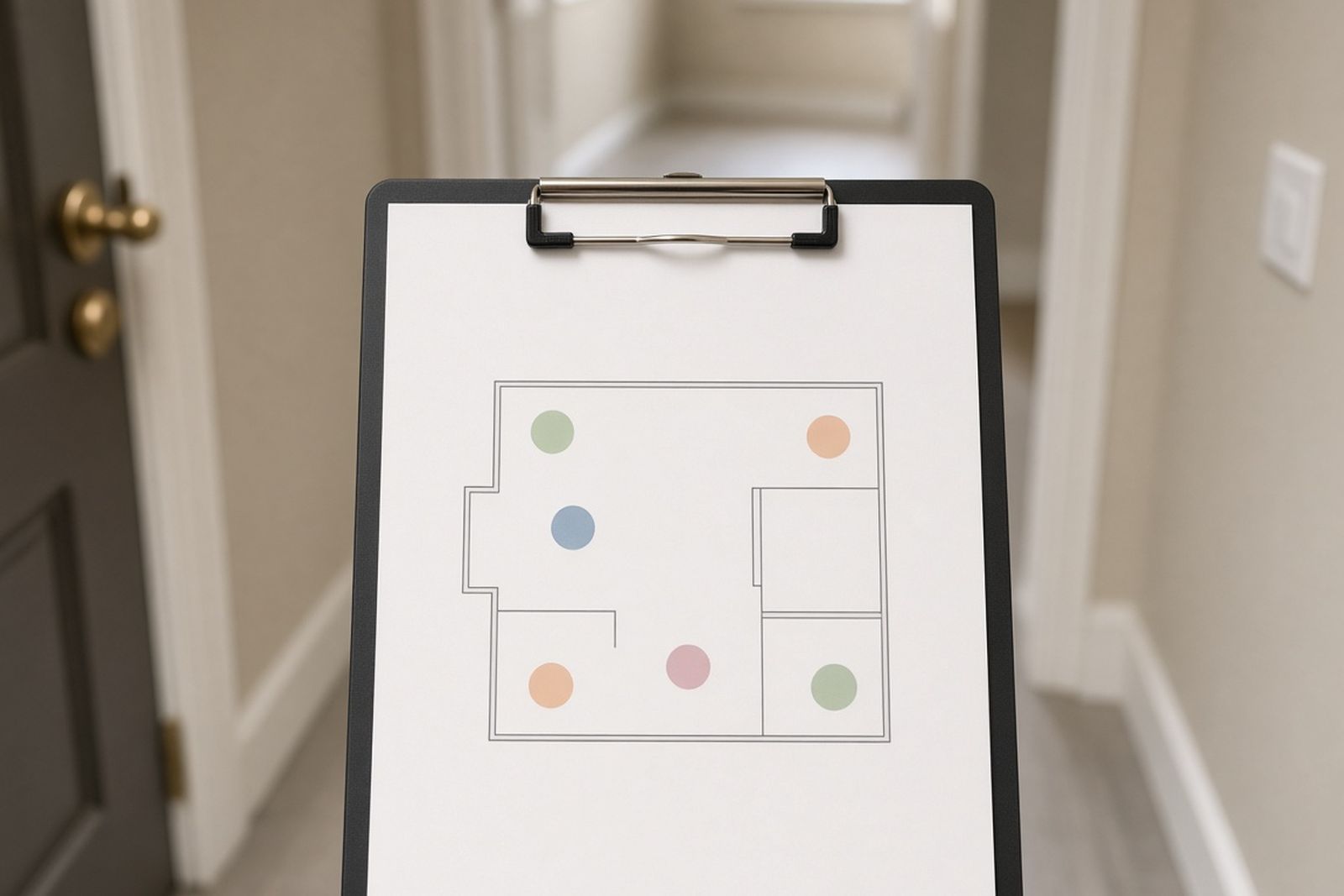
Clipboard showing a room plan with color-coded dots marking high-touch surfaces
Illustrative photo, not a job record. Clipboard showing a room plan with color-coded dots marking high-touch surfaces.
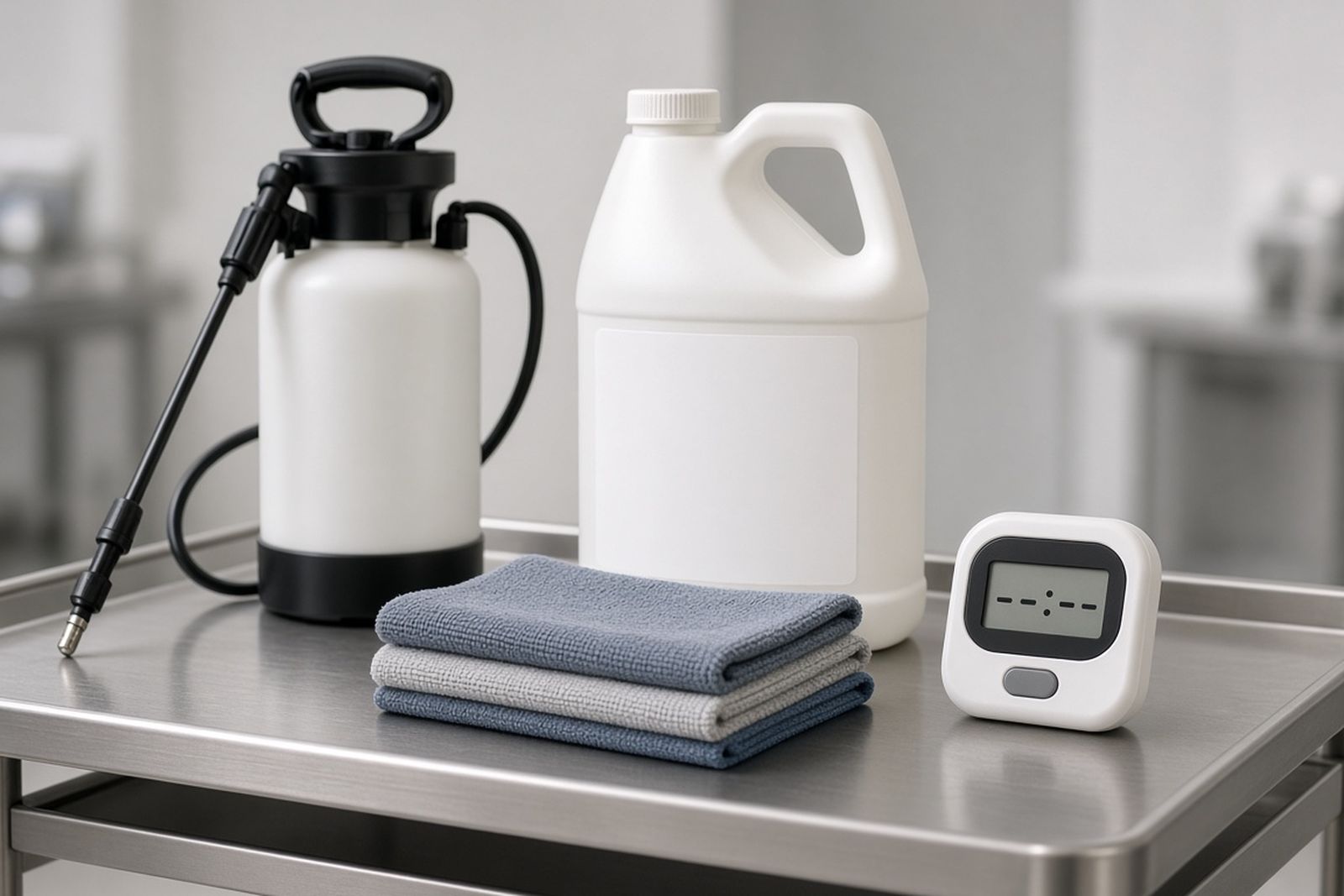
Pump sprayer, disinfectant jug, folded cloths and a contact-time timer on a steel cart
Illustrative photo, not a job record. Pump sprayer, disinfectant jug, folded cloths and a contact-time timer on a steel cart.

Infectious Disease Disinfection figures to keep in mind

National and research figures, not Great Falls data. Local conditions, rules and providers vary; use these for scale and context only.

98.1%

Manual wiping met the study's disinfection-success criterion on 98.1% of surfaces versus 75.5% for UV-C.

Read with care: Specific device, protocol and success criterion; no patient infection endpoint.

Source: Knobling et al. (2023)Naturally contaminated surfaces in a comparative field test.

81%

81% reported bleach use on high-touch surfaces in contact-isolation rooms.

Read with care: 47 of 273 contacted participated; practices were reported rather than observed.

Source: Han et al. (2021)47 US hospital environmental-services respondents across 26 states; 2019 survey.

11

Six of 11 interviewees described concerns or problems from inhaling cleaning chemicals.

Read with care: Small voluntary sample; no causal inference; survey item nonresponse substantial.

Source: Wilson et al. (2023)59 Arizona survey respondents and 11 interviewees from maid services and a school district.

These figures are public research and agency data, not this network's own job records. Keep each number with its population, year and limits; none of them predicts cost, timing or outcome at a specific property.

Plan before you reach out

Use the first 24 hours planner for immediate steps and the provider vetting checklist to confirm any Great Falls provider's training, insurance and waste path in writing.

What research has found

Findings from published studies of people and properties in situations like this one. They describe what researchers observed in a specific group; they are not predictions for your case.

Used wipes retained spores during and after wiping.
Who was studied: Non-sporicidal-claim wipes tested on Formica with C. difficile spores.Limits: Not a comparison of all sporicidal products; physical removal is not complete inactivation.Disinfectant wipes transfer Clostridioides difficile spores during the disinfection proc… (2020)
Some used wipes retained substantial viable bacteria.
Who was studied: Six commercial wipe products; two bacterial strains on nonporous Formica.Limits: Specific products and strains; no general maximum area or disease outcome established.Cross-contamination by disinfectant towelettes varies by product chemistry and strain (2020)

Infectious Disease Disinfection community polls

Poll results

Every count is a real visitor vote; nothing is seeded or padded. One vote per poll per device, and you can change your answer.

Your experience

When your facility had an illness cluster, how did you handle cleaning?

No visitor votes yet
Process

How did you decide whether to close all or part of the facility?

No visitor votes yet

Planning cleanup in Great Falls?

Send a short message about the property to the follow-up inbox. A coordinator can reply by email with next steps.

Your request is sent to the follow-up inbox. A coordinator can reply by email.

If anyone is hurt or in danger, call 911 first.