Northeast · US

Infectious Disease Disinfection Planning in Great Neck, NY

Planning infectious disease disinfection in Great Neck, NY

Great Neck home disinfection planning. Covers school-week touch maps, EPA labels, the limits of List N, how long surfaces stay wet, and honest risk cuts. This is planning guidance, not a claim of a local office or crew in Great Neck.

Get an email reply about infectious disease disinfection

Send a short message to the follow-up inbox. A coordinator can reply by email. This form does not send emergency help; call 911 first if anyone is in danger.

Tell us what you need help with. Share a short description; please leave out medical details, access codes, and other sensitive information.

A request does not confirm a booking. For immediate danger, contact local emergency services.

Or email info@prompartybuses.com

Direct answer

The short answer for Great Neck, NY

Nassau peninsula homes with several generations, LIRR entry benches, and basement tutoring corners need plans that handle shared baths honestly. Keep List N inside its COVID-19 limits. Refuse sterile-campus certificates after a kitchen wipe.

Editorial guide · Biohazard Remediation NetworkUpdated 2026-07-22Location focus: Great Neck, NY

Local planning context

Many Great Neck households put grandparents, parents, and school-age kids under one roof. The same bath taps and fridge handles get used nonstop, from dawn LIRR departures to evening homework. Map who used which bath while someone was contagious. That beats fogging a formal dining room nobody entered. Nassau County Department of Health materials can support factual family notices. They don't create medical clearance for a private kitchen.

Train-timed mornings squeeze reopening decisions. People wipe wet surfaces early so someone can catch a train, which breaks the label's contact time. Summer humidity and closed-up winter storms both change how smells clear after products go on. Some soft items usually need washing or setting aside for a while, since hard-surface germ claims don't cover them. These include washable seat covers near gathering rooms, prayer shawls stored by the chairs, and stuffed toys. An ordinary wipe-down after a cold is not a sterilization event.

Basement tutoring corners add shared keyboards and mini-fridge handles that pass between relatives and visiting students. Keep those desks empty through the wet time. Treat food-prep counters apart from desk wiping. Spraying during a live tutoring call re-soils the keyboard right away. If someone is hurt and blood, or other fluids that can spread disease, gets on the floor, workers need an OSHA bloodborne pathogen plan.
Property considerations

Do shared bath taps, fridge handles, and LIRR entry benches before formal dining decor.

Wash or set aside washable seat covers and stuffed toys before any product comes out.

Close the grandparents' and kids' baths until each label's timer ends.

Keep kitchen food-surface rinse rules apart from wiping basement desks.

Don't let train-timed departures interrupt the wet time.

Treat tutoring keyboards and mini-fridge handles as high-touch if they were used during the illness.

Response-planning framework

Chart how each generation used the baths

List each bath and kitchen spot used while someone was contagious, without publishing diagnoses. Use EPA-registered products labeled for the germ the family is dealing with. List N covers COVID-19 when you follow directions. Spore-forming germs and some tougher viruses may need other claims. Refuse sterile-home slogans.

Clean grime off shared fixtures first

Film in baths many people share blocks the product if you skip cleaning. Log start and stop times so a nice smell isn't mistaken for a finished job.

Stick to one reopening time on train mornings

One written clock for the household beats rushed early wiping so someone can make a train. An untreated spare bath won't help. Air out as the SDS directs.

A household file for Nassau questions

Nassau County's health office takes public questions. So does the state. Medical decisions stay with doctors.

Documentation checklist

  1. 1List of the baths and entry benches each generation used
  2. 2How the family described the illness, including which generations were sick, without names
  3. 3EPA registration numbers and germ claims
  4. 4Proof of detergent cleaning first
  5. 5Timed wet periods for shared baths and kitchenettes
  6. 6Household reopening time set around LIRR or school mornings
  7. 7Decisions to wash or set aside seat covers and stuffed toys
  8. 8Notes on whether the tutoring desk was included or left out

Official resources

Questions for this location

Where should a peninsula home with several generations start after a stomach bug?

Start with the baths used during the illness. Next come fridge and faucet handles, the switches along that path, and the entry bench where bags land before school or the train. Stuffed toys need washing or setting aside. With grandparents and children sharing baths, handwashing still matters. The goal is lower risk, not a sterile home.

Can basement tutoring resume between sessions after a midday spray?

Yes, once the corner has sat idle the whole time the label names. And only for surfaces that were cleaned first. Spraying while a student keeps typing doesn't work. Move the lesson to another room or push it later in the day. Record which product you used and when. Don't tell visiting relatives or the tutor the basement was sterilized. Say it was cleaned.

What should families tell relatives waiting for a train-timed reopen?

Tell waiting cousins which rooms are shut and the hour they open again. Don't share diagnoses. Explain that surface work lowers risk on treated objects. It doesn't prevent future illness. Point wider questions to the Nassau County Department of Health. Keep the SDS handy for anyone going in soon after.

How far does List N go after a COVID-19 exposure in a peninsula kitchen?

In a busy peninsula kitchen, List N simply names products EPA has listed for the COVID-19 virus when the label is followed. Use a listed product along with detergent cleaning and an empty kitchen during the wet time. Open windows or run the range hood. List N doesn't reach stomach bugs or other illnesses. Decisions about isolation or testing for grandparents and children belong with your doctor and the Nassau County Department of Health.

When should blood-cleanup planning replace a routine kitchen wipe here?

When someone in the family got hurt and there's blood or a similar body fluid on a counter, floor, or bathroom fixture. Workers who clean it need gloves, eye protection, sealed waste bags, and OSHA bloodborne pathogen training. Tell the cleaning service what happened before they arrive so they can prepare. A kitchen wiped after a cold or stomach bug, with no blood involved, doesn't need those steps.

How should a Great Neck family clean when an elderly relative is recovering at home?

Ask the relative's doctor or home-care nurse whether to avoid any products or strong smells. Clean their bathroom and bedside surfaces daily with detergent. Then disinfect the grab bars, toilet flush, faucet, and walker handles with a gentle labeled product. Wash their bedding separately. Keep a lined, lidded wastebasket near the bed. Other family members should wash hands before and after helping, even if they feel fine.

What should a Great Neck household do about shared dishes during a family gathering after someone was sick?

Run shared dishes and serving utensils through the dishwasher on its hottest cycle. Or wash them in hot, soapy water and let them air-dry. Wipe counters and the dining table with detergent, then a food-safe disinfectant, and rinse if the label says to. Serve food with utensils instead of letting guests reach into shared bowls. If the sick person is still recovering, they should stay out of food prep until their doctor says it's safe.

Contact

Get help by email

Send a short message for an email reply about infectious disease disinfection planning questions for the New York City area.

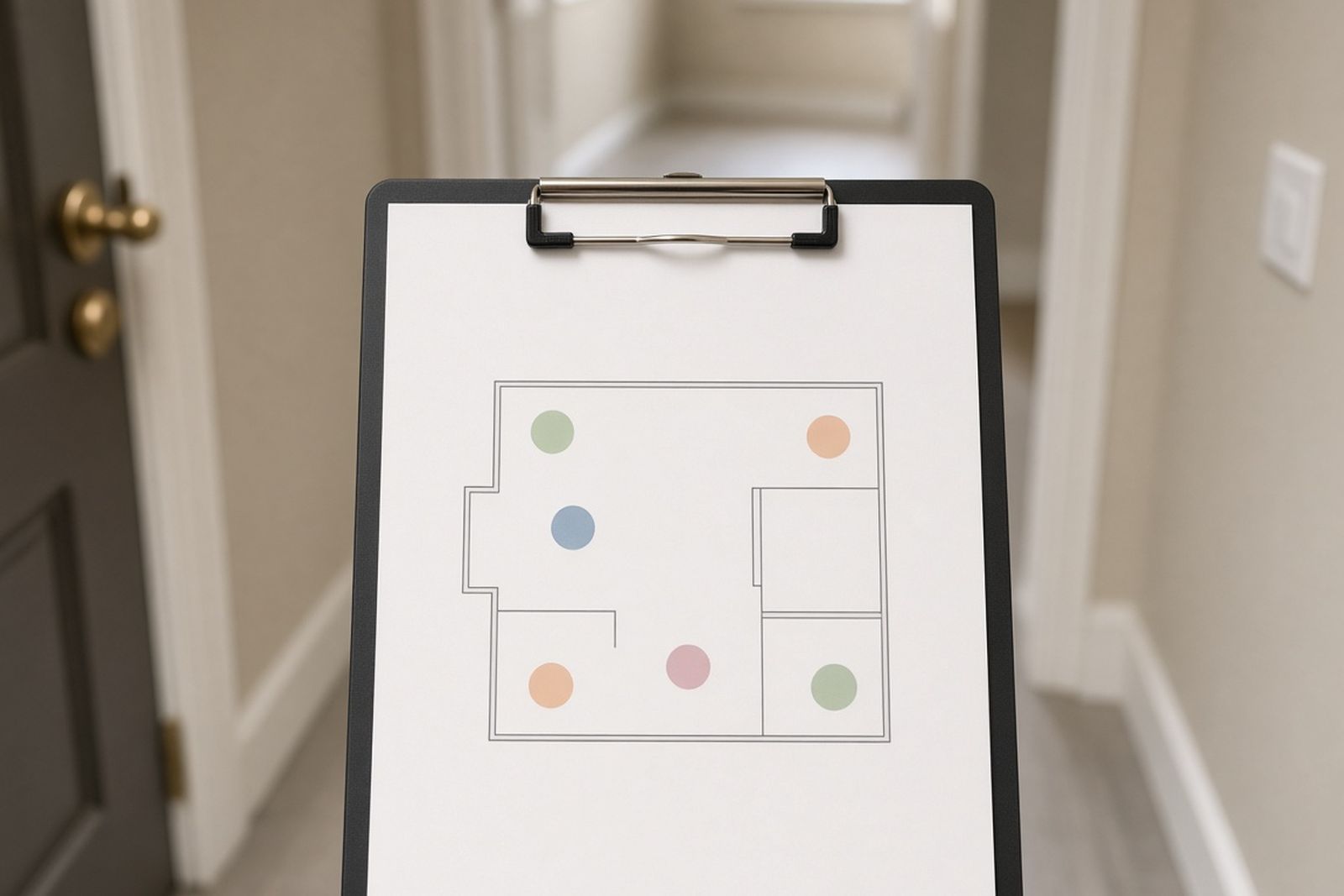
Clipboard showing a room plan with color-coded dots marking high-touch surfaces
Illustrative photo, not a job record. Clipboard showing a room plan with color-coded dots marking high-touch surfaces.
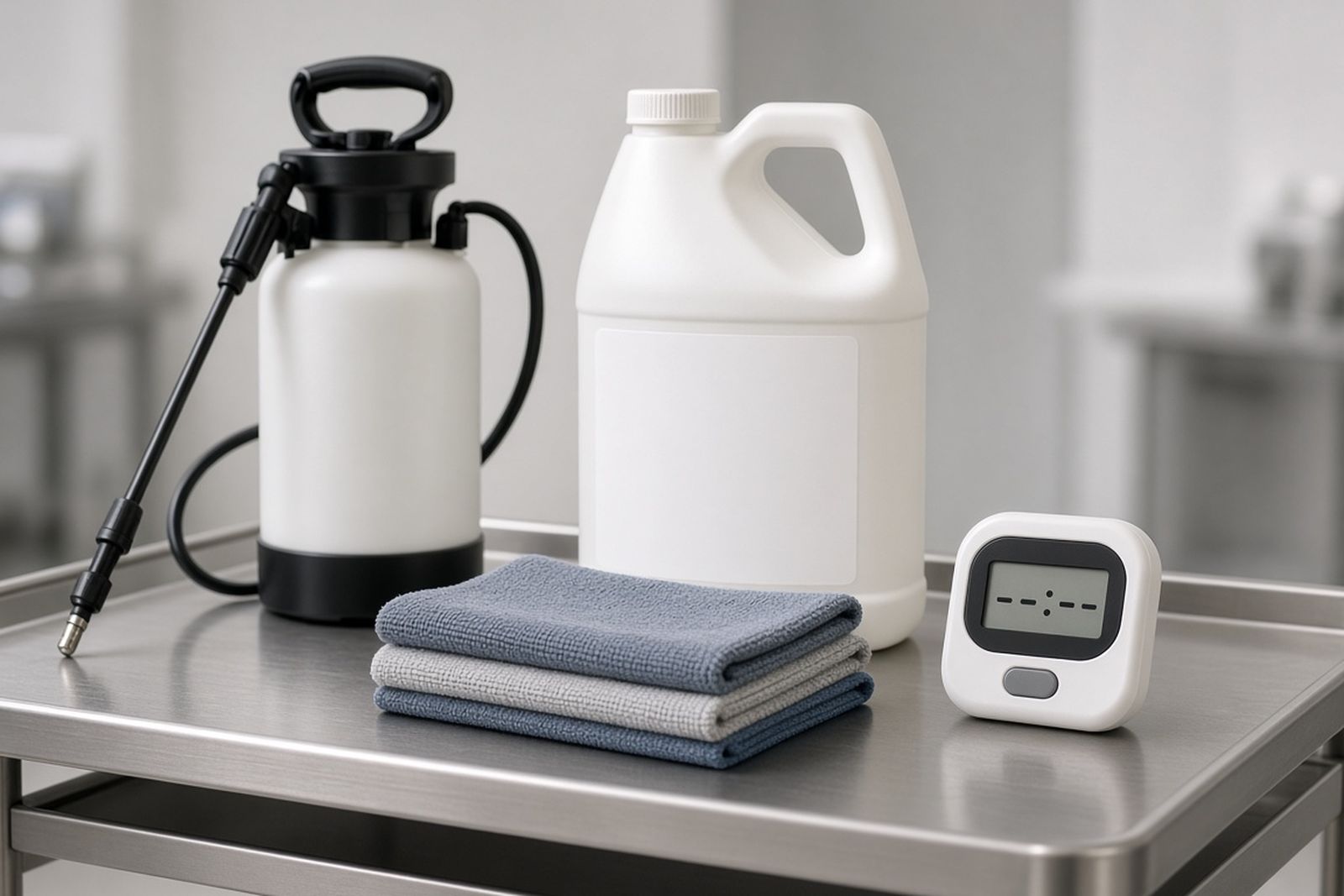
Pump sprayer, disinfectant jug, folded cloths and a contact-time timer on a steel cart
Illustrative photo, not a job record. Pump sprayer, disinfectant jug, folded cloths and a contact-time timer on a steel cart.

Infectious Disease Disinfection figures to keep in mind

National and research figures, not Great Neck data. Local conditions, rules and providers vary; use these for scale and context only.

500+

EPA's List N of disinfectants approved for use against SARS-CoV-2 grew from 85 products in March 2020 to more than 500 by October 2020.

Read with care: Product count has changed since 2020; List N inclusion is not an EPA endorsement.

Source: EPA (2020)United States, EPA-registered products, as of October 21, 2020

48 hours

CDC school guidance states most studies show flu virus can live and potentially infect a person for up to 48 hours after being deposited on a surface.

Read with care: Archived CDC page; survival depends on surface type, humidity and temperature.

Source: CDC (2019)General guidance for schools, United States

10 working days

OSHA's Bloodborne Pathogens standard (29 CFR 1910.1030) requires employers with exposed workers to keep a written exposure control plan reviewed annually, offer hepatitis B vaccination within 10 working days, and train workers at least annually.

Read with care: Applies to employers and their workers, not to homeowners doing their own cleanup.

Source: OSHA (1991)United States, employers with occupationally exposed employees

These figures are public research and agency data, not this network's own job records. Keep each number with its population, year and limits; none of them predicts cost, timing or outcome at a specific property.

Plan before you reach out

Use the first 24 hours planner for immediate steps and the provider vetting checklist to confirm any Great Neck provider's training, insurance and waste path in writing.

What research has found

Findings from published studies of people and properties in situations like this one. They describe what researchers observed in a specific group; they are not predictions for your case.

Used wipes retained spores during and after wiping.
Who was studied: Non-sporicidal-claim wipes tested on Formica with C. difficile spores.Limits: Not a comparison of all sporicidal products; physical removal is not complete inactivation.Disinfectant wipes transfer Clostridioides difficile spores during the disinfection proc… (2020)
Larger wiped areas created concerns about continued cross-contamination.
Who was studied: Six commercial wipe products; two bacterial strains on nonporous Formica.Limits: Specific products and strains; no general maximum area or disease outcome established.Cross-contamination by disinfectant towelettes varies by product chemistry and strain (2020)

Infectious Disease Disinfection community polls

Poll results

Every count is a real visitor vote; nothing is seeded or padded. One vote per poll per device, and you can change your answer.

Your experience

When your facility had an illness cluster, how did you handle cleaning?

No visitor votes yet
Process

How did you decide whether to close all or part of the facility?

No visitor votes yet

Planning cleanup in Great Neck?

Send a short message about the property to the follow-up inbox. A coordinator can reply by email with next steps.

Your request is sent to the follow-up inbox. A coordinator can reply by email.

If anyone is hurt or in danger, call 911 first.