Midwest · US

Infectious Disease Disinfection Planning in Lake Forest, IL

Planning infectious disease disinfection in Lake Forest, IL

Lake Forest compound disinfection planning. Covers coach-house plans, frozen lane gates, EPA claims, List N limits, and the CDC clean-first order. This is planning guidance, not a claim of a local office or crew in Lake Forest.

Get an email reply about infectious disease disinfection

Send a short message to the follow-up inbox. A coordinator can reply by email. This form does not send emergency help; call 911 first if anyone is in danger.

Tell us what you need help with. Share a short description; please leave out medical details, access codes, and other sensitive information.

A request does not confirm a booking. For immediate danger, contact local emergency services.

Or email info@prompartybuses.com

Direct answer

The short answer for Lake Forest, IL

Sheridan Road compounds, coach houses timed to Metra, and lane gates blocked by snowplows need winter records. Do tack-room switches before unused parlors. Keep List N inside its COVID-19 limits. Refuse sterile-estate badges after fogging a frozen entry.

Editorial guide · Biohazard Remediation NetworkUpdated 2026-07-22Location focus: Lake Forest, IL

Local planning context

In winter, North Shore acreage works like a small campus. Metra drop-offs, private-school car lines on Sheridan, and coach-house laundry pulls often see more hands than the formal parlor. After an illness, chart the lane-gate keypads, tack-room switches, and coach-house washer before fogging unused dining wings. Metra parking-lot gravel and car-line mud leave winter grit that Florida vacation villas never see. Errand loops to Market Square add another cluster of keypads before anyone reaches the formal parlor.

Closed storm windows and radiator heat trap smells after products go on. Snowplow crews and riding staff crack side doors open early, which interrupts the label's wet time near frozen gravel drives. Someone may slip on icy gravel or get hurt in the barn and bleed. OSHA's blood rules then guide the cleanup crew.

Riders use side doors near the hose bibs, skipping the front doors that face Market Square. Include those spots whenever riders or grooms went back and forth between the barn and the kitchen wing during the illness. CDC community cleaning still applies in heated homes. Remove grime first, then match the germ claims.

Property considerations

The lane gate, tack room, and coach-house laundry matter far more than the formal parlor.

List the main house, the coach house, and the unheated pavilion on separate lines.

Send wool blankets and pavilion cushions out for cleaning or set them aside.

Keep kitchen food-surface rinse rules separate from wiping the tack room.

Hold vendor gate codes until the wet time ends, even when snowplows need access.

Caretaker notes should say the coach house was cleaned, not sterilized.

Response-planning framework

Name the Metra and barn traffic first

Did a gut bug or a cough move through? Say which. Diagnose no one. Choose EPA-registered products whose labels name the illness that went through the coach house. Refuse sterile-estate slogans on Sheridan properties.

Clear ice grit before any product

Bath film and grit from frozen entries block the product if you skip cleaning. Keep hard surfaces wet for the printed time. Radiator-warmed scent is not a timer.

Keep rooms empty on snow days

Keep the treated coach house and tack room closed until the wet time and the label's return time are both done, even in a January freeze. A second coach-house bath must be treated to count.

A Lake County binder for questions

Keep a binder with product labels, the coach-house and barn surfaces treated, wet times, and reopening times. A residue swab on the coach-house washer handle shows leftover grime only. Questions about anyone's health go to their doctor or the Lake County Health Department.

Documentation checklist

  1. 1List of the coach house and tack room areas included
  2. 2Illness pattern as the family or caretaker described it, without names
  3. 3EPA registration numbers and germ claims
  4. 4Proof of detergent cleaning on icy, gritty entries and baths
  5. 5How long the gate keypad, washer, and baths stayed wet
  6. 6Caretaker reopening time set around Metra or school car lines
  7. 7What happened to blankets and cushions
  8. 8A note that the stables were not treated

Official resources

Questions for this location

If a coach-house tenant was ill, must the heated tack room get the same treatment?

Not by default. Gate hardware and shared washers may still need detergent cleaning plus labeled disinfection, even if the formal parlor sat unused. A clean smell in the coach house clears no dining wing. Write down what's included for each building. Match the germ claims. Winter schedules don't widen what List N covers.
Does List N clear every winter pathogen after one Sheridan Road treatment?

No. List N is a COVID-19 list, even on Sheridan Road. It doesn't reach every winter germ, such as the flu strains and stomach bugs that go around in cold months. Choose a product labeled for the illness involved. Clean first and keep surfaces wet the full time. Handwashing and staying home when sick still matter after any single cleanup.

How should managers describe closed coach houses without stigmatizing staff?

Say plainly which coach house or barn rooms are closed. Say how long they must stay empty for the product to work, and when the label says they can reopen. Don't publish names or diagnoses. Make clear that disinfecting the coach house is one step, along with handwashing and fresh air. It doesn't promise nobody else will get sick.

What verification fits a North Shore insurer packet after multi-structure work?

Keep product labels and a list of which buildings were treated. Add notes on scraping away road salt and ice grit before cleaning, the wet times, and what happened to blankets and cushions. Record how rooms were aired and the written reopening times. A residue swab on a tack-room switch can flag leftover grime. It can't certify sterility. No crew can honestly promise an estate will stay clean for good.

When does a January coach-house wipe turn into a job with blood-safety rules?

Bring it in as soon as workers can reasonably expect to handle blood or other body fluids that can carry disease on the North Shore property. Describe the mess first. If no such fluids are involved, clean first and then use a labeled disinfectant. Keep claims honest and leave hospital wording out of the caretaker's notes.

How should a Lake Forest household plan disinfection around a snowstorm?

If a storm will keep the family indoors, finish the cleanup before it arrives. Then no one is stuck with wet products or strong smells. Close off treated rooms and let the label's contact and return times pass before the house fills up. Keep extra gloves, trash bags, and wipes on hand in case someone gets sick during the storm. Make sure snowplow or delivery workers know which doors to use, so they don't track through treated areas.

What should a Lake Forest family do about wool coats and winter gear after a household illness?

Most wool coats and scarves shouldn't be sprayed with disinfectants, which can stain or damage them. Hang them to air out for a few days, or have them dry-cleaned if the sick person wore them. Washable hats, gloves, and fleece can go in the machine on the setting the tags allow. Wipe coat hooks, the mudroom bench, and boot trays with a labeled disinfectant. Wash your hands after handling the sick person's gear.

Contact

Get help by email

Send a short message for an email reply about infectious disease disinfection planning questions for the Chicago area.

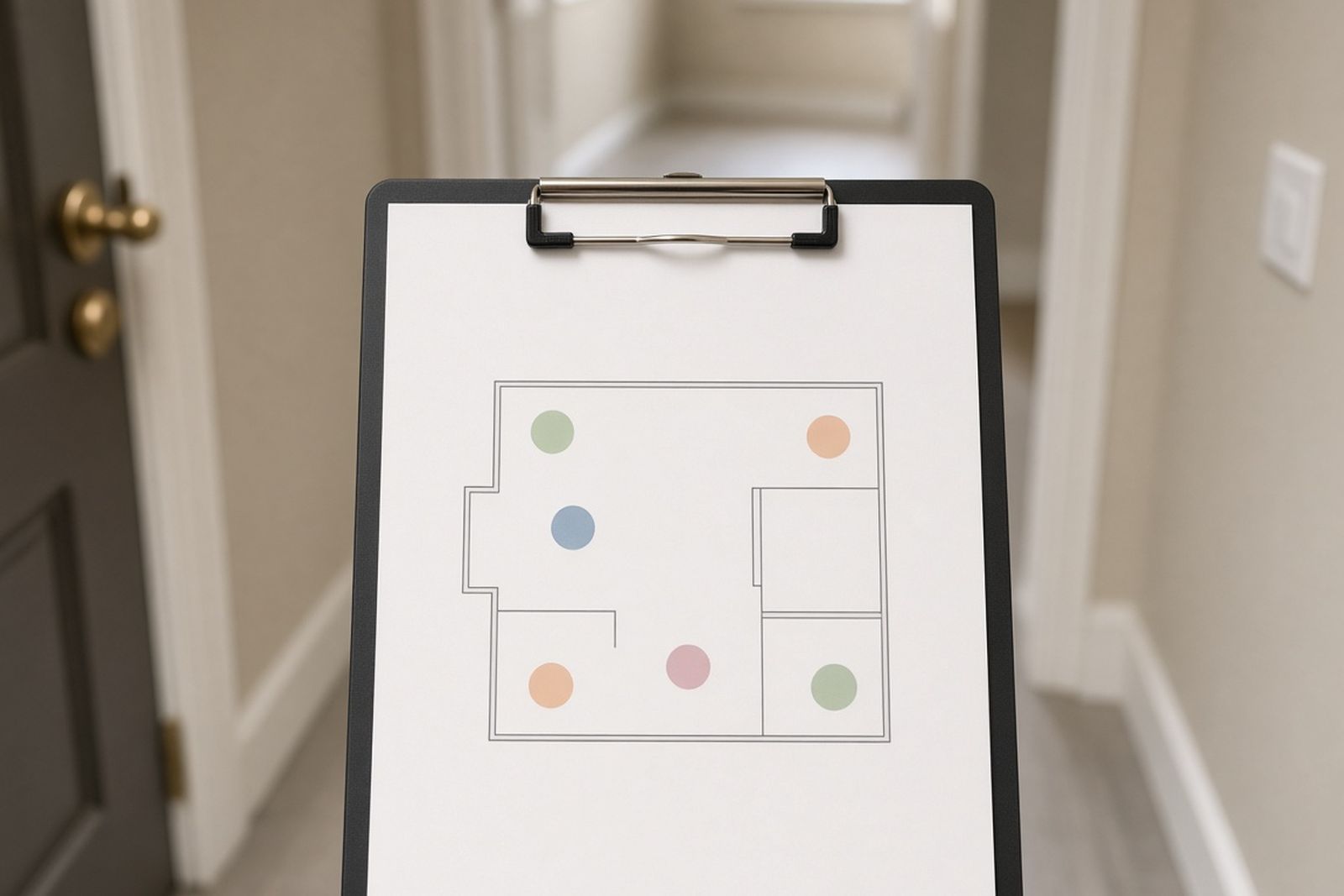
Clipboard showing a room plan with color-coded dots marking high-touch surfaces
Illustrative photo, not a job record. Clipboard showing a room plan with color-coded dots marking high-touch surfaces.
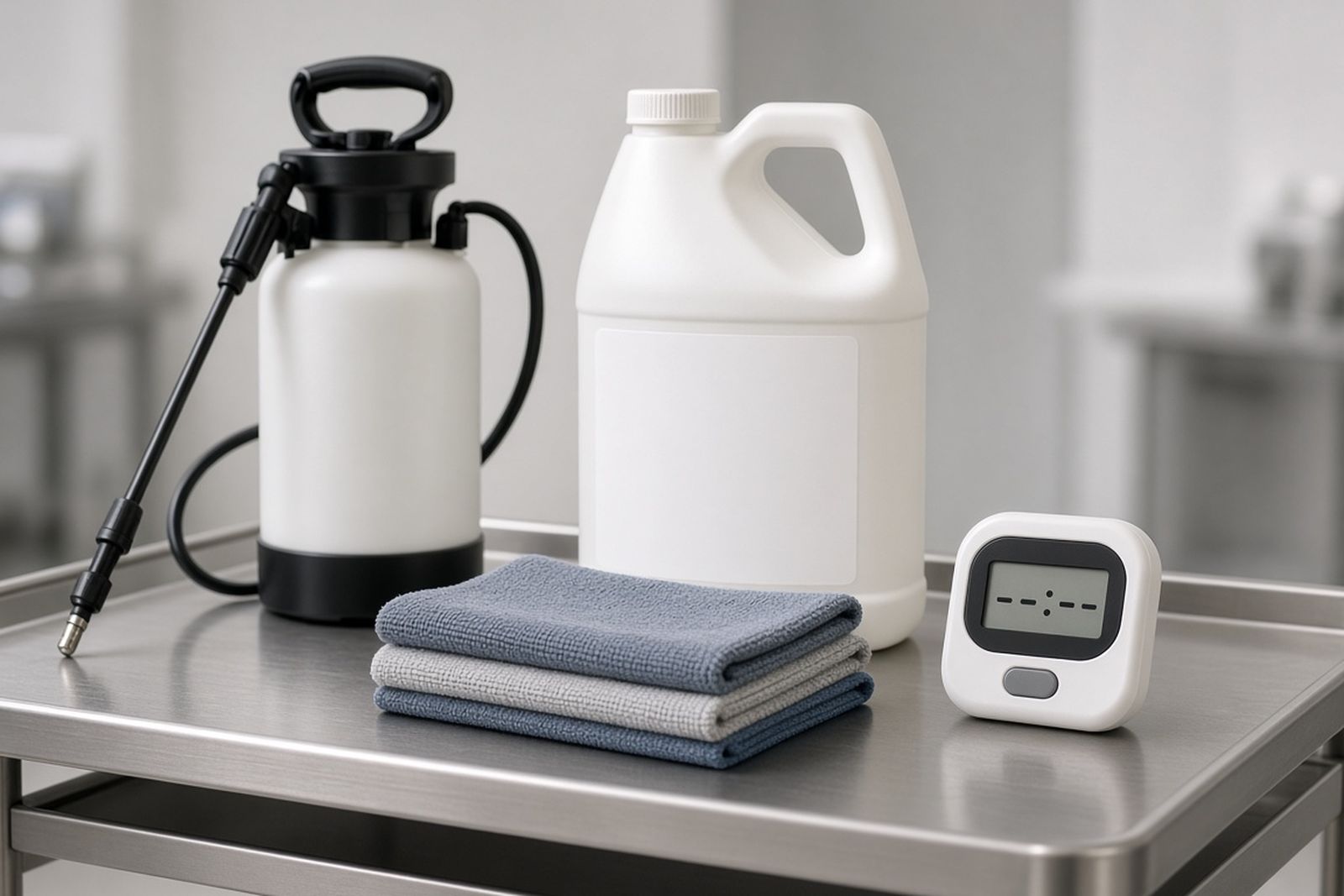
Pump sprayer, disinfectant jug, folded cloths and a contact-time timer on a steel cart
Illustrative photo, not a job record. Pump sprayer, disinfectant jug, folded cloths and a contact-time timer on a steel cart.

Infectious Disease Disinfection figures to keep in mind

National and research figures, not Lake Forest data. Local conditions, rules and providers vary; use these for scale and context only.

8

Products above pH 8 accounted for 74% of failures in the experiment.

Read with care: Accelerated test conditions; not a failure rate for installed equipment.

Source: Jennings et al. (2024)Eight wipe formulations tested on healthcare plastics under fixed strain for seven days.

98.1%

Manual wiping met the study's disinfection-success criterion on 98.1% of surfaces versus 75.5% for UV-C.

Read with care: Specific device, protocol and success criterion; no patient infection endpoint.

Source: Knobling et al. (2023)Naturally contaminated surfaces in a comparative field test.

81%

81% reported bleach use on high-touch surfaces in contact-isolation rooms.

Read with care: 47 of 273 contacted participated; practices were reported rather than observed.

Source: Han et al. (2021)47 US hospital environmental-services respondents across 26 states; 2019 survey.

These figures are public research and agency data, not this network's own job records. Keep each number with its population, year and limits; none of them predicts cost, timing or outcome at a specific property.

Plan before you reach out

Use the first 24 hours planner for immediate steps and the provider vetting checklist to confirm any Lake Forest provider's training, insurance and waste path in writing.

What research has found

Findings from published studies of people and properties in situations like this one. They describe what researchers observed in a specific group; they are not predictions for your case.

Used wipes retained spores during and after wiping.
Who was studied: Non-sporicidal-claim wipes tested on Formica with C. difficile spores.Limits: Not a comparison of all sporicidal products; physical removal is not complete inactivation.Disinfectant wipes transfer Clostridioides difficile spores during the disinfection proc… (2020)
Larger wiped areas created concerns about continued cross-contamination.
Who was studied: Six commercial wipe products; two bacterial strains on nonporous Formica.Limits: Specific products and strains; no general maximum area or disease outcome established.Cross-contamination by disinfectant towelettes varies by product chemistry and strain (2020)

Infectious Disease Disinfection community polls

Poll results

Every count is a real visitor vote; nothing is seeded or padded. One vote per poll per device, and you can change your answer.

Your experience

When your facility had an illness cluster, how did you handle cleaning?

No visitor votes yet
Process

How did you decide whether to close all or part of the facility?

No visitor votes yet

Planning cleanup in Lake Forest?

Send a short message about the property to the follow-up inbox. A coordinator can reply by email with next steps.

Your request is sent to the follow-up inbox. A coordinator can reply by email.

If anyone is hurt or in danger, call 911 first.