West · US

Infectious Disease Disinfection Planning in Los Angeles, CA

Planning infectious disease disinfection in Los Angeles, CA

Disinfection planning for Los Angeles towers and suites. Map elevator touch points, match EPA labels, know List N's limits, and follow LA County guidance. This is planning guidance, not a claim of a local office or crew in Los Angeles.

Get an email reply about infectious disease disinfection

Send a short message to the follow-up inbox. A coordinator can reply by email. This form does not send emergency help; call 911 first if anyone is in danger.

Tell us what you need help with. Share a short description; please leave out medical details, access codes, and other sensitive information.

A request does not confirm a booking. For immediate danger, contact local emergency services.

Or email info@prompartybuses.com

Direct answer

The short answer for Los Angeles, CA

Crowded Los Angeles towers, HOA amenities, and street-level shops and offices need outbreak records that map how germs pass through elevators and laundry rooms. Match EPA label claims to the illness you're seeing. Keep sterilization language out of homes and offices.

Editorial guide · Biohazard Remediation NetworkUpdated 2026-07-22Location focus: Los Angeles, CA

Local planning context

Across the Los Angeles Basin, outbreak calls often come from HOA boards. They manage package rooms, underground parking elevators, and amenity kitchens that hundreds of hands touch each week. The most useful first step is a floor-by-floor map of what people touched while someone was contagious. An invoice to fog the whole building is not. Basin air quality and closed-window cooling can trap chemical smells. Set reopening times that allow for airing out after the wet time ends.

Street-level shops and medical-style offices get short visits. Reception counters, shared restrooms, and card readers see a steady stream of hands. Work each shop restroom from dirty to clean. Then leave it shut until the product's timer is done. Los Angeles County Department of Public Health materials back up EPA-registered products and contact time for community buildings. They don't turn a condo hallway into a sterile operating room.

Property managers should keep the wording for resident amenities apart from any clinic tenant's infection-prevention program. CDC guidance written for hospitals and clinics doesn't give an HOA board a standard for clearing a residential floor. Blood, or other body fluids that can carry disease, in a Wilshire tower unit brings OSHA's blood rules into play for the crew. Ordinary cold, flu, or stomach bug surface work stays simple. Clean, then disinfect with labels that name the germ, and make no sterile-tower promises.
Property considerations

Rank elevator cabs, laundry controls, package lockers, and amenity kitchen handles above decorative spots few people touch.

Decide how amenity upholstery and drapes will be handled before anyone sells a fog pass.

Treat food-contact amenity counters separately from other hard surfaces, for rinse and use-site rules.

Coordinate HOA access so package deliveries or vendor visits don't break the wet time.

Say whether the job covers a private unit, a shared amenity, or a commercial suite.

In mixed-use towers, keep the clinic tenant's duties in a separate written plan.

Response-planning framework

Map how germs travel before picking a bottle

List the high-touch points in the order residents and visitors move. That's the parking elevator, lobby, mail area, amenity kitchen, and unit doors. Note any restroom where heavy mess centered. Choose a product only after that map is done and the illness pattern is described. Don't diagnose anyone.

Match EPA claims to the event, including List N limits

Pick EPA-registered disinfectants whose labels support the concern. List N fits COVID-19 when directions are followed. It doesn't cover every spore-forming germ or stomach virus. If a clinician raises a spore concern, require a product whose label makes a spore claim. Turn down sterilization sales talk for towers and offices.

Run empty time and fresh air on one HOA clock

Keep treated amenities and elevators closed through the full wet time. Post factual closure notices without names or diagnoses. Ventilate per the SDS, then reopen.

Prove it with records, not door-hanger certificates

The HOA file should hold EPA numbers, a zone list, cleaning proof, wet-period clock times, and prep photos. Swabbing a lobby handle shows leftover film. It doesn't prove any germ is gone. Don't invent lab clearance the job never included. File notices apart from any private medical details.

Documentation checklist

  1. 1Property type and zones in the plan: private unit, amenity, or commercial suite
  2. 2Elevator-to-amenity high-touch map, with porous items left out
  3. 3The label for each product used in the tower, kept with the HOA minutes
  4. 4Proof that package-room and parking-elevator grime was washed off first
  5. 5Clock times for when each amenity kitchen and laundry room was sprayed and reopened
  6. 6Fresh-air steps and the HOA reopening time, tied to the label and SDS wording
  7. 7Waste notes for heavy mess or body fluids that can carry disease, when present
  8. 8Board postings, reviewed so no resident's illness is revealed

Official resources

Questions for this location

Can an HOA in Los Angeles declare a tower pathogen-free after one List N treatment?

No. A product being on List N doesn't mean it covers norovirus, C. diff spores, or every other concern. It never sterilizes air, soft items, or people. Boards should record which hard surfaces were cleaned and kept wet for the labeled contact time. They should note which fabrics were washed or left out, and when elevators reopened. Routine cleaning and handwashing still matter after the job.

How should Los Angeles amenity kitchens be handled after a vomiting illness?

Close the amenity. Gear up, then bag the mess. Wash hard surfaces with detergent. Next comes a registered product labeled for gut bugs. The amenity counters, cabinet pulls, and nearby restroom taps then sit wet for the whole labeled time. Follow the label's rinse directions on food-contact surfaces. Soft seating may need washing or temporary removal. Reopen only at the written time.

What language belongs on a Los Angeles building notice after disinfection work?

Say which floors or amenities are closed, how long they must stay empty for the contact time, and when they should reopen based on the label. Don't name sick residents or share diagnoses. Point wider questions to the Los Angeles County Department of Public Health or CDPH. Keep product records in the building office.

Why can't clinic terminal-clean practices be copied onto residential floors in Los Angeles?

Licensed clinics and hospitals run infection-prevention programs and follow rules for cleaning medical devices. CDC's health care disinfection and sterilization guidance supports those settings. It isn't a standard for clearing homes. Homes and offices aim to lower risk on surfaces with labeled products, after the grime is cleaned off. Bringing "hospital sterile" sales talk into a condo hallway misleads residents. It can also skip the hard-surface wet time that actually matters. Keep the clinic tenant's duties in a separate plan.

What counts as realistic verification for a Los Angeles property manager?

A useful packet has EPA registration numbers, rooms and surface types treated, and proof of cleaning. It adds timed wet periods, prep photos, fresh-air notes, and the reopening time. A residue swab test, if used, only checks for grime. No LA tower is germ-free forever. Reset routine cleaning afterward. A single job is not a program.

How should a Los Angeles apartment resident clean after an illness when the unit has no windows that open well?

Pick a mild product with clear return steps. Avoid foggers and aerosol sprays in rooms you can't air out. Use wipes or a cloth to put disinfectant right on handles, taps, and counters. Run the bathroom fan and range hood if you have them. Keep inside doors open to move air. If anyone at home has asthma, ask a doctor or pharmacist which products may be easier to handle.

Who pays for disinfection in a Los Angeles rental after a tenant's illness?

That depends on your lease and where the work happens. Common areas are usually the landlord's or HOA's job. Cleaning inside a unit is often the tenant's. If you need professional help inside your unit, read your lease or ask the landlord in writing before you hire anyone. For questions about tenant rights, a local tenant-rights group or the city's housing office can explain the rules. Keep receipts and a short description of the work.

Contact

Get help by email

Send a short message for an email reply about infectious disease disinfection planning questions for the Los Angeles area.

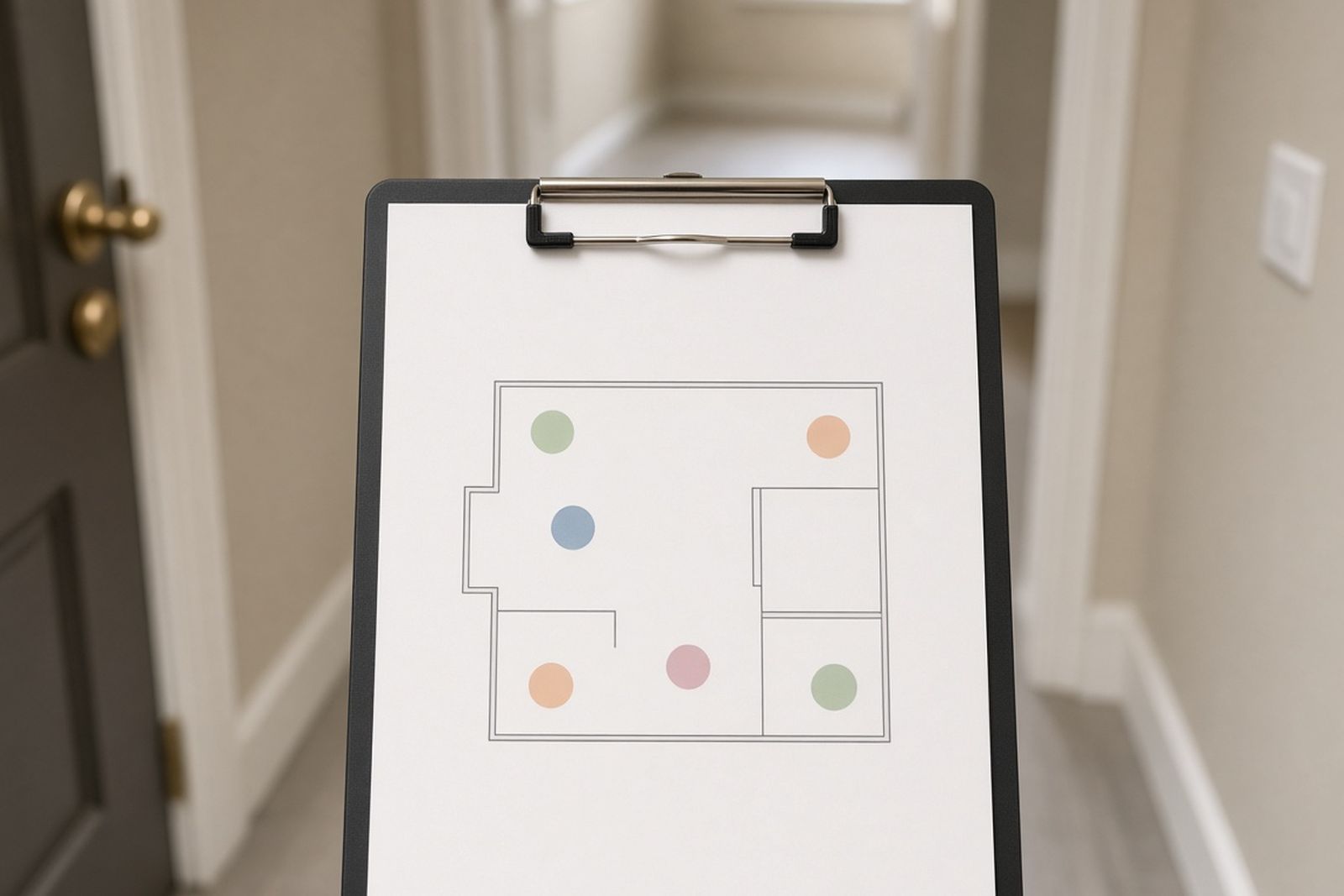
Clipboard showing a room plan with color-coded dots marking high-touch surfaces
Illustrative photo, not a job record. Clipboard showing a room plan with color-coded dots marking high-touch surfaces.
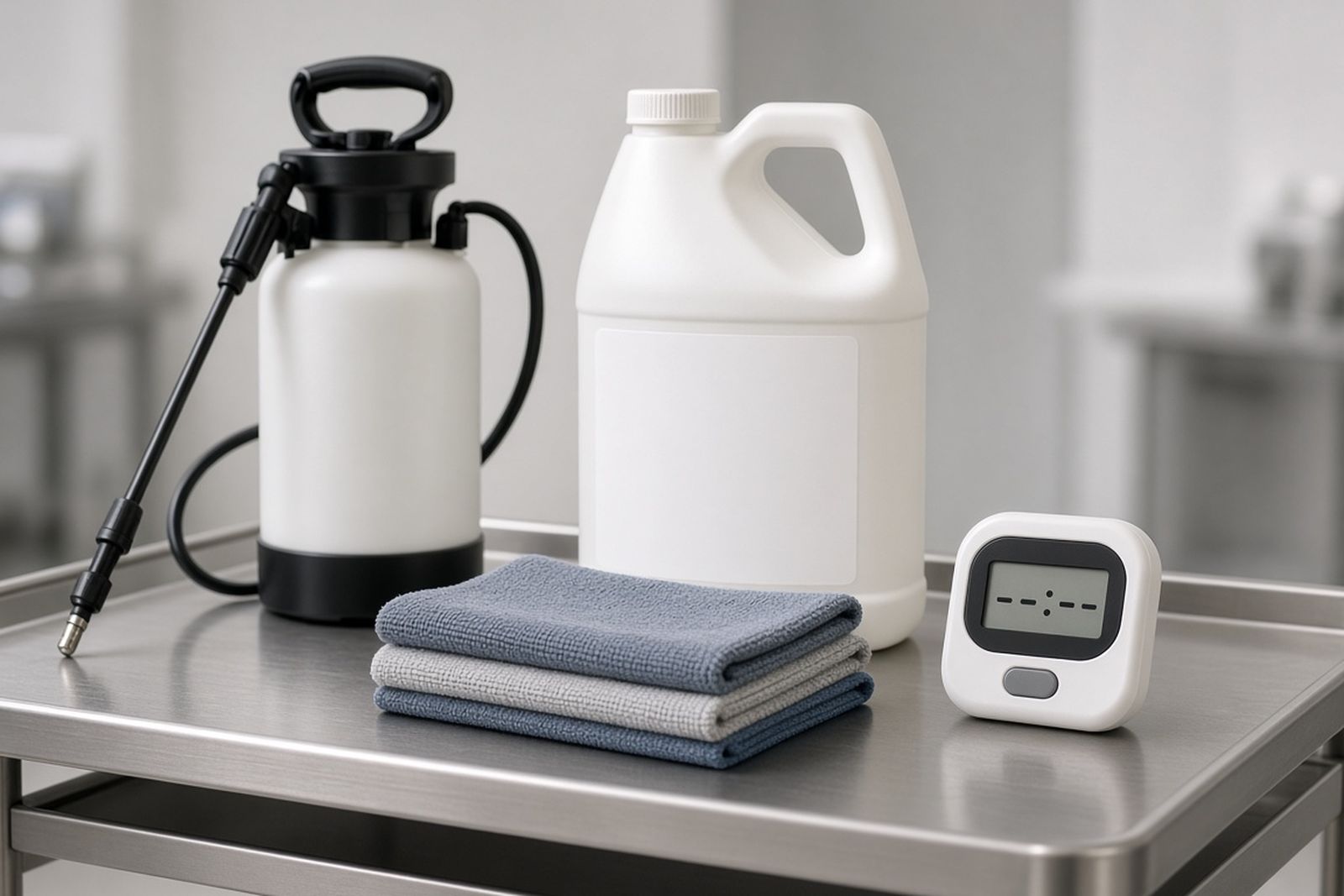
Pump sprayer, disinfectant jug, folded cloths and a contact-time timer on a steel cart
Illustrative photo, not a job record. Pump sprayer, disinfectant jug, folded cloths and a contact-time timer on a steel cart.

Infectious Disease Disinfection figures to keep in mind

National and research figures, not Los Angeles data. Local conditions, rules and providers vary; use these for scale and context only.

48 hours

CDC school guidance states most studies show flu virus can live and potentially infect a person for up to 48 hours after being deposited on a surface.

Read with care: Archived CDC page; survival depends on surface type, humidity and temperature.

Source: CDC (2019)General guidance for schools, United States

500+

EPA's List N of disinfectants approved for use against SARS-CoV-2 grew from 85 products in March 2020 to more than 500 by October 2020.

Read with care: Product count has changed since 2020; List N inclusion is not an EPA endorsement.

Source: EPA (2020)United States, EPA-registered products, as of October 21, 2020

4,000+

Under FIFRA, a disinfectant must be registered with EPA before it can be sold or distributed in the U.S.; more than 4,000 antimicrobial products are currently registered.

Read with care: Registration means EPA reviewed efficacy and safety data for label claims, not that any product works on every pathogen.

Source: EPA (2025)United States, federal pesticide regulation

These figures are public research and agency data, not this network's own job records. Keep each number with its population, year and limits; none of them predicts cost, timing or outcome at a specific property.

Plan before you reach out

Use the first 24 hours planner for immediate steps and the provider vetting checklist to confirm any Los Angeles provider's training, insurance and waste path in writing.

What research has found

Findings from published studies of people and properties in situations like this one. They describe what researchers observed in a specific group; they are not predictions for your case.

One worker described skin irritation despite improvised arm coverings while fogging.
Who was studied: 59 Arizona survey respondents and 11 interviewees from maid services and a school district.Limits: Small voluntary sample; no causal inference; survey item nonresponse substantial.COVID-19 cleaning protocol changes, experiences, and respiratory symptoms among cleaning… (2023)
Small/medium amines or alcohol in formulations were linked with greater cracking propensity.
Who was studied: Eight wipe formulations tested on healthcare plastics under fixed strain for seven days.Limits: Accelerated test conditions; not a failure rate for installed equipment.Chemical resistance testing of plastics: compatibility of detergent and disinfectant pro… (2024)

Infectious Disease Disinfection community polls

Poll results

Every count is a real visitor vote; nothing is seeded or padded. One vote per poll per device, and you can change your answer.

Your experience

When your facility had an illness cluster, how did you handle cleaning?

No visitor votes yet
Process

How did you decide whether to close all or part of the facility?

No visitor votes yet

Planning cleanup in Los Angeles?

Send a short message about the property to the follow-up inbox. A coordinator can reply by email with next steps.

Your request is sent to the follow-up inbox. A coordinator can reply by email.

If anyone is hurt or in danger, call 911 first.